Lifestyle renters, resort-style amenities, and affordability challenges are reshaping apartment development from Brigham City to Santaquin.
By Bradley Fullmer
For decades, apartment living was widely viewed as a temporary stop on the path to homeownership. People rented while saving for a down payment, building their careers, or waiting for the right time to buy a house.
Today, that mindset has changed dramatically.
Across Utah's expanding Wasatch Front—from Brigham City to Santaquin—an increasing number of residents are choosing apartment living not because they cannot afford a home, but because they prefer the lifestyle. At the same time, developers are engaged in an escalating competition to deliver increasingly sophisticated amenity packages that rival private resorts, while policymakers and housing advocates continue searching for solutions to one of Utah's most pressing challenges: creating housing that remains attainable for households across the income spectrum.
The result is a multifamily market undergoing one of the most significant transformations in Utah's history.
"For a long time, renting an apartment was seen as something you did until you could afford to buy a house," said Dan Lofgren, President/CEO of Salt Lake City-based Cowboy Partners. "Renting as a lifestyle choice continues to surge and has been embraced by the market and the industry. There are distinct lifestyle advantages to renting, like truly maintenance-free living, flexibility when it matters, and lock-and-go travel freedom that serve a lot of households' needs very, very well."
That evolution is visible throughout the Wasatch Front, where luxury apartment communities continue attracting young professionals, retirees, empty nesters, remote workers, and even high-income households who could purchase homes but choose not to.
Jory Walker, President of Salt Lake-based Beecher Walker Architects, has witnessed the change firsthand.
"What's changed most over the past 10 to 15 years is the way people view apartment living," Walker said. "Apartments used to be seen as a steppingstone to homeownership. Today, for many people, apartments have become the home."
Slide title
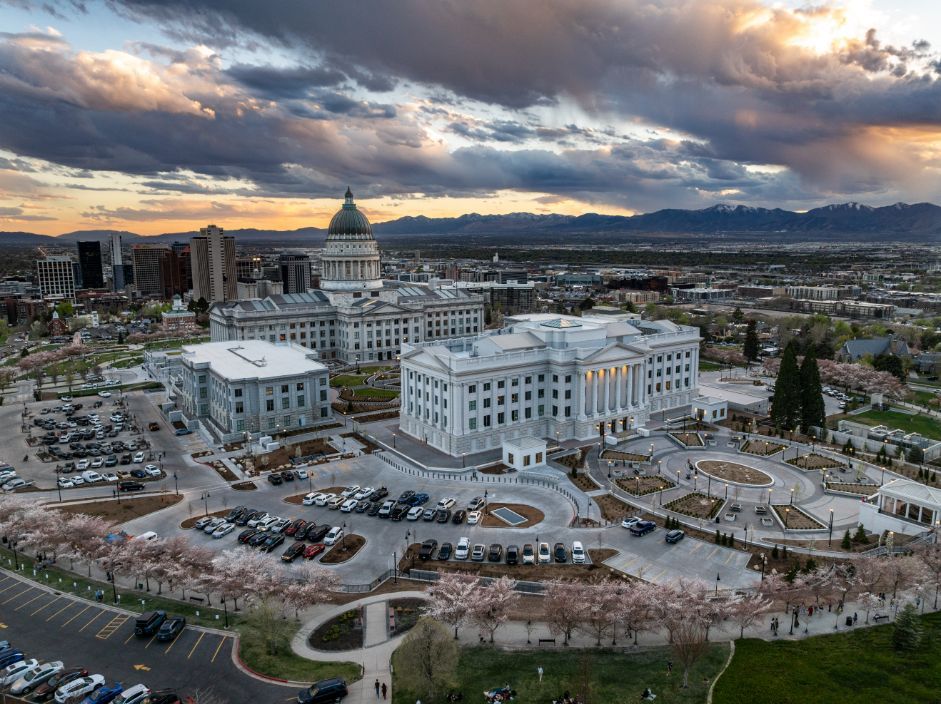
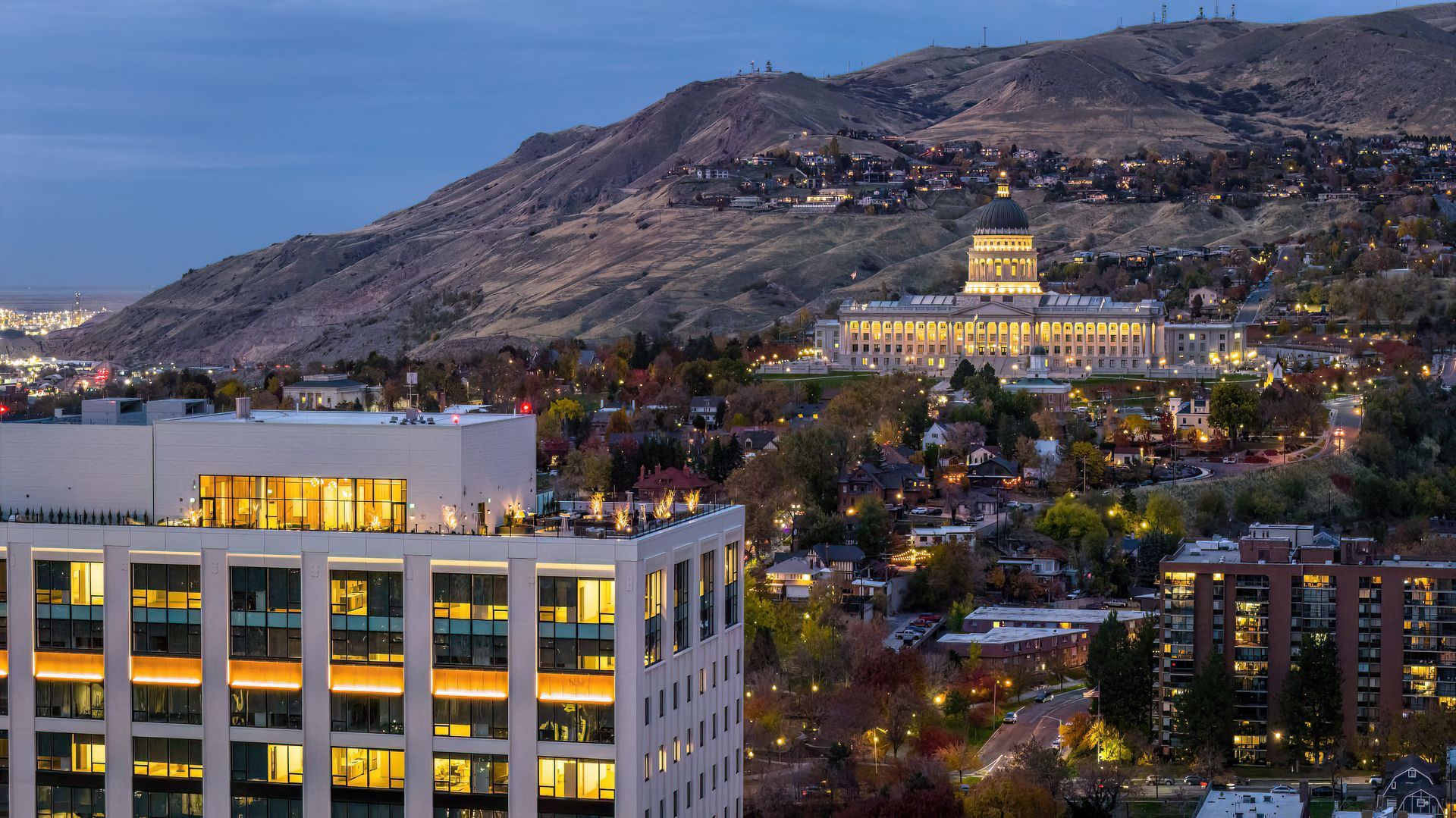
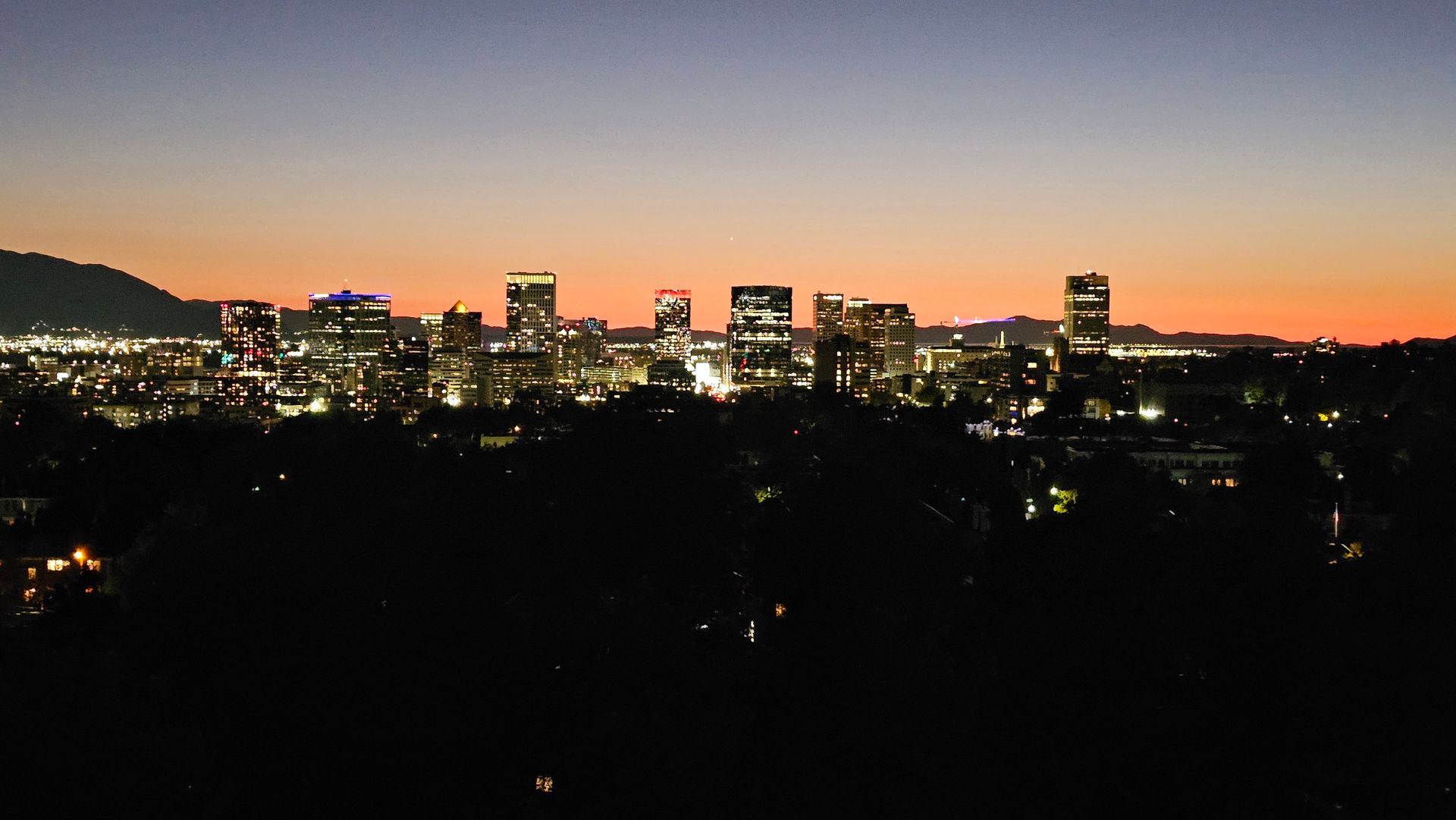
The Salt Lake City skyline.
(photo by Dave Johnson)
Button
Why Renting Has Become a Lifestyle Choice
Several factors are driving this lifestyle shift, starting with flexibility. Apartment residents can relocate for career opportunities, travel extensively, or pursue experiences without worrying about home maintenance, landscaping, or major repair expenses.
Others simply prefer the convenience.
"People are willing to give up a yard and some of the traditional aspects of homeownership if they can have access to resort-style amenities," Walker said. "They want great fitness centers, clubhouses, theaters, pools, pickleball courts, gathering spaces, and other experiences that enhance their lifestyle."
The trend initially emerged in urban environments where residents valued walkability and proximity to restaurants, entertainment venues, and employment centers. Today, those same preferences have expanded into suburban communities throughout Weber, Davis, Salt Lake, and Utah counties.
"We first saw this trend emerge in urban centers," Walker continued. "People wanted to live downtown where they could walk to restaurants, bars, and grocery stores. Over time, that mindset has expanded into suburban markets as well."
Changing generational preferences are also playing a role.
"Younger generations don't necessarily aspire to the traditional model of a quarter-acre lot, a two-car garage, and a fenced backyard," Walker said. "Their priorities are different. They value flexibility, experiences, and mobility."
Technology has accelerated the trend. The rise of remote and hybrid work has untethered many professionals from traditional office locations, making apartment living increasingly attractive.
"The pandemic helped remove the requirement that people be tied to a specific office or even a specific home," Walker said. "Apartments support that flexibility. Residents can lock the door, travel, and work remotely while maintaining a high-quality lifestyle."
The Amenity Wars
As renters increasingly view apartments as long-term homes, developers have responded by transforming apartment communities into lifestyle destinations.
The result has been what many in the industry describe as an "amenity arms race."
"The answer here is much more complex than one might guess," Lofgren said. "There just isn't a typical renter."
Lofgren notes that apartment communities today serve a remarkably diverse population.
"Some people are surprised to learn how many 60-plus and 70-plus-year-old residents we host in our communities," he said. "There is also some element of surprise at the concentration of very high-income earners in our communities."
Because renter demographics are so diverse, developers are increasingly focused on creating communities that offer something for everyone.
Alex Stoddard, Senior Associate at Midvale-based Architecture Belgique, says amenity expectations have changed dramatically during the past decade.
"It's been more than 10 years since we designed 4th West (which opened in 2016). At the time, that level of amenities was mind-boggling for our market," said Stoddard.
Today, many of those same features are considered standard.
"A rooftop deck used to be something that set your project apart," he said. "Now, every multifamily building seems to have a rooftop deck because you have to. If you don't have one, your project is the one that's behind."
Fitness facilities have experienced a similar evolution.
"Small gyms are out," Stoddard said. "Tenants want a 3,000-SF gym. You have to have competitive amenities."
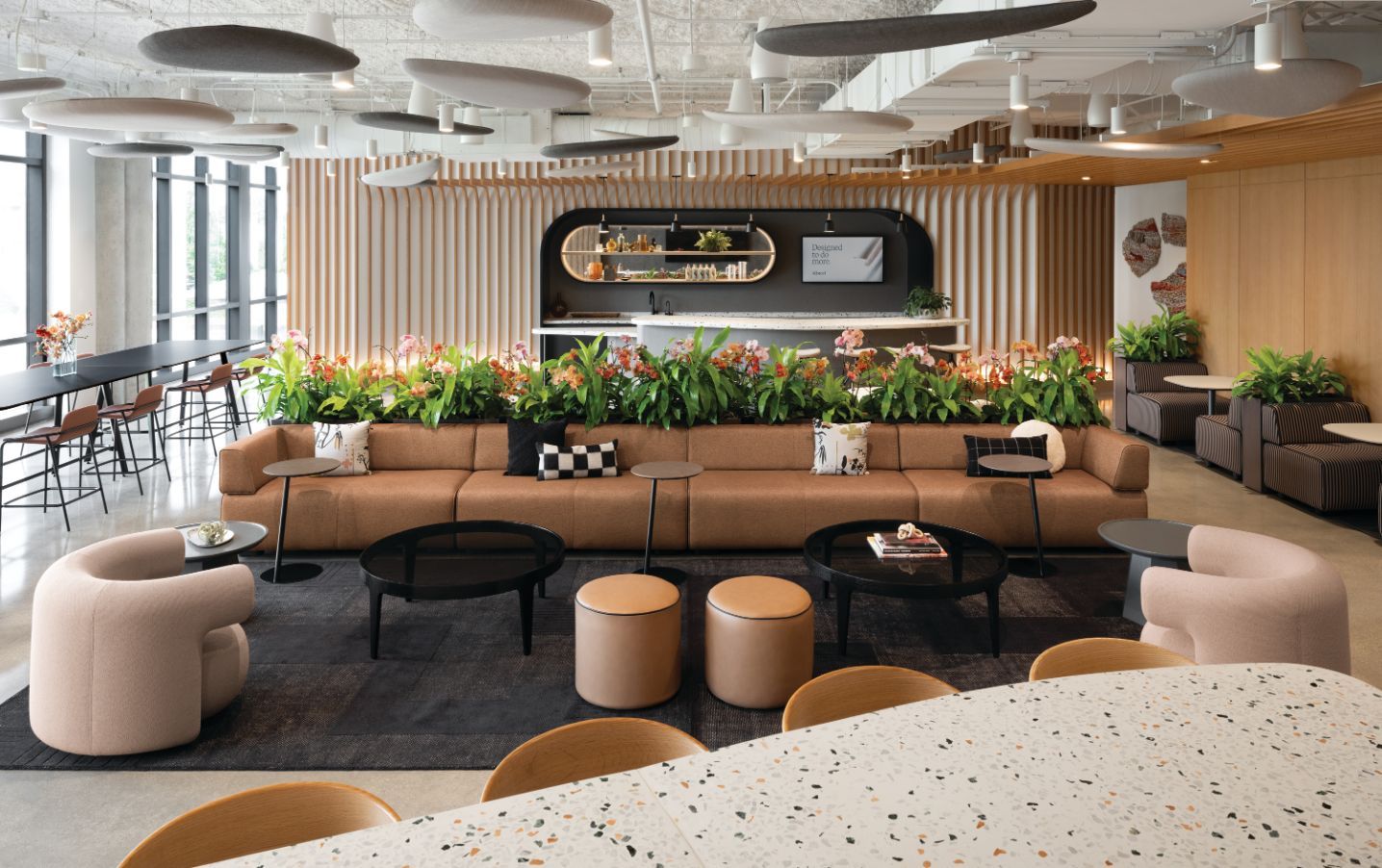
The list of amenities found in today's Wasatch Front apartment communities continues to grow—resort-style pools, pickleball courts, coworking spaces, pet spas, golf simulators, outdoor entertainment areas, wellness centers, and concierge-style services.
"We're seeing concierge-style services become more common," Walker said. "Features like valet trash, package services, and other convenience-oriented amenities help create a higher-end living experience."
The objective extends beyond creating attractive spaces. Developers are building communities designed to foster social interaction, convenience, and lifestyle experiences that often rival those found in luxury hotels and private clubs.
"The puzzle of what makes for a really compelling community is much more complex than just the amount of sizzle you can generate in your recreational amenities package," Lofgren said.
Slide title
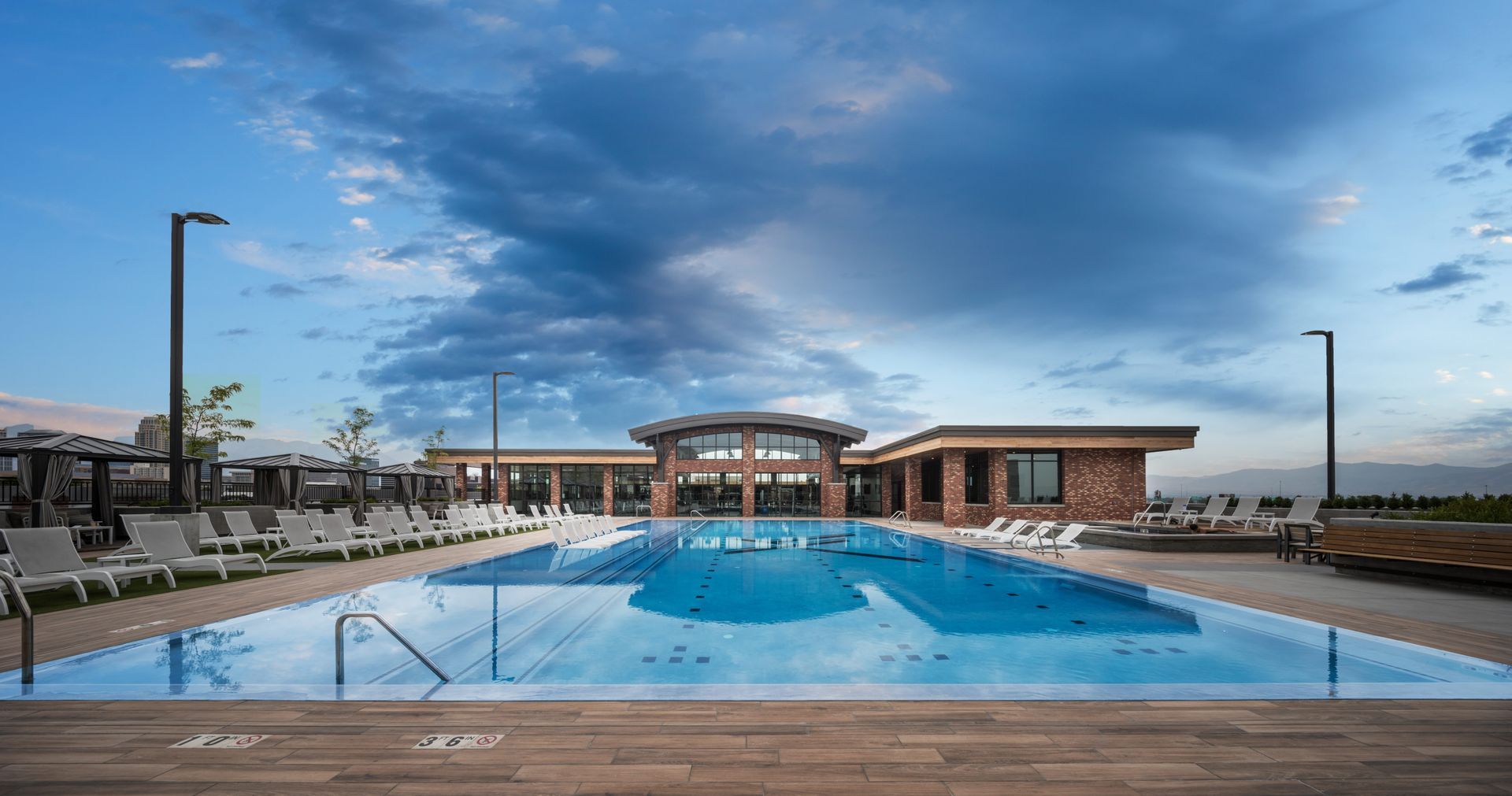
What was once a one-of-a-kind amenity, like 4th West Apartments' rooftop pool, has become more standardized to keep up in the amenity arms race.
(photo courtesy Architecture Belgique)
Button
Slide title
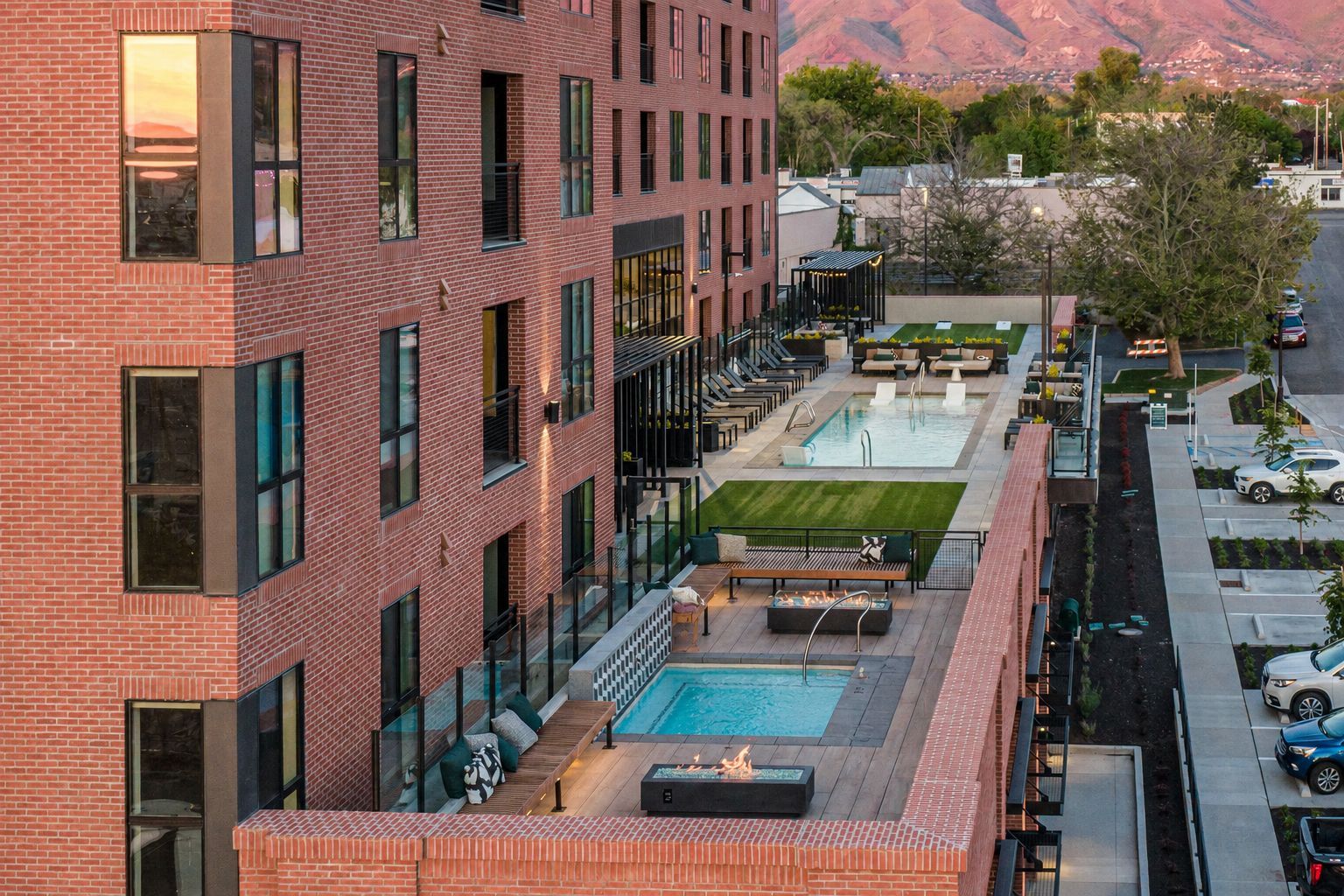
The CRE and A/E/C communities are constantly combining for desired and connected ammenities, like MILLHAUS's 2nd floor amenity deck.
(photo courtesy AO)
Button
Slide title
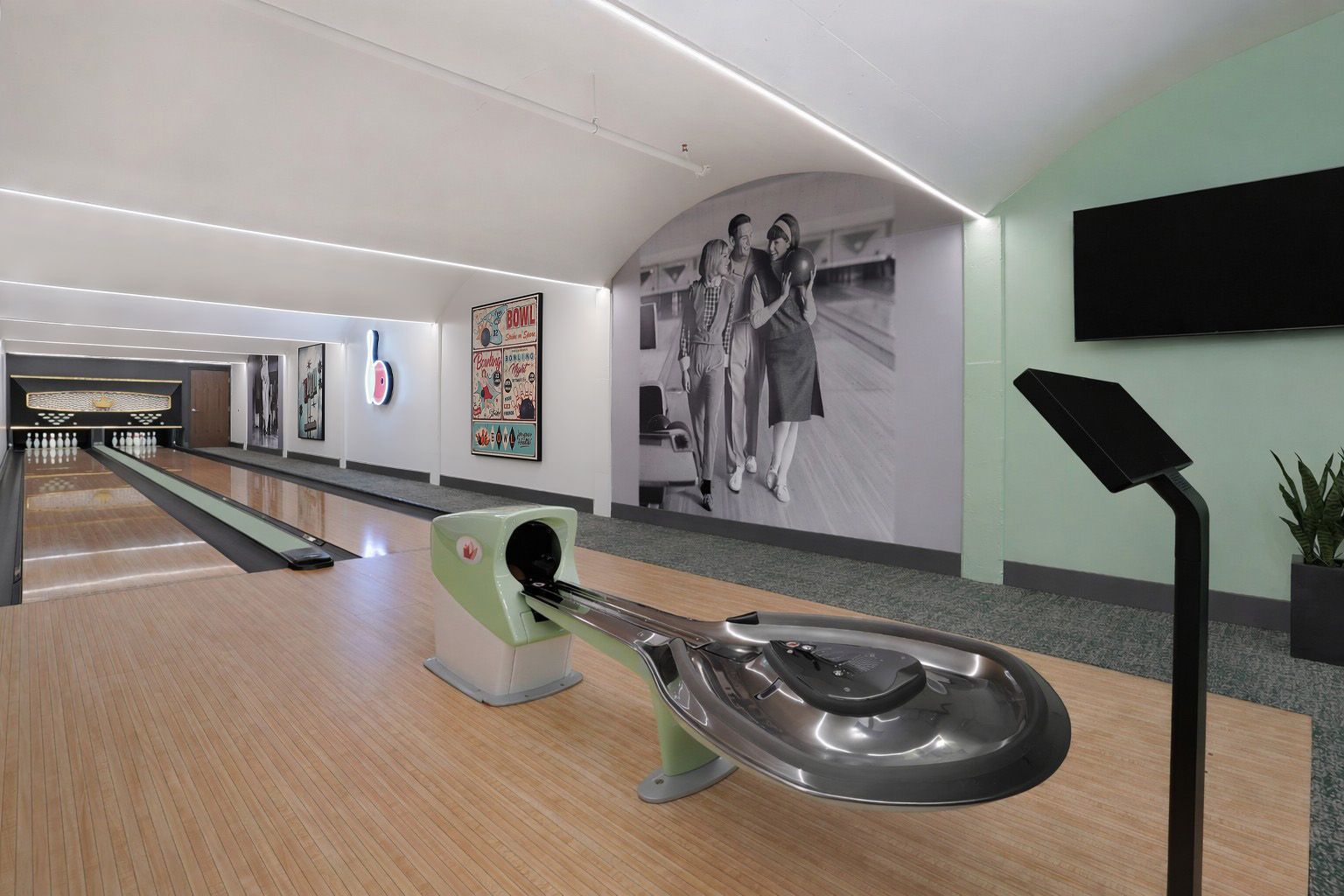
Even adaptive reuse projects, like The Source on South Temple, have incorporated amenities like the basement bowling alley to attract and retain tenants.
(photo by Freebird Marketing & Photography; courtesy Woodbury Corporation)
Button
Strong Fundamentals Continue to Drive Demand
Despite economic uncertainty and a slowdown in apartment construction, Utah's underlying fundamentals remain among the strongest in the nation.
"Tariffs, immigration policy, labor shortages and geopolitical conflicts are all contributing to uncertainty," said Dejan Eskic, senior research fellow with the Kem C. Gardner Policy Institute. "Consumers and businesses alike are becoming more cautious about making major financial decisions."
Even so, Utah continues to outperform much of the country.
"Nationally, job creation has slowed considerably, but Utah continues to outperform the country as a whole," Eskic said.
The state's demographic advantages continue to support long-term housing demand.
"One of Utah's greatest long-term advantages remains its demographics," Eskic said. "The state has one of the youngest populations in the nation, creating a strong workforce pipeline and supporting long-term economic growth."
Combined with ongoing investment activity along the I-15 corridor, those demographics continue to generate demand for housing.
Between 2020 and 2024, Utah experienced approximately 17% household growth, one of the highest rates in the nation.
"These demographic trends continue to generate strong housing demand," Eskic said.
That demand is expected to remain strong for years to come.
Market Conditions Are Beginning to Stabilize
Following a decade-long apartment development boom, market conditions are beginning to rebalance.
"As fewer new apartment projects enter lease-up, competition for tenants decreases," said Jeff Neese, President of Western States Multifamily Appraisals & Consulting. "When vacancy rates begin to decline, rents typically increase. Across the Wasatch Front, rents have generally been flat for the past three years, although conditions vary by submarket."
The slowdown in construction activity has allowed many submarkets to absorb recent deliveries and stabilize occupancy levels.
At the same time, developers are beginning to adapt to today's financing environment.
"I think everyone's kind of realized interest rates are going to stay where they are," Stoddard said. "A lot of projects were put on hold while people waited for things to settle down. Now we're starting to see some of those projects move forward."
Contractors are also experiencing changing market conditions.
"Our general contractors are telling us they're getting a lot more bids than they used to get," Stoddard said. "People are fighting for work a little bit more again rather than just naming a price and getting it."
Why Projects Still Don't Pencil
While demand remains strong, bringing new multifamily projects to market remains difficult.
Construction costs, financing expenses, insurance premiums, and land prices have all increased significantly during the past several years. And the very real specter of inflation—largely due to the fallout from the insidious and impossible-to-explain War in Iran—could very well cause a spike in interest rates and further threaten developers' ability to make project pencil.
"One of the biggest challenges facing development today is economics," Walker said. "Five or six years ago, apartment projects could be built for approximately $185,000 per unit. Today, many projects are approaching $300,000 per unit."
The increase has created substantial feasibility challenges.
"There is significant capital available, but investors need to achieve certain returns before projects become viable," Walker said. "Right now, many projects simply don't pencil out."
Neese says feasibility depends on numerous interconnected factors.
"There are many moving parts that determine whether an apartment project becomes feasible," he said. "Construction costs are one factor, but financing costs, demand, rental rates and several other variables all have to align at the same time."
Some projects have remained dormant for years.
"We have seen apartment projects remain on the sidelines for seven or eight years waiting for the right conditions to move forward," Neese said.
Lofgren agreed, saying, "As compared to five years ago, interest rates and construction costs are high and getting development to pencil is hard.”
The challenge has reinforced the importance of strategic project planning.
"We help clients determine what a particular market needs and what is financially feasible," Neese said. "That includes evaluating unit sizes, unit mix, construction type and building configuration."
Slide title
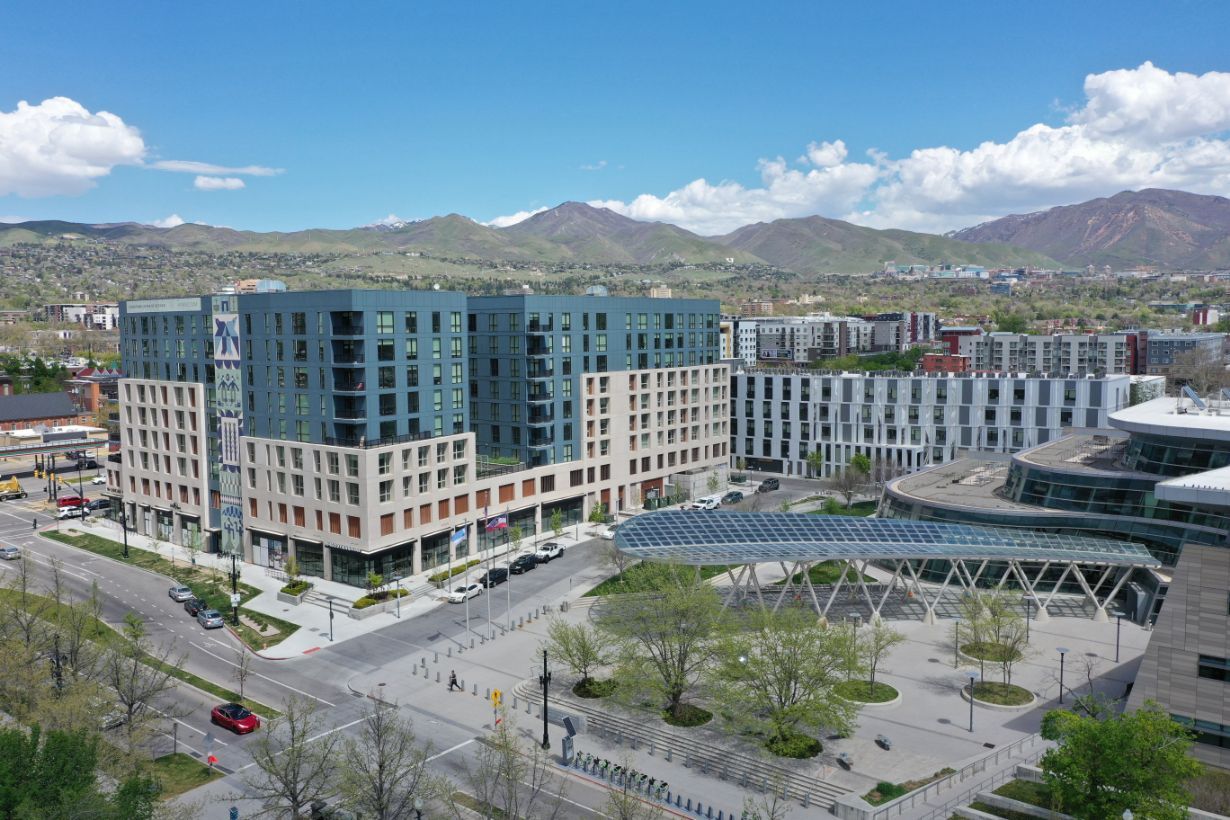
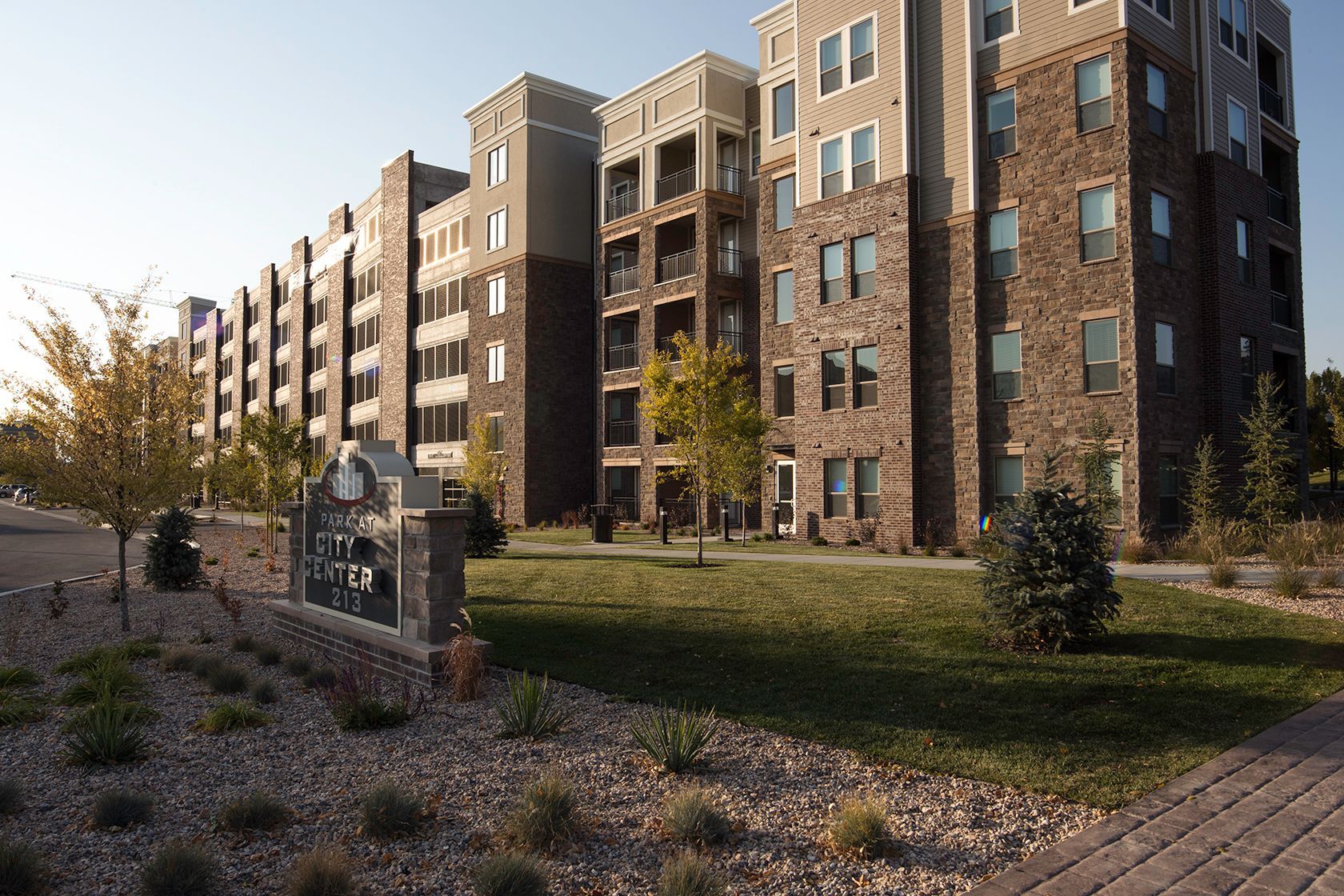
Multifamily projects have succeeded across the Wasatch Front for years, like Park at City Center in Sandy.
(photo courtesy KIER Construction)
Button
Slide title
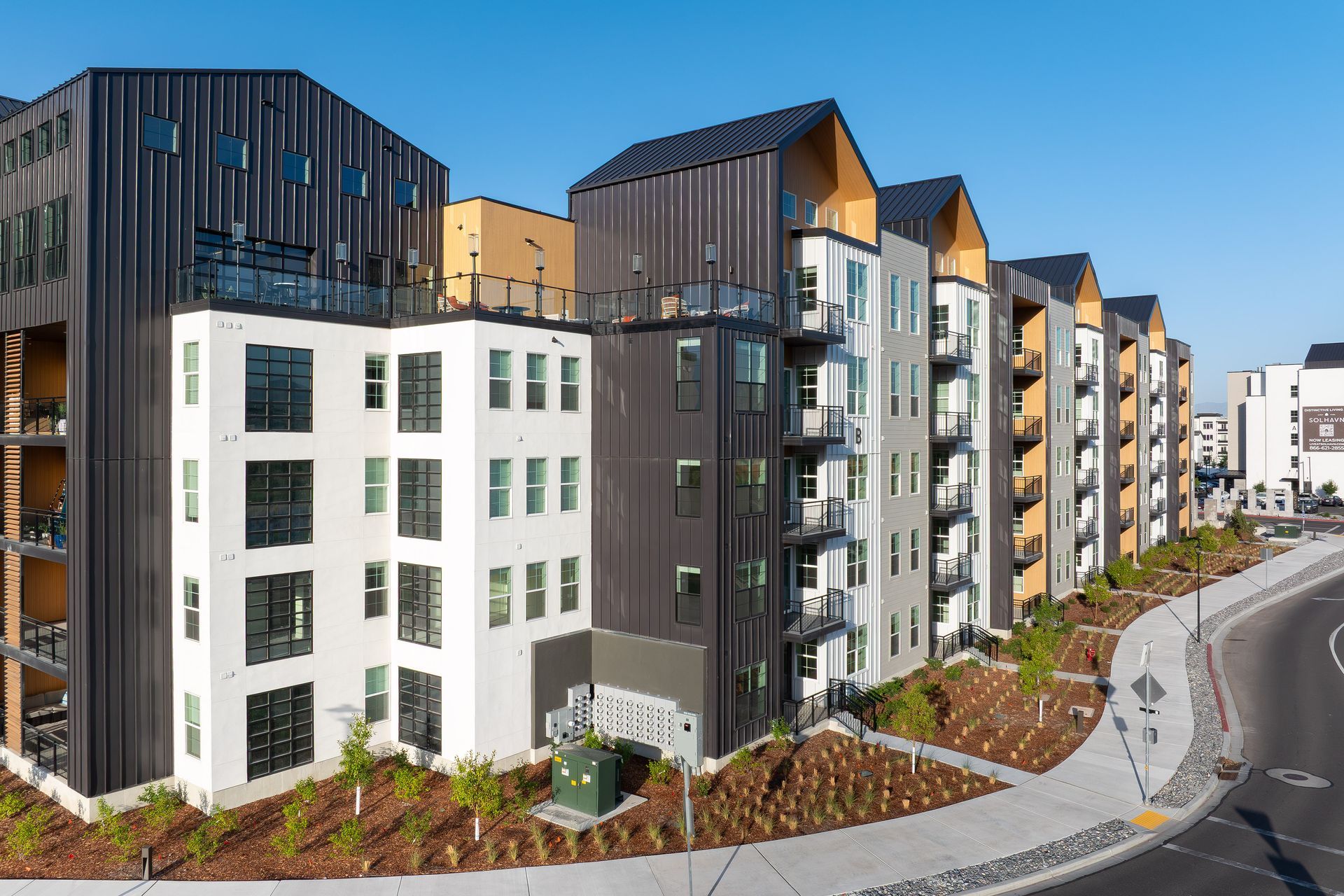
Multifamily growth has expanded deeper into suburban Utah County, with projects like Solhavn Apartments in American Fork.
(photo courtesy FFKR Architects)
Button
Slide title
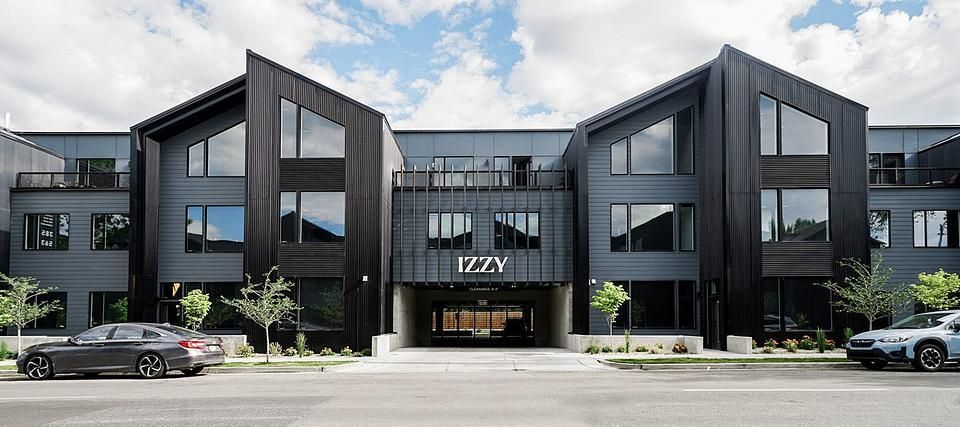
Salt Lake City has seen massive buildouts of multifamily projects, adding thousands of units in the city, like Izzy North and Izzy South.
(photo courtesy New Star General Contractors)
Button
Slide title
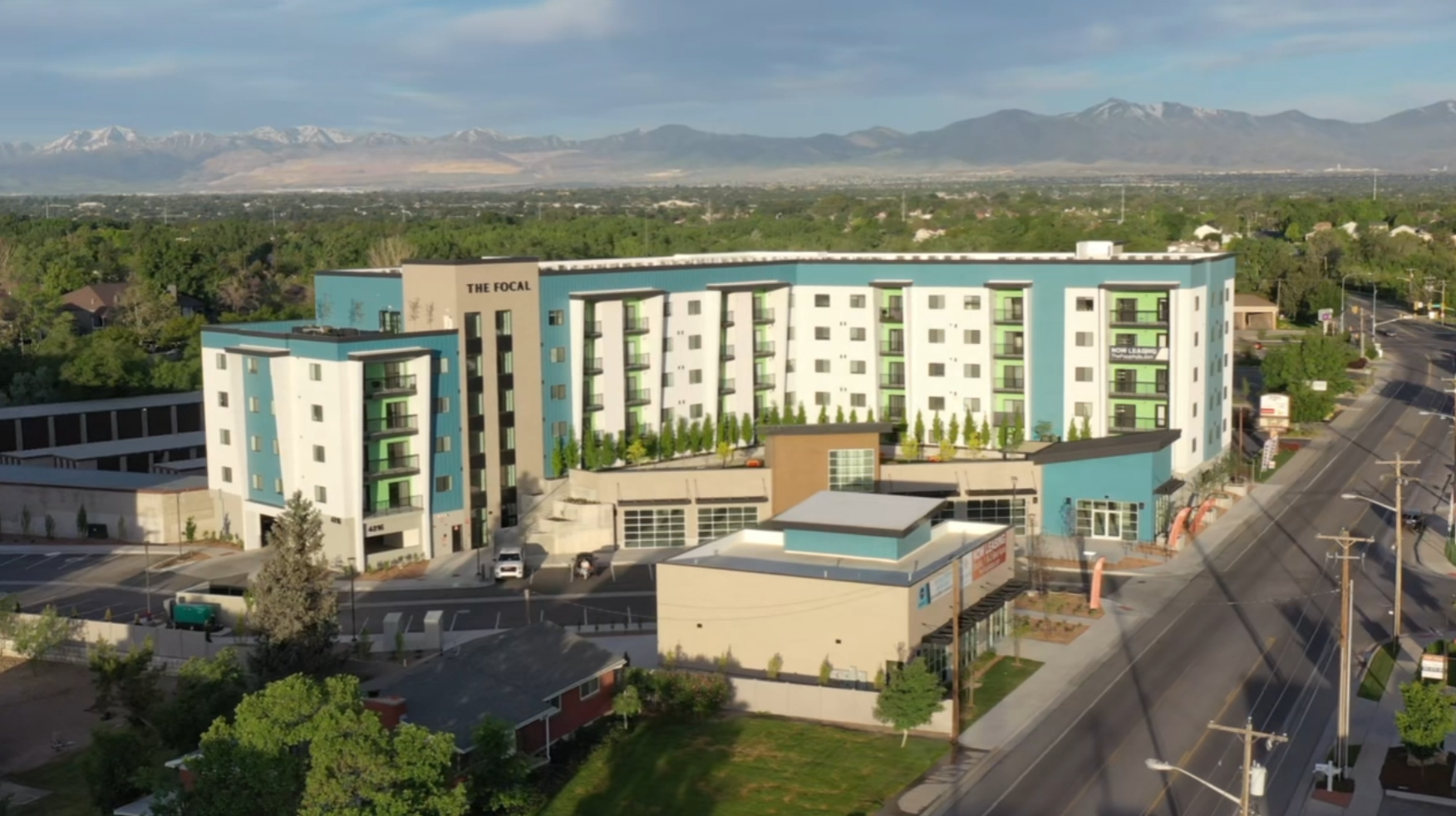
Many projects have emerged in suburban Salt Lake County, like The Focal in Murray.
(photo courtesy Beecher Walker)
Button
The Affordable Housing Challenge
While luxury apartment communities continue attracting residents seeking flexibility and lifestyle amenities, "Housing affordability remains one of the state's most pressing challenges," Eskic said.
The issue is driven by both home prices and mortgage rates.
"The median home price in Utah peaked at approximately $540,000 in 2022 and remains above $500,000 today," Eskic said.
The result is a widening affordability gap.
"Today, it is often significantly less expensive to rent than to own," Eskic said. "In Salt Lake County, the monthly cost of owning a typical single-family home is approximately $3,600 compared with roughly $2,500 to rent a similar property."
As a result, homeownership has become increasingly difficult for many households.
"Nearly 90% of renter households in Utah are now priced out of purchasing a median-priced home," Eskic said.
Neese notes that these pressures are affecting all types of multifamily development.
"There is strong demand for affordable housing, but those projects face many of the same feasibility challenges as market-rate developments, particularly rising construction costs," he said.
Competition for Low-Income Housing Tax Credits remains intense, while bond-financed affordable housing projects face their own leasing and financing challenges.
For Lofgren, the issue extends beyond simply increasing unit counts.
"There are households who need housing right now, and it isn't within reach," he said. "It isn't just about creating housing. It is, in my opinion, the attainability of that housing that matters. We could create 150,000 units, but if they are the wrong ones, it won't help all that much."
Looking Ahead
Despite today's challenges, industry leaders remain optimistic about the long-term future of multifamily housing along the Wasatch Front, where demographic strength, economic diversity, and continued population growth continue to support long-term housing demand.
At the same time, developers, architects, and policymakers will continue searching for ways to create housing that is both desirable and attainable, which Lofgren believes can be assisted by innovation.
"Another emerging force in the industry about which I am particularly excited, and which I think may have transformative potential, is modular housing," he said.
Ultimately, the future of multifamily housing along the Wasatch Front will be defined by two powerful, seemingly contradictory forces reshaping the next generation of apartment development across the region. The first is a growing population of renters who increasingly view apartments as a preferred lifestyle choice. The second is the urgent need to provide housing options that remain within reach of Utah households.
As Lofgren put it, "Housing matters."
And in Utah's rapidly growing economy, ensuring that housing is both available and attainable may be the industry's most important challenge for years to come.