








Baltimore-based St. John Properties marks its “double-nickel” anniversary this year, including an impressive 12-year run in the Beehive State that has seen the firm develop more than 1.4 million SF of space in four main Utah cities under the direction of Daniel Thomas.
By Bradley Fullmer
It's been a dozen years since Daniel Thomas was instructed by Edward St. John, Founder and Chairman of Baltimore-based St. John Properties to "pick a new market," leading Thomas to establish a St. John Properties regional office in Utah.
Over that 12-year period, the reputable commercial real estate developer with a presence in 13 U.S. states has thrived in the Beehive State, with Thomas having spearheaded the development of more than 1.4 million square feet of building space in four main Utah cities, with the majority of it happening at its 128-acre Valley Grove mixed-use community in Pleasant Grove.
Thomas's story, and that of St. John himself, offers a glimpse into how top-level real estate executives operate, and thrive.
Company Roots; Enjoyment Playing Real-Life Monopoly
Edward St. John earned a degree in Electrical Engineering from the University of Maryland, College Park in 1961, before founding St. John Properties (SJP) in 1971 in Baltimore. As the company marks 55 years since its founding, St. John reflected on what he has enjoyed about his career, and what continues to drive him.
"What I’ve enjoyed most is [...] it’s never felt like work—it’s always felt like playing Monopoly," said the 88-year-old St. John. "I've been playing Monopoly since I was five years old, only now I do it with real buildings and real money.
"It’s fun—tremendously fun. That’s what keeps me going," he continued. "Of course, you have to be cautious in this business. You can’t just keep pushing forward without caution, or you’ll get into trouble. But at its core, it’s still exciting to me and something I enjoy every day. Beyond that, there’s a strong sense of pride in what we’ve built. We’ve set the standard and are now looked up to across the industry. But at the end of the day, what stands out most is the enjoyment."
To date, SJP has developed, constructed, and owns a portfolio of more than 25 million SF of primarily flex/research and development buildings, along with retail, and office space serving some 2,700 clients. The firm recently delved into multifamily development, with over 3,000 apartment units to date and more coming down the pipe.
"What I’ve enjoyed most is [...] it’s never felt like work—it’s always
felt like playing Monopoly. I've been playing Monopoly since I was
five years old, only now I do it with real buildings and real money.”
—Edward St. John
The company has assets valued north of $5.5 billion, and a slew of industry awards under its belt, including 2018 NAIOP National Developer of the Year, 1st Place (large business category) Best Places to Work in 2020 by Baltimore Business Journal, and recognition for its sustainability prowess from the U.S. Green Building Council for having more than 130 projects earn LEED Certification.
St. John is also renowned for his philanthropic work, having established the Edward St. John Foundation in 1998, a 501(c)3 non-profit that aims to provide financial assistance to formal education programs. To date, the foundation has donated more than $56 million.
Thomas' Winding Journey from West Coast to East Coast to the Wasatch Mountains
A native of Portland, Oregon, Daniel Thomas earned a Bachelor of Real Estate Finance and Master of Real Estate Development from Portland State in 2006, landing a job doing land acquisitions at Portland-based Riverside Homes.
Upon being laid off during the Great Recession in 2008, Thomas ventured across the continent to the east coast to attend Johns Hopkins Carey Business School in Baltimore, graduating from the Edward St. John Real Estate and Infrastructure Program in 2009. With slim pickings in the real estate market at that time, he took an uninspiring job with the Army Corp of Engineers, quickly feeling like a fish out of water.
"It wasn't a good fit—it drove me crazy," Thomas recalled. "I was young and ambitious. I wanted the world, and I’d go to work and nothing was moving at a speed that was acceptable to me."
One day he got a random call from a former Johns Hopkins professor he had apparently impressed, who said to Thomas, "Hey, Edward St. John was looking through his resume drawer at the school. You might want to give him a call."
"At first, I said no," he said. "I thought, 'This is my first secure job in a long time. I hate it, but it’s 2009 and it’s a paycheck. Why would I go work for a developer'? It bothered me for about a day, and then I thought, 'I walked through a door with his name over it for a year and I never even reached out; I don’t even know who he is. I better at least call and say thank you'. So, it started with a simple expression of gratitude. I called, got his assistant, and said, 'Please just pass along a thank you'. She called back an hour later and said, 'Ed wants to meet with you.' He offered me the position. There’s way more to the story, and it’s pretty neat how it all happened, but that was the start."
Thomas was hired as a "partner in training" and spent five years under St. John's tutelage, an experience he described as "priceless", learning everything from leasing, to construction, to property management.
"It was like a Ph.D. layered on top of everything else," said Thomas. "You can go to school and learn the theory and analytics, but to spend five years in a highly productive, highly effective environment and see how it all really works—and not just watch it but participate in it—that was incredible."
It was definitely hands-on work, with considerable time spent in the field with boots and a tool belt.
"It was like a Ph.D. layered on top of everything else. You can go to school
and learn the theory and analytics, but to spend five years in a highly
productive, highly effective environment and see how it all really
works—and not just watch it but participate in it—that was incredible."
—Daniel Thomas
"I learned how to change filters in rooftop units and sweep warehouses," he said. "My first day on the job involved a broom. We have a whole division focused on maintenance and customer service. The face of our company to our clients is often the maintenance team. We’re a real estate company, but with nearly 25 million square feet of tenants, you really become a service company. If you own it, you manage it."
After five years, St. John told Thomas it was time to spread his wings and "pick a new [geographic] market" to start developing in.
Utah—The Right Place
Thomas, who is a member of the Church of Jesus Christ of Latter-day Saints, obviously knew a little bit about the Beehive State due to it being the Church's headquarters, but was not privy to how Utah's economy was functioning.
"Growing up in the Pacific Northwest, I had been through Utah and skied here. But professionally, I knew nothing about the market or the economy," he said.
He got to work researching various markets. He looked at Texas, but couldn't picture becoming a Texan for the next 30-plus years.
"If I was going to move somewhere, it needed to be a place I could live the rest of my life," he conceded. "I also looked at Portland, where I had started my career, and Seattle, which is basically a larger Portland. Then I looked at Salt Lake City."
He did a deep analytical dive into those three markets; all had pros and cons, but he realized he didn’t want the frustrations of the Pacific Northwest regulatory environment, nor did he want to try and steal market share in an established, slower-growth market.
"Then I looked at Utah, and the business case just jumped off the page," he said, citing Utah's impressive demographics and strong population growth. He quickly decided the Beehive State was the right place to give it a go, moving here with his young family in July 2014.
St. John approved of Thomas' instincts, despite not knowing much himself about Utah beyond its world-class ski slopes.
"At the time, Utah had been ranked by Forbes as one of the most business-friendly states in the country—that certainly caught my attention," said St. John. "Personally, I didn’t know the market in a deep business sense at that point—I knew Utah mostly from skiing. But what fascinated me was the population dynamic. It’s a relatively small state population-wise, but it’s highly concentrated around Salt Lake City. That creates a kind of density and energy in one area that’s very attractive from a real estate perspective."
"In a growing market, you can establish a foothold and grow with it—that was appealing to me," Thomas explained. "I also looked at the business-friendly environment. At that time, Utah was consistently being recognized nationally, and, under Governor Herbert, there was a big push for Utah being seen as the No. 1 state for business.”
Whether some of that was PR or not, the fundamentals made sense.
"And then there was the lifestyle question: Where do I want to live? Where do I want my kids to go to school? Where do I want to recreate?” Thomas continued. “Unless you’re a skier, maybe you don’t understand it the same way, but you’d be hard-pressed to find a better place in the country to work and also have an incredible lifestyle—cost of living, recreation, community. Whether it’s the LDS community or just the broader culture, I found Utah to be very welcoming."

Quickly Making Hay in a Bustling Market
Right before making the move out west, Thomas said St. John told him, semi-facetiously, "'Go out there are call me in a year. Spend a year getting to know the market, then call me when you've got something. Don't rush it—just get to know the market and find something'," recalled Thomas.
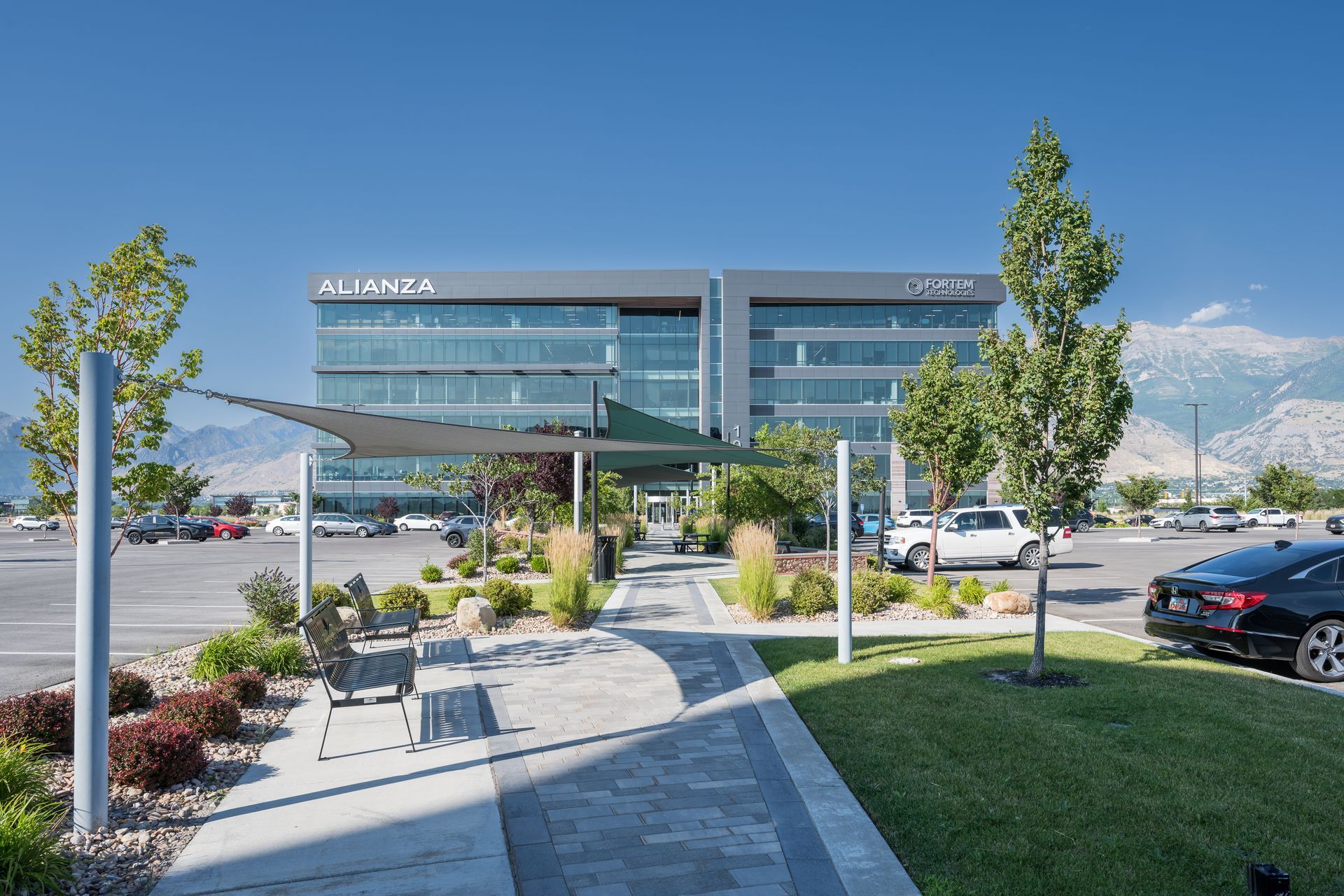
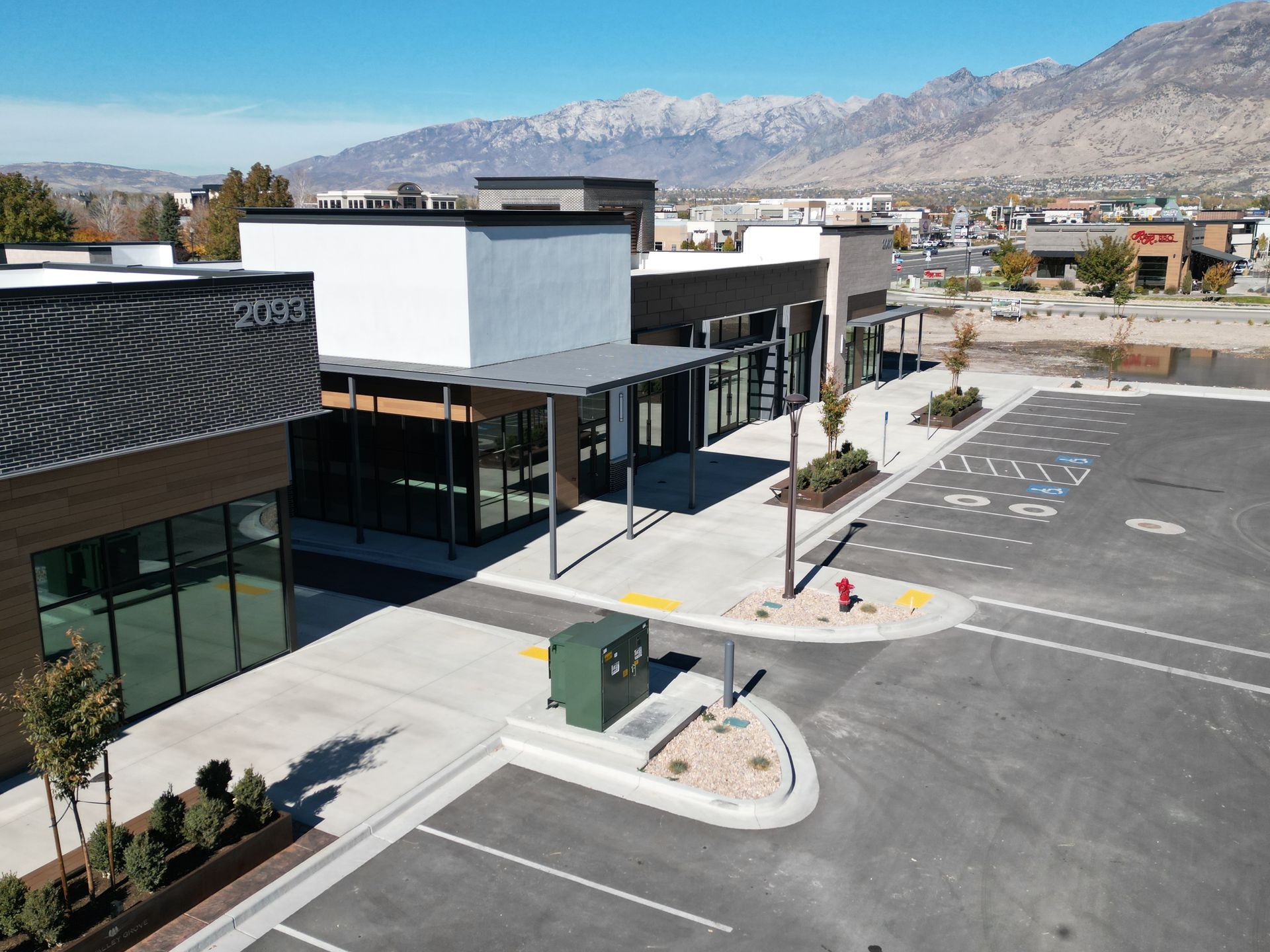
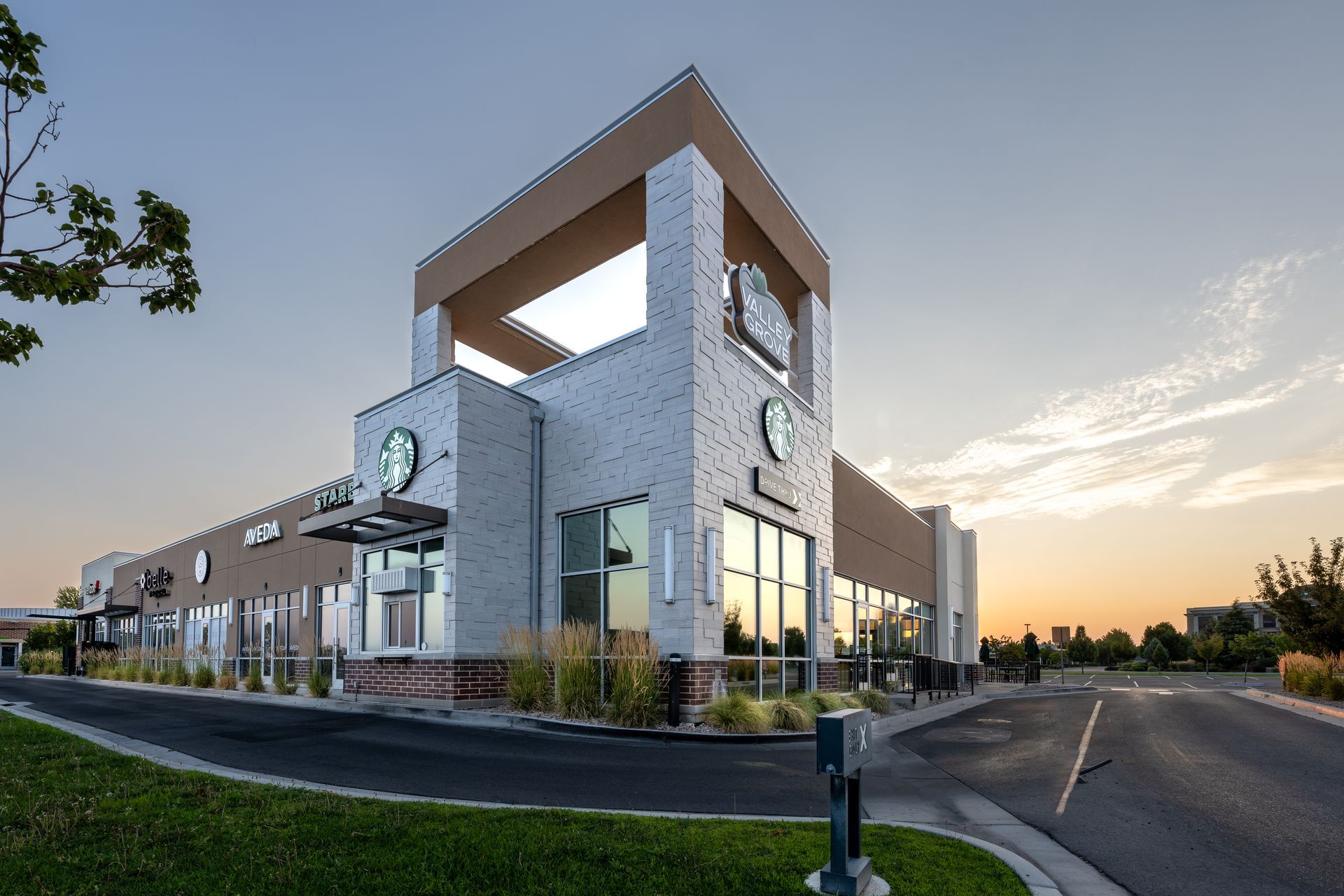
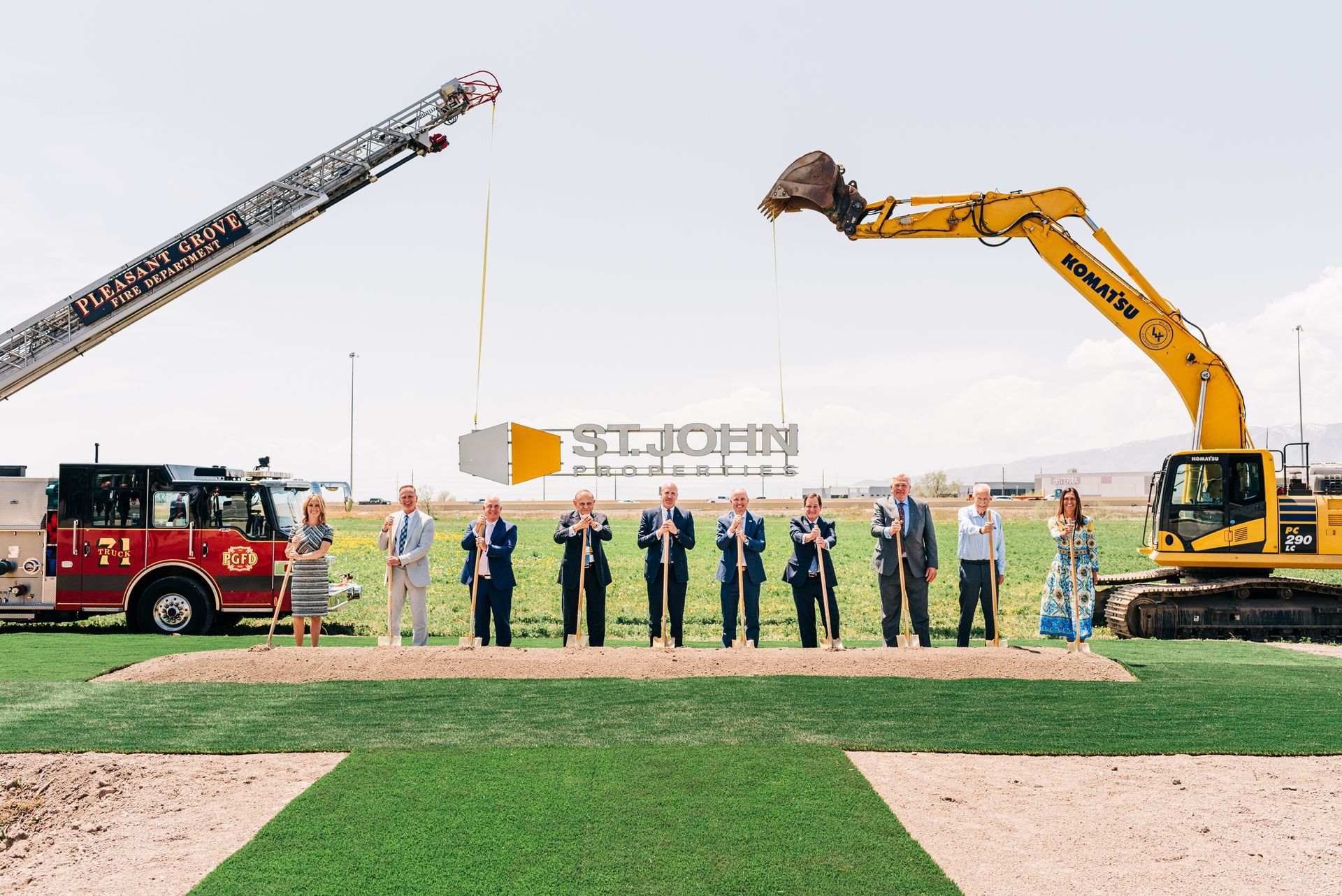
By January 2015, he had a deal in place for 20 acres of raw land in Pleasant Grove just east of I-15, closing it in April and setting off on building a retail pad that included a Starbucks, single-story office buildings, and the centerpiece of Phase I—Grove Tower, a six-story Class A office building. Thomas moved SJP's office from downtown Salt Lake to Valley Grove and continued aggressively pursuing deals.
Over the past 11-plus years, Valley Grove has become a multi-phase, 128-acre development, with two smaller deals in March adding seven acres. Other notable deals in Utah include acquiring 19 acres in Taylorsville off I-215, 17 acres in rapidly-growing Saratoga Springs, and 19 acres in Marriott-Slaterville in Weber County.
Thomas said Edward St. John's strategy has typically been to develop and hold, which Thomas said sums up his “building the empire” philosophy.
"If you sell, you create tax implications, and then have to replace the asset," said Thomas, who today serves as the firm’s Regional Partner for Utah. "He loves to build and own, and so do I. That’s our financial model."
In addition to Maryland and Utah, Thomas said SJP kicked off a larger expansion across the U.S., establishing offices in Austin, Dallas, Tampa Bay, Raleigh, Charlotte, Nashville, and Delaware all within the last five years.
"For years, St. John Properties was known as the largest private landowner in Maryland, just because we had been developing there so long," said Thomas. "Once you start reaching capacity in a home market, expanding into secondary and tertiary markets makes sense. I believe we are now building more square footage outside Maryland than inside Maryland."
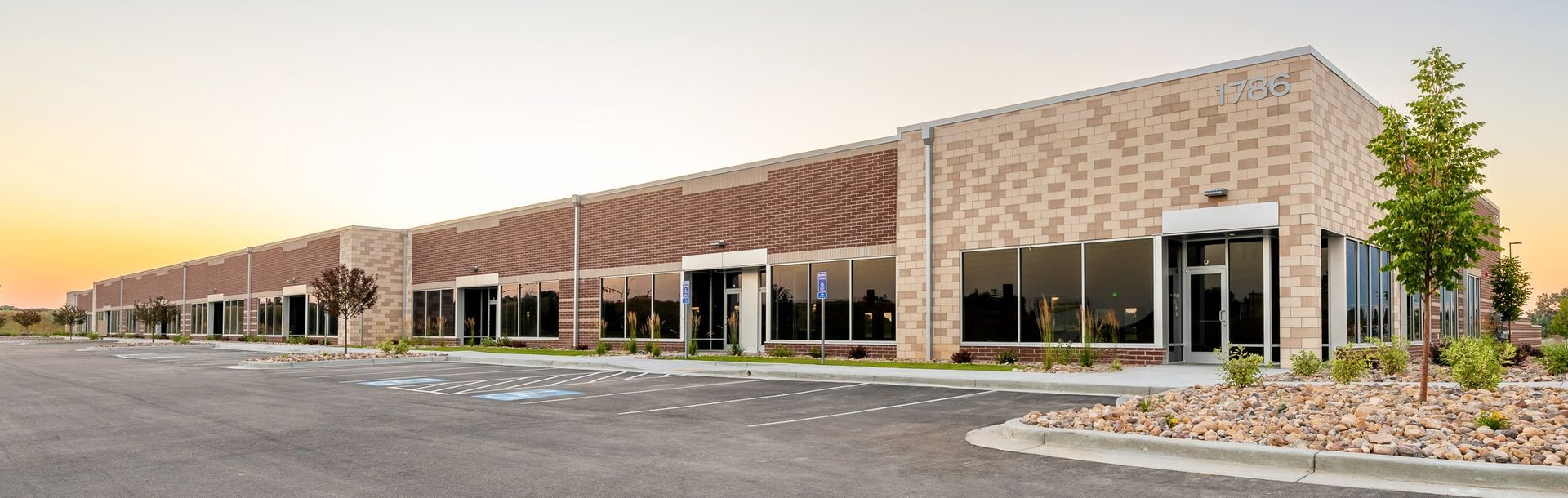
Regarding building type, Thomas said, "Ed's bread and butter has always been small-bay flex industrial space—16- to 18-foot clear-height light industrial flex—and that’s still the bulk of the portfolio. Of the company’s nearly 25 million square feet, about 16 million square feet is flex space. Retail is around two million square feet, and the balance would be office."
Acting as Owner/GC Offers Tremendous Value, Efficiency
While Thomas hired three different local general contractors for the initial retail pad, two single-level office buildings, and Grove Tower, he had stumbled upon Mark Cathemer during the first of those projects in 2016, quickly hiring him to serve as Owner's Rep on the six-story office building. Since then, Cathemer has steered the construction of every SJP project in its Utah portfolio, which has proved invaluable to the firm the past decade.
"My background was working for large general contractors, so the transition was natural," said Cathemer, SJP’s Vice President of Construction for Utah, who manages a team of seven professionals. "It was really nice coming here and setting up a construction department as the owner-developer-general contractor. Decisions get made in real time—it’s fast and streamlined. We’re building a team that has the long-term interests of St. John Properties in mind—not just for one building, but for how that building fits into the portfolio for 40-plus years."
"It's not a profit center for us," added Thomas. "We don’t do third-party work. It’s all at cost. One of the biggest advantages is design. We use third-party architects, but with the GC in-house and aligned with the owner, we can make design and construction decisions that benefit a long-term hold.
"Some of these buildings may see 10 different tenants over their lifespan, so we design and build with that in mind. That’s different from the way a lot of general contractors might approach a project."
"It was really nice coming here and setting up a construction department as the
owner-developer-general contractor. Decisions get made in real time—
it’s fast and streamlined. We’re building a team that has the long-term
interests of St. John Properties in mind—not just for one building,
but for how that building fits into the portfolio for 40-plus years."
—Mark Cathemar
"We also have a very integrated process—development, construction, interior design, property management, leasing—all working together to make decisions that are more tenant-focused," Cathemer emphasized.
“Most of our buildings are repeat buildings—they’re prototypical, and financially it makes sense to bring [the general contractor] in-house,” Thomas added, "If I was going to build a large apartment complex, I’d want a GC who has done that, because I don’t know how to build that product. But office, flex, [and inline retail], Mark and his team can handle it. We currently have nine buildings under construction, plus six tenant improvements projects. We run very lean."
Bullish on Utah's Future; Possible Expansion Into Multifamily
Despite recent headwinds including sticky interest rates, rising costs for land, fuel, and construction, as well as geopolitical uncertainty, Thomas remains bullish that Utah is a solid development market now and will be well into the future, and he is committed to remaining aggressive in pursuit of new deals.
"Utah is still such a good market," said Thomas. "It’s not without challenges, but there are so many things here that line up for success. It is different than it was 10 years ago. Back then, you could almost build anything and get bailed out by the strength of the economy. Now, you have to be more careful. Not everything works as well as you hoped it would, but the fundamentals are still strong—job growth, population growth. It’ll be interesting to see what AI does to the tech industry and how that affects demand for space. We’re definitely watching that."
Thomas also believes there is ample—but certainly not unlimited—land available along the Wasatch Front for future development opportunities.
"You hear people say, 'We’re running out of land.’ And yes, the mountains create some constraints. But if you zoom out on Google Earth, there is still a lot of land," said Thomas. "Look at Pleasant Grove—this interchange has been here for 20 years, and now we own all of this. You drive down North County Boulevard into Lindon and there are still 80 to 100 acres of prime land. Head toward Saratoga Springs, Eagle Mountain, Herriman, Payson, Springville, Mapleton, or west toward Tooele—overall, Utah is still ripe for growth. And I think the state is ahead of it. They’re putting in infrastructure like Mountain View Corridor and preparing for that growth. I think the state does a really good job trying to stay ahead of it."
While SJP’s recently established its Multifamily Construction Division that will build multifamily projects near the company’s headquarters in Maryland, with the eventual goal of helping construct multifamily projects throughout the country, multifamily is the one building type Thomas has yet to tackle in Utah. Although the demand will likely be strong for the foreseeable future, he isn't rushing into it just for the sake of enhancing the portfolio.
"I have to recognize that I don’t yet know how to do [multifamily]—not end to end," he admitted. "Could we build it? Absolutely. But to design it, own it, manage it, lease it, and finance it—that’s different. A little retail building might cost a few million dollars. An office building might cost $40 million. A multifamily project [...] could be $150 million to $180 million. That’s not a 'Let’s try this and see what happens’ kind of project. We need to get there, and I think we will, but it’s not something I’m ready to go out and do today with our current local expertise."
As for St. John, he's been ultimately pleased with the results Thomas, and his team of 20 employees, has produced to date.
"It’s been fabulous for us—the growth has been tremendous," said St. John. "When we first started looking at land, we couldn’t afford some of the more established areas—the prices were simply too high. So, we moved further south to Pleasant Grove, where land was more attainable, and that decision proved to be a great one.
"What’s remarkable is how much the area has transformed," he continued. "I remember standing on the sixth floor of Grove Tower [...] and looking out at what was essentially just open land. Today, that same view is filled with buildings, retail, and activity. It’s a great market, and it’s only getting better."
Thomas expects St. John to maintain his stamina as the SJP empire expands.
"If Mr. St. John has anything to say about it, he’s going to keep working another 20 years," he said. "He thinks he’s going to live to 120—he really believes the science is out there. He’s in the office every day. He’s still incredibly sharp and very aware of every building we’re developing out here. He still gives me a lot of advice, direction, and recommendations. I couldn’t ask for a better mentor or business partner."