







CANstruction delivers a meaningful way for the industry to help the community fight hunger and food insecurity while showcasing the immense talents of Utah’s A/E/C professionals.
By Taylor Larsen
Eight layers into a modular construction project mid-May, we were so far ahead of schedule. Maybe too far. Now, we were looking at cost overruns, long lead times, and rework.
It wasn’t even 10 AM.
Project from hell? No way. CANstruction is too much fun.
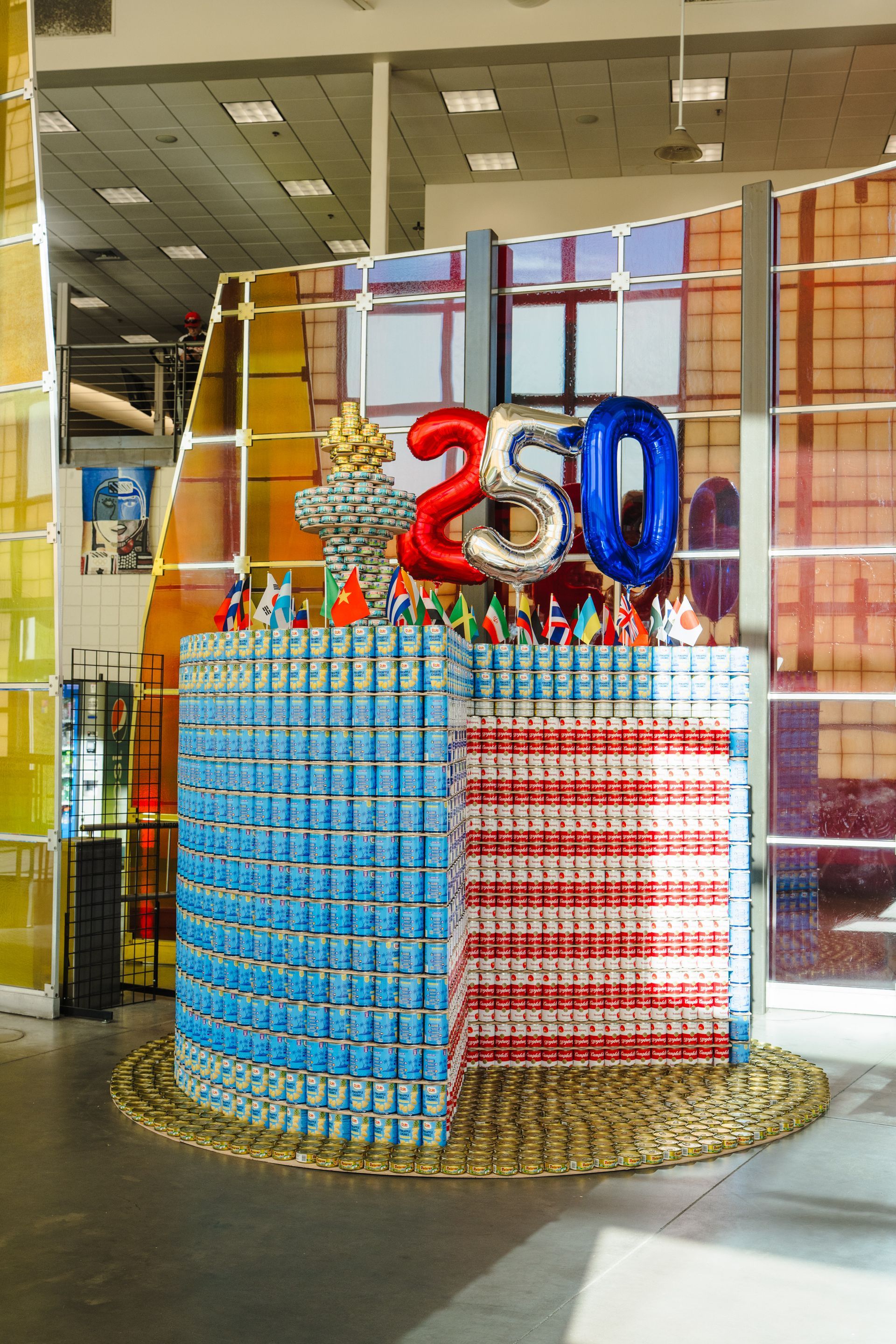
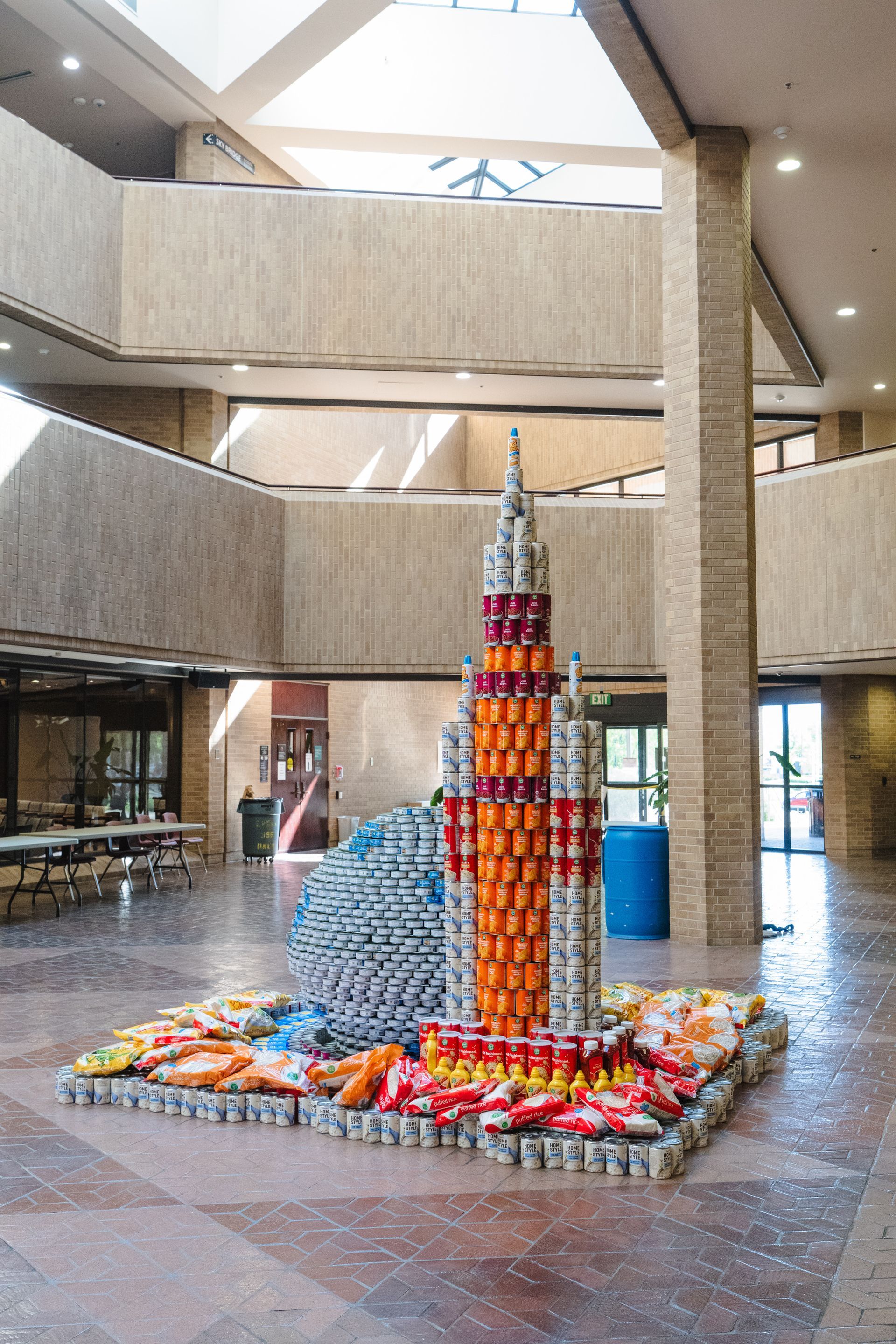
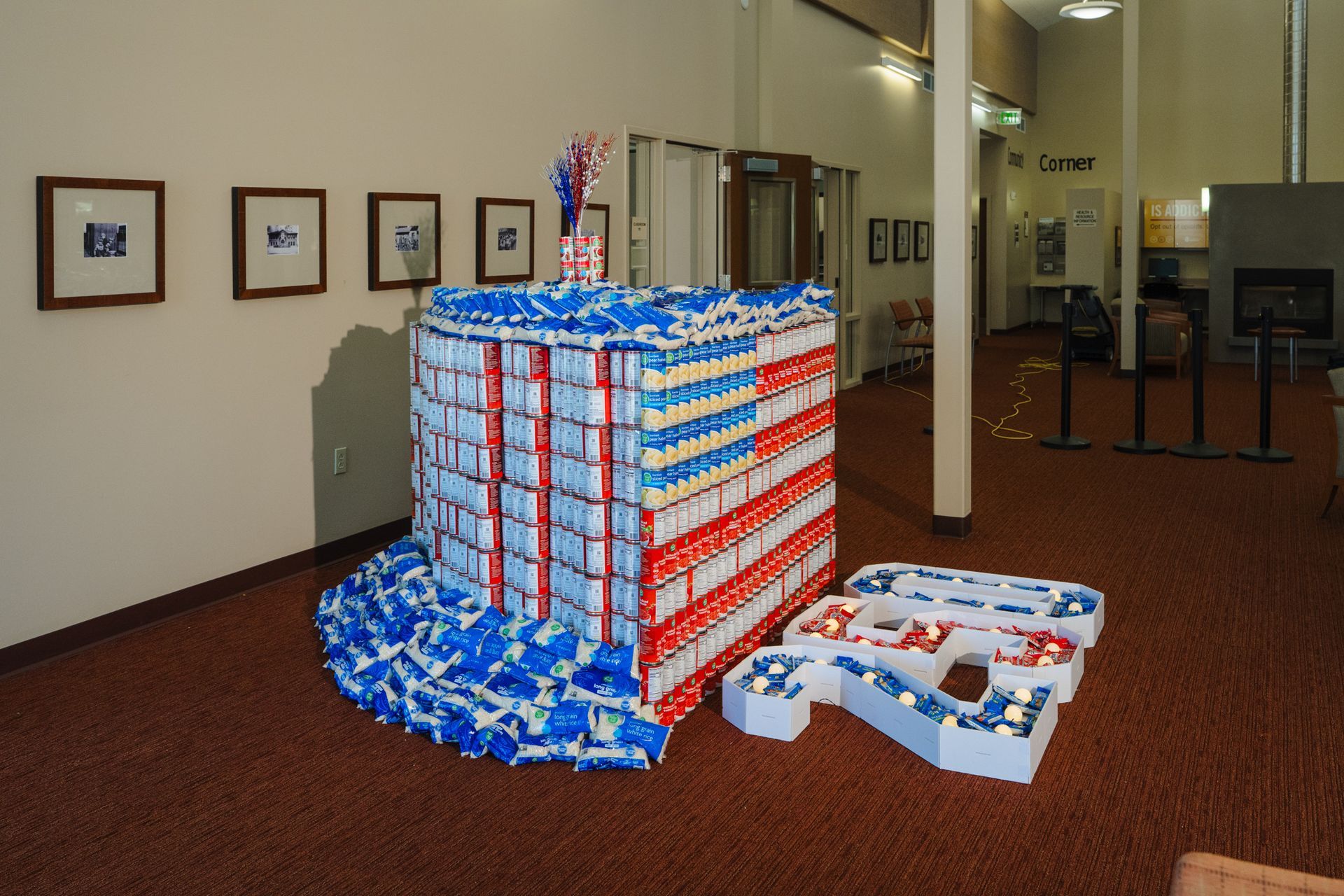
With 2026 marking America’s 250th birthday, AIA Utah and many industry partners joined with Salt Lake County for CANstruction—where eight Salt Lake County buildings would host sculptures made entirely out of canned food and dry goods made by project teams containing members and firms from across the A/E/C spectrum. The sculptures would go toward raising awareness for the over 360,000 people estimated to experience food insecurity in the Beehive State, and seek to aid the Utah Food Bank in its efforts to bring that number to zero.
Design for the sculptures would follow the theme: “Honoring our Past, Feeding our Future."
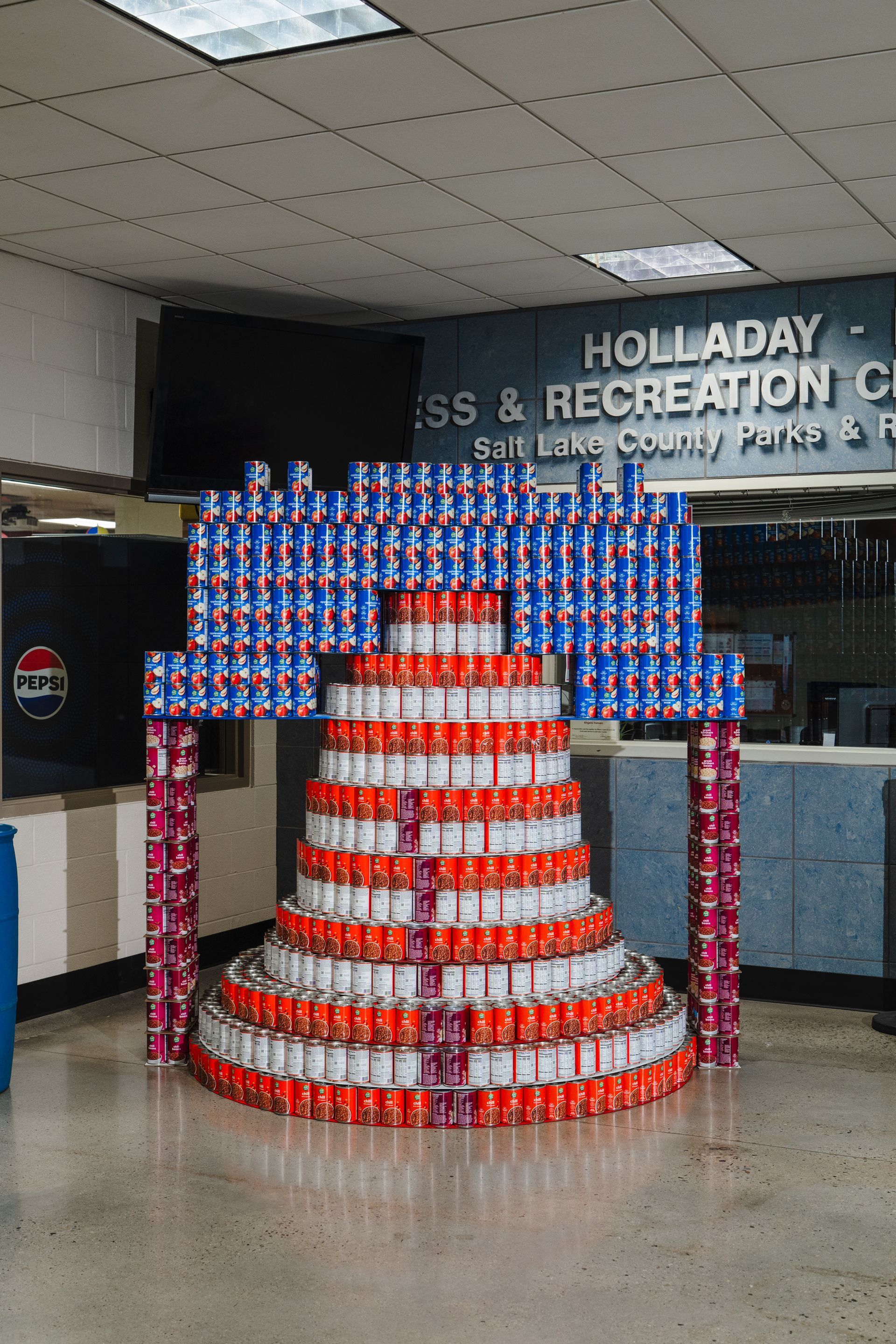
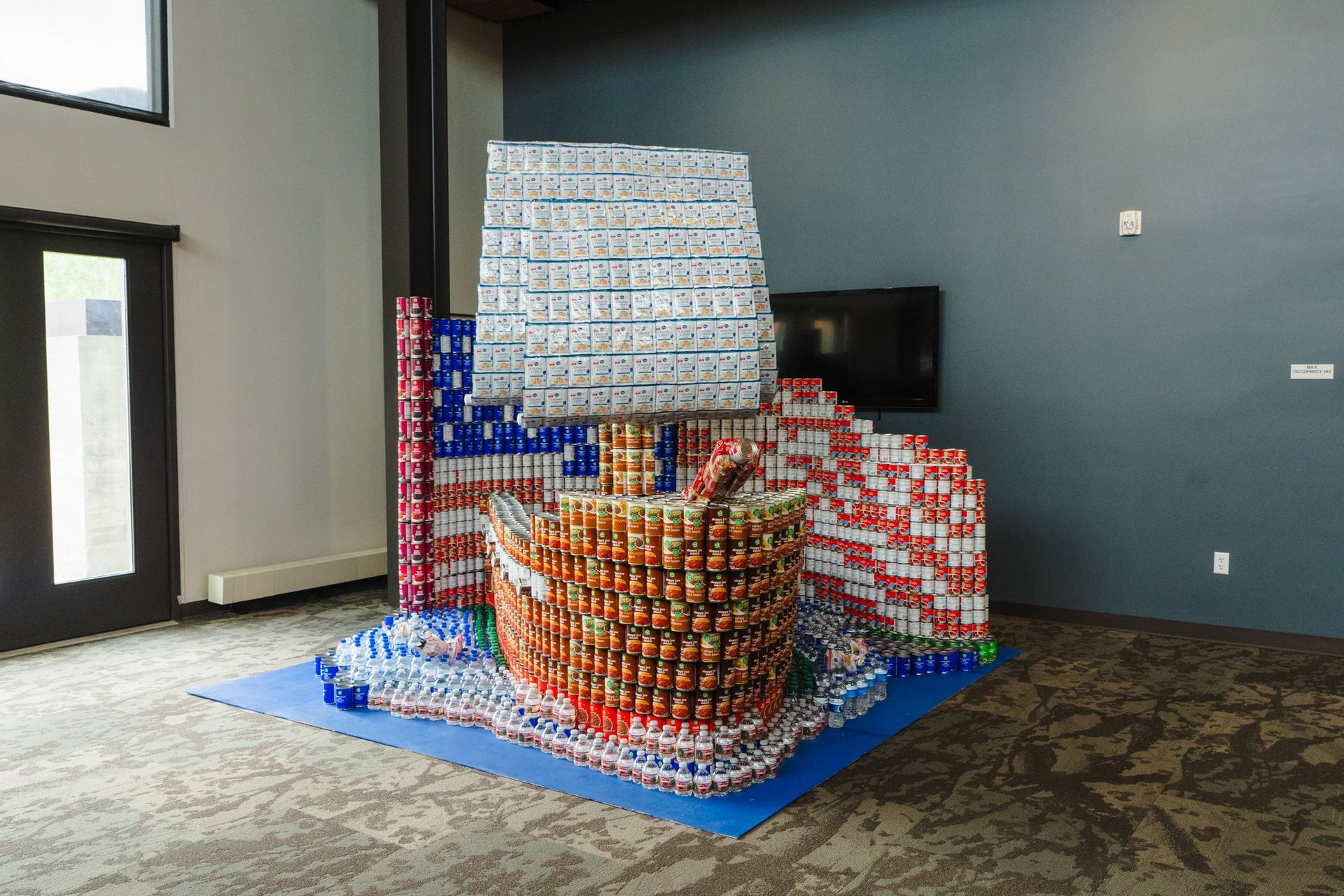
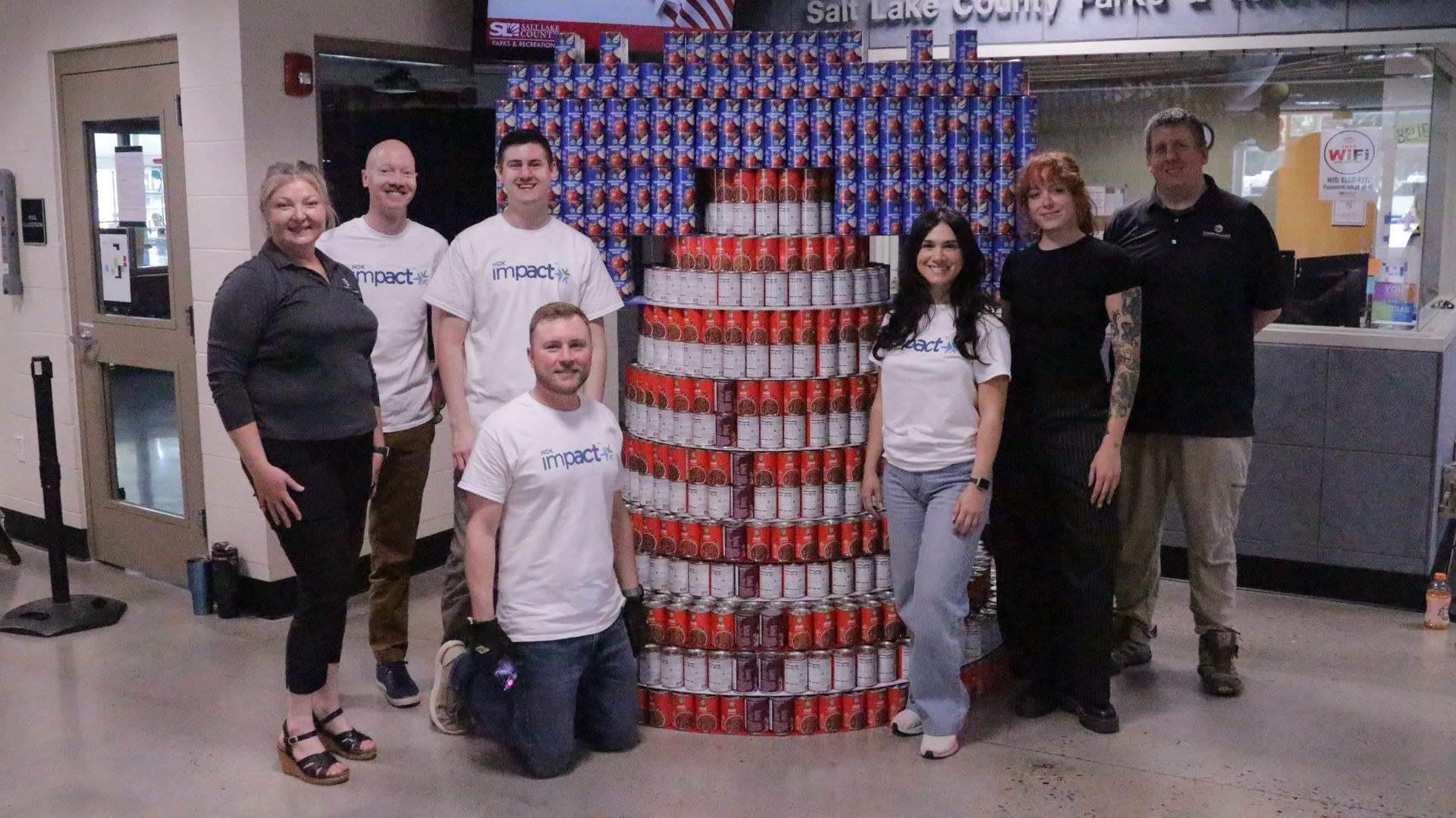
For Holladay’s Lions Recreation Center, that meant a modular construction replica of the Liberty Bell, the most famous member of the brass chorus that sang in the first public reading of the Declaration of Independence four days after the “Founding Fathers” signed it in 1776.
But the 2026 Liberty Bell team only had the time it took John Hancock’s signature to dry—eight hours—to build a red, white, and blue replica of the Philadelphia icon.
Thank goodness for precon.
Rewind back to February, when the “Red, White, and Soup” project team first met. Consisting of architects from HOK, builders from *rand construction, engineers at Calder Richards Structural Consultants; with trade partner—in the most generous sense of the word—UC+D brought on in early design-assist.
As inspiration hit Correy Seldon (*rand construction), Marc Shields (Calder Richards) and Alex Peng (HOK) brought it to life on paper, where additional meetings brought value engineering (the good kind) to ensure structural integrity, high design, and cohesion in form and function—making a meal from the canned food without making a meal of the canned food.
After a practice build the week before, construction day arrived. A stellar logistics team from Modular Interiors Moving delivered materials to the “jobsite”—the space just beyond the facility’s reception desk for all patrons to see.
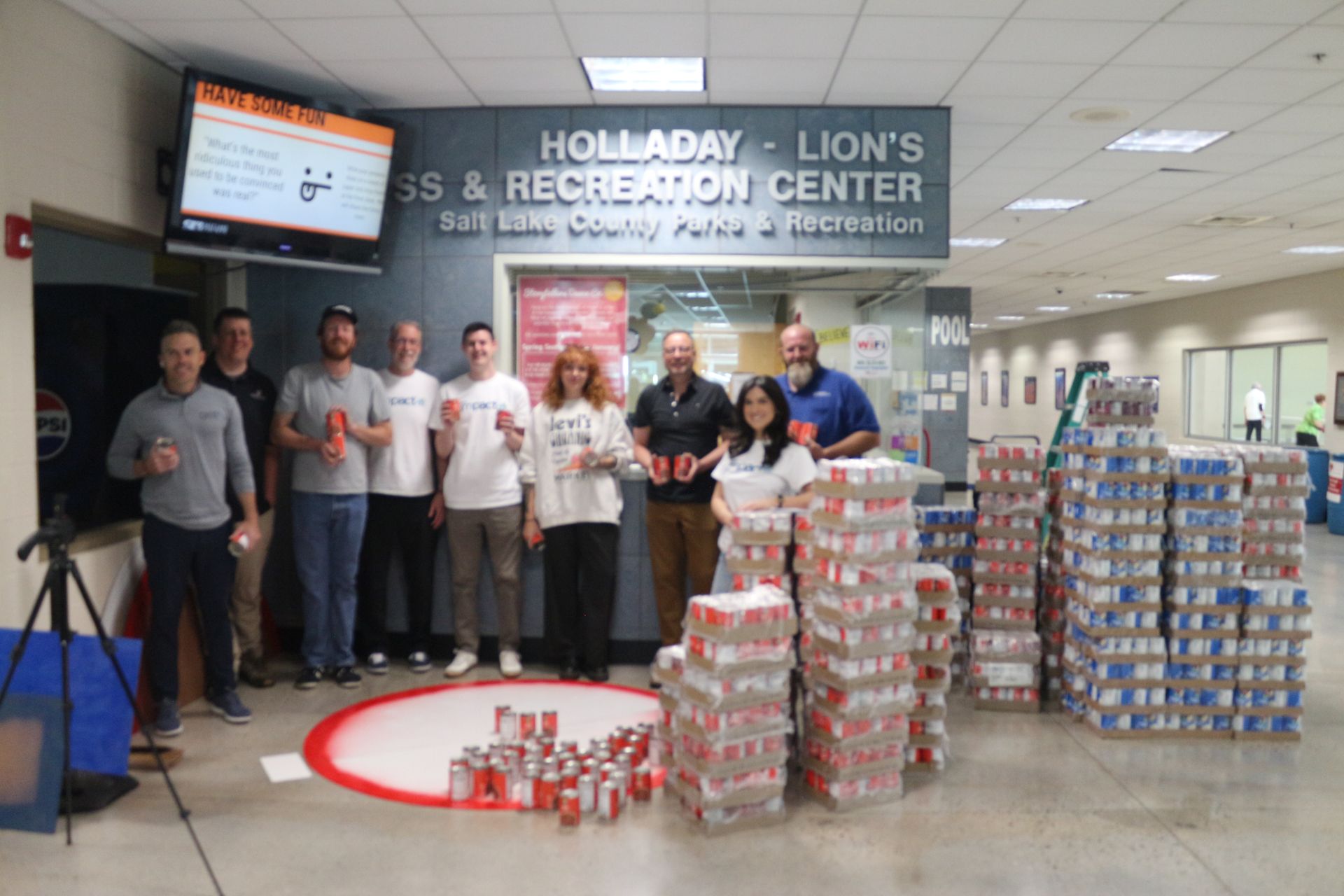
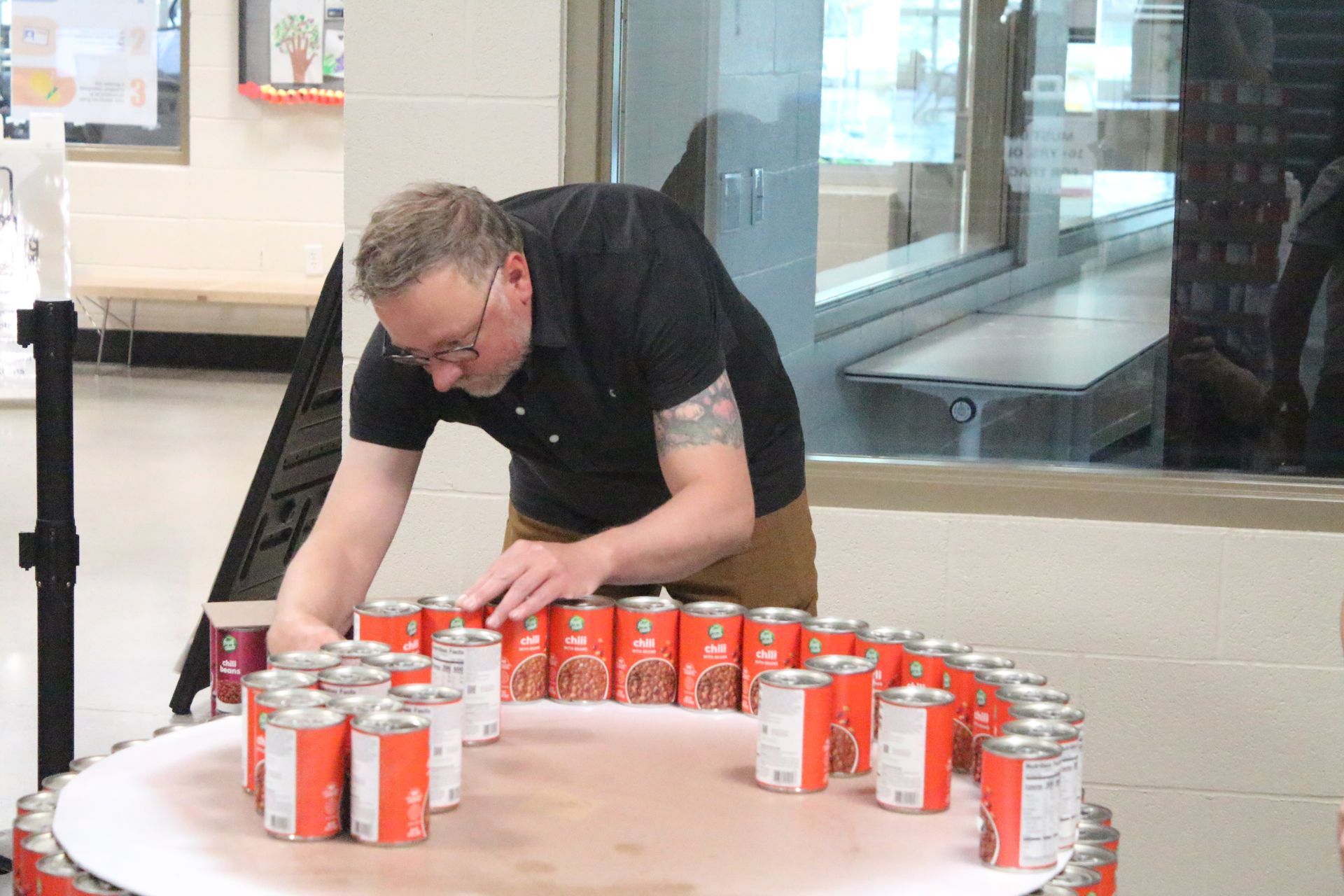
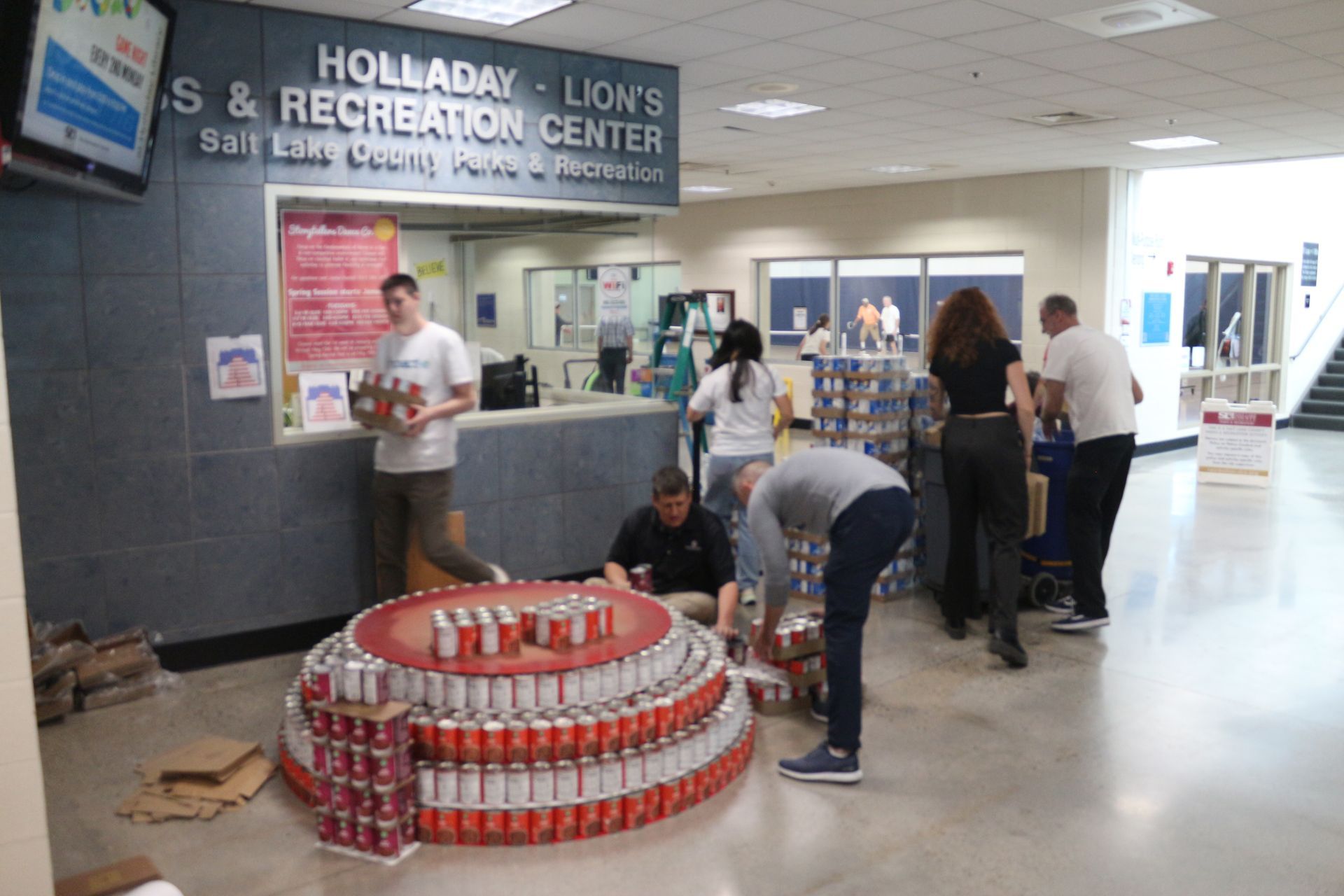
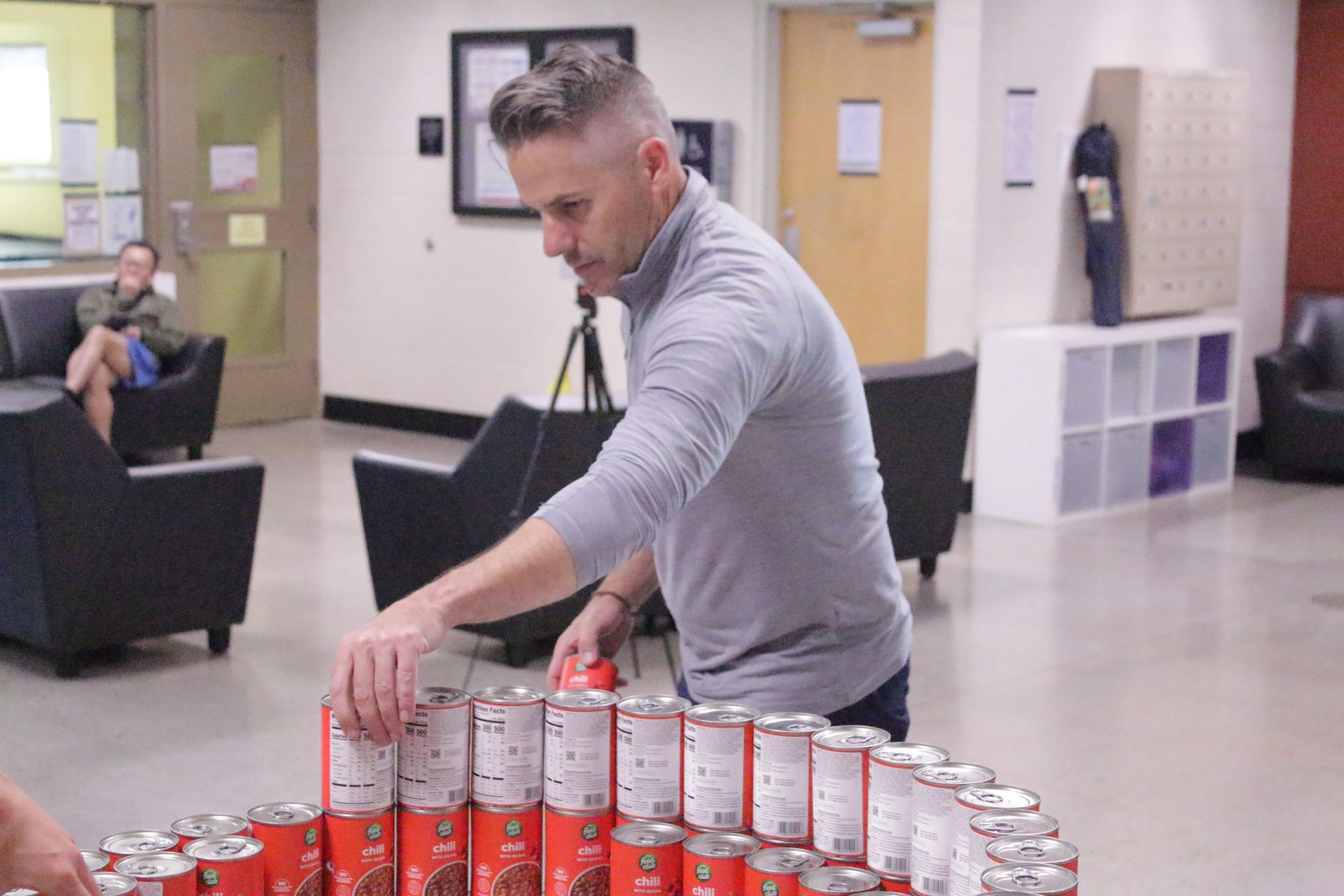
As “can-struction” commenced, the bell portion was going as fast as modular construction could go, with teammates placing alternating layers of chili beans—red can fronts facing out first, the next layer rotated to the white stripe of the nutrition label, then a circular plywood topper added for weight distribution and structural integrity. The pattern repeated in alternating red and white stripes and gently tapered into the bell shape as more layers rose. Purple-clad pinto beans functioned as both the Liberty Bell’s famous crack and supports on either side of the bell in preparation for final seven layers of the blue-clad original applesauce cans that made up the “headstock” above the bell.
We were flying.
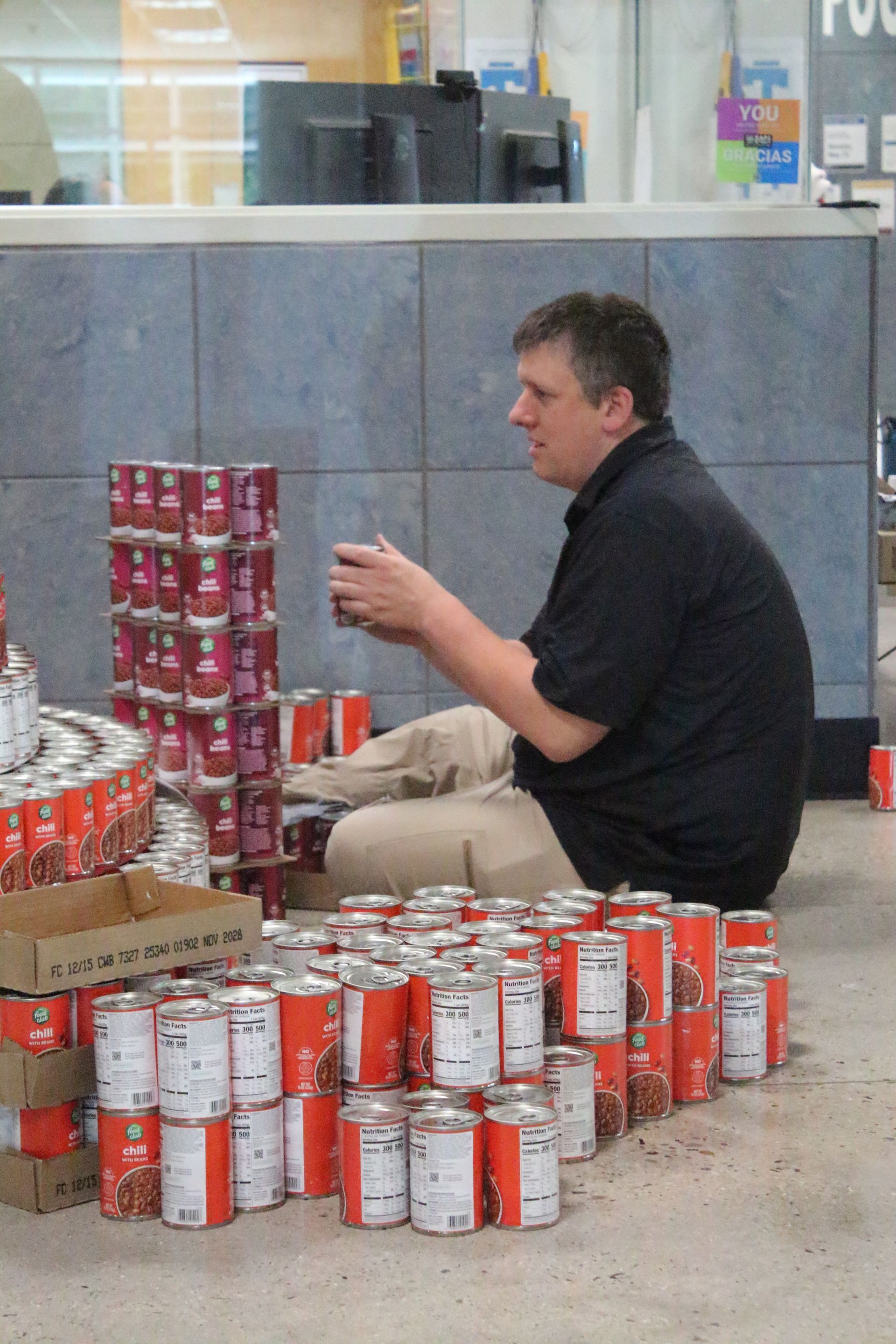
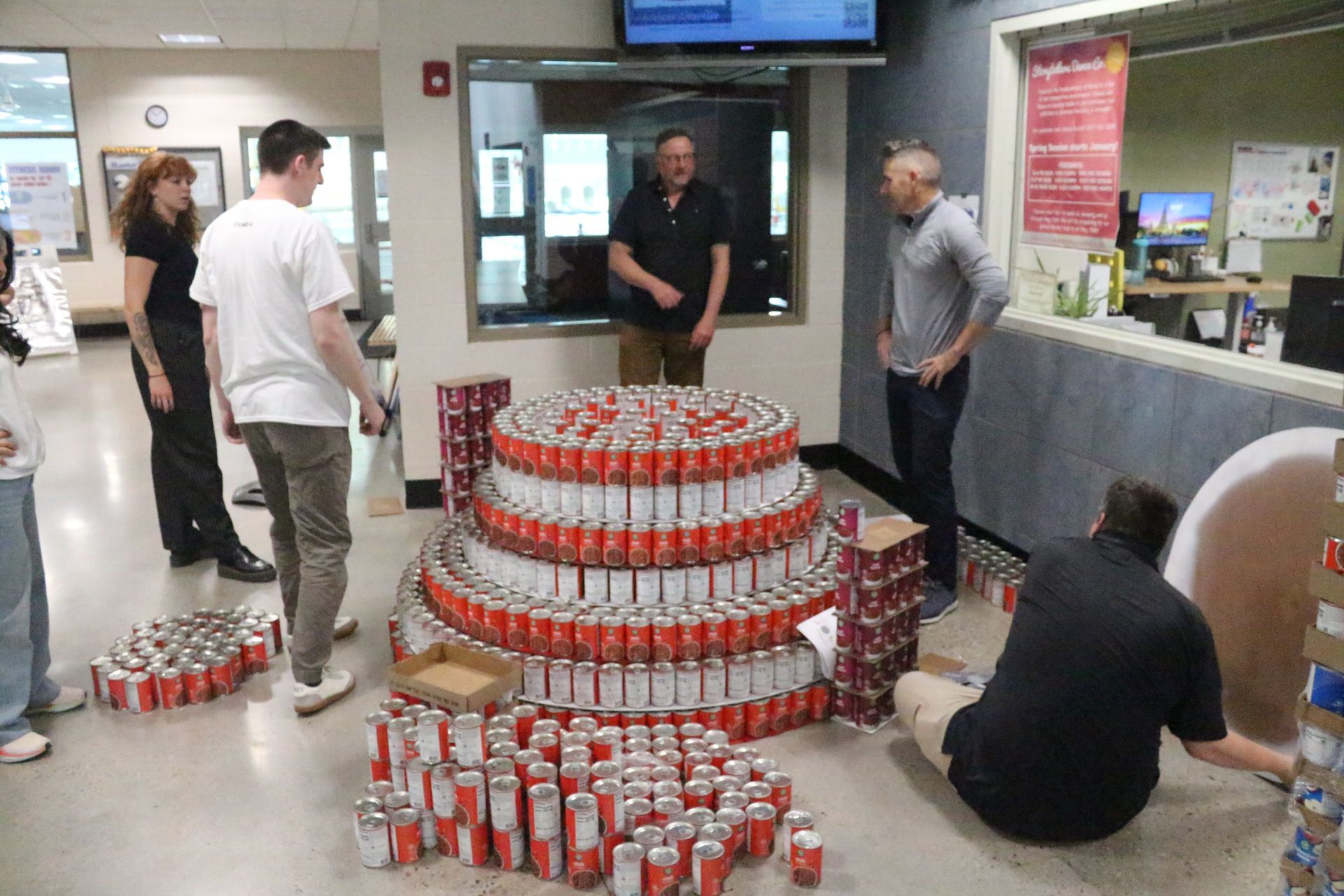
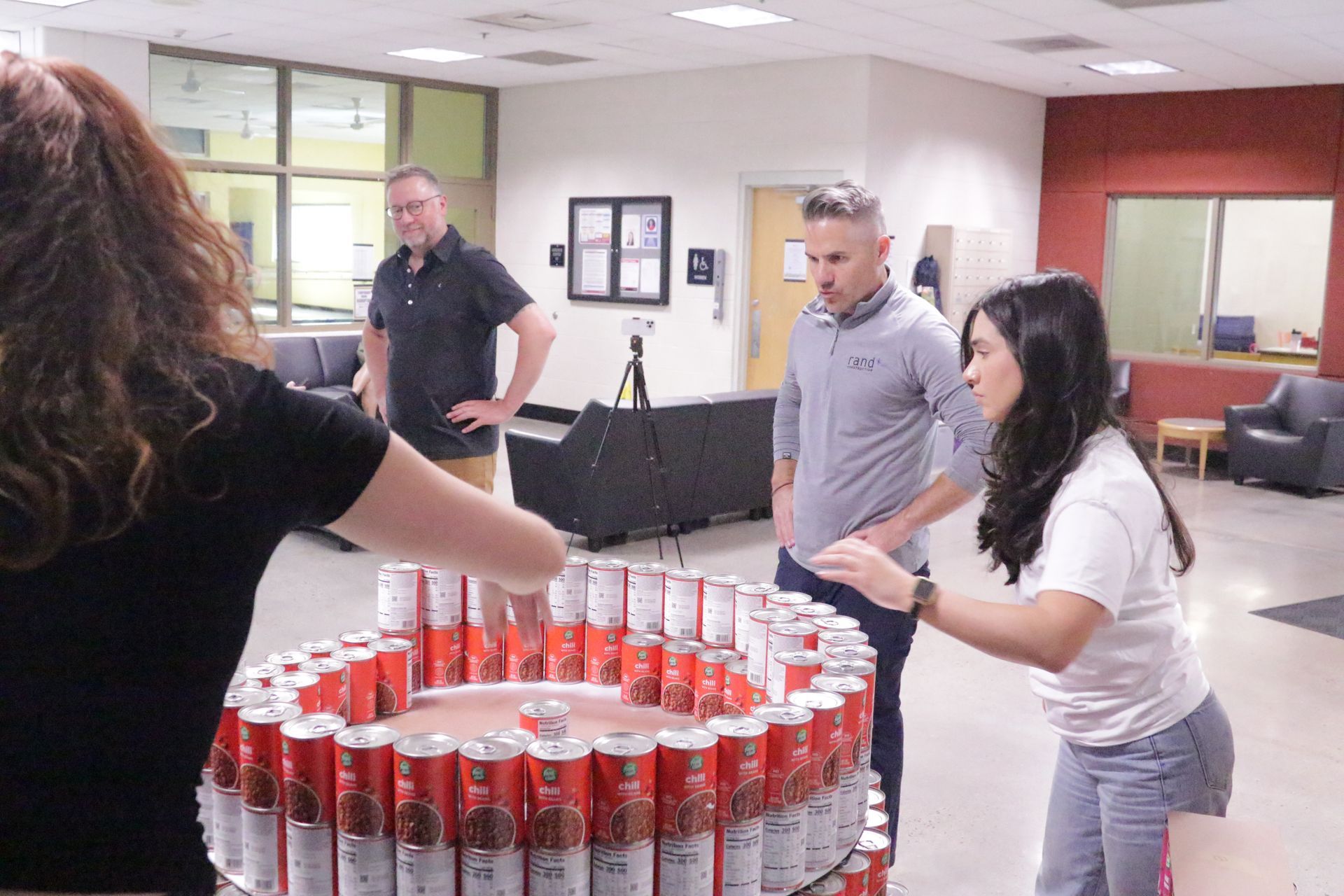
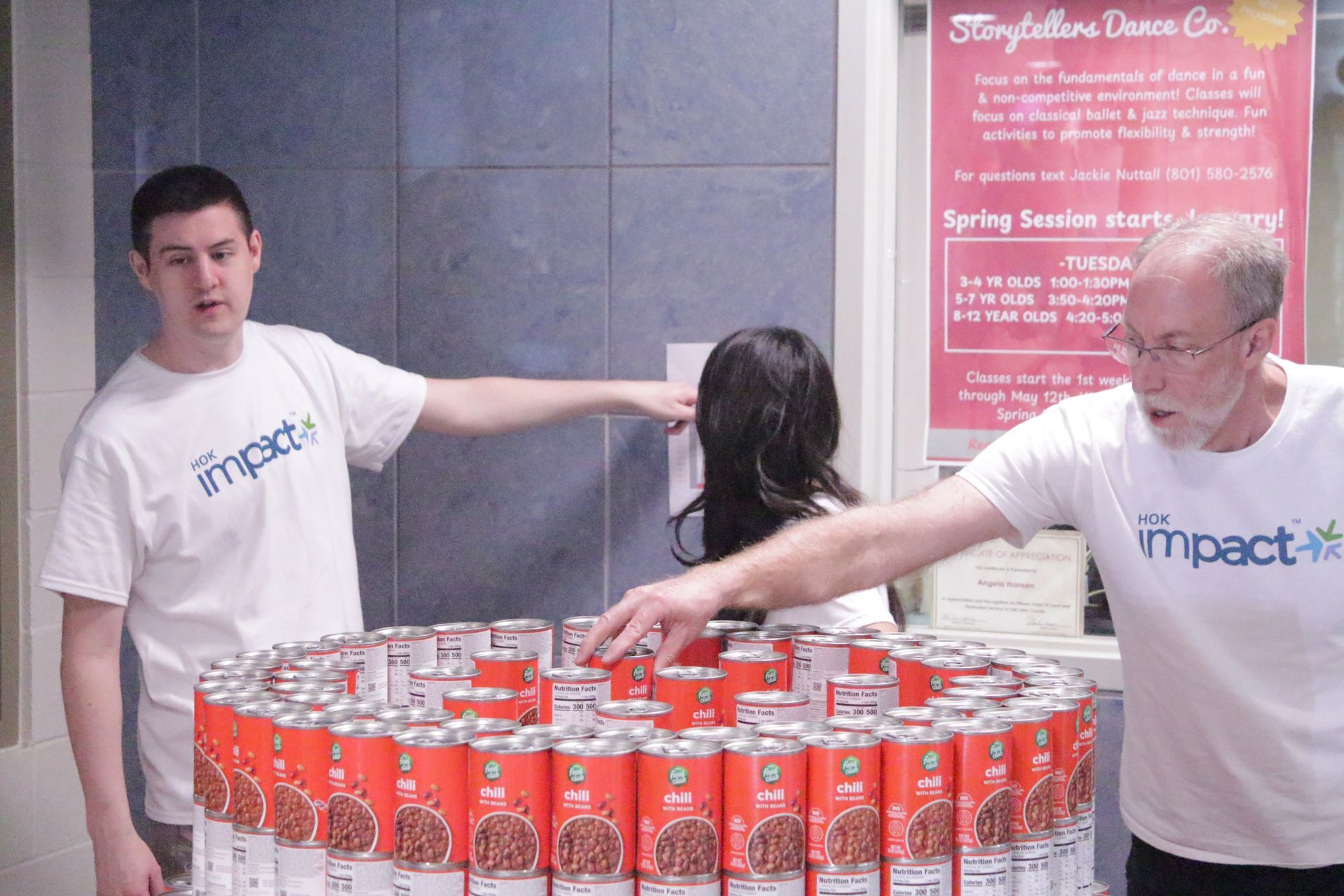
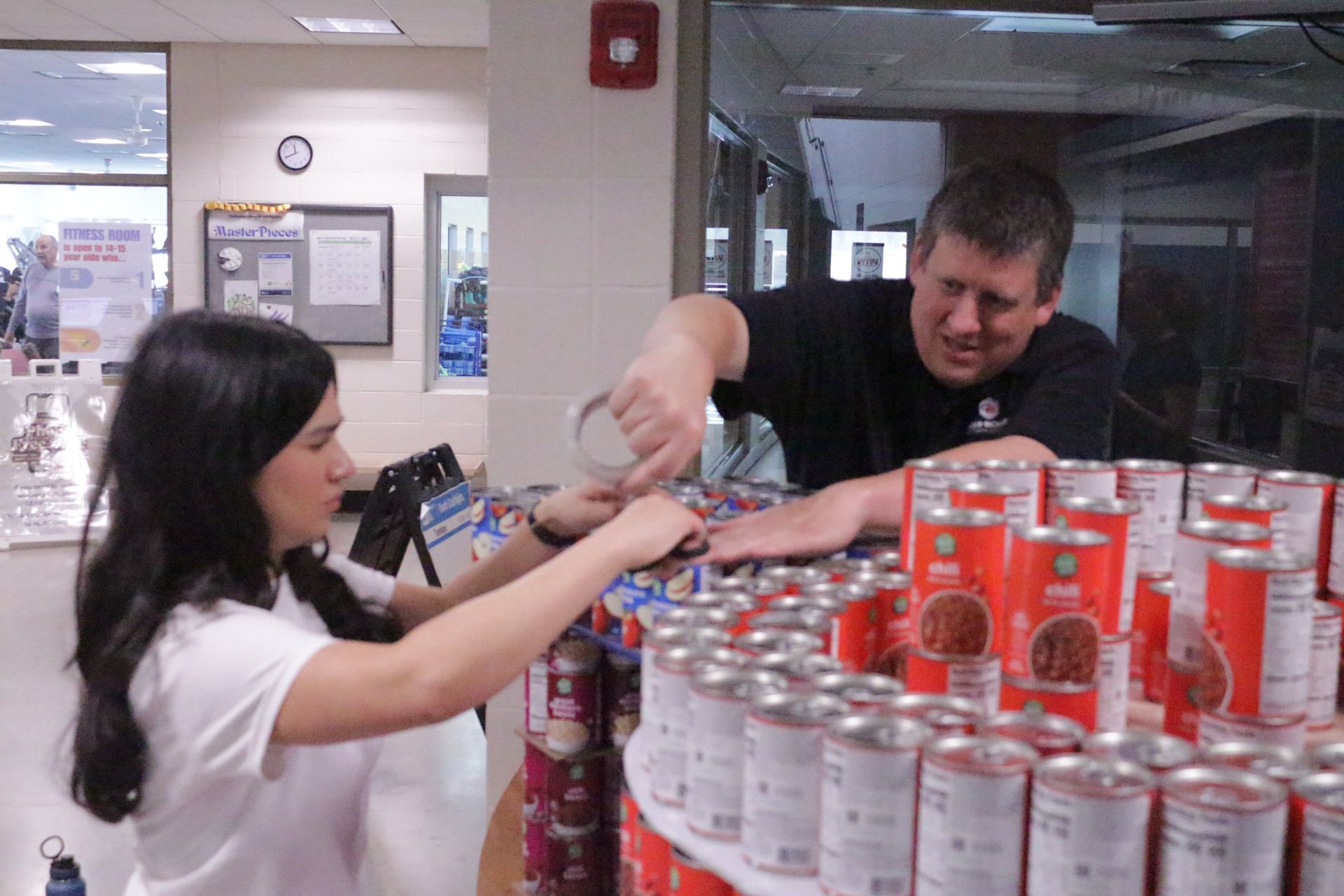
But eight layers up, our lack of quality control meant that we were running out of red cans. We had over-engineered and filled the voids required to maximize our materials.
Seldon went out for additional procurement—diced tomatoes are always welcome regardless of lead time—as the field team began the rework by disassembling, reassembling, disassembling, and reassembling the sculpture—necessary voids and all. Back on schedule, back on budget, back on track.
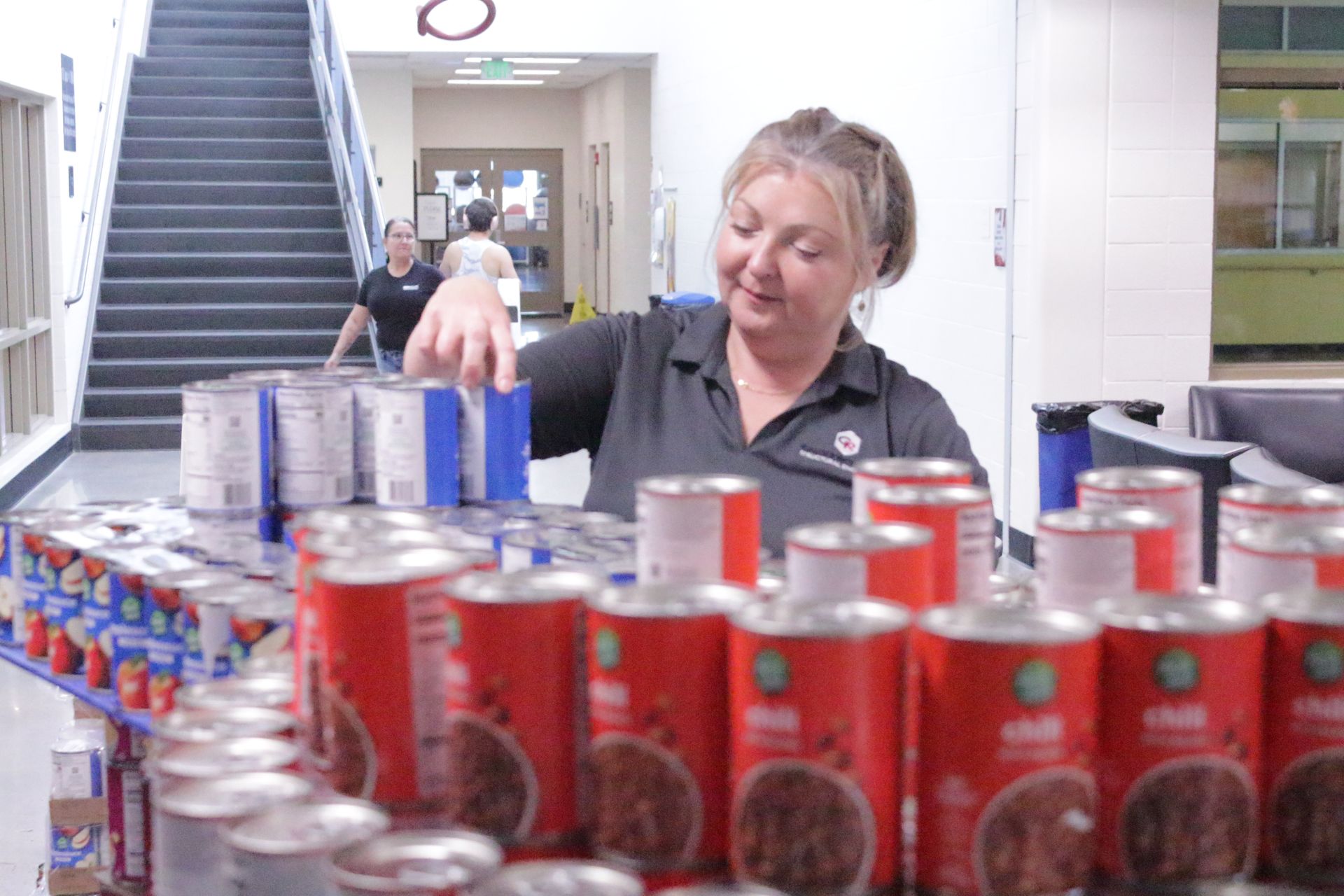
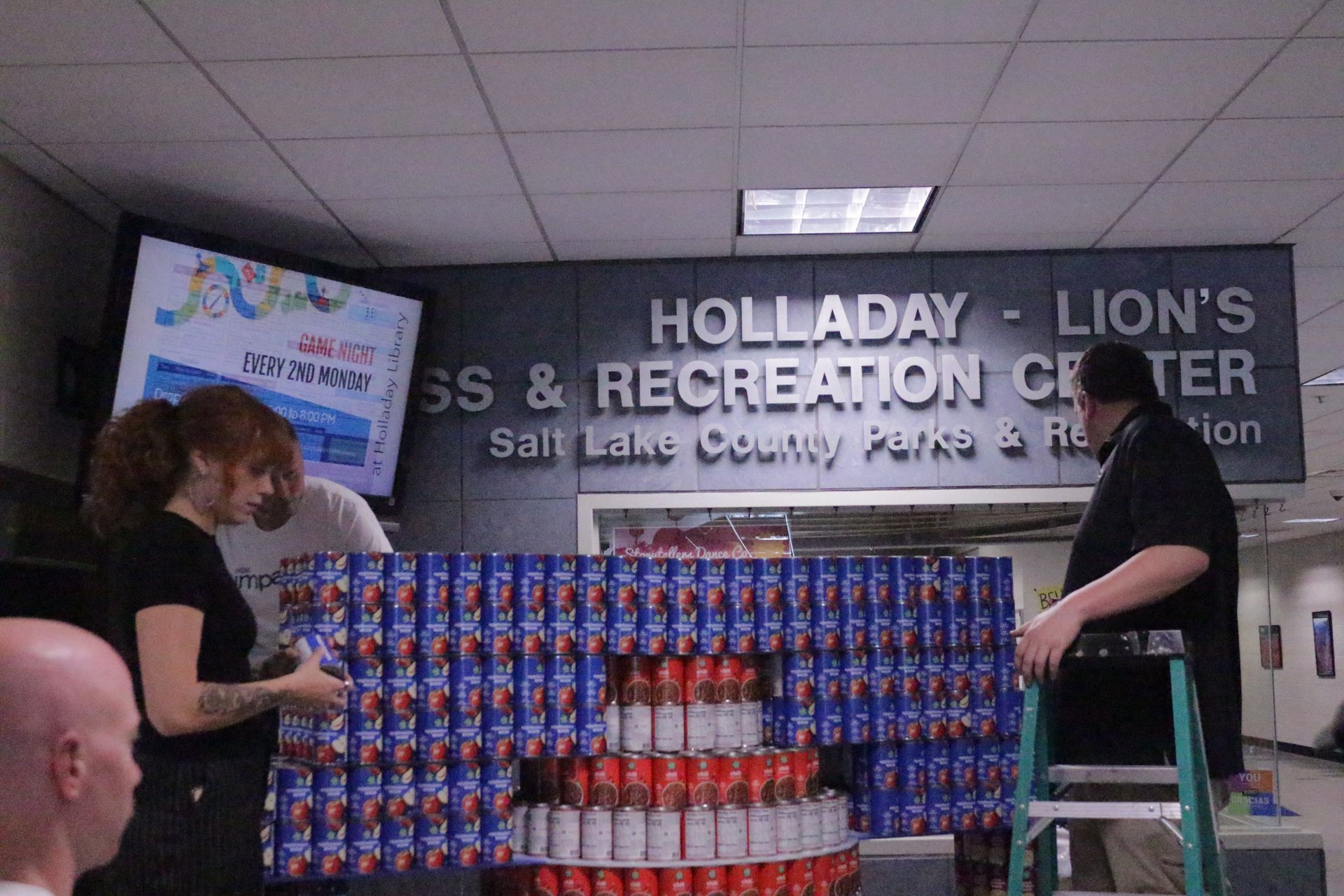
Ladders came in to assist with the headstock scope, with a layer of tape going around the applesauce cans, whose extra ounce in size delivered a unique field condition—they did not stack snugly into place atop each other. But finishing work helped ensure assembly fully matched the design intent.
Said Seldon, “I definitely underestimated the degree of coordination required for CANstruction. There are so many moving parts and pieces.”
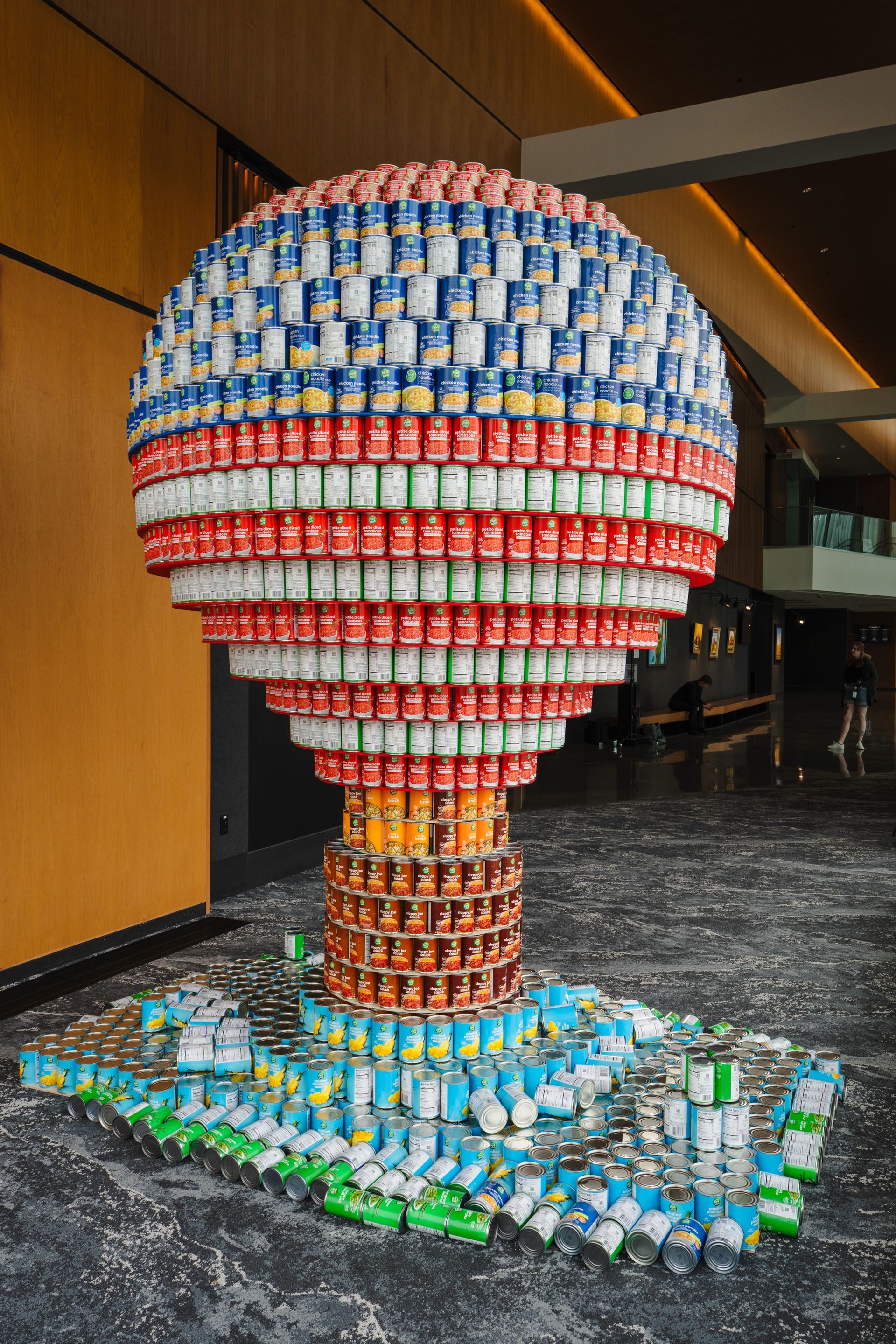
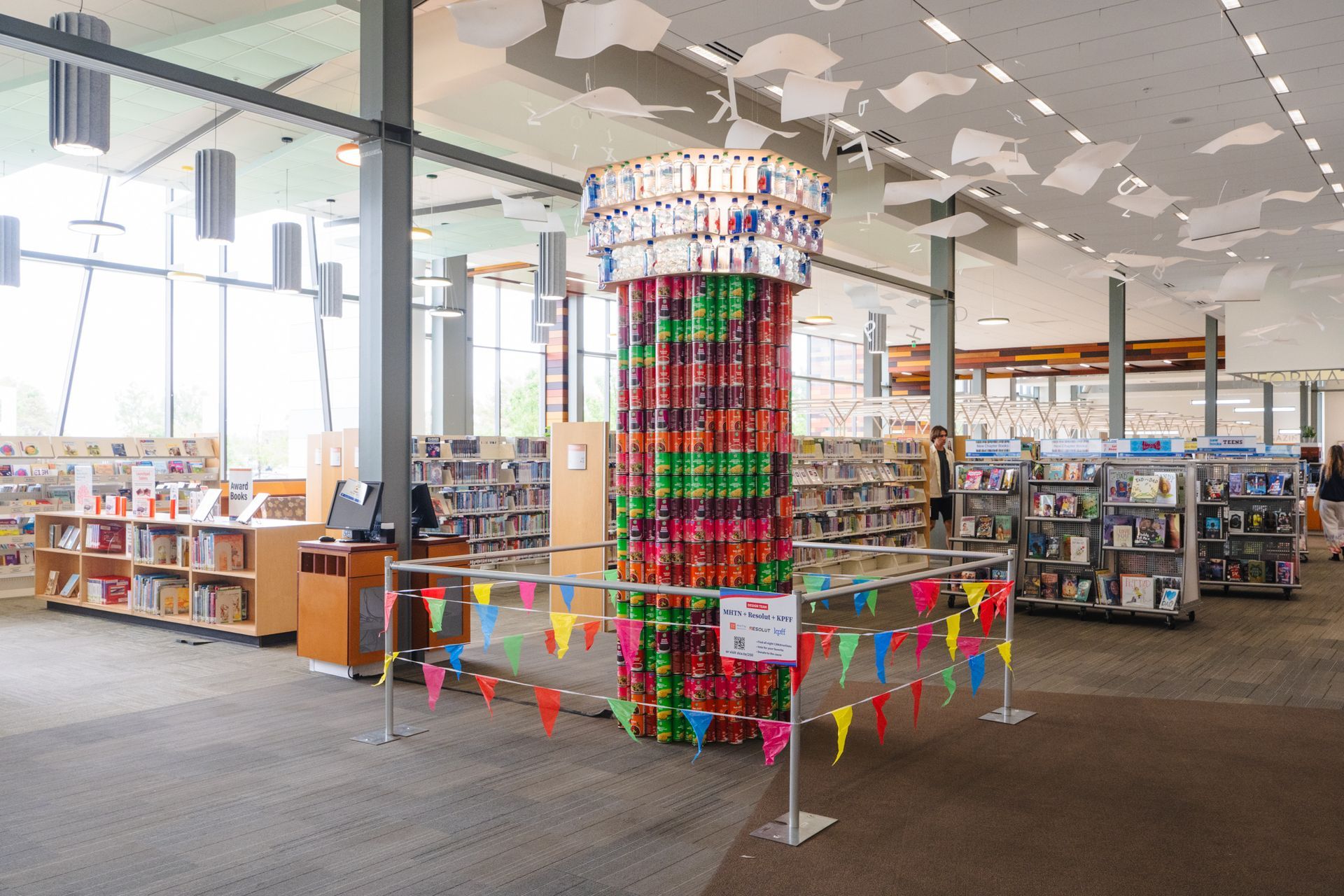
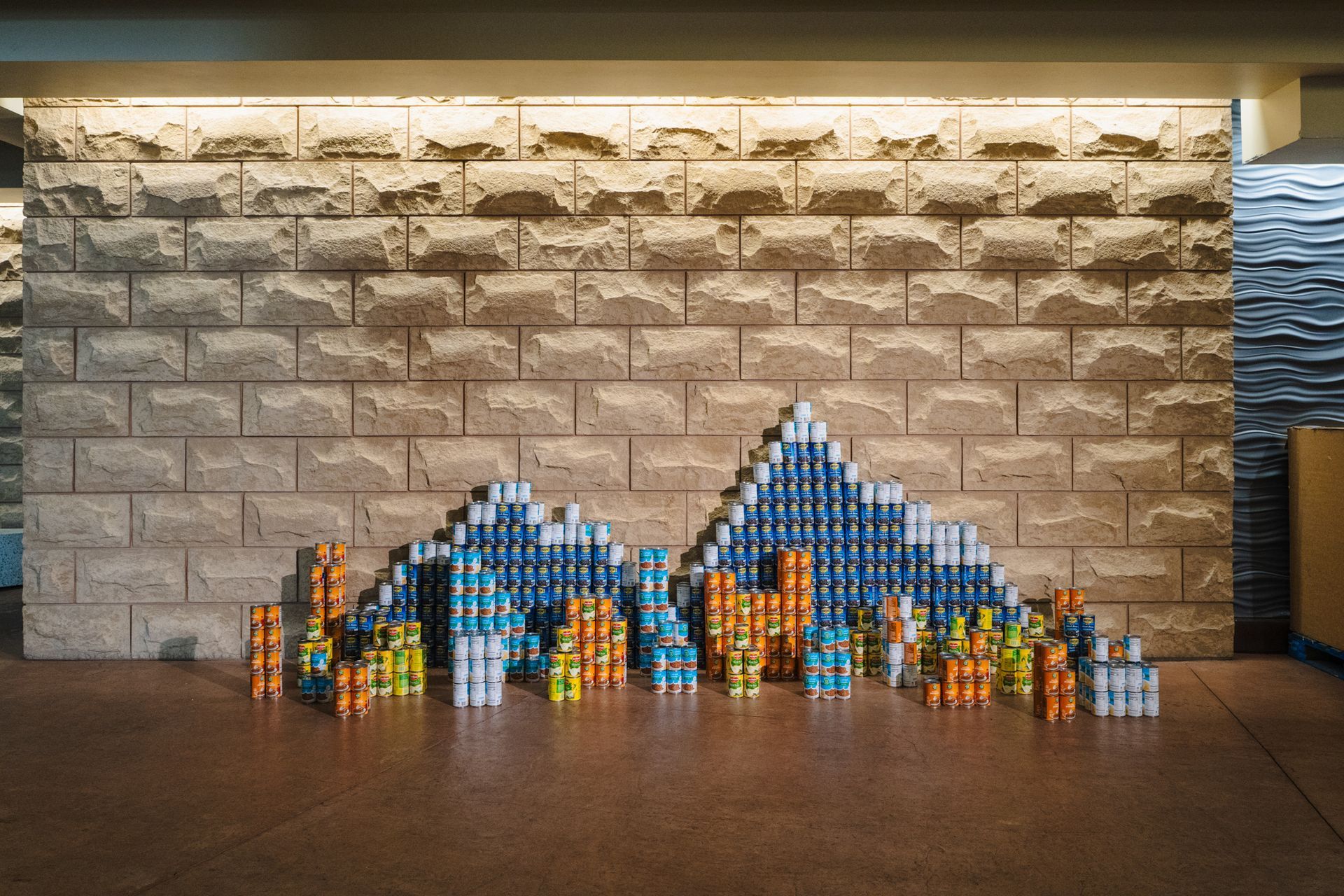
In just under five hours, “Red, White, and Soup” finished the Liberty Bell as the other teams around the county completed their sculptures to honor American history—27,994 cans in total across eight Salt Lake County facilities—as one of over 100 participating cities and areas nationwide.
The massive local success was led by a trio of Angie Harris-Roberts (AIA Utah), Laura Tungseth (Armstrong Group), and Shelby King (Kimball International), with the following companies donating significant time and money to CANstruction efforts.
- Midwest D-Vision Solutions
- LINX
- Copper Mountain Electric
- Kenco Drywall
- Performance Glass
- Modular Interiors Commercial Moving
Harris-Roberts, AIA’s Utah’s Executive Director, said raising awareness for food insecurity in the community and delivering above and beyond the original goal ($25,000 in donated food) an honor made more special by the unique way CANstruction highlights the many facets of the design and construction industry.
“This is an event that AIA Utah truly enjoys being involved in because it brings so many of our partners together,” she said, complimenting the collaboration, problem-solving, and attention to detail that come together to create stunning and playful designs. “It definitely reminds me that we need to build bridges and work with allied organizations.”
Much as the Liberty Bell rang out nearly 250 years ago, Harris-Roberts is hopeful that this work reverberates, where “kids will see the designs and ask questions about architecture, engineering and construction,” she said. “If we can plant that small seed of interest, then maybe someday an architect will tell me that they first heard of architecture when they headed to the Sorenson Rec Center to go swimming. That would be incredible.”
CANstruction 2026
Sculpture Name—Location
(Images by Austen Diamond; courtesy AIA Utah)