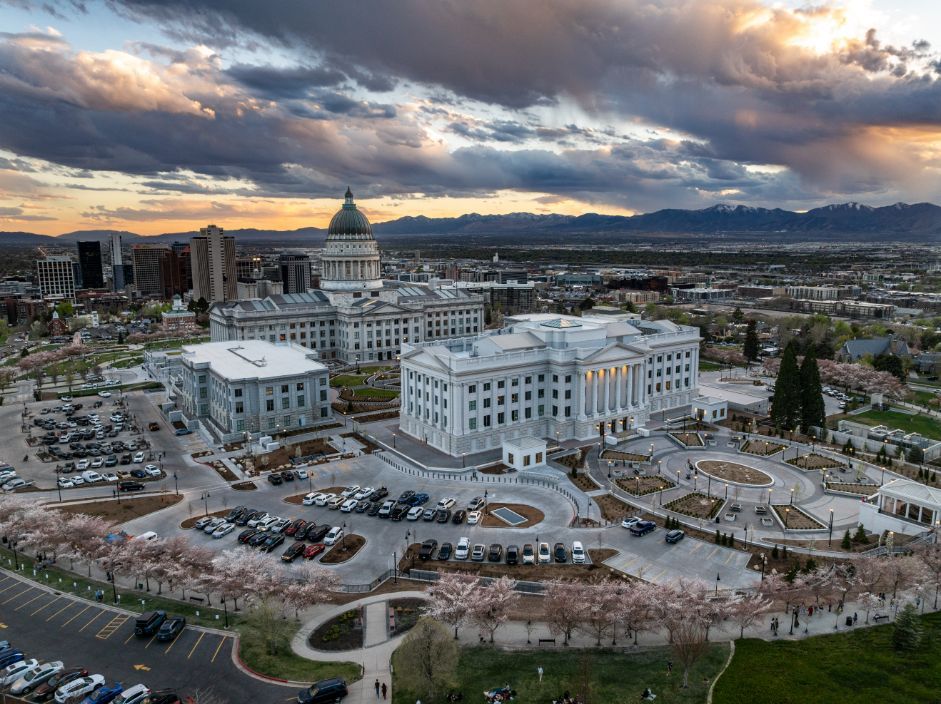








Significant Buzz

The Ballpark at America First Square is an exciting new home for the Salt Lake Bees, anchoring the new Downtown Daybreak development and putting South Jordan on the map as an entertainment destination. 
By Brad Fullmer
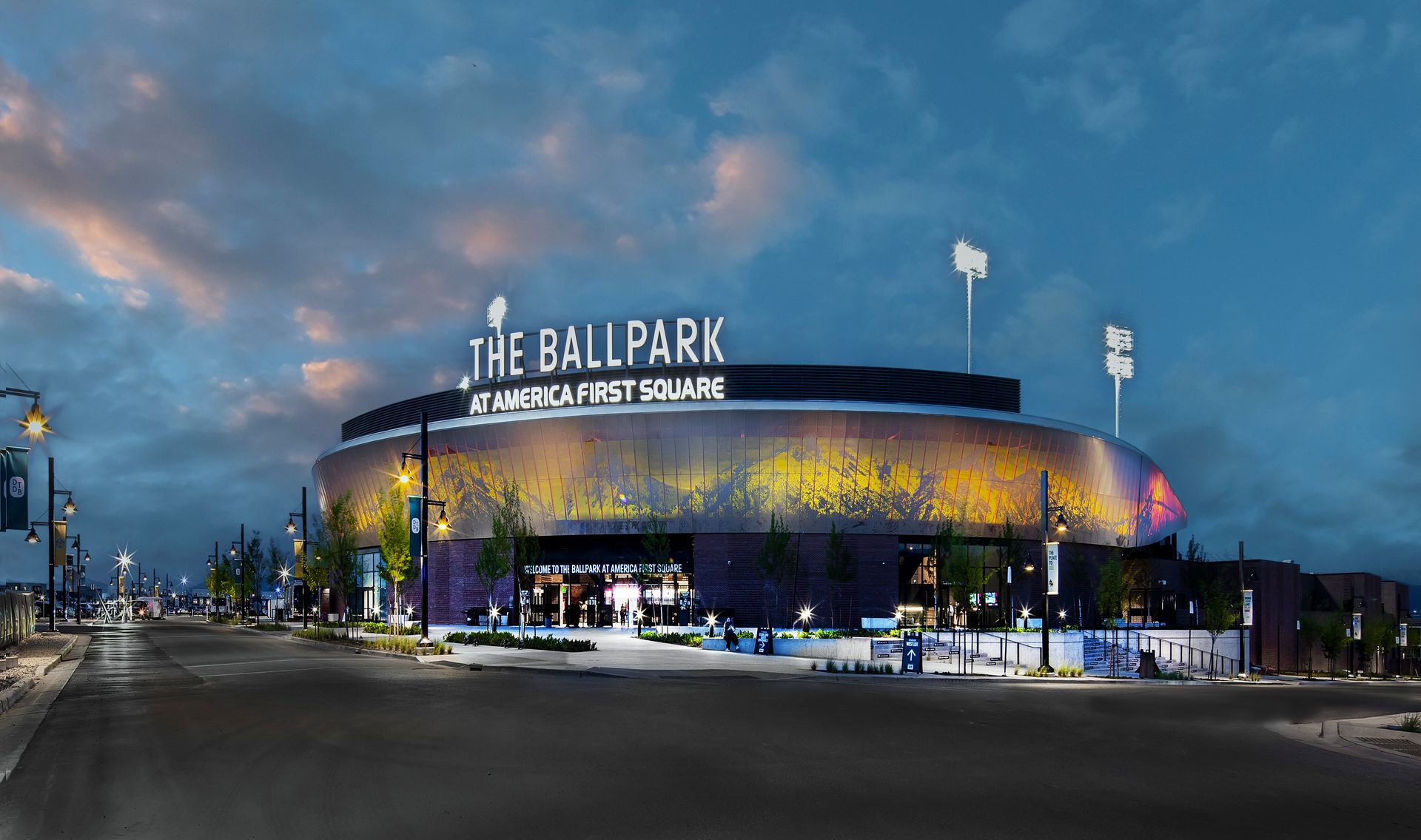
The first season is in the books for the Salt Lake Bees in its spectacular new home—the Ballpark at America First Square, the exciting new heart of Downtown Daybreak and certainly one of the premier Triple-A stadiums in the country. 

"It's a really cool stadium—the field looks so good!" gushed Eric Barton, Project Director for Salt Lake-based Okland Construction, while surveying the spacious 280,000 SF, 6,500-seat (8,000 capacity) ballpark. Barton said his team faced an extremely difficult construction schedule with the mandate the project had to be sufficiently ready for Opening Day 2025 on April 8, less than 18 months after the formal October 20, 2023, groundbreaking. Barton said Okland knew it was going to be a grind, with long hours and tight windows to get various milestones accomplished.

"When we bid this to our trade partners, we had them bid it with the expectation of it being six days a week," he said. "We want not only your best guys, but you have to be adaptable to the plan. It was gangbusters from the start.” 

Up to 300 workers were onsite during peak construction activity, requiring meticulous coordination throughout. Okland even brought in Fred Strasser, a legendary project director who came out of retirement to shepherd the project through. "Fred is the genius behind getting this whole thing done," said Barton.

The project was designed by Salt Lake-based HOK, who worked closely with the owner, Sandy-based Larry H. Miller Real Estate (LHMRE) and Miller Sports + Entertainment (MSE) to bring about a project that would add even more buzz to its wildly popular, 4,000-acre master planned Daybreak development in South Jordan, making it a true entertainment destination. 

The design weaves together best-in-class baseball experiences with year-round public amenities, including a recently opened Megaplex theater, a performing arts center, a large amphitheater, along with retail, restaurants, and apartments, with buildout continuing through 2027. 

Walking paths and open spaces create natural connections between The Ballpark and the surrounding neighborhood, making the area an iconic community asset and a true sports and entertainment district. Downtown Daybreak is slated to host more than 200 annual events—including the Bees’ 75-game regular season.

Supporting this entertainment destination, the venue’s prominent location just off the Mountain View Corridor freeway makes it highly visible to passing traffic while providing easy access. The stadium is also connected to multiple transportation options, easily reached by walking, biking or light rail across the Wasatch Front, and by car from the new freeway corridor.

The Ballpark site drops 20 feet from the loading dock to the plaza, managed through terraced spaces that echo the region’s mining heritage. Though the slope stays gentle at under 5%, carefully placed stairs and planters make walking comfortable while honoring the industrial past. The center field main entrance connects to light rail, while a formal plaza at home plate serves as a second entrance, primarily for VIP access.
The street design follows Daybreak’s established standards for lighting and tree spacing. Bike racks at the light rail station and plaza make cycling to games convenient.

Utah’s Landscape Shapes Design

The Wasatch Mountains, visible from every angle of the ballpark, directly influenced the ballpark's design. Throughout the venue, carefully planned viewpoints frame these mountain vistas. The structure resembles this mountainous setting in its form, transitioning from solid brick and concrete at its base to lighter materials—metal and expansive glass—as it ascends. Working with Kansas City-based architectural metal fabricator Zahner, HOK and MSE created a distinctive facade using perforated metal panels that suggest Utah mountain peak silhouettes from Ben Lomond Peak in Weber County to Mt. Nebo, the southernmost and highest mountain in the Wasatch Range of Utah. These panels transform into a glowing display at night, serving as a lantern on The Ballpark’s ‘front porch’ and welcoming visitors.

This connection to Utah’s landscape flows throughout the site. Angular planters guide visitors along pathways, while public spaces are arranged in terraces that echo the mountainside. The copper colors and stepped surfaces of the nearby Kennecott Mine inspired the ballpark’s materials and layout. Inside, the decor features warm copper, gold and honey tones, with textured materials that blend the natural landscape with the Salt Lake Bees’ team colors.

  • Slide title

    Write your caption here
    Button
  • Slide title

    Write your caption here
    Button
  • Slide title

    Write your caption here
    Button
  • Slide title

    Write your caption here
    Button
  • Slide title

    Write your caption here
    Button
  • Slide title

    Write your caption here
    Button
  • Slide title

    Write your caption here
    Button
  • Slide title

    Write your caption here
    Button
  • Slide title

    Write your caption here
    Button

Precast Bleachers Key to Making Schedule Work


While Okland handled all concrete duties, including slab-on-grade risers at the main level, Salt Lake-based Contech Engineered Solutions fabricated 86 risers for the stadium seating on the club level, which helped keep the schedule on track, with the firm installing the risers in just seven days. The longest span, according to Aaron Simpson, Regional Sales Manager for Contech, was 41 ft. and weighed 30,000 lbs. 


Simpson said preast is "ideal for this type of project. The prestressing capabilities allow the panels to span longer distances than typical cast in place. This eliminates the need for additional concrete or steel columns to support cast in place." He added that precast opens the space beneath the suspended stadium seating area, allowing more open views without columns obstructing views.


"Precast can greatly enhance the schedule of a project as the components can be cast concurrently with the site work, allowing installation as soon as the project site is ready. No need to spend time forming or curing site cast concrete bleachers," added Lee Wegner, Regional Sales Manager for Contech.


Fan Experience and Amenities


The intimate seating bowl brings fans exceptionally close to the field, with 6,500 fixed seats complemented by open areas that bring the total capacity to more than 8,000. The 10 field level suites—positioned closer to the field than any in Minor League Baseball—anchor the premium offerings. Additional premium spaces include four Founders suites on the main concourse, unique batter box loges, and twin party decks on the first and third base sides that each accommodate 475 fans. Behind home plate, fans can choose between two inclusive club spaces: the Diamond Club and Terrace Club.


The concourse circles the entire stadium, offering uninterrupted views of the baseball field and the Wasatch Mountains. The ballpark features locally inspired food-from-scratch kitchens, quick service stands and smart technology-enabled markets, including a ‘just walk out’ market powered by Amazon along the walkway. Other amenities include the Bees Team Store on the center field plaza (open year-round), an expansive video scoreboard and designated alcohol-free family zone. Families and other visitors can enjoy the game from multiple vantage points, whether they’re seated in the stands or gathering in the stadium’s various social spaces.


The ballpark’s upper levels offer several places for casual gatherings. A grassy berm in right field provides lawn seating and picnic spots. Other rooftop areas feature artificial turf with tables for group seating. A unique wiffle ball field atop the team store adds an unexpected recreational amenity.


Player Development Facilities 


For players, the facility meets and exceeds current Major League development standards with a 12,000-SF clubhouse, dedicated training and player development areas, including female staff locker rooms for teams and umpires, MLB-style bullpens, an expanded commissary area for team nutrition needs, and multiple batting cages.


Ballpark at America First Square

Start/Completion: October 2023/April 2025

Cost: $140 million

Delivery Method: CM at risk

Stories: 3

Square Footage: 280,000

Owner: Miller Sports + Entertainment 


Design Team

Architect: HOK 

Civil Engineer: Perigree Consulting

MEP Engineer: ME Engineering

Structural Engineer: MKA 

Interior Design: HOK

Landscape Design: HOK; Intermountain Plantings


Construction Team

General Contractor: Okland Construction

Electrical: Cache Valley Electric

Mechanical Trade Partner: Archer Mechanical; B2 Air; Koch Mechanical

Plumbing Trade Partner: Archer Mechanical; Koch Mechanical

Geotech: Applied Geotechnical

Furniture: HB Workplaces

Concrete: Okland Construction

Steel Fabrication & Erection: SME Steel

Glass/Curtain Wall: Steel Encounters

Masonry: Allen’s Masonry

Drywall/Acoustics: CSI Drywall

Painting: Fisher Painting

Tile/Stone: Dowland Tile

Carpentry: Boswell Wasatch

Flooring: Wall 2 Wall

Roofing: UTR, Inc.

Waterproofing: UTR, Inc.; Weathersealed, Inc.

Excavation: Jones Excavation

Precast: Contech

Landscaping: Brightview; Intermountain Plantings


By Bradley Fullmer April 30, 2026
The new St. George City Hall is a shining example of a collaborative process between owner, architect, and general contractor, producing a world-class facility that will serve the community for the next 40-plus years.  By Bradley Fullmer
By Bradley Fullmer April 30, 2026
After more than a half century designing buildings, 73-year-old Jim Child remains a fixture in Utah’s architectural community, with a genuine passion for his craft that inspires those around him.  By Bradley Fullmer
By Taylor Larsen April 30, 2026
Three Salt Lake City projects showcase the immense talent of the local A/E/C industry to achieve supreme levels of sustainability through adaptive reuse, turning drab offices into vibrant housing. By Taylor Larsen
By Taylor Larsen April 30, 2026
Design and construction teams working at “ludicrous” speeds delivered more than the Utah Mammoth’s new practice facilities, but also a fitting tribute to Utah’s strong hockey culture.
By Bradley Fullmer April 30, 2026
The passage of HB 355 in 2025 provided stability for Utah's construction aggregate producers. The question moving forward is: How long will the finite supply of materials last at existing operations along the Wasatch Front?
By B. Garn April 30, 2026
The new Deseret Peak High School delivers out-of-this-world design for a welcome addition to the growing Tooele Valley. 
By Taylor Larsen April 30, 2026
The eight-year odyssey to deliver Cyprus High was worth the voyage, as designers and builders created a stellar learning environment for Magna’s growing community.
By Taylor Larsen April 30, 2026
Engineers note the emerging trends among Utah’s different transit modes and how evolving technology and partnerships set the state up for success.  By Taylor Larsen
By Bradley Fullmer April 30, 2026
UC+D profiles four new firms who aim to make a name for themselves in an A/E/C market that refuses to slow down. By Bradley Fullmer
By Bradley Fullmer April 30, 2026
Led by the City of St. George, Washington County has experienced explosive growth of more than 50% over the past 15 years, ranking in the top 5% of all U.S. counties and fueling strong demand for commercial construction projects.  By Bradley Fullmer