






Scintillating Sustainability

Utah Clean Energy's new Climate Innovation Center in Salt Lake transformed an old, dilapidated structure into an exciting model of a zero-energy building.
By Bradley Fullmer
Architect Brian Backe was succinct when he stated, "when I try to describe the Climate Innovation Center, one of the phrases is 'big things comes in small packages'." His words couldn't be more profound.

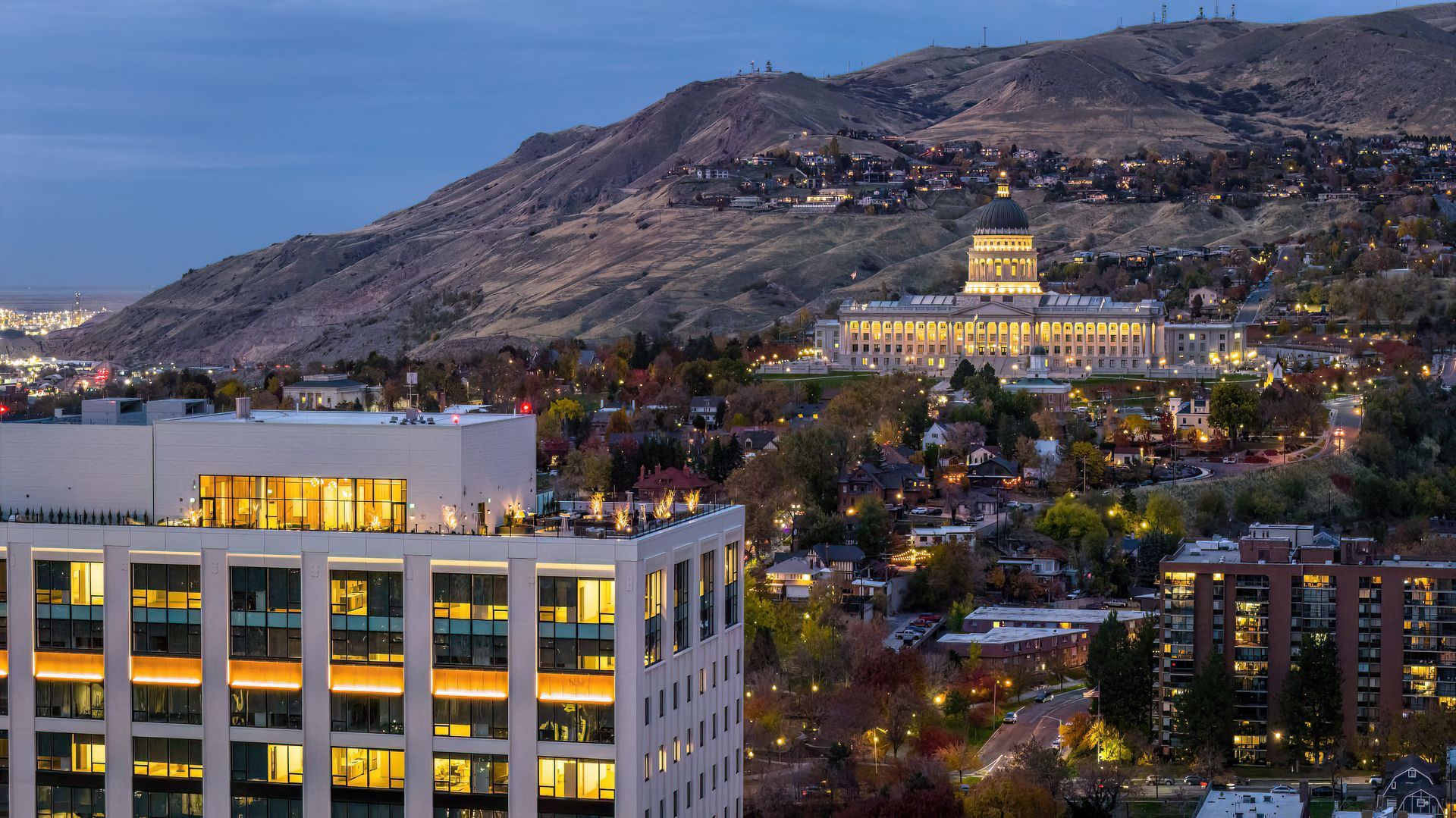
An ambitious adaptive reuse project that is generating significant buzz in the sustainable building arena locally, Utah Clean Energy's new Climate Innovation Center (CIC) is the transformation of a modest, nearly 70-year-old, 3,000 SF single-level commercial structure into a state-of-the-art, two-story, zero-energy building that will serve as UCE's home for the next half century. 

"Within a 3,000 square foot footprint it has urban infill, is an adaptive reuse site, Net-Zero, combustion-free, hybrid mass timber structure—we really packed in a lot," said Backe, Principal-in-Charge for Blalock & Partners, who worked closely with Salt Lake-based Okland Construction to ensure optimum sustainability throughout the construction process.

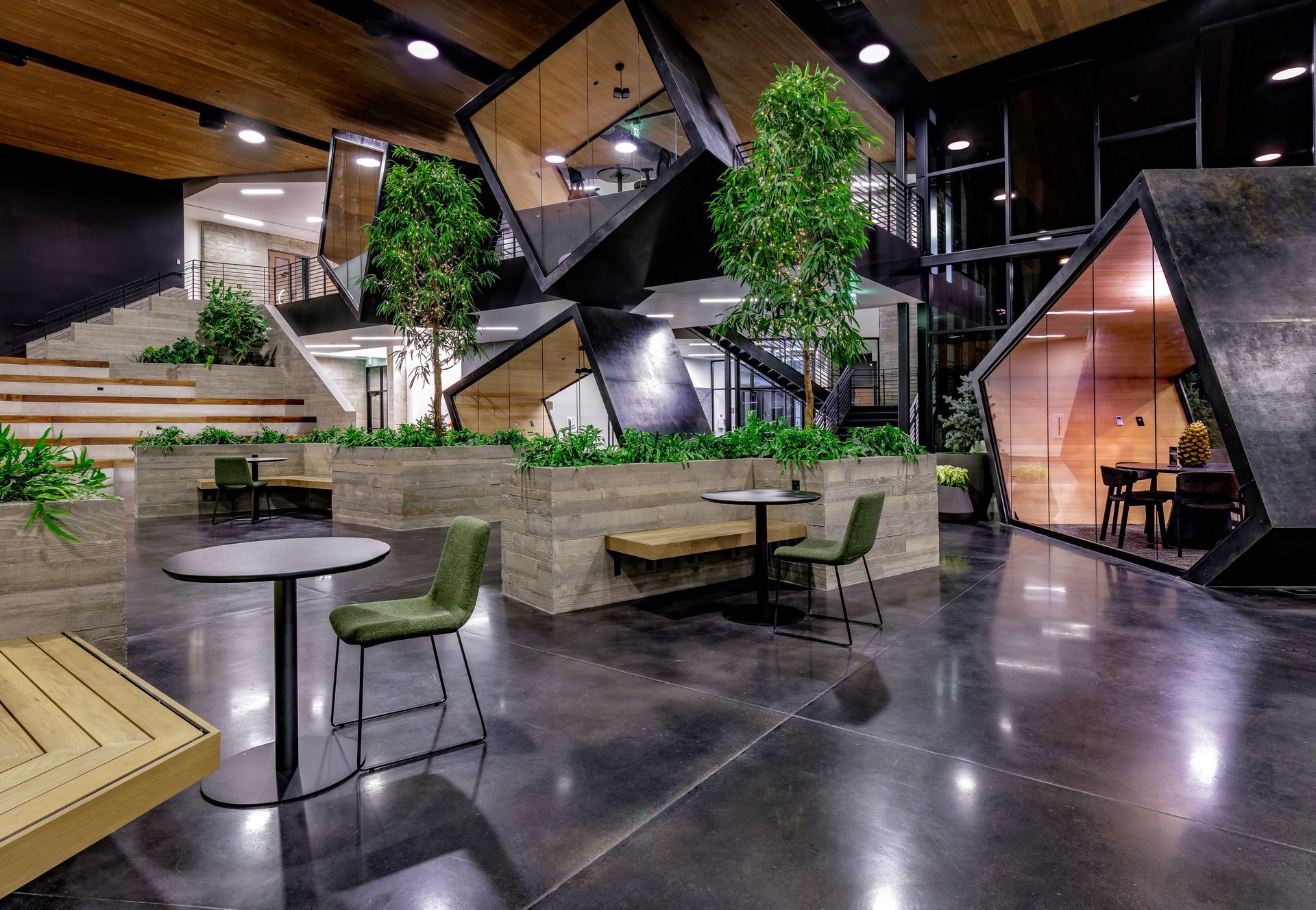
The $5.4 million, 5,260 SF project officially opened in June to much pomp and circumstance, and rightfully so. The center showcases the potential of what homes and buildings can be—spaces that are not only comfortable and inviting, but also produce zero pollution. The building will offer a space dedicated to learning, exploration and collaboration centered on climate solutions and improving local air quality, and a place for the community to engage and create solutions to the challenges we face. 

The project is a testament to CEO/Founder Sarah Wright and her team at Utah Clean Energy, and their commitment to increasing awareness of environmental sustainability. Their new home makes a bold, walk-the-walk statement about the importance of renewable energy in the built world.

"There needs to be an education and understanding that renewables (solar, wind, hydro, geo-thermal) are our cheapest resources," said Wright, a Chicago-native whose diverse background includes work in geology, environmental consulting, air quality, and occupational health. She founded UCE, a mission-driven non-profit, in 2001 and is thrilled to see the CIC finally come to fruition after years of planning. The project, she said, embodies UCE's dedication to transforming Utah's built environment to be zero energy and emission-free, while helping the community reimagine the places we live and work.

"This is a living laboratory and teaching tool for the public and the business community, demonstrating the tremendous role that buildings have in solving climate change," said Wright. "Everyone that's been here loves it and other owners say they are inspired by it."

Kevin Emerson, Director of Building Decarbonization and an 18-year UCE veteran, said the project became a necessity in recent years as UCE's staff swelled to 15 people. 

"We've had a dream to really 'walk to talk' through our office headquarters and (CIC) is the result of that dream coming to fruition," said Emerson. "It is more than just office space—it's meant to be a showcase and teaching tool for the construction and design industry." 

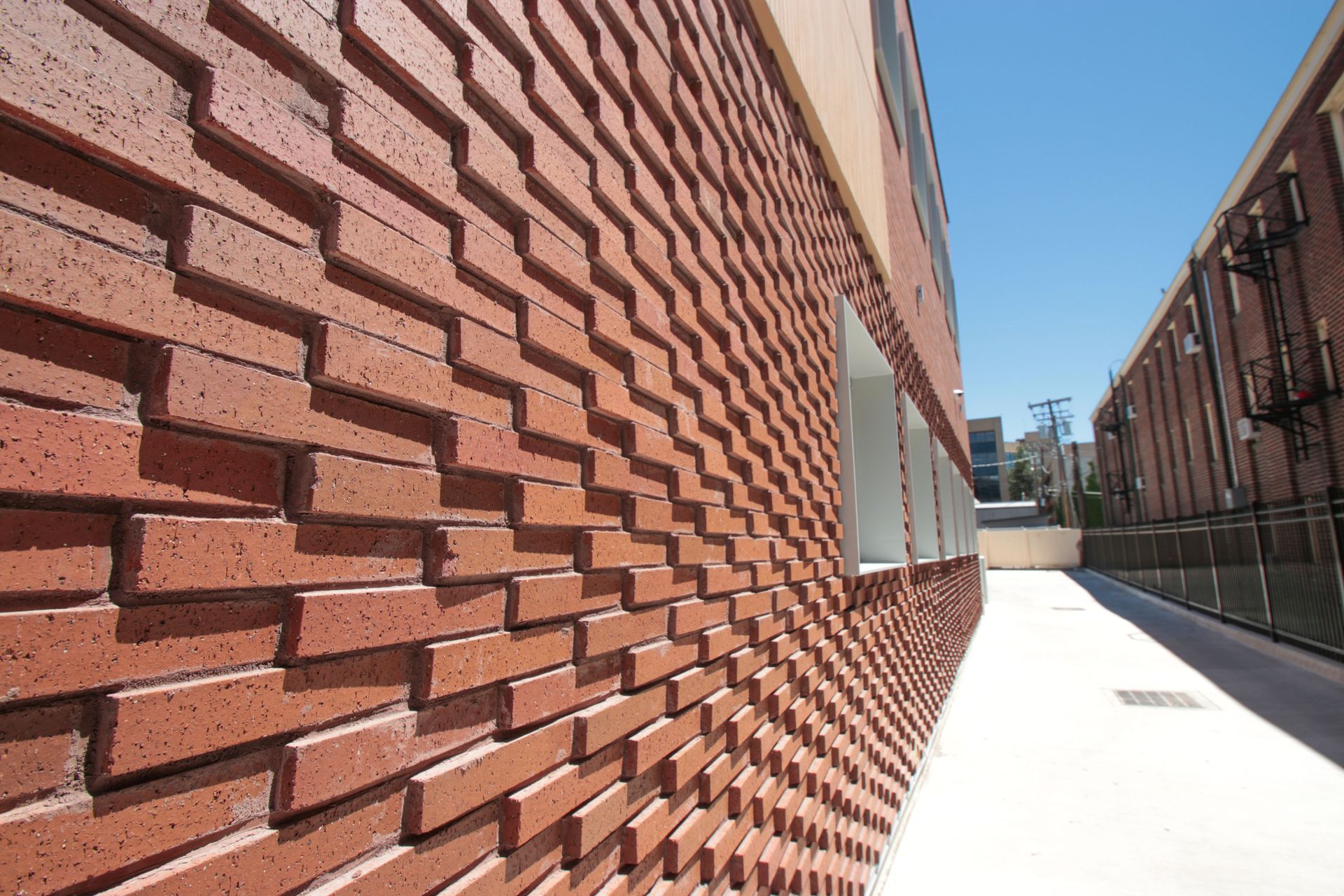
"There is nothing more sustainable than reusing our existing buildings and breathing a new 50-year-life into a structure than was slated for demolition," said Backe, adding that construction crews seismically braced the primary existing CMU block wall, in addition to reusing over 65 tons of CMU and 50 tons of concrete. 
  • Slide title

    Write your caption here
    Button
  • Slide title

    Write your caption here
    Button
  • Slide title

    Write your caption here
    Button
  • Slide title

    Write your caption here
    Button

Emerson said the project is aiming for zero-energy certification (one-year data collection period) through International Living Future Institute (ILFI), along with a second third-party certification from Energy Star, with a score of 86 (out of 100). 


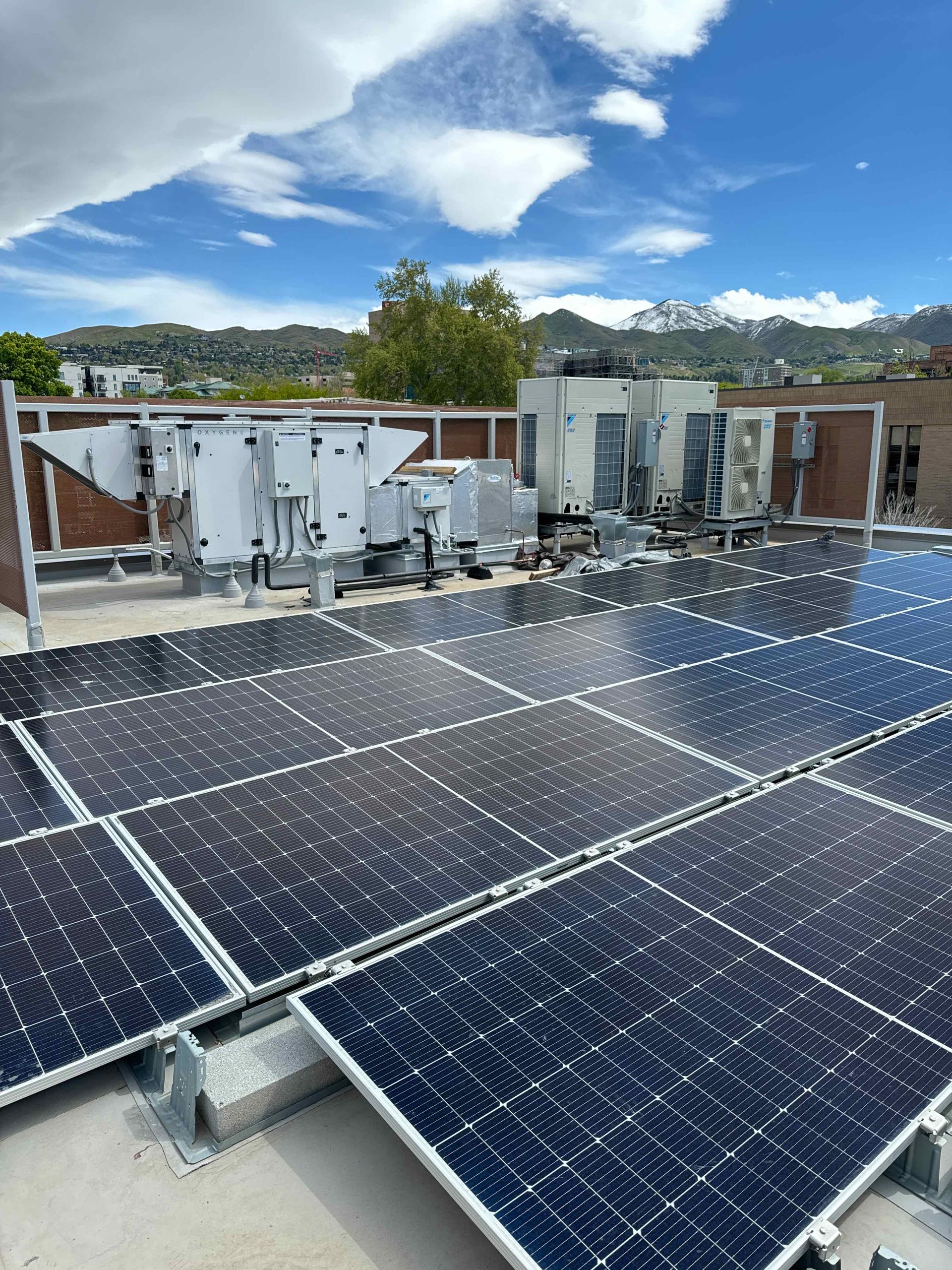
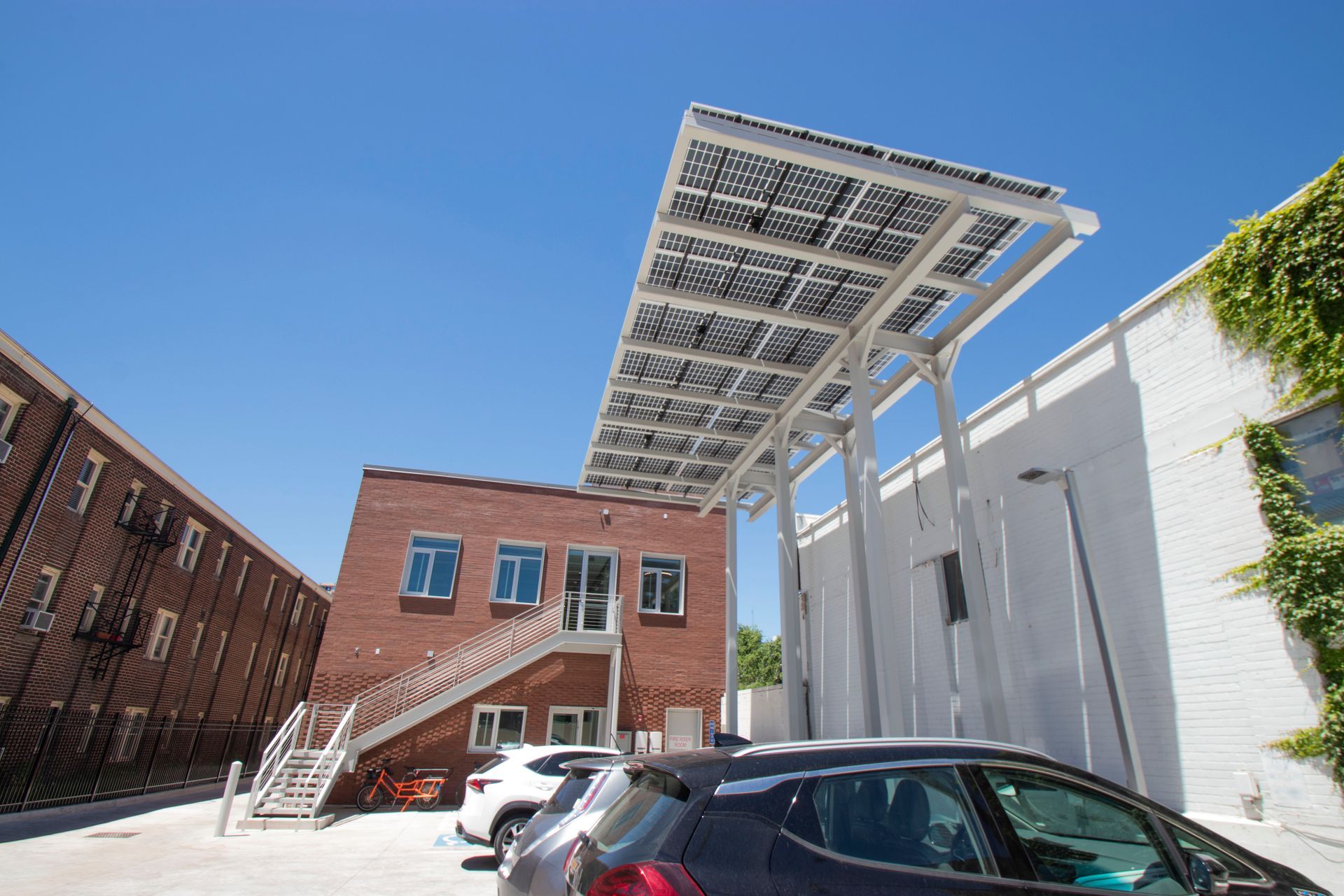
From an energy standpoint, the highlight of the building is its on-site, 37.1 kW capacity solar panel system, consisting of 70 total panels—54 on the roof and 16 on a solar canopy over the parking lot. Donated by Salt Lake-based rPlus Energies, the bi-facial, 545-watt capacity panels can capture sunlight on both sides, increasing energy production by absorbing reflected light from the ground and other surfaces. The modules boast a lower operating temperature, enhanced safety and fire measures, and adaptability in snow, high latitude regions. 


In addition to the solar array, UCE hired Salt Lake-based VBFA to conduct energy modeling with an EUI (energy per square foot) goal of 28 in the most affordable manner, calculating for insulation, window performance, HVAC system, and other criteria. 


"We designed the [solar] canopies and roof spacing around our modeled energy performance [...] and ended up with an EUI of 27.8 as final target," said Emerson.


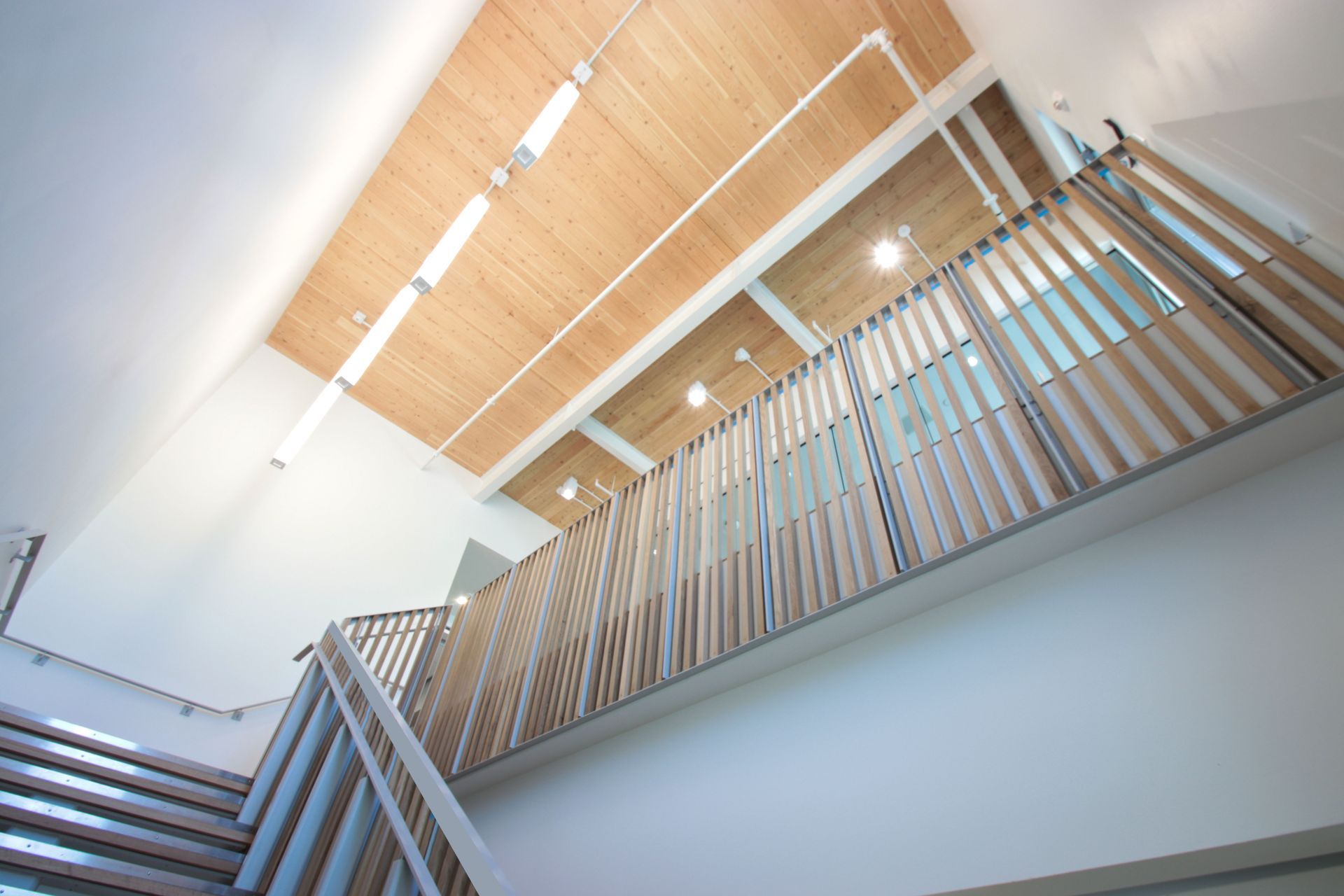
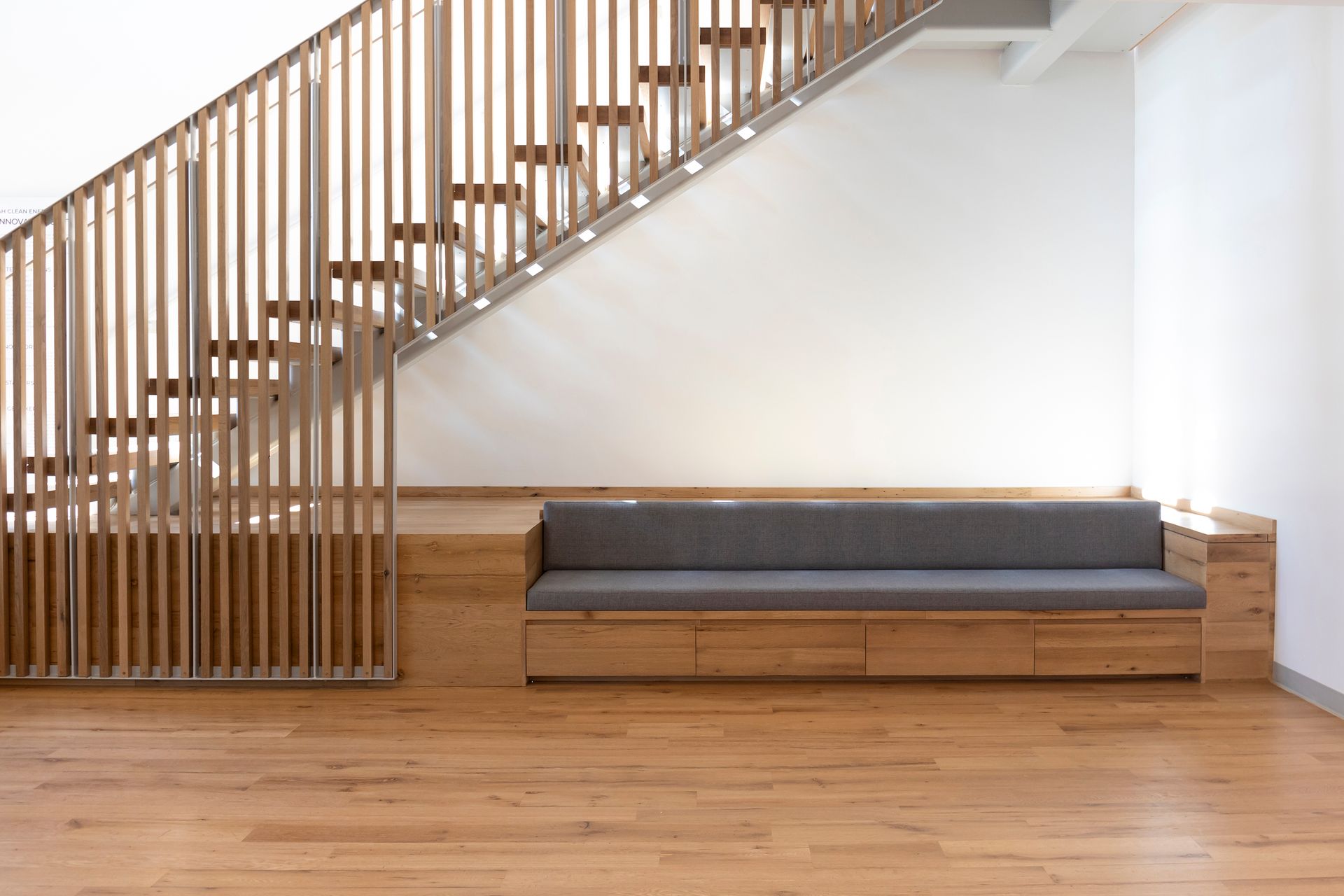
Backe said the project is the first CLT mass timber structure in Utah to use FSC (Forest Stewardship Council) certified wood, an important hot-button item for CEU. The interior includes reclaimed wood floors, zero-VOC paint, carbon neutral carpet tiles, recycled content tiles, recycled Paperstone counters. The building is conditioned by a highly energy efficient, all-electric VRF heat pump-based HVAC system with an energy-efficient DOAS with ERV and an evaporative cooling stage. 


Key spaces include an outdoor terrace that connects to a large conference room via a bank of folding glass doors, allowing extra space to host community events in good weather. 


Other sustainable highlights include:

  • High performance and airtight building envelope.
  • Ultra-efficient VRF HVAC system.
  • Grid interactive with onsite mega battery storage.
  • Water-wise landscaping and fixtures.
  • Low emission transportation options, including EV charging, bike parking, proximity to public transit. 
  • Reduced embodied carbon emission through mass timber and sustainable materials
  • All-electric power (no fossil fuels).
  • Zero Energy Registered (pursuing certification). 


Wright is confident that long-term the building will greatly bolster UCE's mission and ability to drive positive societal change towards greater use of renewable energy.


"You have to be optimistic and believe that we can change," she said. "You have to believe in Utahns and our shared values. I also understand that Utah will never be fully independent [on renewables]—the idea is having more reliable, affordable power."


And power will always be in high demand, Wright said, making the expansion of renewable energies on a larger scale that much more critical. 


"The technologies we have today, especially communications protocol, is huge and we will need more transmission and distribution systems. But to do that effectively we need to invest in them. We are proud to lead by example." 


Climate Innovation Center 

Location: Salt Lake City

Start/Completion: May 2023/June 2024

Cost: $5.4 million 

Delivery Method: CM/GC 

Stories/Levels: 2

Square Footage: 5,620 

Owner: Utah Clean Energy 


Design Team

Architect: Blalock & Partners 

Civil Engineer: Forsgren

Electrical Engineer: BNA

Mechanical Engineer: VBFA

Structural Engineer: BHB Engineers 

Geotechnical Engineer: AGEC

Interior Design: Blalock & Partners

Landscape Architect: G. Brown Design

Building Envelope Commissioning: Morrison Hershfield (now Stantec)

System Commissioning Agent: Bernhard

Solar Design: Gardner Energy


Construction Team

General Contractor: Okland Construction

Concrete: Iron Horse

Plumbing: Reliable Plumbing

HVAC: Atlas, Mechanical Products

Electrical: STF

Masonry/Cladding: Monsen

Drywall: K&L Acoustic

Painting: Grow Painting

Tile/Stone: Design Team

Millwork: Boswell

Flooring: Design Team

Roofing: Superior Roofing

Glazing/Curtain Wall: Bountiful Glass

Waterproofing: Guaranteed

Steel Fabrication & Erection: Intermark Steel

Mass Timber: Golder (installer); sourced by Kalesnikoff 

Excavation: MC Green

Demolition: Red Rock Demolition

Landscaping: Erickson

Solar Install: Gardner Energy, Creative Energies, Intermountain Wind and Solar


By Bradley Fullmer April 30, 2026
The new St. George City Hall is a shining example of a collaborative process between owner, architect, and general contractor, producing a world-class facility that will serve the community for the next 40-plus years.  By Bradley Fullmer
By Bradley Fullmer April 30, 2026
After more than a half century designing buildings, 73-year-old Jim Child remains a fixture in Utah’s architectural community, with a genuine passion for his craft that inspires those around him.  By Bradley Fullmer
By Taylor Larsen April 30, 2026
Three Salt Lake City projects showcase the immense talent of the local A/E/C industry to achieve supreme levels of sustainability through adaptive reuse, turning drab offices into vibrant housing. By Taylor Larsen
By Taylor Larsen April 30, 2026
Design and construction teams working at “ludicrous” speeds delivered more than the Utah Mammoth’s new practice facilities, but also a fitting tribute to Utah’s strong hockey culture.
By Bradley Fullmer April 30, 2026
The passage of HB 355 in 2025 provided stability for Utah's construction aggregate producers. The question moving forward is: How long will the finite supply of materials last at existing operations along the Wasatch Front?
By B. Garn April 30, 2026
The new Deseret Peak High School delivers out-of-this-world design for a welcome addition to the growing Tooele Valley. 
By Taylor Larsen April 30, 2026
The eight-year odyssey to deliver Cyprus High was worth the voyage, as designers and builders created a stellar learning environment for Magna’s growing community.
By Taylor Larsen April 30, 2026
Engineers note the emerging trends among Utah’s different transit modes and how evolving technology and partnerships set the state up for success.  By Taylor Larsen
By Bradley Fullmer April 30, 2026
UC+D profiles four new firms who aim to make a name for themselves in an A/E/C market that refuses to slow down. By Bradley Fullmer
By Bradley Fullmer April 30, 2026
Led by the City of St. George, Washington County has experienced explosive growth of more than 50% over the past 15 years, ranking in the top 5% of all U.S. counties and fueling strong demand for commercial construction projects.  By Bradley Fullmer