








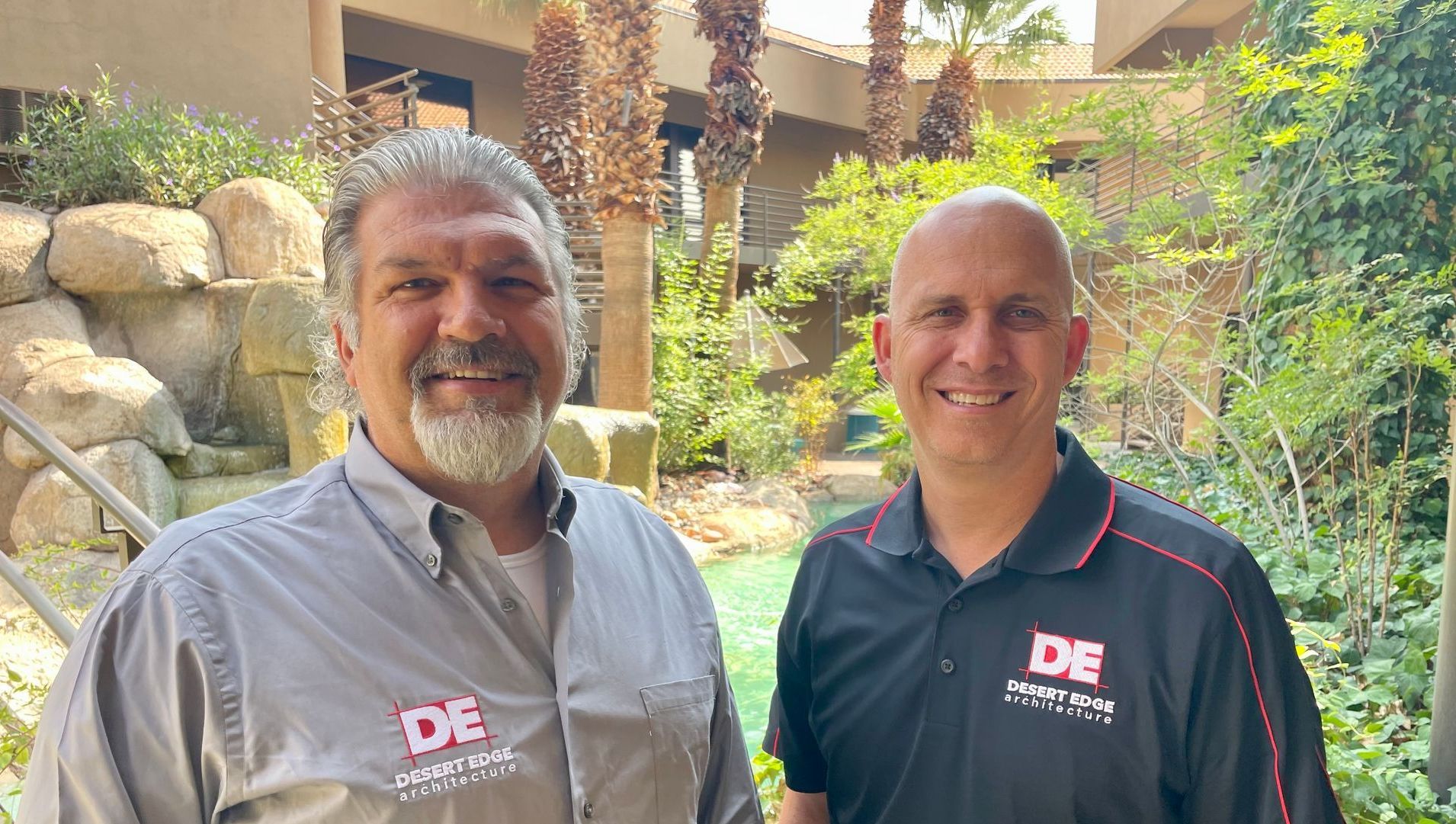
Ben Rogers and Scott Gilberg venture out on their own with the founding of St. George-based Desert Edge Architecture. By Brad Fullmer
Just over a year ago, Ben Rogers completed a complex restoration of the very first car he purchased as a 17-year-old in 1984—a sleek, cherry red 1967 Chevrolet Chevelle, one of the premier “muscle cars” from the historic 1960’s automaking decade in the U.S.
Rogers said he self-performed 95% of the intensive work on the car (he hired someone to paint it)—which he originally purchased for $400 from a lady in his neighborhood in St. George. It proved to be a true labor of love.
“It’s been fun,” said Rogers, who started the full rebuild process in 2017, and at one point was asked by his wife, Michelle, what the budget was for this project. “I said, ‘Well, there isn’t one’. A budget just limits what you can do,” he smiled. He’s tricked out the prized automobile with all-new interiors, a new suspension, a stiffer frame, and a high-powered 6.2-liter LS3 Corvette engine. Needless to say, it hauls ass.
He hadn’t driven it since 2010, so the first time he took it out for a spin down St. George Boulevard since finishing its restoration, he cranked Aldo Nova’s 1982 hit “Fantasy” (chorus: Life is just a fantasy, can you live this fantasy life?)—along with some classic Van Halen. He said he’s had it over 100 mph once but tends to keep it within the posted speed limit—usually.
At the beginning of 2022, Rogers, 54, along with long-time co-worker Scott Gilberg, 46, set out building a different kind of project: founding St. George-based Desert Edge Architecture. They had spent the past 22 and 16 years, respectively, honing their craft at a prominent Utah architecture firm and felt the time was right to venture out on their own.
“We joked about it for a long time, that maybe one day we’ll do it,” said Rogers of the decision they made to switch gears well into their careers and start a firm in Southern Utah’s largest city. “Those discussions would go by the wayside because we love what we do and enjoyed working together. It was just never a priority, and we didn’t need to push it.”
“I had cold feet initially,” Gilberg admitted. “I got a little more confident as our client base continued to grow. I needed more confidence. It got to a point financially where I could take that risk, and I warmed up enough to the idea to where we were taking the steps necessary to make it happen.”

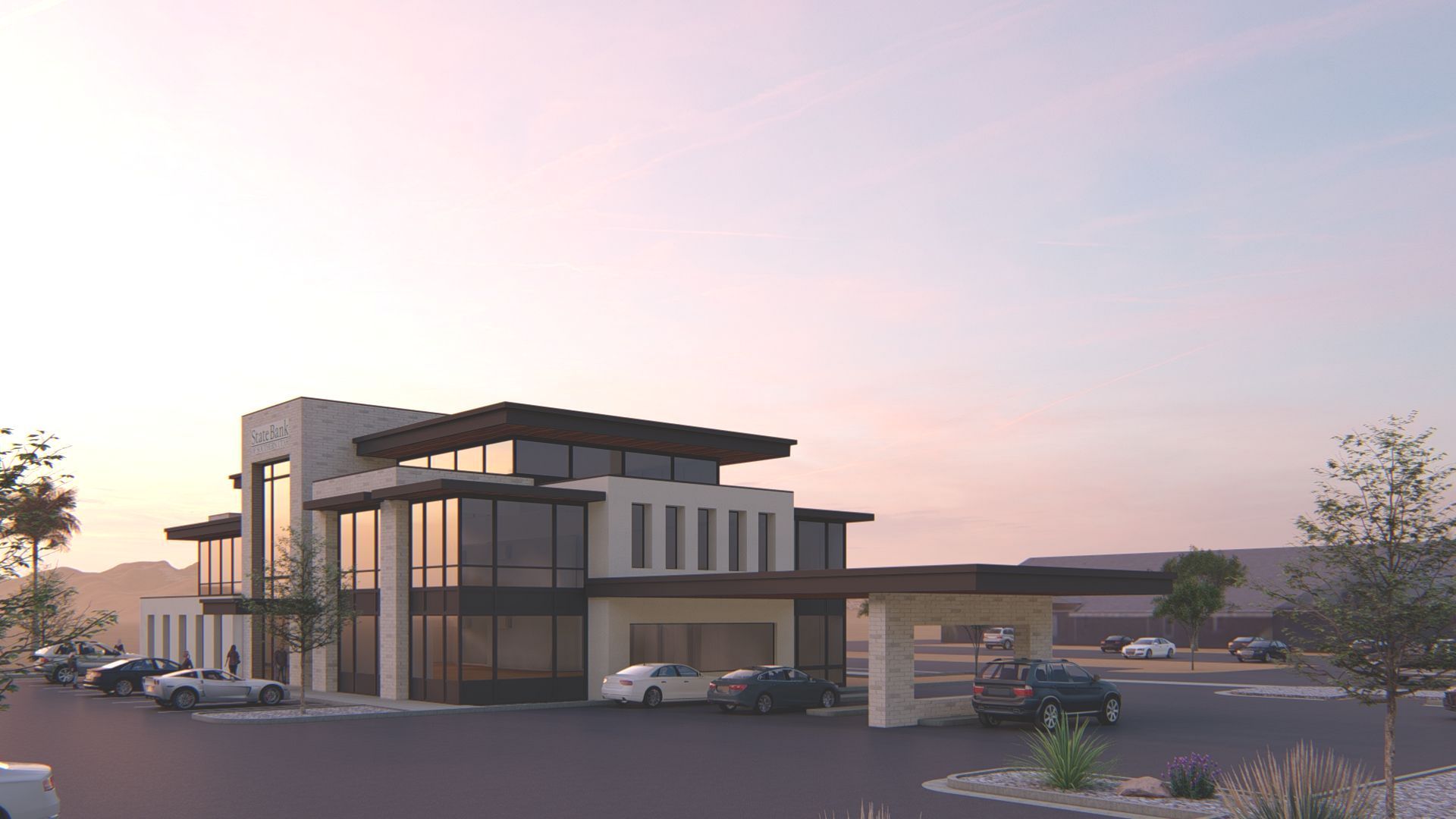
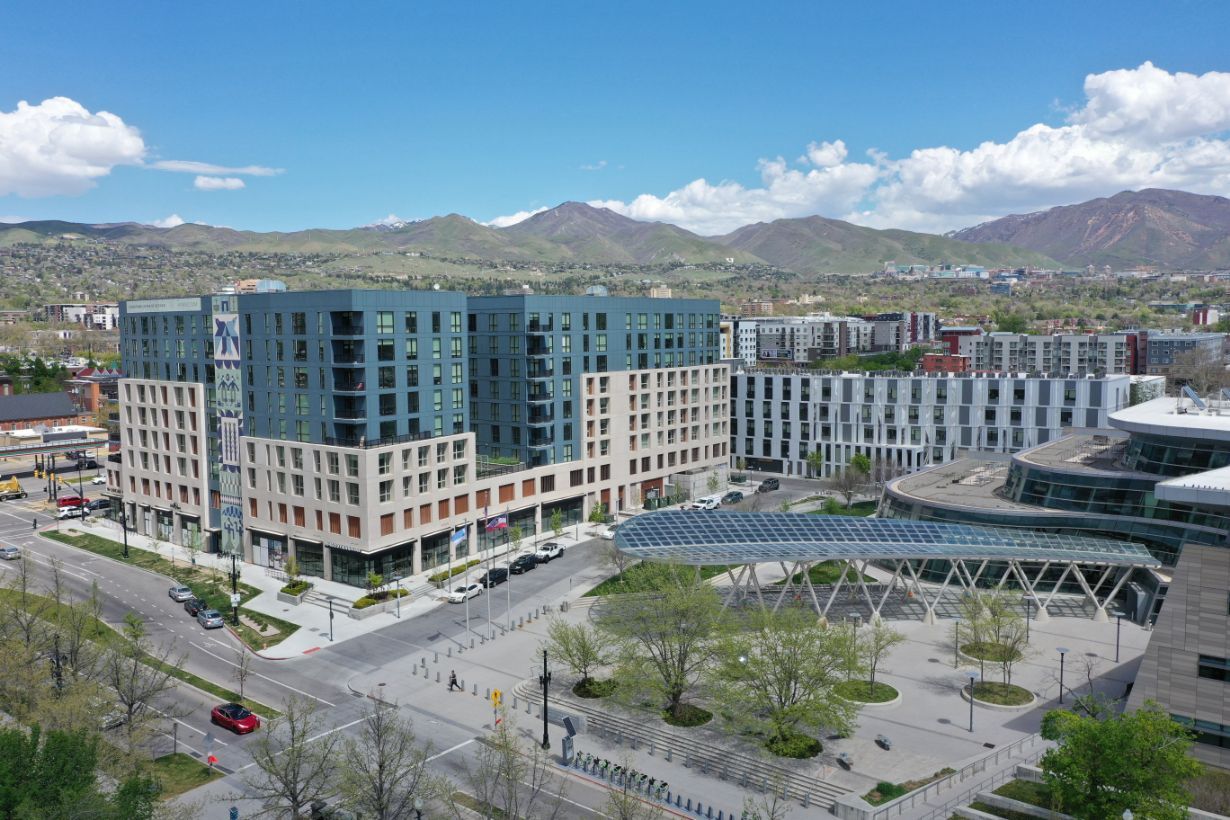
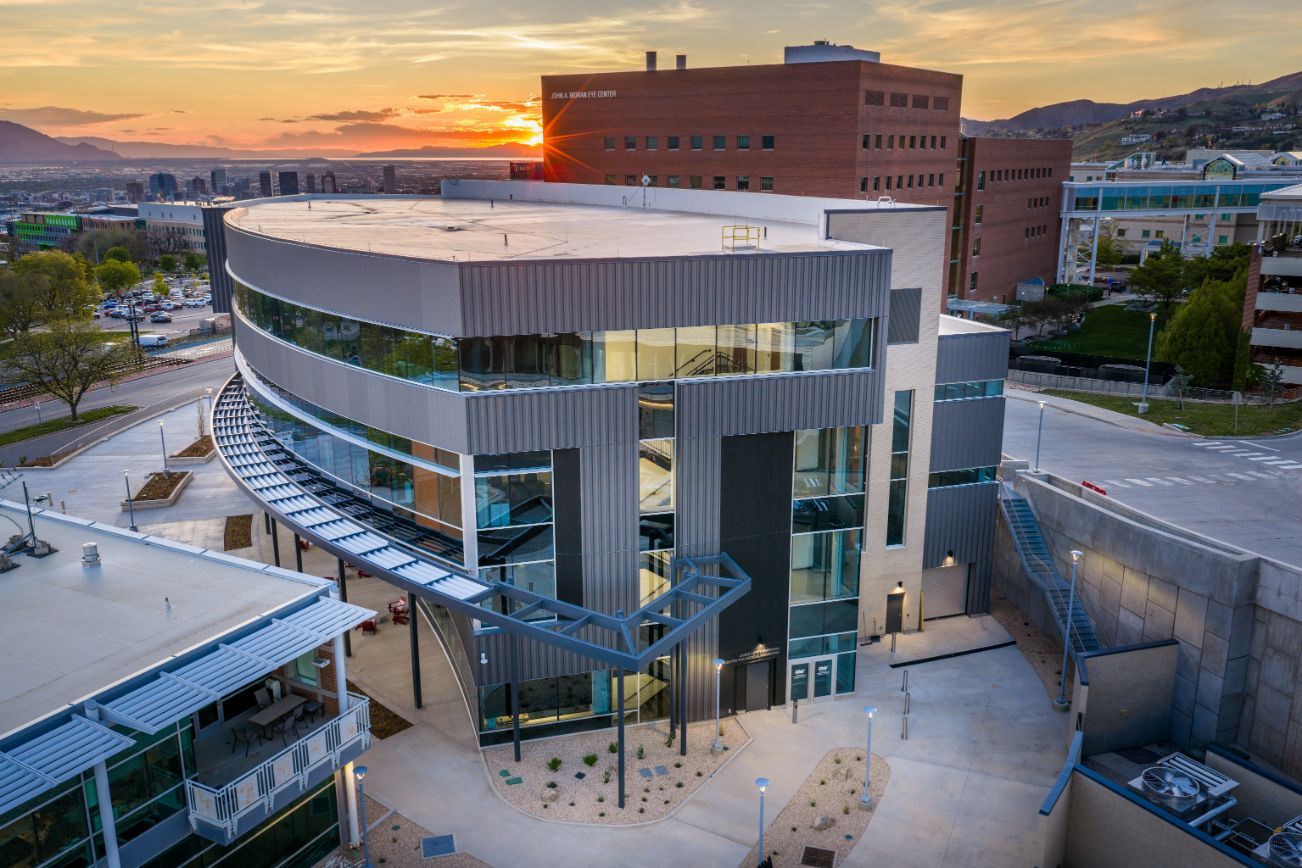
Two of the firm’s current projects include Logan Fire Station No. 70 and State Bank of Southern Utah (renderings courtesy Desert Edge Architecture).
Southern Utah is Home
Rogers has called Southern Utah home since his parents, Ed and Ann Rogers, moved their large family (Ben is the sixth of nine children) to St. George in 1979. After graduating from Dixie High in 1985, he served a two-year mission for the Church of Jesus Christ of Latter-day Saints to Toronto from 1987–1989, and at one point, according to Ann, wrote a letter to her stating his desire to be an architect when he returned.
He put himself through college as a residential general contractor and ultimately graduated from the University of Utah’s School of Architecture in 1999, immediately setting out to find work at an architectural firm.
“I had an emphasis in historic preservation—that’s what led me to Wally Cooper,” said Rogers. “I came across the Utah Preservation History magazine and found a full-page article on Cooper Roberts [Architects]. I faxed a resume to Wally—it couldn’t have come across as very impressive. He called me up within half an hour, [and] within two hours, I was in his office. Half an hour later he offered me a job and convinced me this is where I wanted to be.”
When he started, he was given latitude to market to clients in Washington County, landing the Santa Clara Library as his first project. By 2006, Rogers had established enough of a presence in Southern Utah to warrant the firm creating a satellite office.
Gilberg is also a Southern Utah native, growing up in the Kanab area as the oldest of five children. After graduating from Kanab High in 1994, he served a Latter-day Saint mission to Columbus, Ohio, returning in 1996. He attended Dixie College and then headed north to the U of U to pursue a Master of Architecture.
“If somebody had clued me in to the difficulties and stress of the architecture program I may have chosen an alternative route,” he laughed. He graduated in 2006 and gained an interview with Cooper. Within minutes, he knew it was the place he wanted to work.
Within a matter of weeks, Gilberg was approached by Rogers, who asked the newcomer if he’d be interested in working together in Southern Utah. He initially declined, but two months later had a change of heart and joined Rogers in St. George.
During their 16 years working together, they’ve become a formidable architectural team, along with being close friends, or, as Gilberg quipped, “brothers from another mother.”
They have quickly assembled a solid team of professionals and a pipeline stocked with 35 active projects. Desert Edge also has the distinction of being the largest architectural firm headquartered in St. George.
Both Rogers and Gilberg expressed great optimism about what the future holds for them and their firm, although they know full well that the road to success can get a little bumpy.
“My dad used to say about life, ‘It’s not a free ride on an escalator—it’s a ladder,’” said Rogers. “And you’re going to climb your way to the top. And you’re going to find while climbing that ladder that you might have a [rung] that’s going to break on you and take you down a couple. But you’re going to keep moving forward if you keep climbing.”
“I’m excited about what is already a promising future,” added Gilberg. “What a ride it’s been!”
Rogers concluded: “At my core—who I am—I’m a people person. I love being with people. I love every aspect of what I do, […] taking something broken, used or in disrepair and restore it, rebuild it. I always try and improve upon something that’s given to me. It’s a lot like my car—I like things that are in my control that I can improve.”