The new Deseret Peak High School delivers out-of-this-world design for a welcome addition to the growing Tooele Valley.
By B. Garn
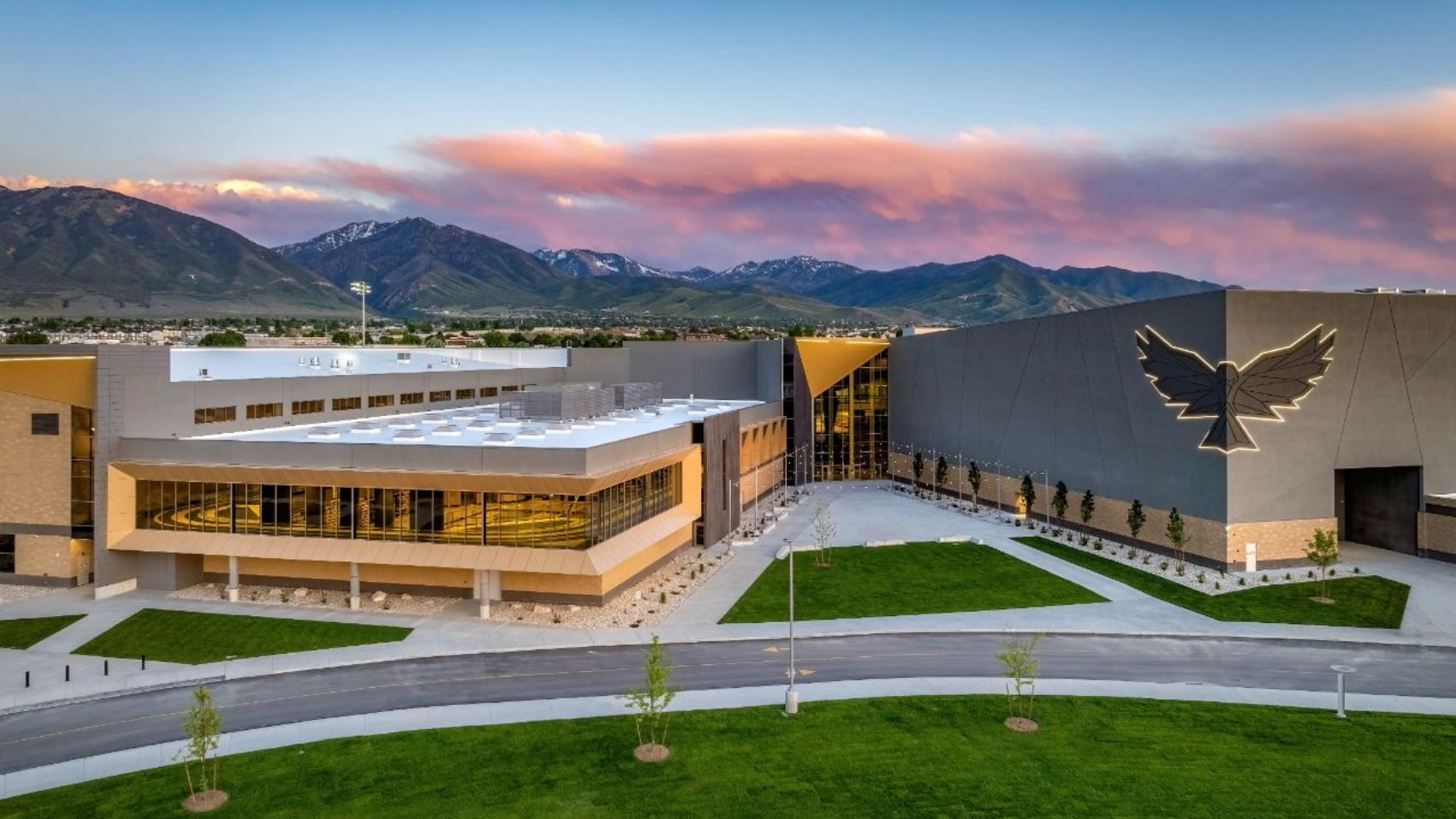
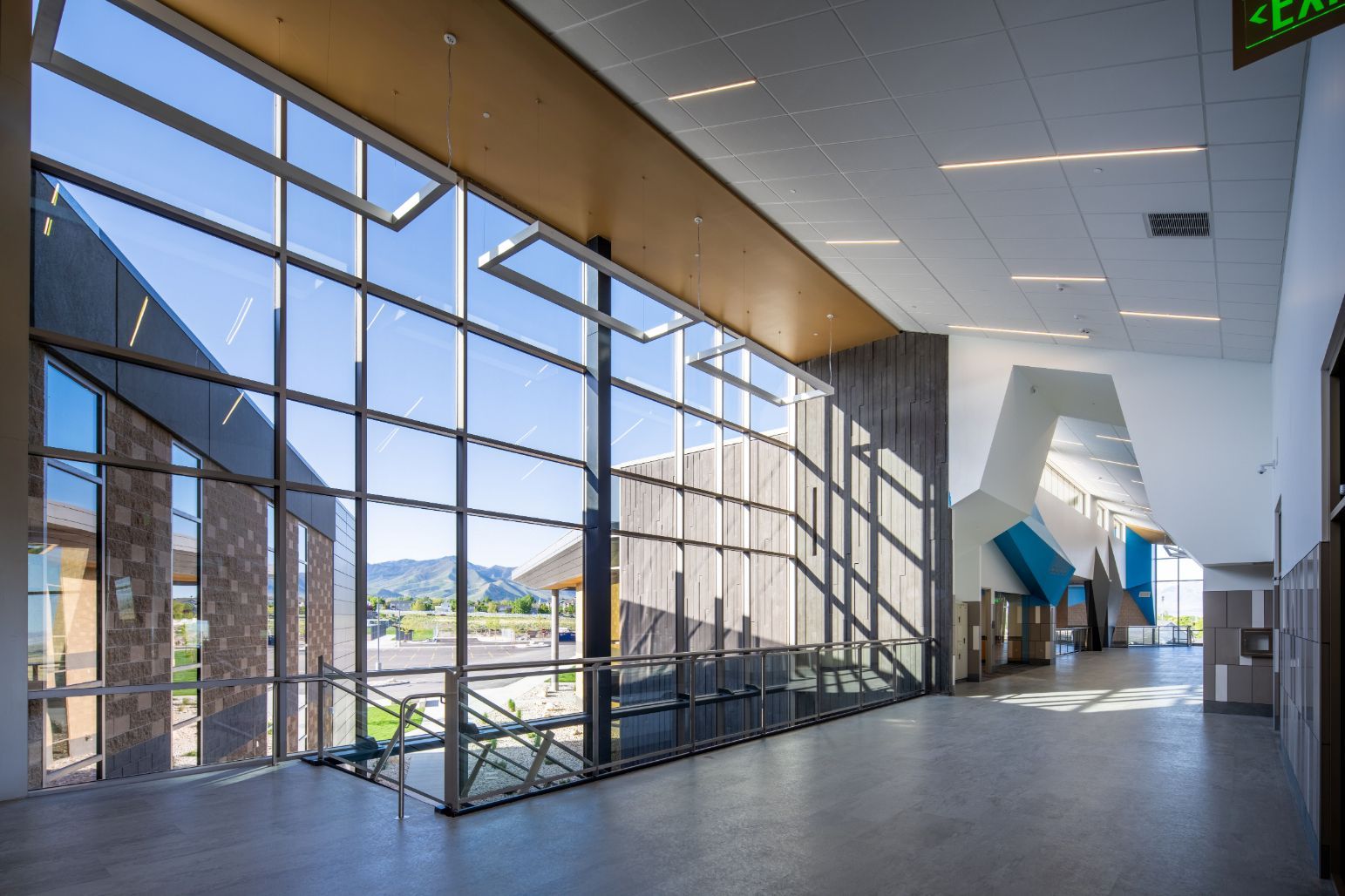
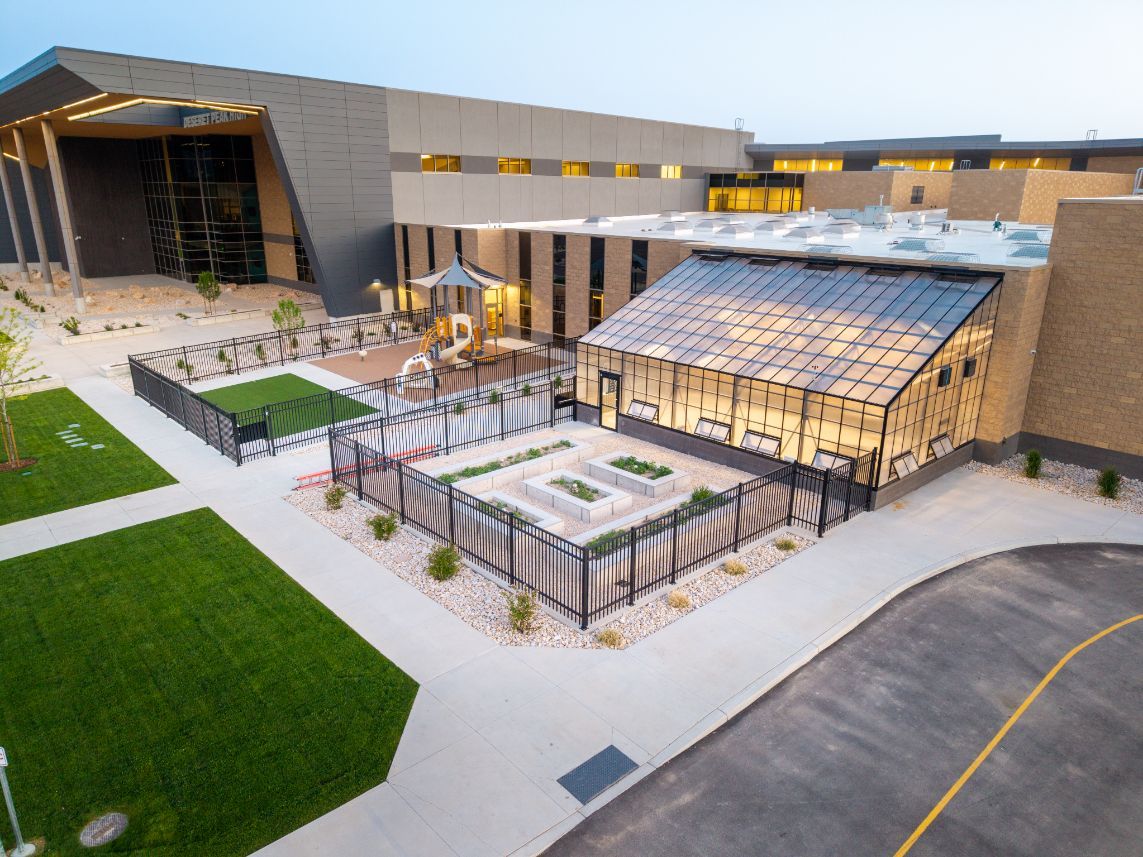
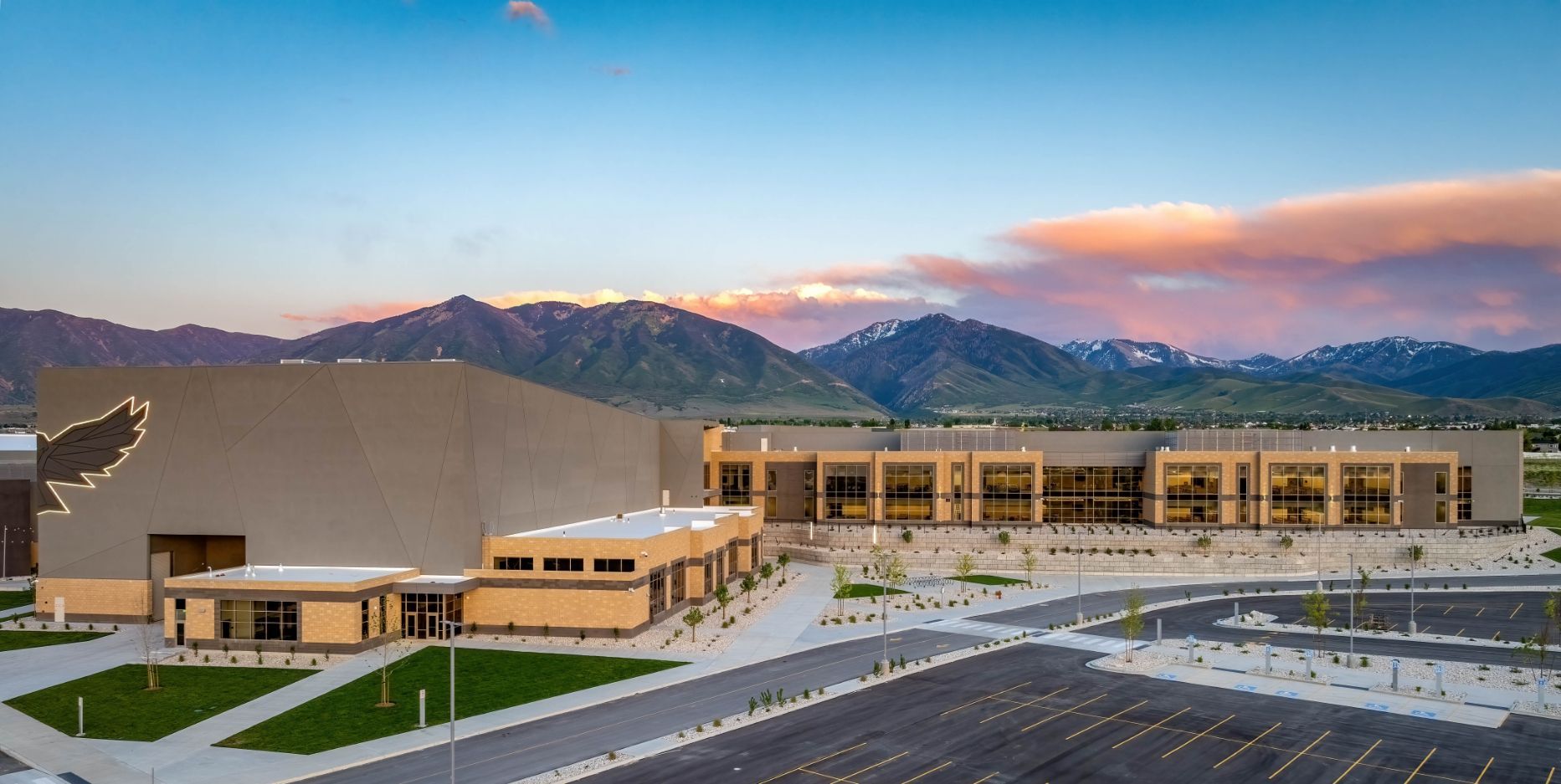
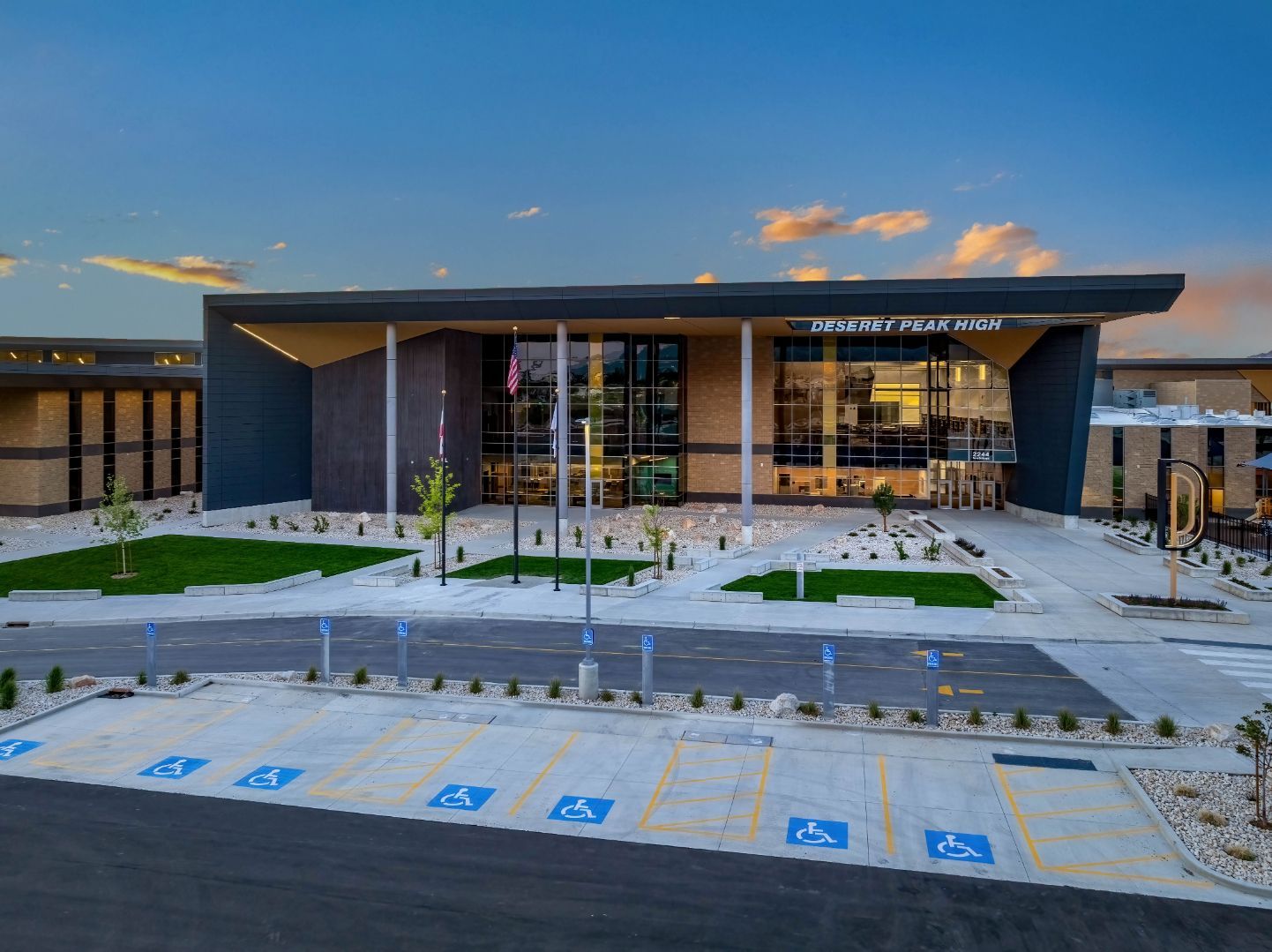
Nearly 40 miles southeast of Salt Lake City and on the west side of the Oquirrh Mountains, the Tooele Valley seems a world away from the buzzing Wasatch Front. Amongst the agriculture, warehouses, and sprawling Army Depot that dominate this growing community’s landscape are now the soaring spans of glass and the tilted, reaching rooflines of the new Deseret Peak High School, like something that arrived from another world. The 336,000-SF, two-story building rising out of what was an empty, gently sloping pasture has caused more than a few double takes.
The idea that they had created something that was “too much” for the relatively quiet, conservative community raised concerns with architects Brian Peterson and David Cox at Salt Lake-based design firm VCBO.
“We got going on the design, and we’re going a hundred miles an hour trying to create something dynamic and forward-thinking because that is what [Tooele School District officials] asked for,” said Peterson, VCBO Associate Principal. “As things are coming together, we realize we’ve created a school that’s like nothing else in Utah, and so we get a little nervous. We go to the owner’s representative and say ‘We’ve created something we’re really excited about, but we’re afraid you’re going to have a hard time getting the community excited about it.’”
The design team knew it had taken two different attempts to get voters to approve a bond issue to fund new projects, but the district official assured designers they were on the right track, reminding them of why the new school was needed in the first place. Many who would use the building, Peterson recalled the officials saying, moved to Tooele from places that already had these types of interesting, progressive buildings that the architects envisioned.
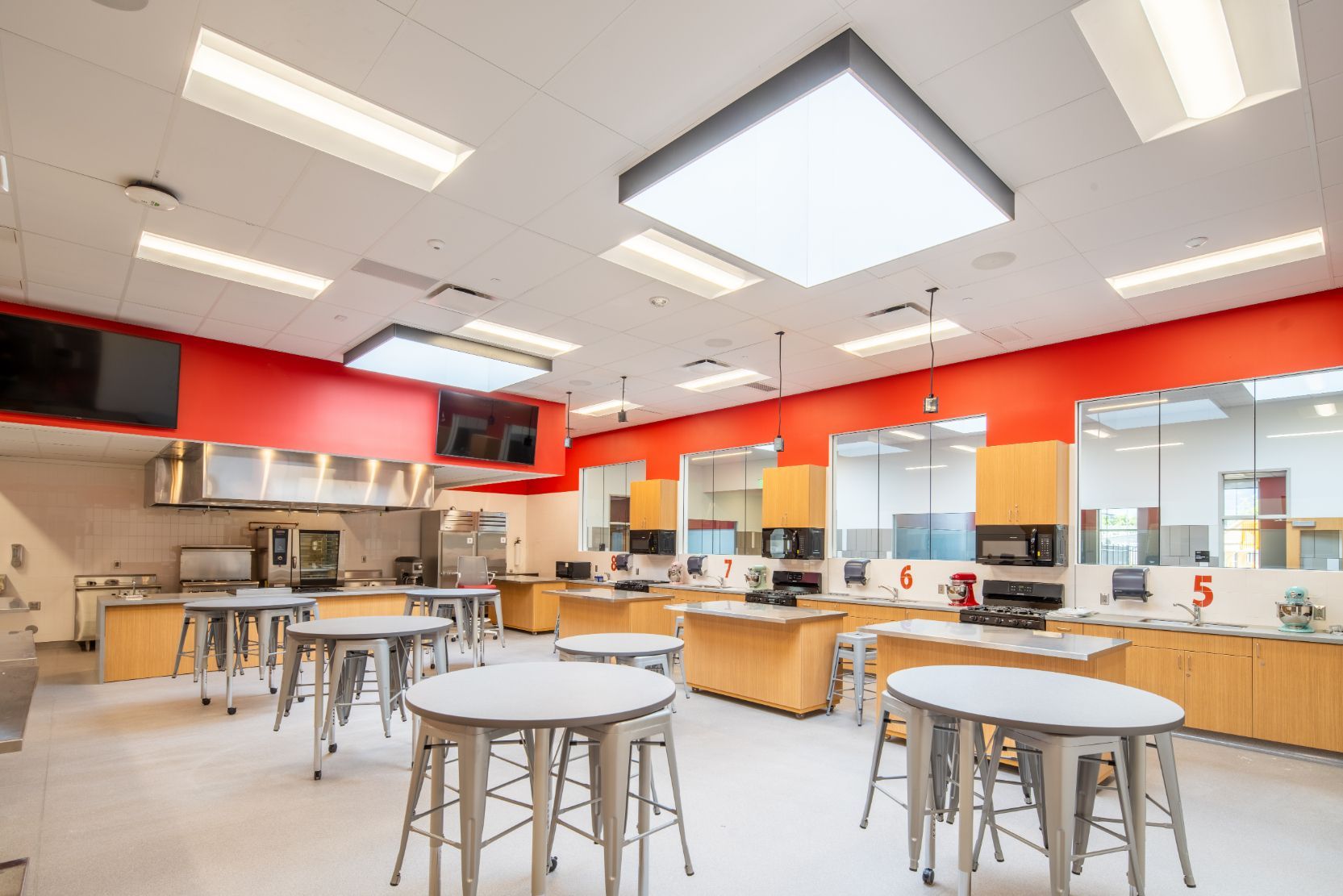
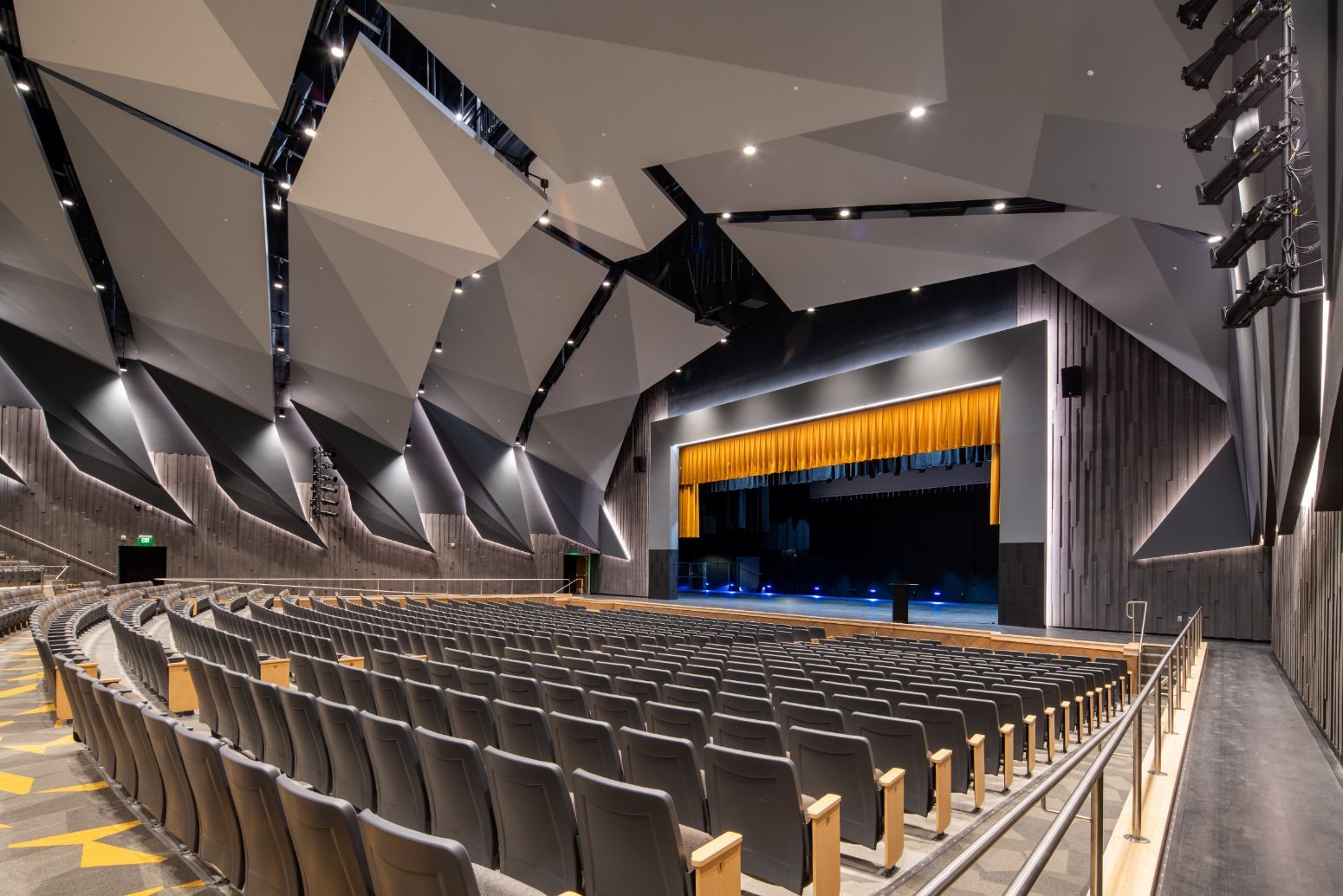
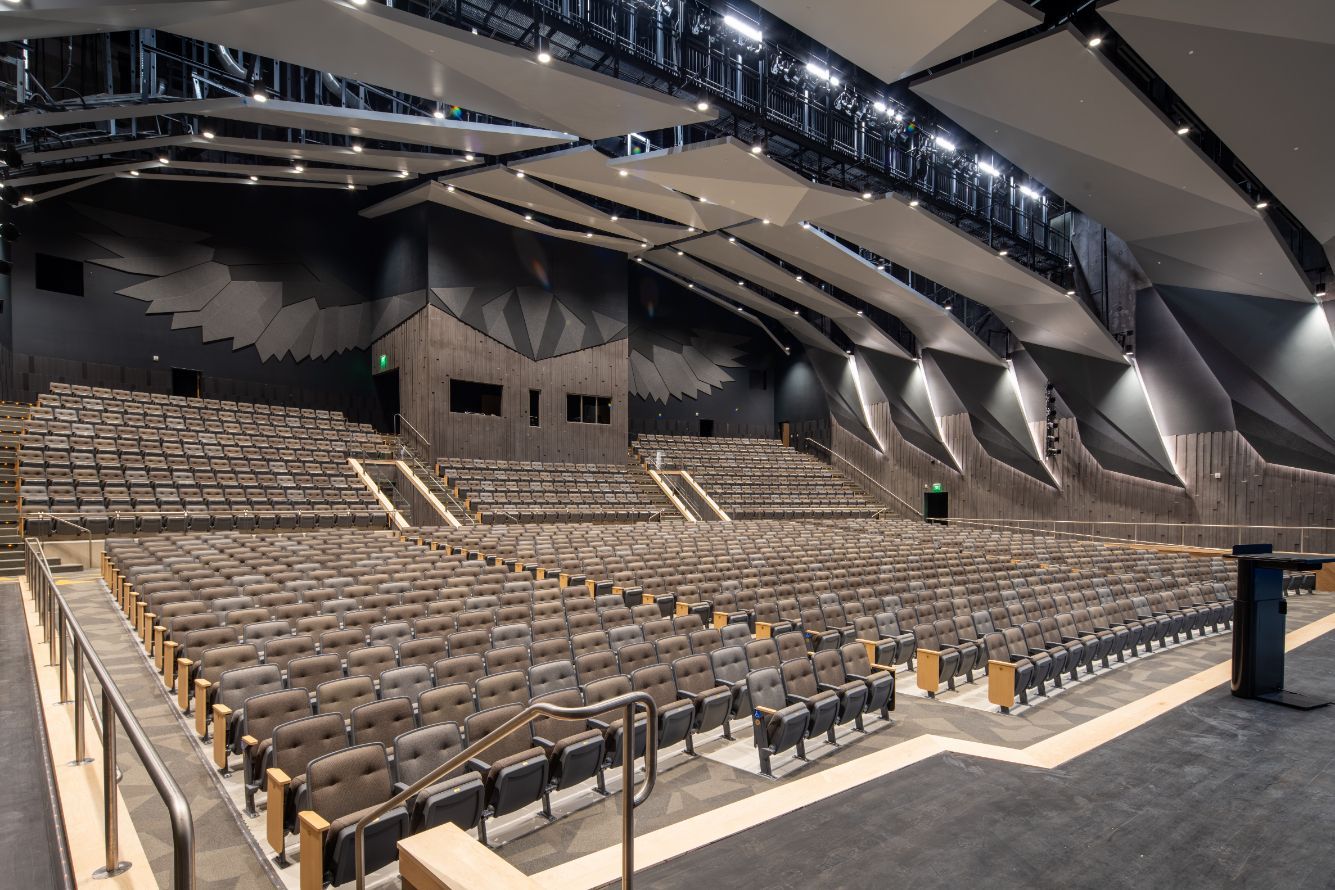
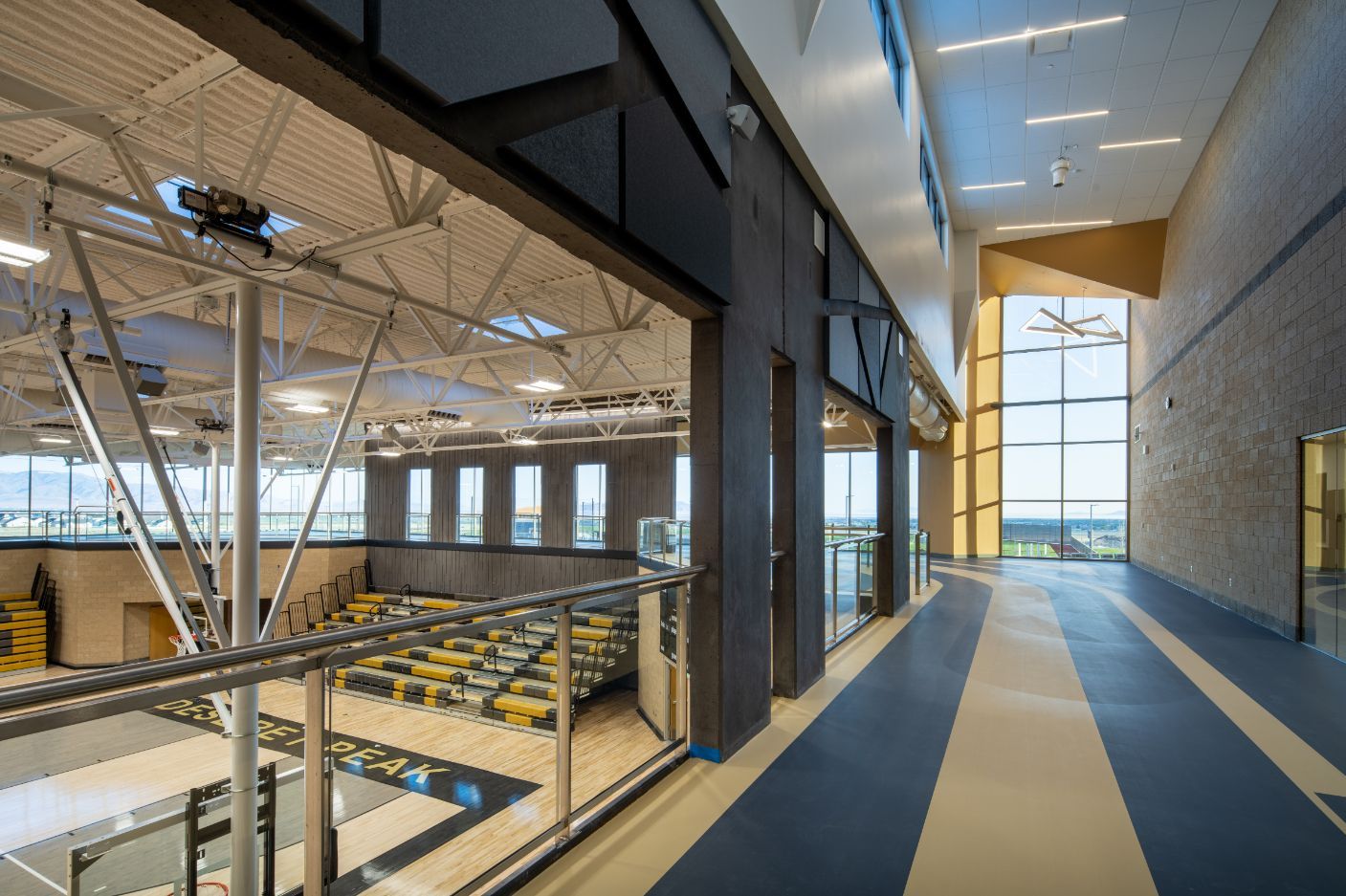
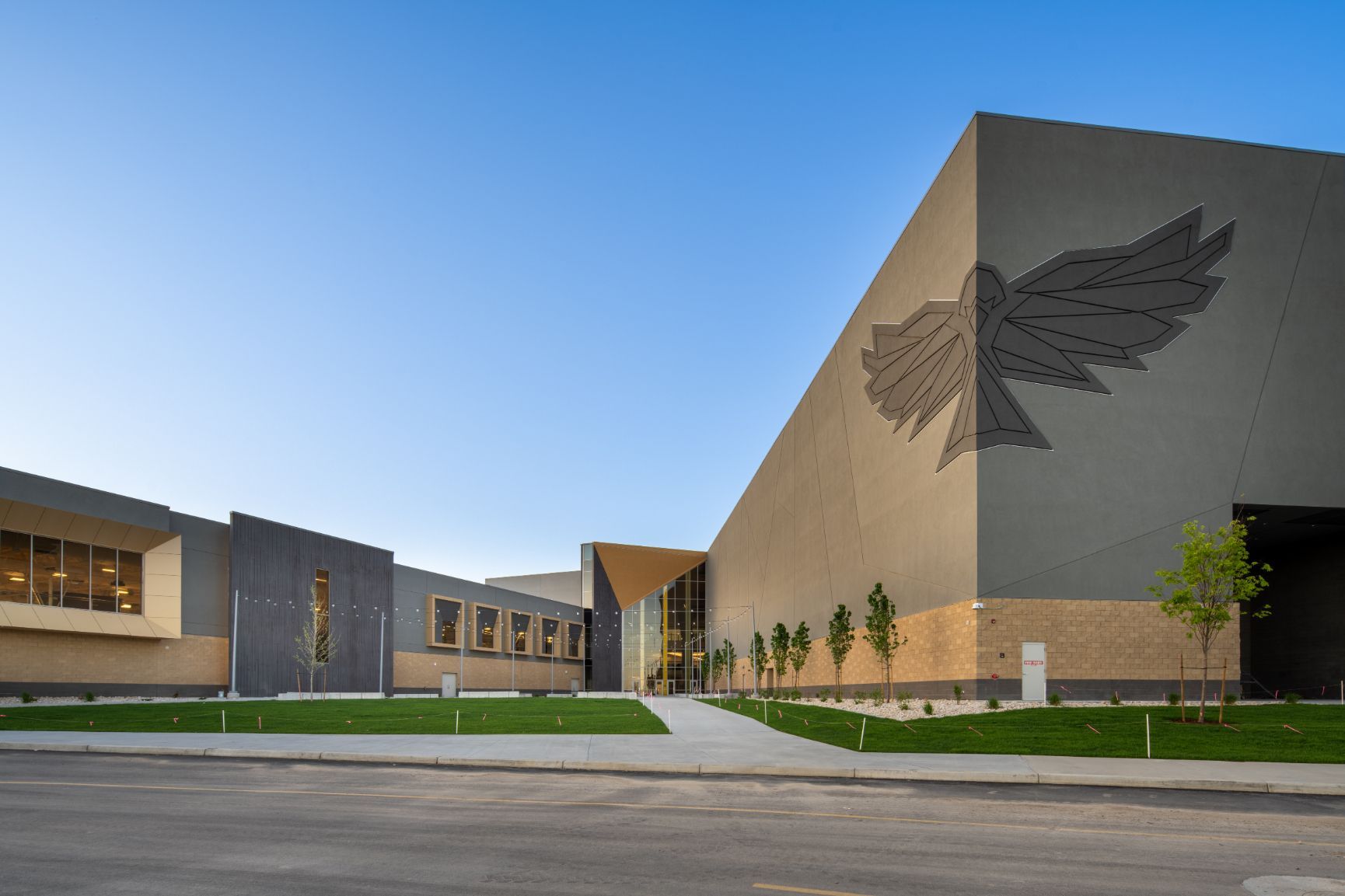
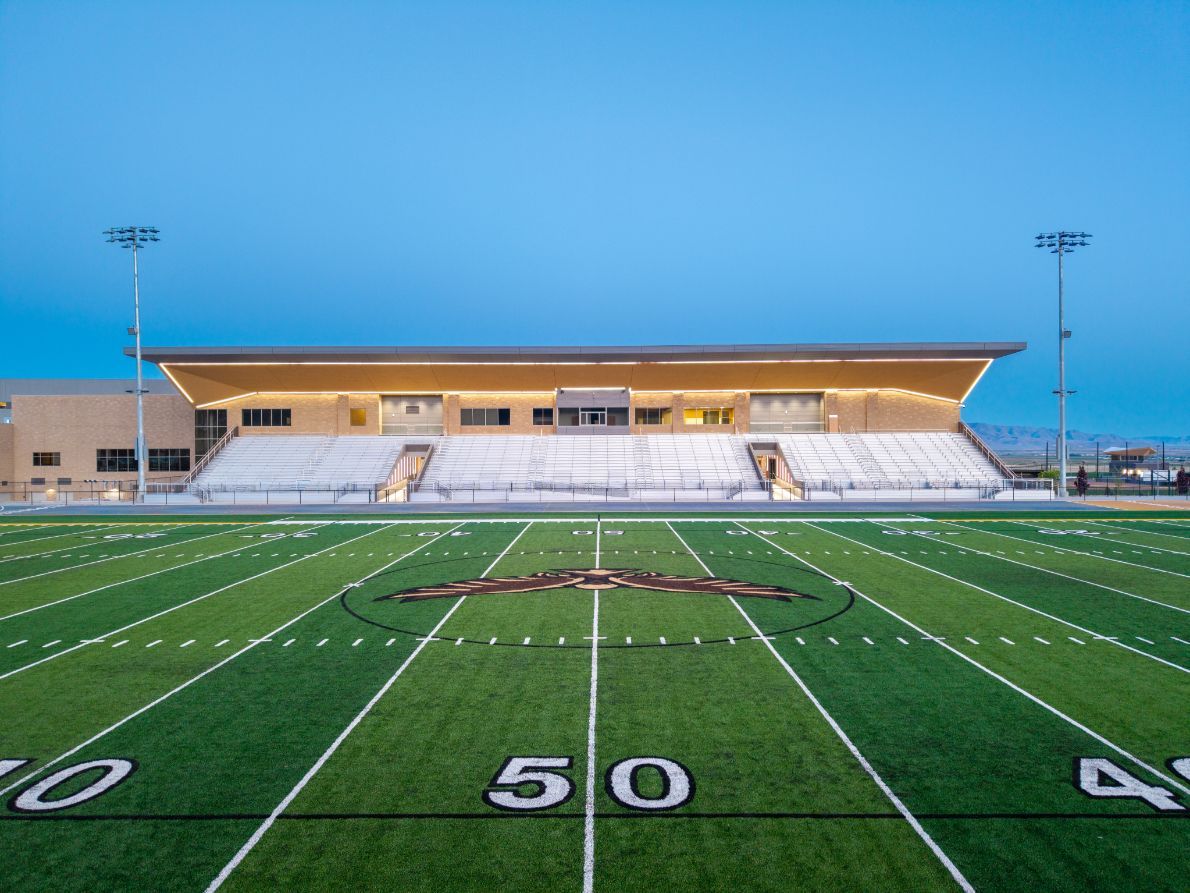
What the district received, after nearly three years of design and construction, is a flagship facility tailored for modern educational instruction with flexible learning spaces and maker labs. The new school’s state-of-the-art athletic field has shaded seating and a suite to host events while providing a private viewing area for visiting college athletic scouts. The 1,200-seat auditorium even pays homage to the school’s Golden Eagles mascot, with acoustic panels resembling an eagle’s wing.
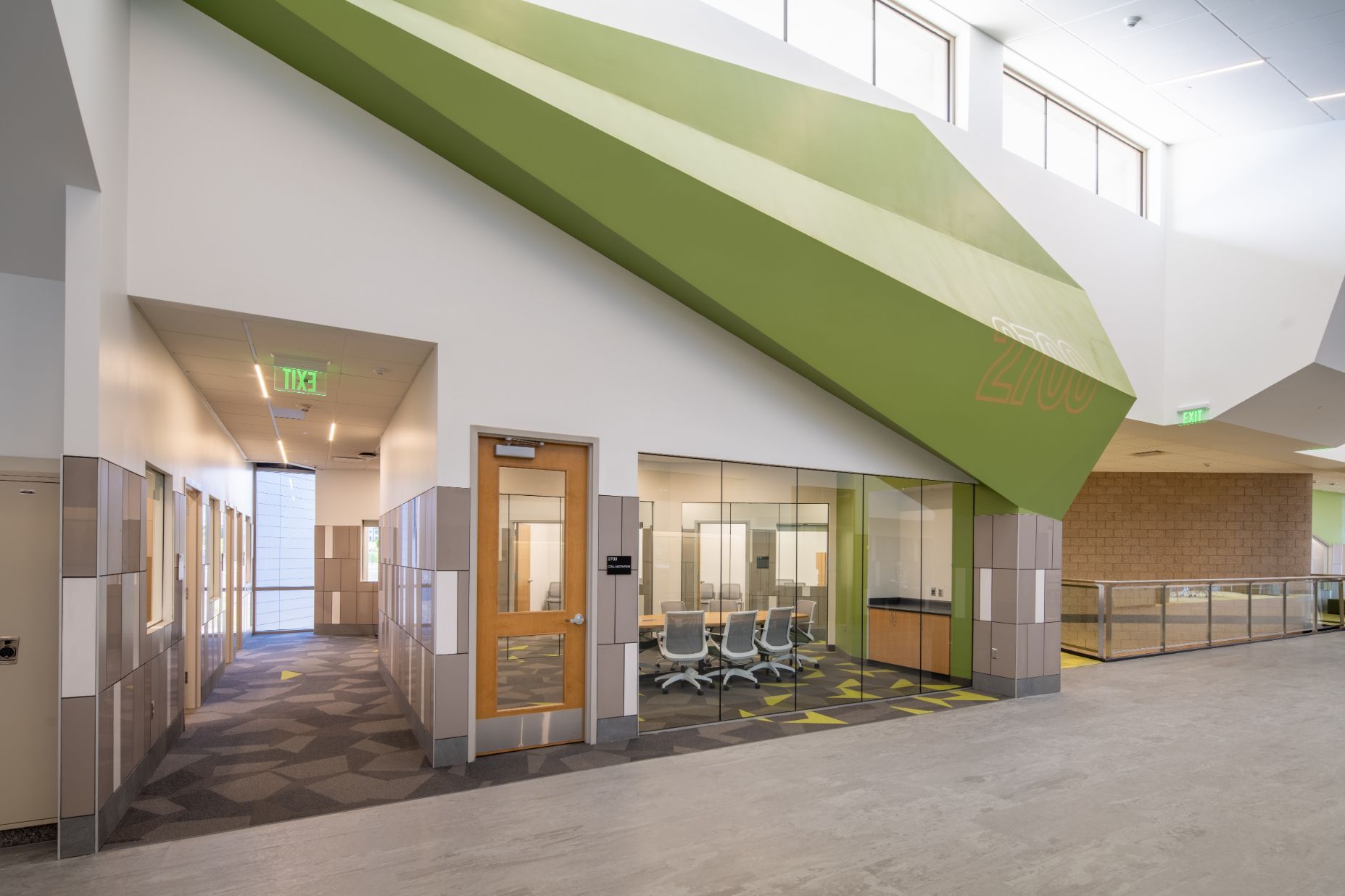
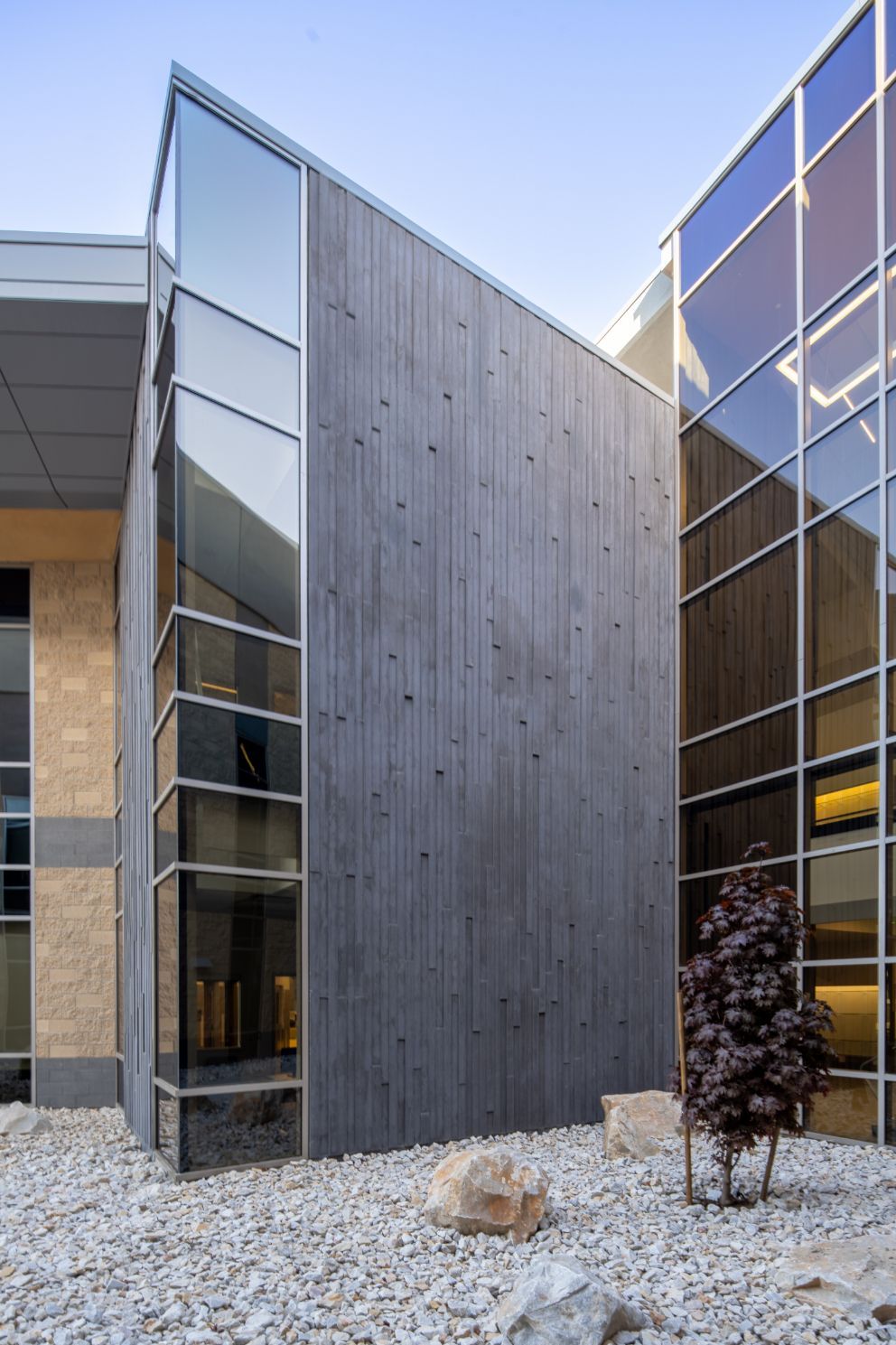
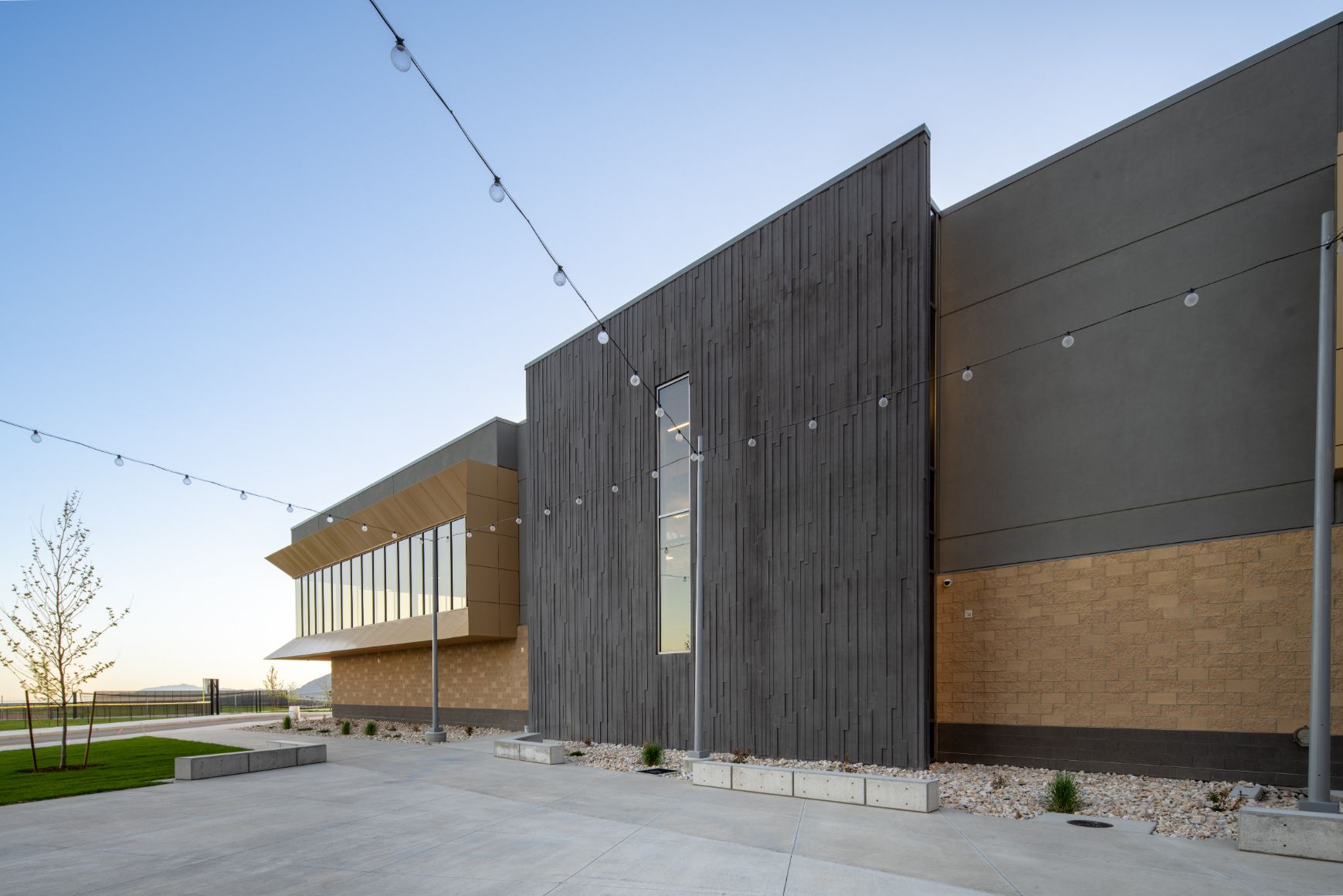
The building utilizes 260 tilt-up concrete panels, some nearly 80 feet tall. The panels are structural, but colored and textured to function as an interior aesthetic as well. Large spans of glass and skylights provide daylight to augment the LED lighting used throughout the building. Complex geometric forms inside create interest and reflect the school’s identity.
Slide title
Photos courtesy Hughes General Contractors
Button
Slide title
Photos courtesy Hughes General Contractors
Button
Slide title
Photos courtesy Hughes General Contractors
Button
Slide title
Photos courtesy Hughes General Contractors
Button
Slide title
Photos courtesy Hughes General Contractors
Button
Slide title
Photos courtesy Hughes General Contractors
Button
Filling a Blank Slate
Cox, VCBO Principal, said the firm had done several projects for the Tooele School district in the past, including a district-wide masterplan mapping out the next 20 years. But this was the first high school they had been tasked with designing.
Much like the empty field they had for a building site, district officials and the design team started with a blank slate.
“When we started, [Tooele School District officials] weren’t sure exactly what they wanted other than a new high school,” said Cox. “We took them on multiple tours of other schools like Farmington and back to Alexandria High School near Minneapolis, Minnesota, which is a well-recognized facility. And they started picking up pieces of what they wanted to do and how they wanted to do it.”
Cox said newer high schools are designed beyond the traditional lecture-based classrooms to accommodate project-based learning and team problem-solving. Classrooms of varied sizes are used to further optimize space.
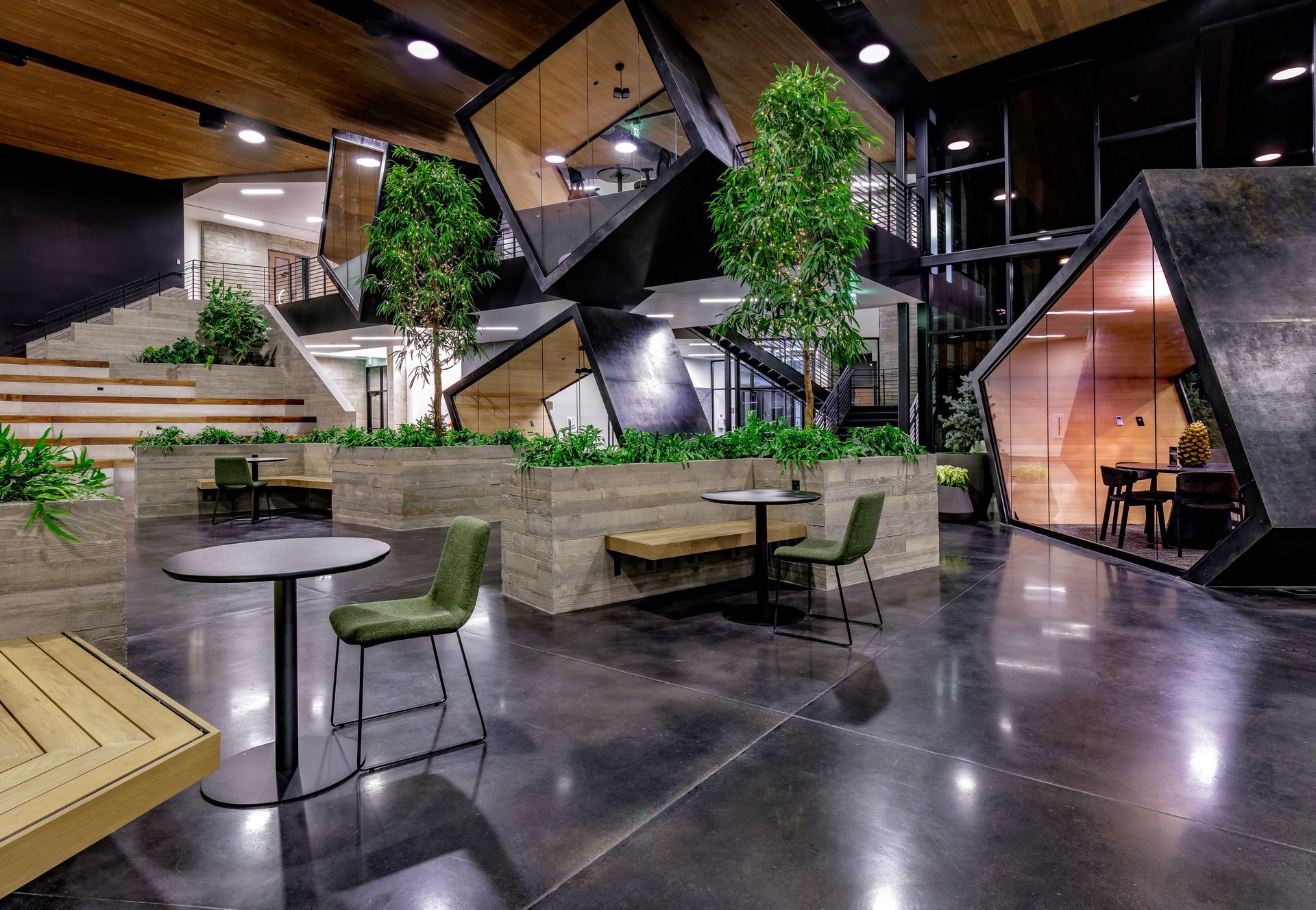
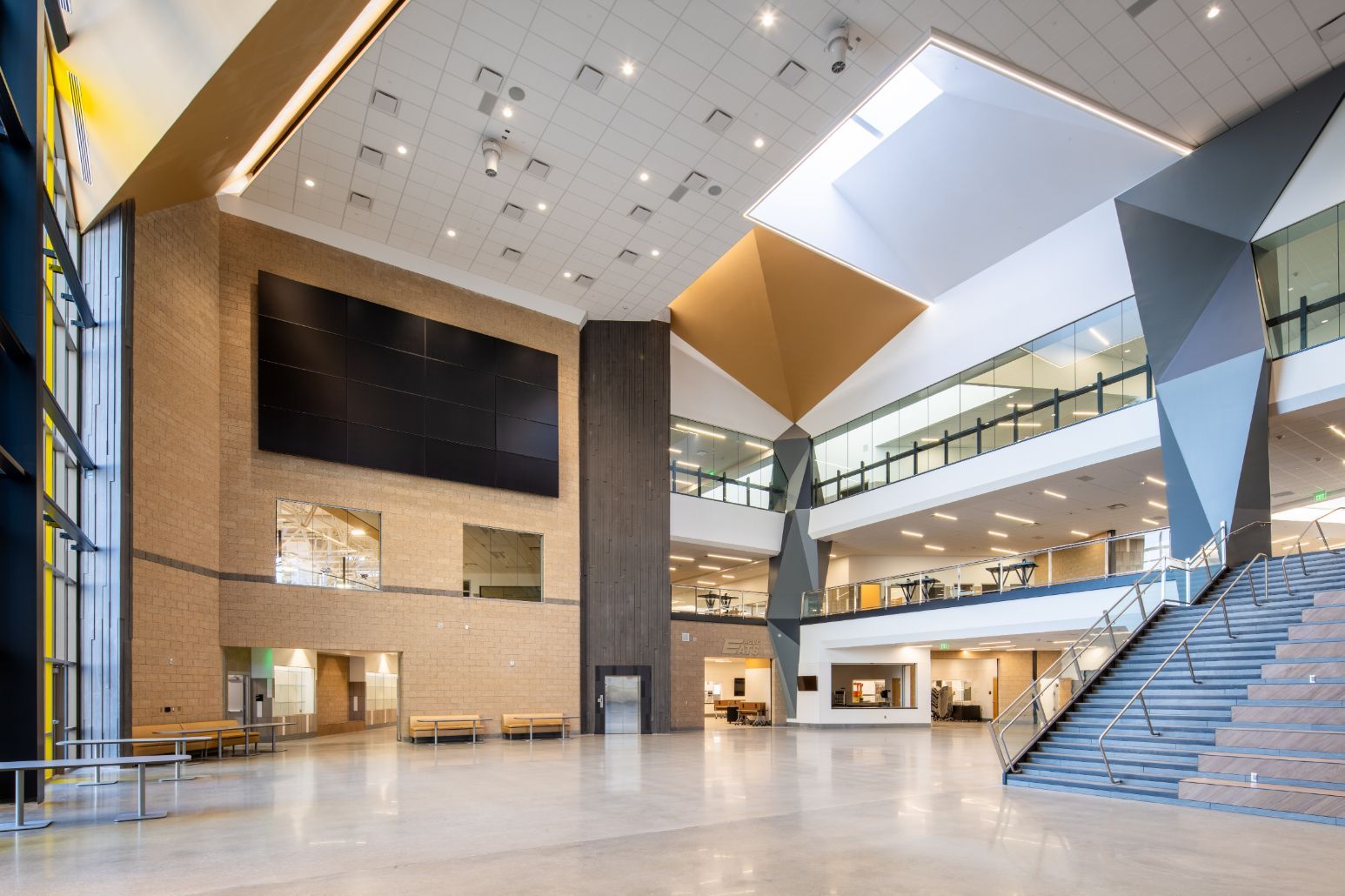
In addition to varied classroom sizes, the school includes a large teachers’ lounge and work area. The expansive student commons features a large set of bleacher or “social” stairs where students can gather. Overhanging the commons space is a 2,300-SF “nest” feature designed to accommodate a variety of functions.
“The team was excited about this ‘eagle’ theme, so we had this idea of a nest and hanging it from the structure. When you’re inside it you look out onto this great, three-story space,” said Cox.
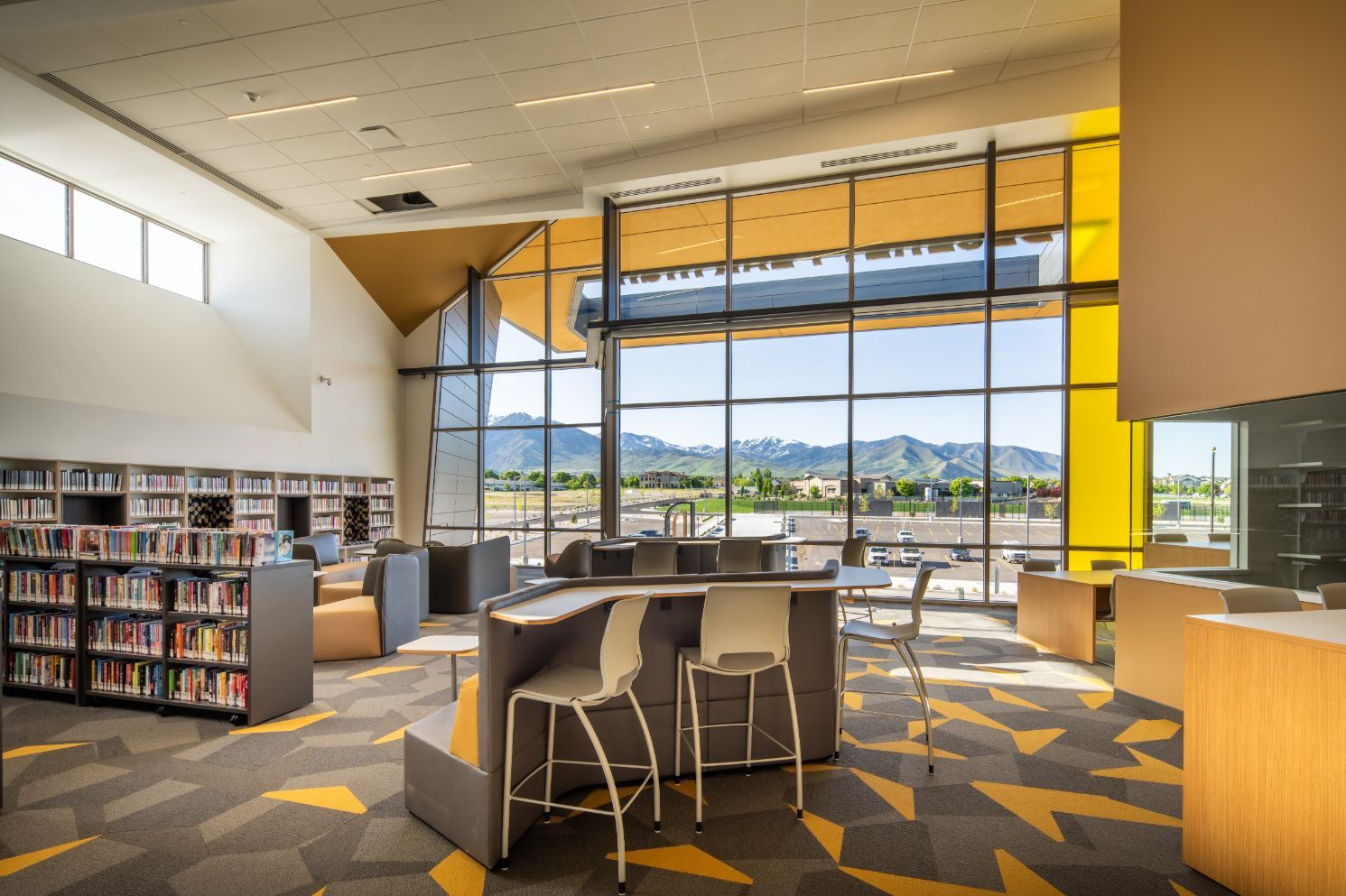
The school library was also designed for modern use.
“The library, or media center, in schools has evolved to be more of a community center, like a coffee shop where people can gather,” Peterson said. “What we did was take all the square footage that would usually be in the library and put it down the corridors so there are breakout spaces down the main thoroughfare of the school. We still have a room that is quieter with stacks of books, but then there are areas that are more social.”
Slide title
Photos courtesy Hughes General Contractors
Button
Slide title
Photos courtesy Hughes General Contractors
Button
Slide title
Photos courtesy Hughes General Contractors
Button
Slide title
Photos courtesy Hughes General Contractors
Button
Slide title
Photos courtesy Hughes General Contractors
Button
New School Tilt-up
The district not only wanted a building to accommodate new ways of teaching and learning, but something that would be durable and reasonably easy to maintain for future growth. As design continued, the district selected Hughes General Contractors of North Salt Lake City to deliver the new school on a CM/GC contract. Hughes and VCBO had worked together previously to deliver a major upgrade and expansion of Alta High school in 2021.
Mark Spence, Project Manager for Hughes, said the project team had used tilt-up panels for the Alta High School project and suggested it as a possibility in Tooele. But Cox knew the idea of using the construction method typically associated with big-box stores and warehouses would be a tough sell to the district.
“One of the first things they said is ‘Don’t just give us a warehouse,’” said Cox. With that in mind, “We have to come up with something that hides the features associated with tilt-up, like the seams between panels.”
Spence was confident the Hughes team could deliver something special.
Michael Garcia, Construction Coordinator for the Tooele School District said the contractor’s previous expertise was helpful in overcoming some of the district’s reservations about tilt-up construction.
“We toured some of Hughes’ other projects where they had done interesting things with the form liners for the panels. VCBO had some big ideas and Hughes found ways to make them work and do it in a way that was economical,” said Garcia. Speed of construction and aesthetic capabilities further sold the idea. “[Hughes] definitely made us understand what tilt-up could be and what it could do for us.”
As a way to hide the seams between panels and create a more visually interesting interior finish, the Hughes team developed casting forms that used four-inch-wide plastic blocks of varying thickness.
“We would put those together in random patterns, and it would make a three-dimensional pattern vertically and across the panel,” said Spence.
The varied pattern made it nearly impossible to tell where two panels joined together. Selected panels were made with colored concrete so future scratches or chips in the material will be almost invisible. Untextured or exposed panels were insulated or paired with masonry or EIFS as part of the interior design scheme.
The designers also turned to concrete to create a durable and low-maintenance floor for the commons area. Spence said that, over the past 13 years, the contractor has developed a concrete slab called “Magic Slab” which is almost completely free of joints and resists cracking.
“We have some 500-foot-long corridors and there might be just two joints. And in the commons,” he said, “it looks just like an enormous slab has been laid down, and it’s nearly joint-free.”
Spence said other operating cost reductions built into the design include the expansive canopies overhanging the building masses on the southeast that serve as the main entrance.
“Those are not just for show. You are able to reduce the size of the mechanical system because the canopies shade the front of the building,” Spence said. “You’re not getting as much direct sunlight in the building, but you’re still getting the benefit of the natural light.”
Slide title
Write your caption here
Button
Slide title
Write your caption here
Button
Slide title
Write your caption here
Button
Slide title
Write your caption here
Button
Slide title
Write your caption here
Button
Slide title
Write your caption here
Button
Going with the Flow
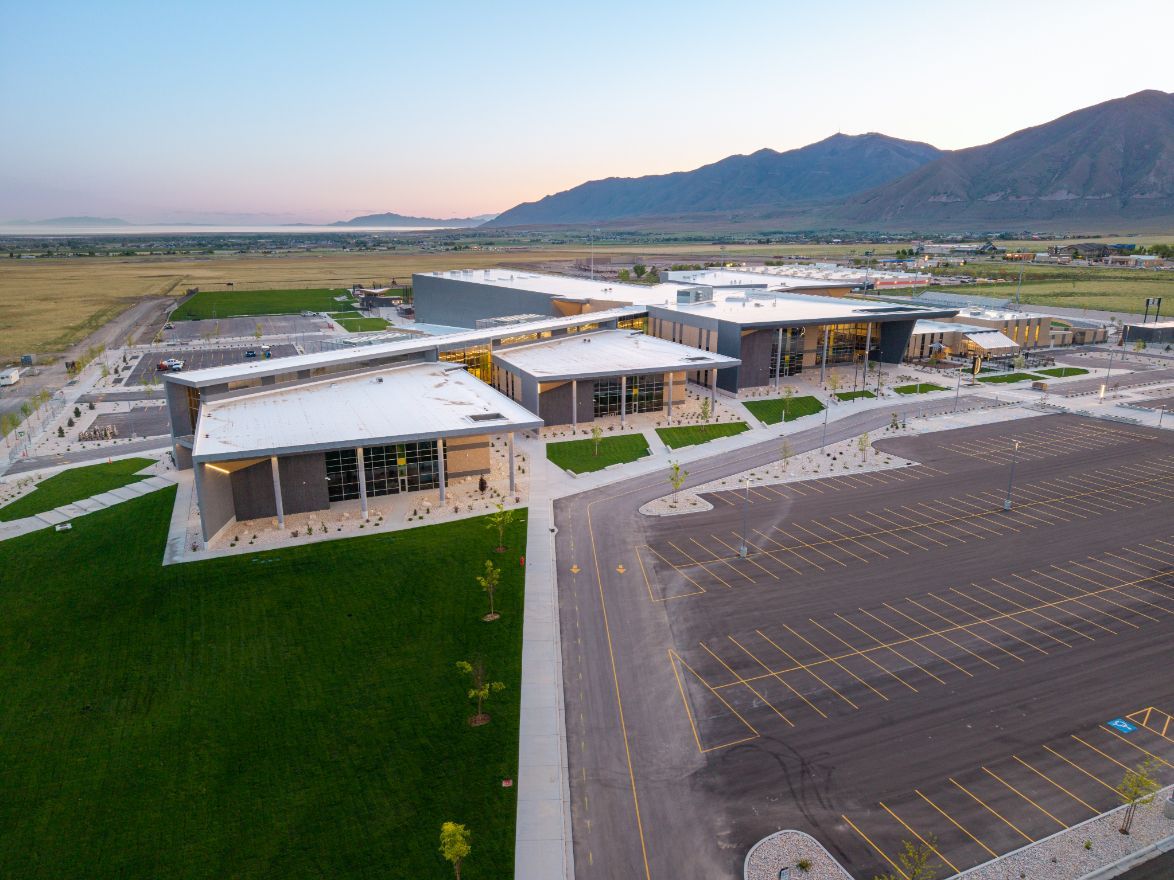
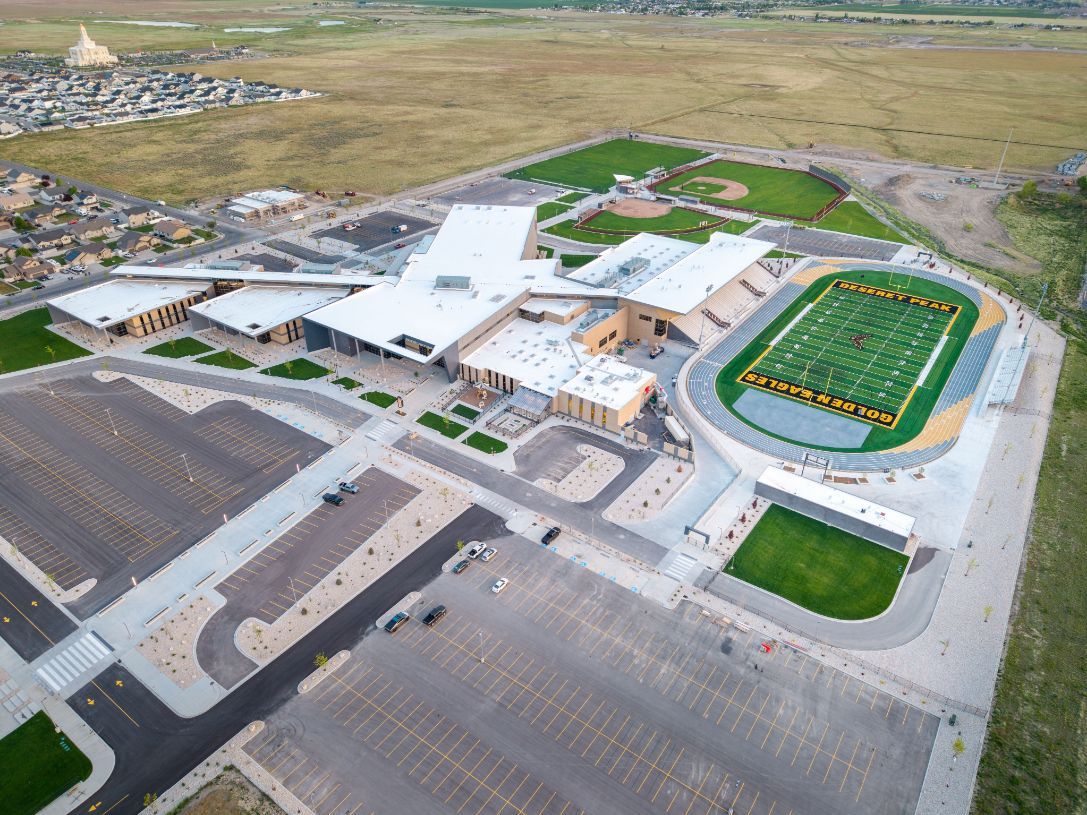
The building’s angled orientation on the 57-acre site was the result of the topography, according to Peterson.
“The grade changes about 60 feet from north to south, and it slopes toward the northwest and toward the lake. We decided to use that to our advantage,” he said.
The building mass was broken into seven sections and rotated to fall along the site’s contours.
“When you walk into the building you are really on the middle floor, it’s like a split-level,” said Peterson. The slope also enabled the taller elements like the fly loft for the auditorium to be integrated into the overall massing.
“Visually, you don’t see this big box sticking up because it steps down a story,” said Peterson.
For Spence, one of the early challenges of the site was the existence of a FEMA-designated floodplain on one corner.
“It can be a long process trying to get a floodplain rerouted, and we didn’t want to slow down the project,” said Spence. Instead of adding years to the project timeline, “We worked with the design team to get all the programming we needed on the site and just snip off that northeast corner of the site.”
Playing fields were regraded to go south and west of the floodplain, while some of the excavated material went on the other side of the floodplain to further reduce costs.
Cox and Peterson said they feel confident the design will serve the district well into the future, even though there will undoubtedly be changes in how schools choose to operate.
“We are constantly thinking about what’s next,” said Peterson. “I need to think about what kids are going to need 60 years from now. 98% of the kids who are going to be using this school have not even been born yet.”
Cox said even as some things change over decades, others remain constant.
“In 60 years, kids are still going to need spaces to socialize and work on team projects,” Cox said. “They are still going to need daylight and need athletic and academic spaces; those things aren’t going to change. And we feel like the way we’ve approached this, in a transparent and team effort, is most likely to succeed in the future.”