Design and construction teams working at “ludicrous” speeds delivered more than the Utah Mammoth’s new practice facilities, but also a fitting tribute to Utah’s strong hockey culture.
By Taylor Larsen
I was shocked at the response from the owner of Play-It-Again Sports when I asked him in spring 2020, “What equipment surprises you at how fast it sells out?”
“Ice skates,” he answered, specifically referencing the amount of hockey equipment purchased from his sporting goods store for all levels and ages of players. “You wouldn’t believe how hard it is to keep them in stock. We sell out every year.”
Hockey in Utah, unbeknownst to me, was skating under the radar. But when Ryan Smith purchased the Phoenix Coyotes NHL franchise and moved it to Utah in 2024, hockey talk buzzed. From that point on, the gears were in motion to honor the state’s underrated hockey culture with more than an NHL team, but with the facilities that Utah’s hockey-playing community has long deserved.
Foundational Plans
Culture changes are organic and often slow to evolve, especially in hockey. Case in point, the NHL didn’t mandate helmet use until the 1979 season. So many exceptions were made to that rule that the 1996/1997 season was the last one where a player competed without a helmet.
But culture can change quickly, too. Smith Entertainment Group (SEG), the owners of Utah’s new hockey franchise, sought to build on an existing culture, where the Utah Mammoth Ice Center would be built for NHL-level player development and community engagement. Jim Olson, SEG’s executive representative on all facilities projects, mentioned how touring practice facilities for the Seattle Kraken and Vegas Golden Knights, two of the NHL’s newest teams, helped to reinforce some of the decisions on the Mammoth’s location and amenities.
“This place had to have a great flow and a great vibe for the team,” said Olson, referencing the questions SEG proposed during design: “How do these athletes go from skating to treatment? And since these athletes are here for so long, would this be a place that they would want to hang out? Where they would want to be?”
The second key component was getting the public space right, where visitors would have a high degree of visibility and access as they went from the parking lot into the lobby and locker rooms before heading to the ice sheets.
Lingering over both desires was speed—Connor McDavid-level speed—to deliver the facility before the 2025/2026 NHL season, just over a year after Smith and SEG purchased the team and brought it to Utah.
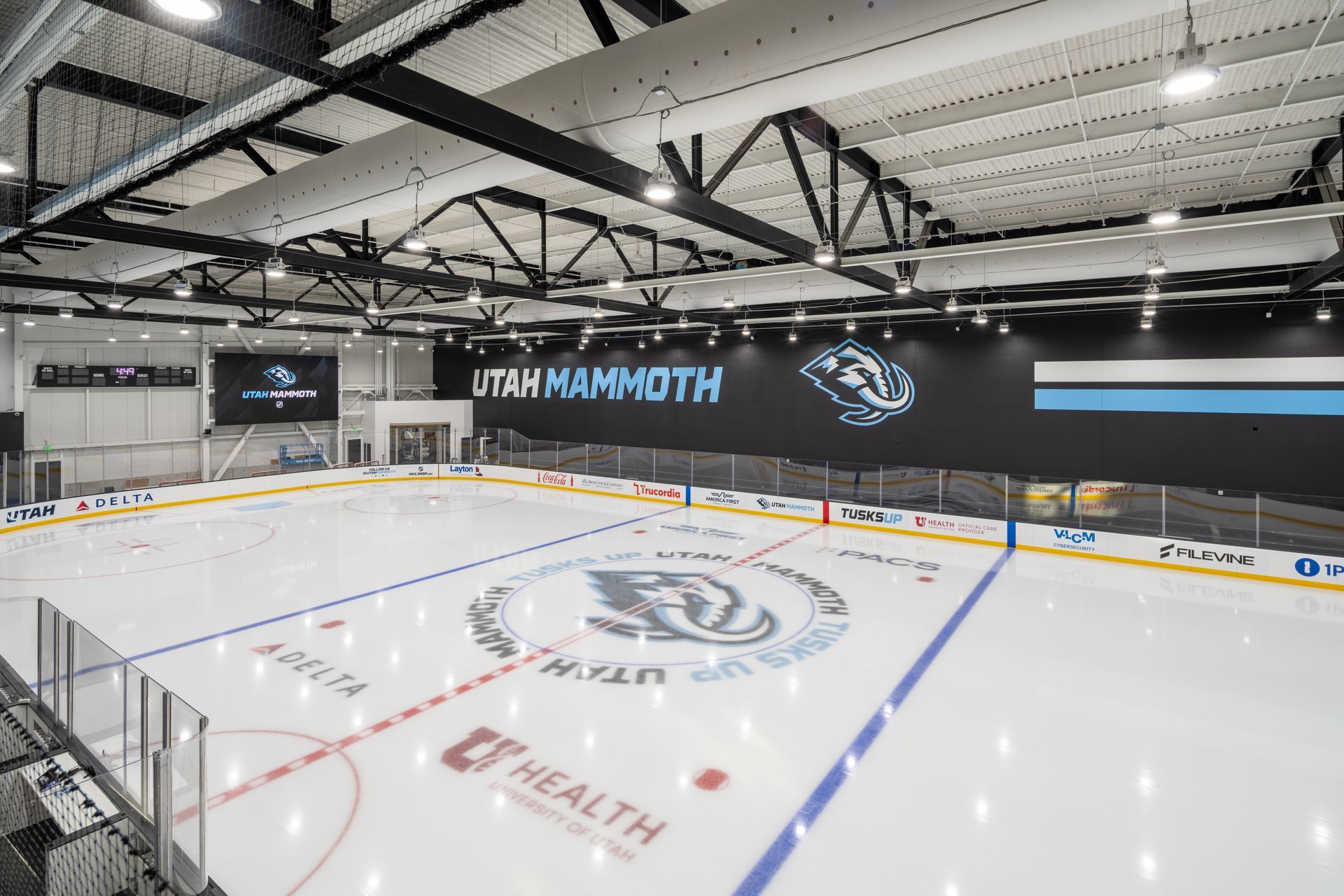
SEG hired Babcock Design and Layton Construction in a CM/GC contract that included many team members and firms who helped deliver the Olympic Oval in Kearns over 20 years ago. This team would design and build a new, NHL-level facility in an impressive 14 months, well ahead of typical timelines for a project of this scale.
Slide title
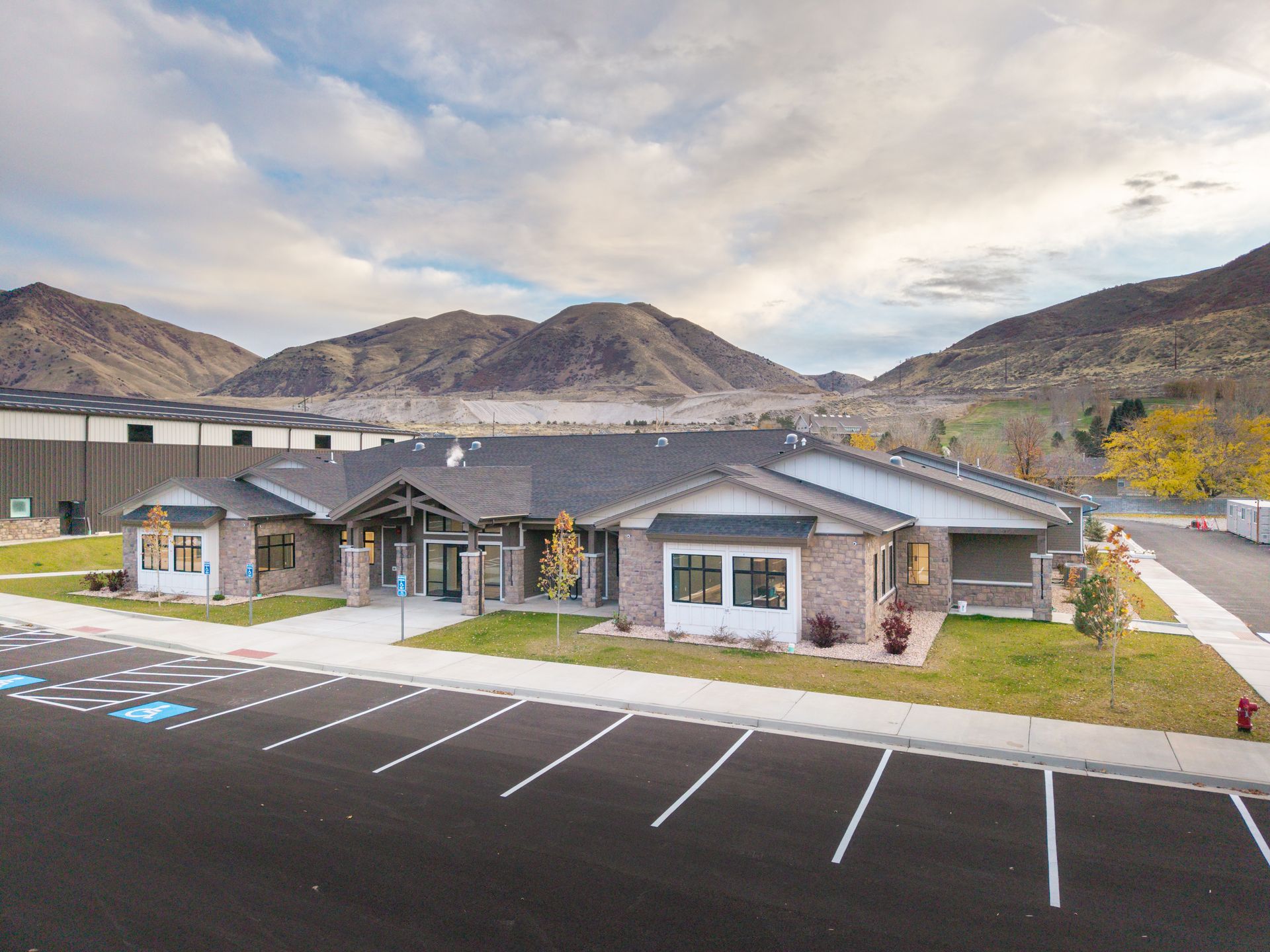
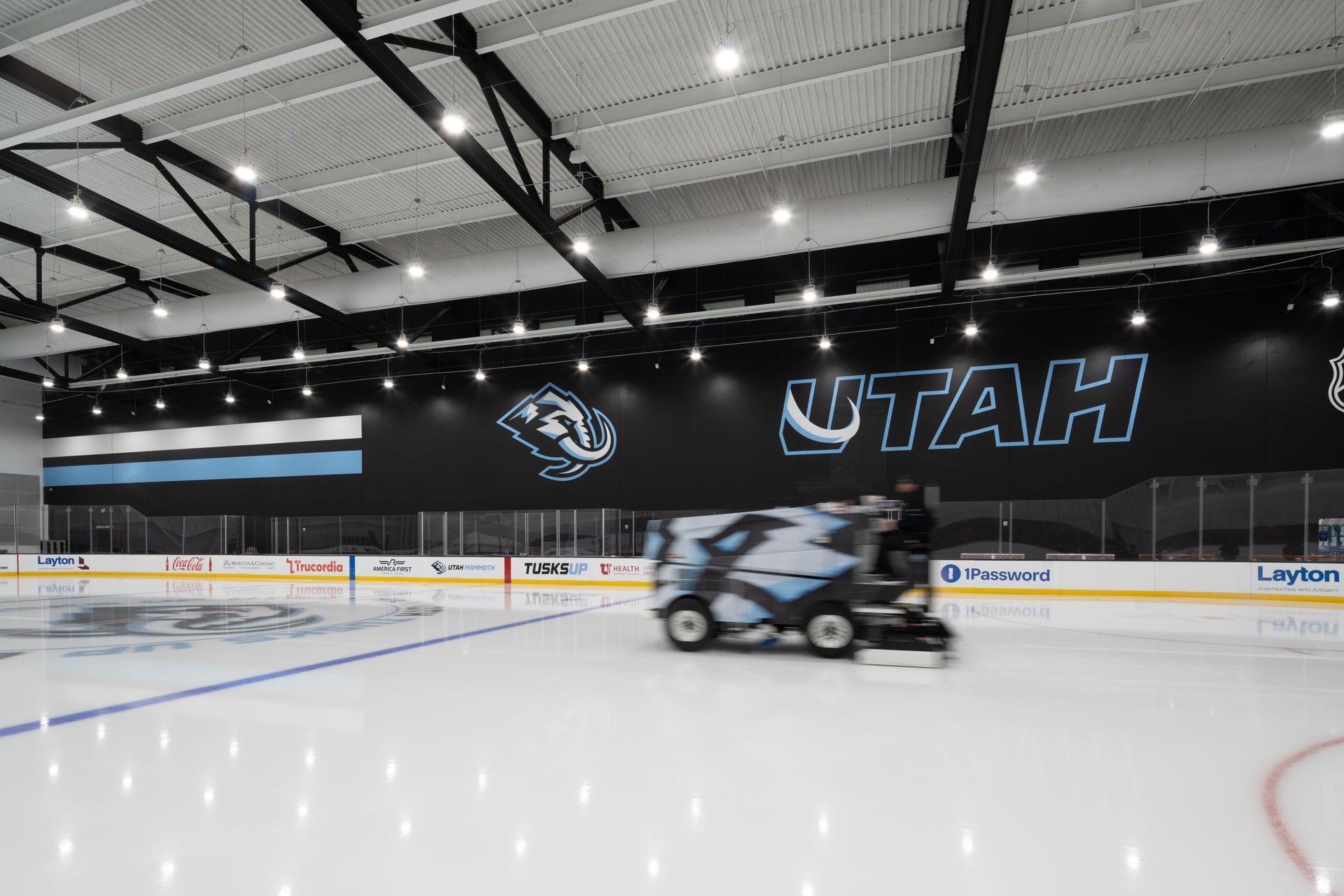
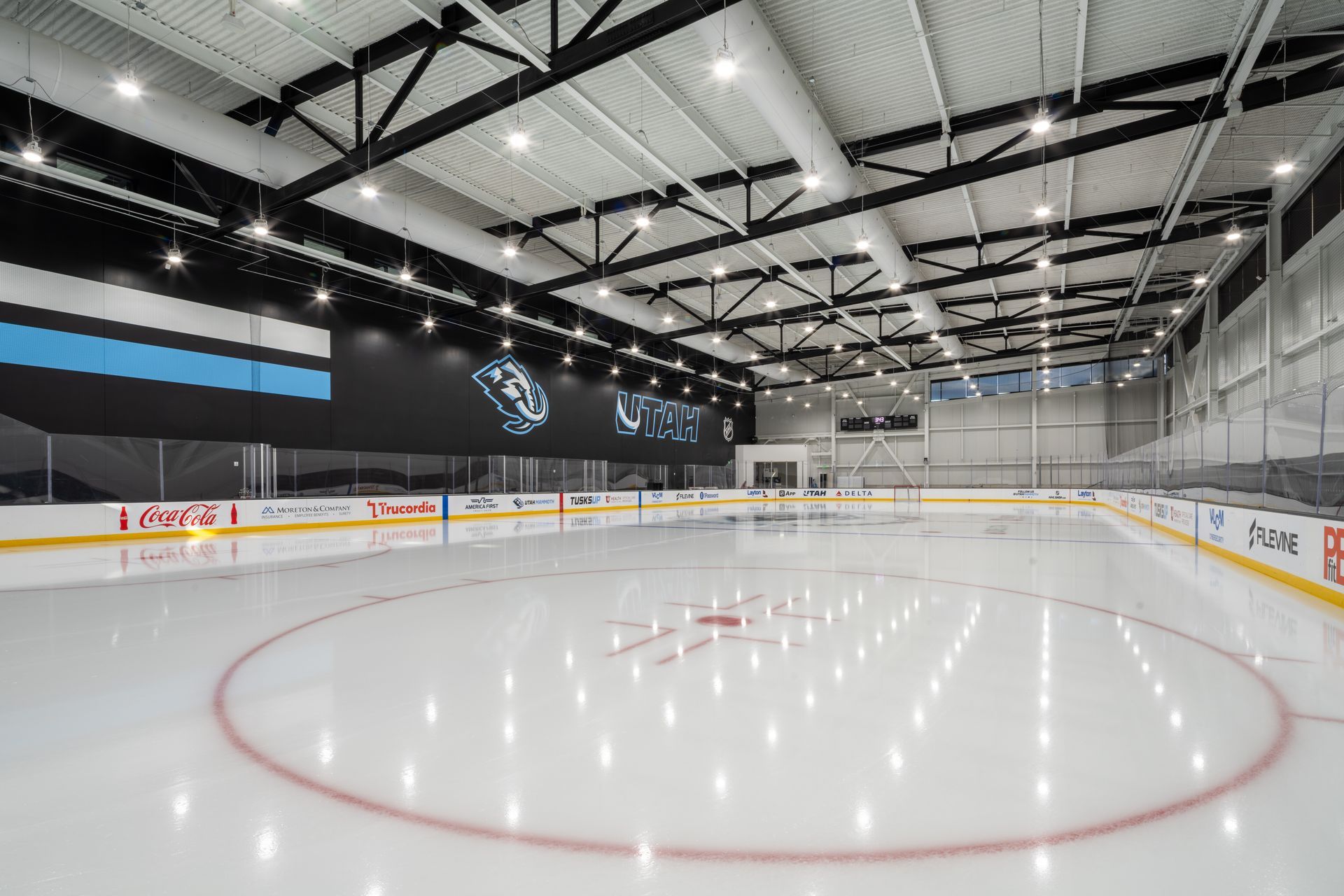
The ice box served as the project's critical path (photos courtesy Layton Construction)
Button
Slide title
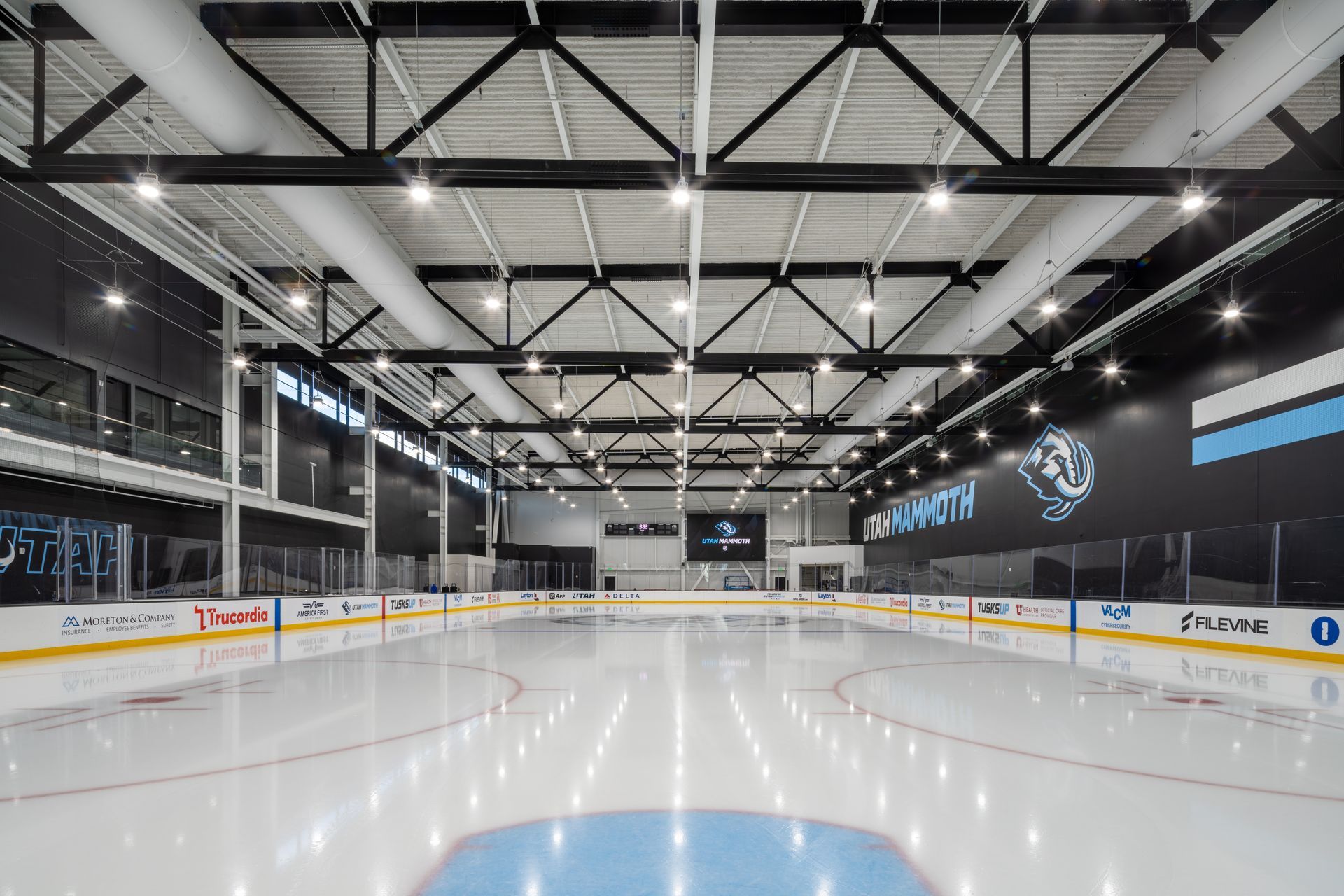
The ice box served as the project's critical path (photos courtesy Layton Construction)
Button
Slide title
The ice box served as the project's critical path (photos courtesy Layton Construction)
Button
Slide title
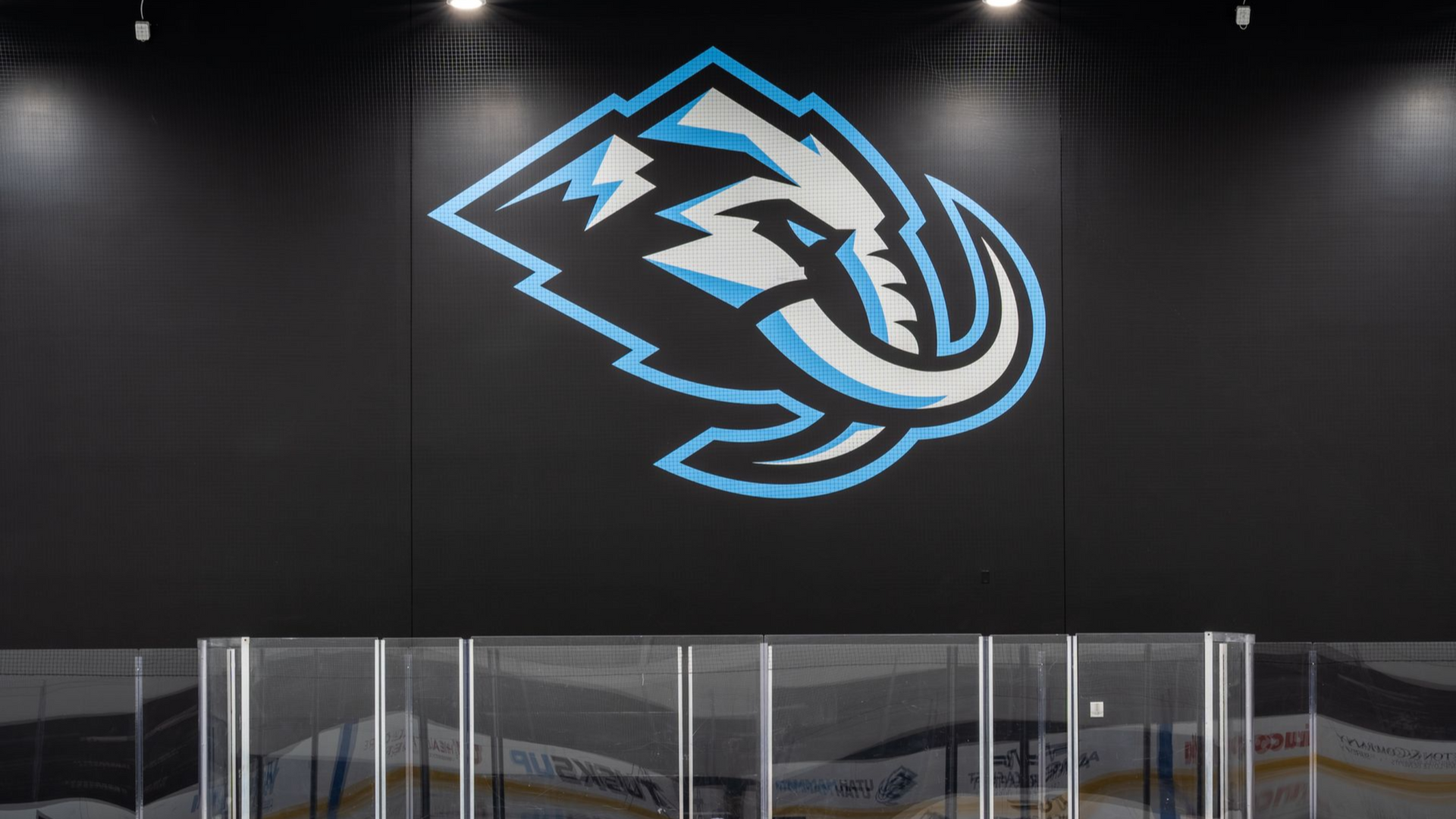
The ice box served as the project's critical path (photos courtesy Layton Construction)
Button
Design History and Experience
Push Ice Box Forward
Much like building culture, building expertise in design and construction takes time and repetition.
For Rob Cottle, expertise in ice rink design began before the new millennium. He said the prospect of designing the Olympic Oval in Kearns for the 2002 Winter Olympics lured him back to Salt Lake-based GSBS Architects. There, he served as Project Architect and later Project Manager on the GSBS team designing the facility, with Sandy-based Layton Construction leading efforts to build the iconic speed skating venue.
“It was a good three years of my life,” said Cottle, now Babcock Design’s Principal and CEO. He smiled as he recounted learning so much—maybe more than he ever wanted to—from researching and traveling to visit Olympic-level and other speed skating rinks in North America. At the time, the Olympic Oval would be the 12th indoor speed skating oval in the world, and just the fourth built to Olympic standards.
As design on the facility’s long-term viability beyond the 2002 Olympic Winter Games concluded, Cottle was sure he would never use his ice-making design expertise again. He remembered a conversation with Kevin Miller, his then-supervisor (now President) at GSBS, who told Cottle: “Congratulations. You’re an expert on the rarest building type on the planet.”
But if the opportunity ever presented itself to build professional-grade sports ice again, Cottle said, “I could certainly fill the role.”
When SEG presented the opportunity to work with the Layton team again on another ice skating venue, Cottle was ready and willing.
“I’ve worked for my entire career on different projects with Layton,” said Cottle, detailing how good relationships with the builders were key in winning the job. “I dusted off my memories of how to make ice—it certainly came in handy.”
Rick Millward, Sr. Project Manager for Layton Construction, explained how the general contractor’s expertise in ice-making capabilities and supporting infrastructure also came in handy to support the two ice rinks that would go up on the south end of The Shops at South Towne in Sandy.
One critical decision made hay—ice in this case—as the project team designed for and procured an ammonia refrigeration plant system engineered and installed by Canadian refrigeration specialists CIMCO. Millward praised the CIMCO team for its efforts to design-build a system that serves as the backbone of the facility.
“The system is responsible for not only ice production, but also integrates with the building's HVAC to regulate overall climate conditions,” said Millward. The plant integration shaved at least two months off the construction schedule. He continued, “It saved a lot of money and time as, without that integration, we would have had to provide two separate systems, one to support each part of the building.”
The “ice box” that houses the two ice sheets and supporting infrastructure is economical and architecturally unique, with a tapered roof form providing architectural flair. Insulated metal panels, where two metal panels sit either side of four inches of insulation, serve as the exterior and interior skins. Panels are an all-in-one assembly that allowed for quick installation as they work in tandem with the HVAC system to keep temperatures inside between 55 and 60 degrees.
Moving at “Ludicrous Speed”
While the ice box served as the critical path, the whole project required the same level of dedication, expertise, and precision driven by ownership and executed by the design and construction teams.
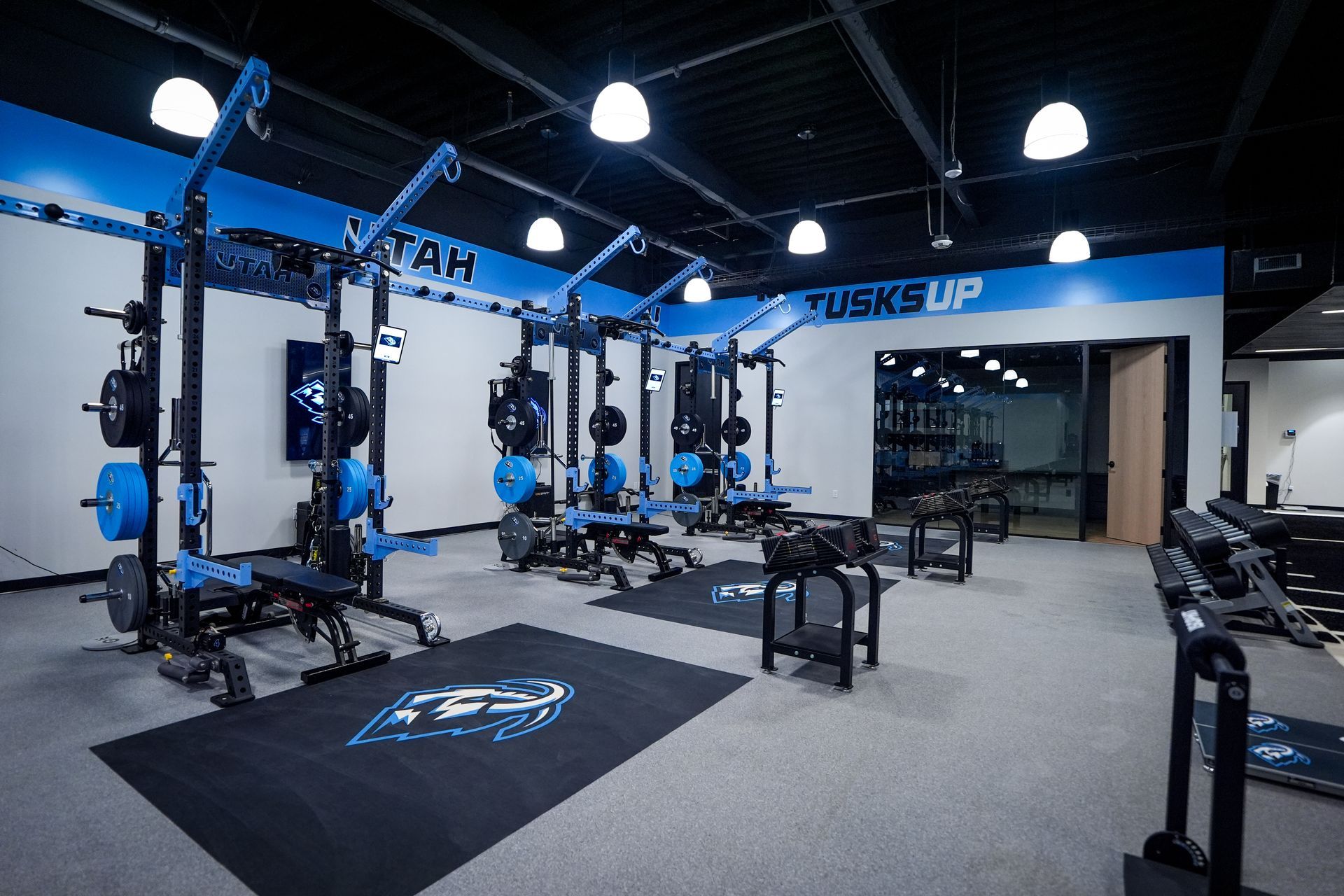
“SEG, to their credit, bit off a huge task,” said Cottle. The gas pedal would be on the floor for everyone involved to deliver the entire project—a 146,000-SF, state-of-the-art complex for Utah’s new NHL franchise, with the two previously mentioned rinks, a 8,082-SF dry gym, player recovery suite, team offices, equipment management spaces, and a commercial kitchen with dining and lounge areas—to be ready for player use by October 2025.
“We were moving at ludicrous speed,” said Cottle, quoting the infamous line from cult classic movie
Spaceballs. He credited a stellar consultant team who worked within evolving design constraints to help push the project forward, saying, “It was a lot to figure out in a short period of time. […] Lots of on-the-fly modifications, where the team had to be flexible and roll with it.”
Millward agreed, saying, “The design team, owner representatives, and the Layton Construction team met multiple times a week, and daily at times, to review the status, make decisions, plan design deadlines, and work that all into the construction schedule.”
Working with an active and open mall environment was another challenge that required careful safety planning, constant construction coordination, and communication with South Towne management so that deliveries, material staging areas, construction parking, and other activities didn’t disrupt the nearby shops and restaurants.
“It wasn’t the simple—complete design, order material, start work,” said Millward. “Design items and construction plans were being created, and we were building as fast as we could get information.”
He and the other Layton teammates accommodated for both speed and quality by scheduling frequent walk-throughs of the emerging construction, ensuring what was on paper matched the vision and intent of all the end users. Considerations from ownership and hockey team personnel made for an evolving project, even as construction teams were putting up walls and installing equipment.
“But we all knew and understood this,” said Millward, ”so all parties were extremely flexible to work with the additions, changes, and needs that came out.”
Core trade partners came aboard fully committed to the timeline and goals. Each provided the needed manpower for two-shift days to move the project forward, with Millward crediting the following firms for their precision, speed, and attention to detail:
- Lundahl Ironworks Company—ice rink structural steel fabrication and roof trusses;
- Wasatch Electric—building electrical systems;
- Automated Mechanical—main rooftop unit mechanical equipment procurement and installation for air circulation;
- Palmer-Christiansen—plumbing and pumps for custom-built cooling equipment that tied into CIMCO’s ammonia refrigeration plant;
- Wallboard Specialties and Contempo Cabinet & Mill—custom design on interior finishes and locker room millwork.
- Alignment was crucial in delivering something so important to the team and community.
“There is no question this singular building will have a lasting impact on our community,” said Layton Executive Vice President Dave Whimpey. “Delivering it within such a tight window required every partner—including Sandy City—to come to the table with solutions.”
Cottle said Sandy City helped move the project along with a standing weekly design review meeting held on Mondays with the City’s team leads. “They didn’t waive any requirements—we still had to follow their rules and submittal processes to the letter,” said Cottle. “But the thing they did was be available and do what they could to expedite reviews. They were a good, cooperative partner.”
Slide title
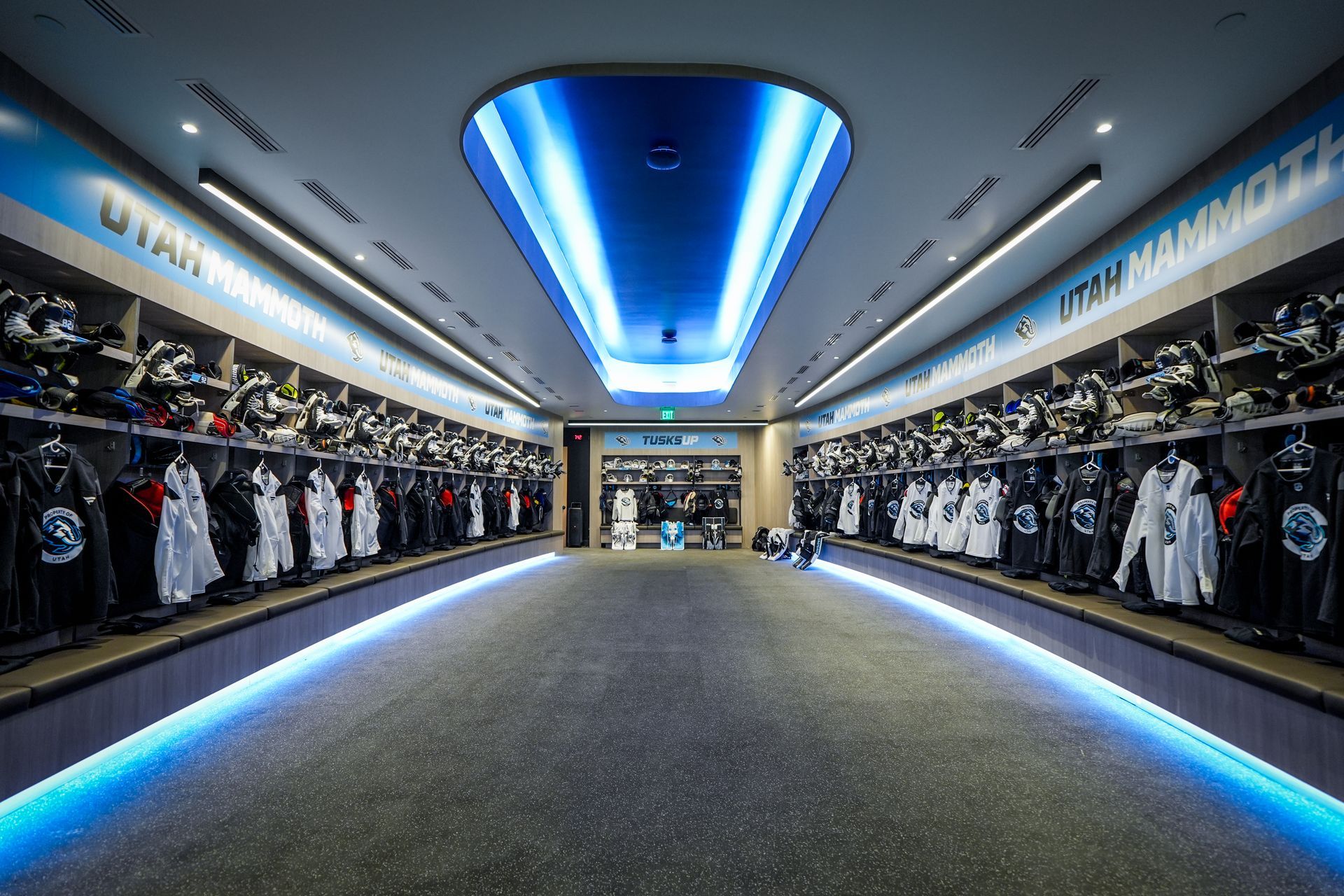
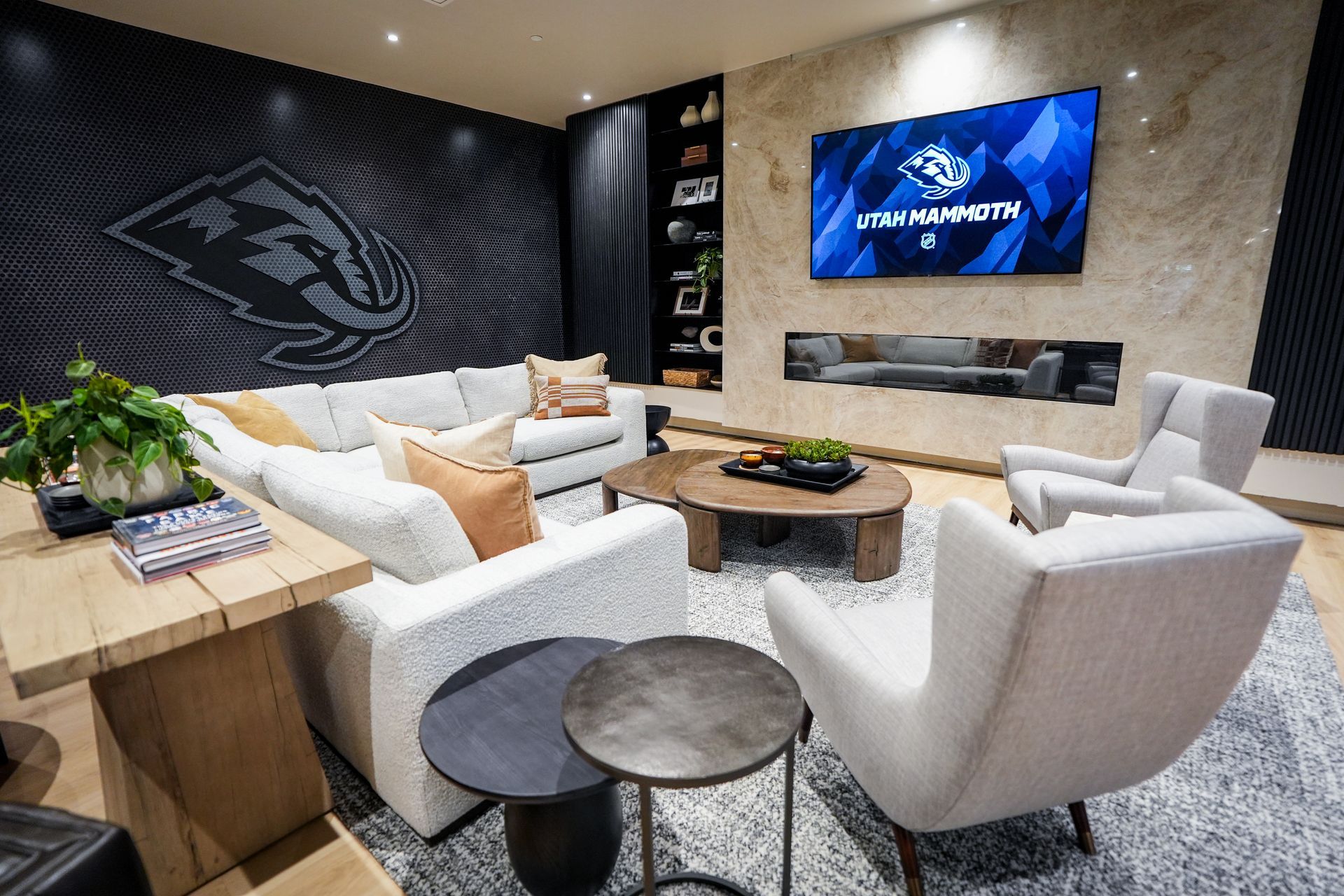
Utah Mammoth player and staff spaces (courtesy Layton Construction)
Button
Slide title
Utah Mammoth player and staff spaces (courtesy Layton Construction)
Button
Slide title
Utah Mammoth player and staff spaces (courtesy Layton Construction)
Button
Slide title
Utah Mammoth player and staff spaces (courtesy Layton Construction)
Button
Slide title
Utah Mammoth player and staff spaces (courtesy Layton Construction)
Button
Establishing Mammoth Basecamp
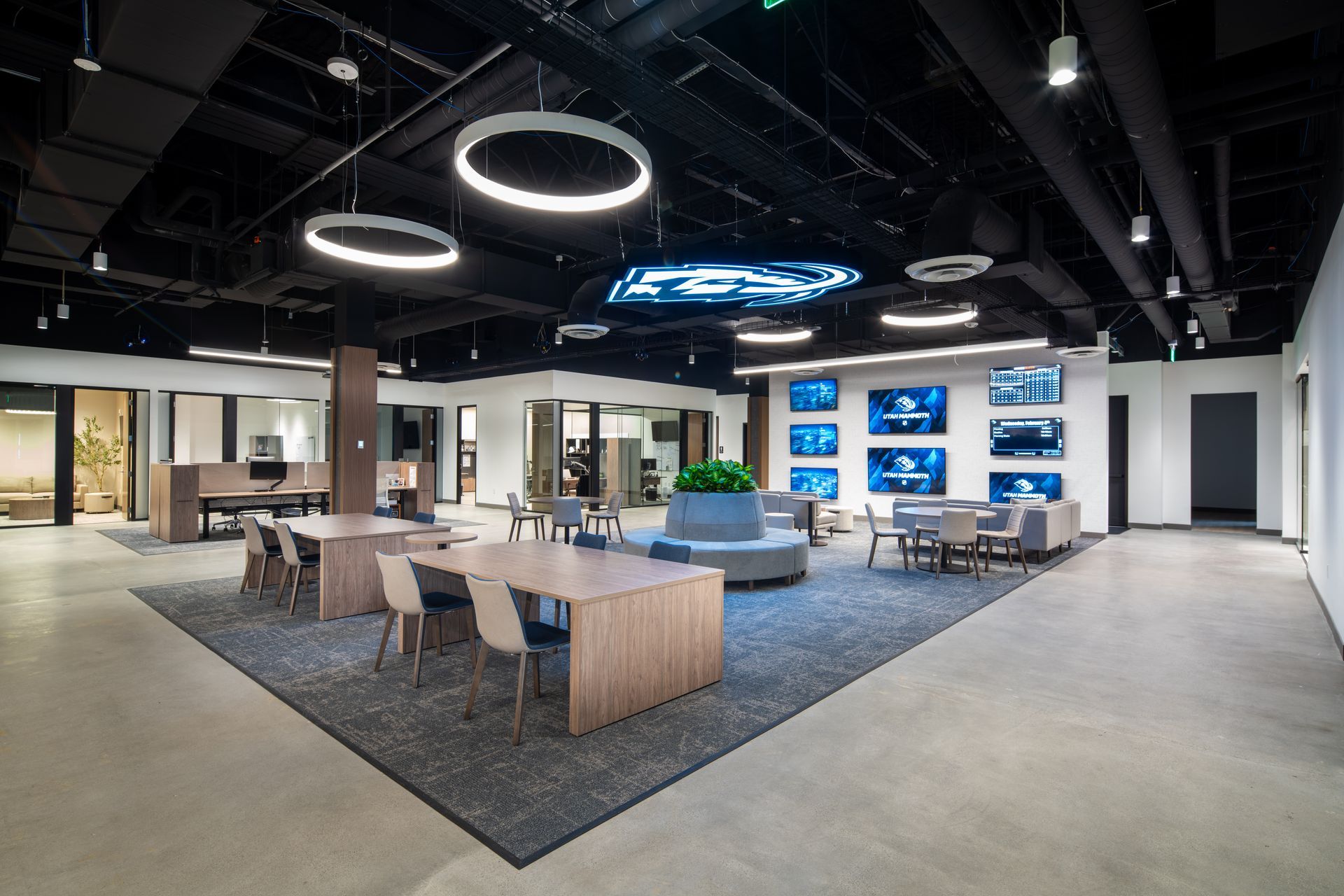
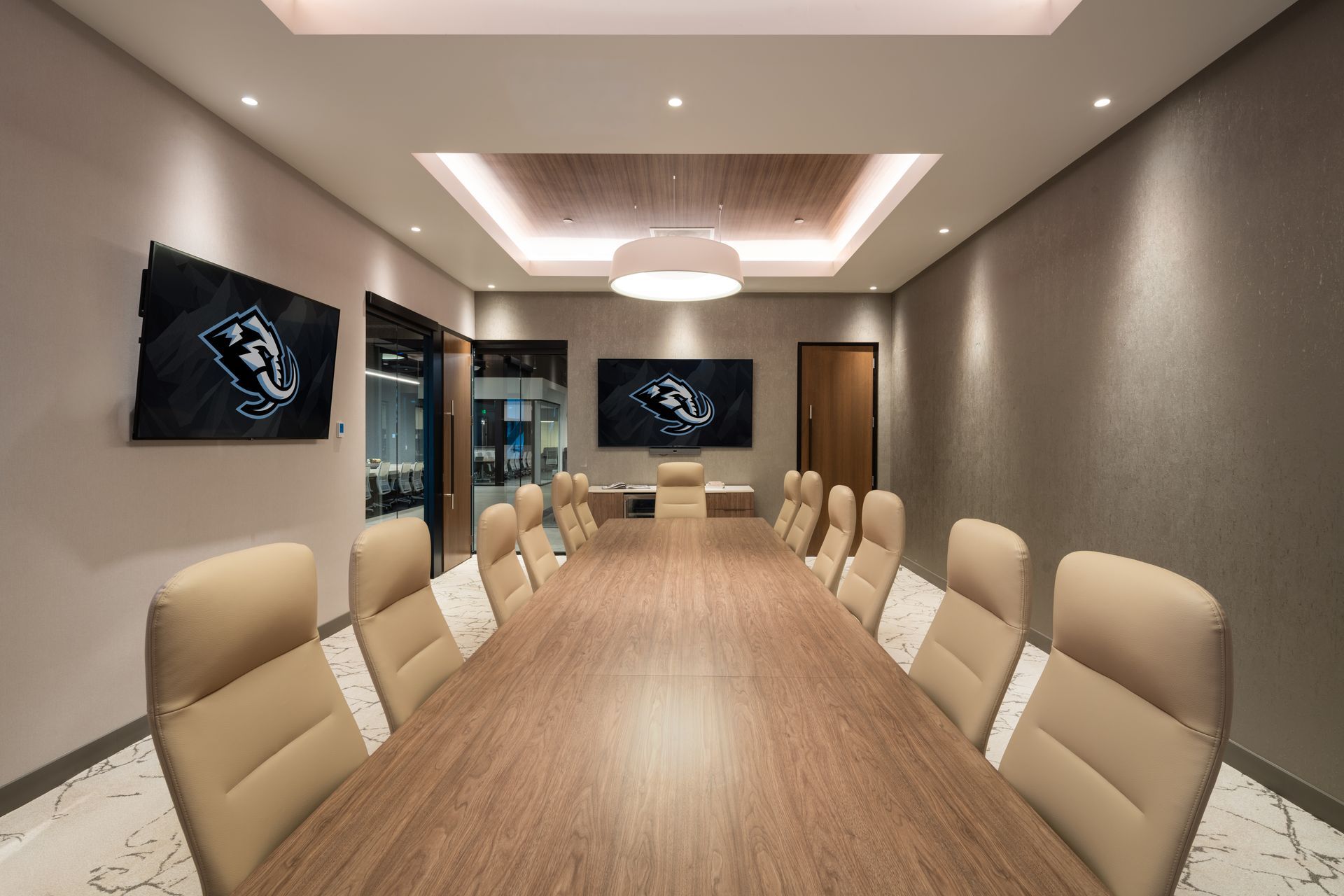
The facility is mixed-use to the max, with design incorporating offices for SEG’s Utah Mammoth staff. Whitney Reynolds, Head of Interior Design with Alpine-based Ezra Lee Design + Build, said her firm’s scope involved designing these offices to a high-end hospitality standard. With a generous amount of space to work with, she and the Ezra Lee team worked closely with the Babcock team to ensure cohesion across the separately designed player and office spaces.
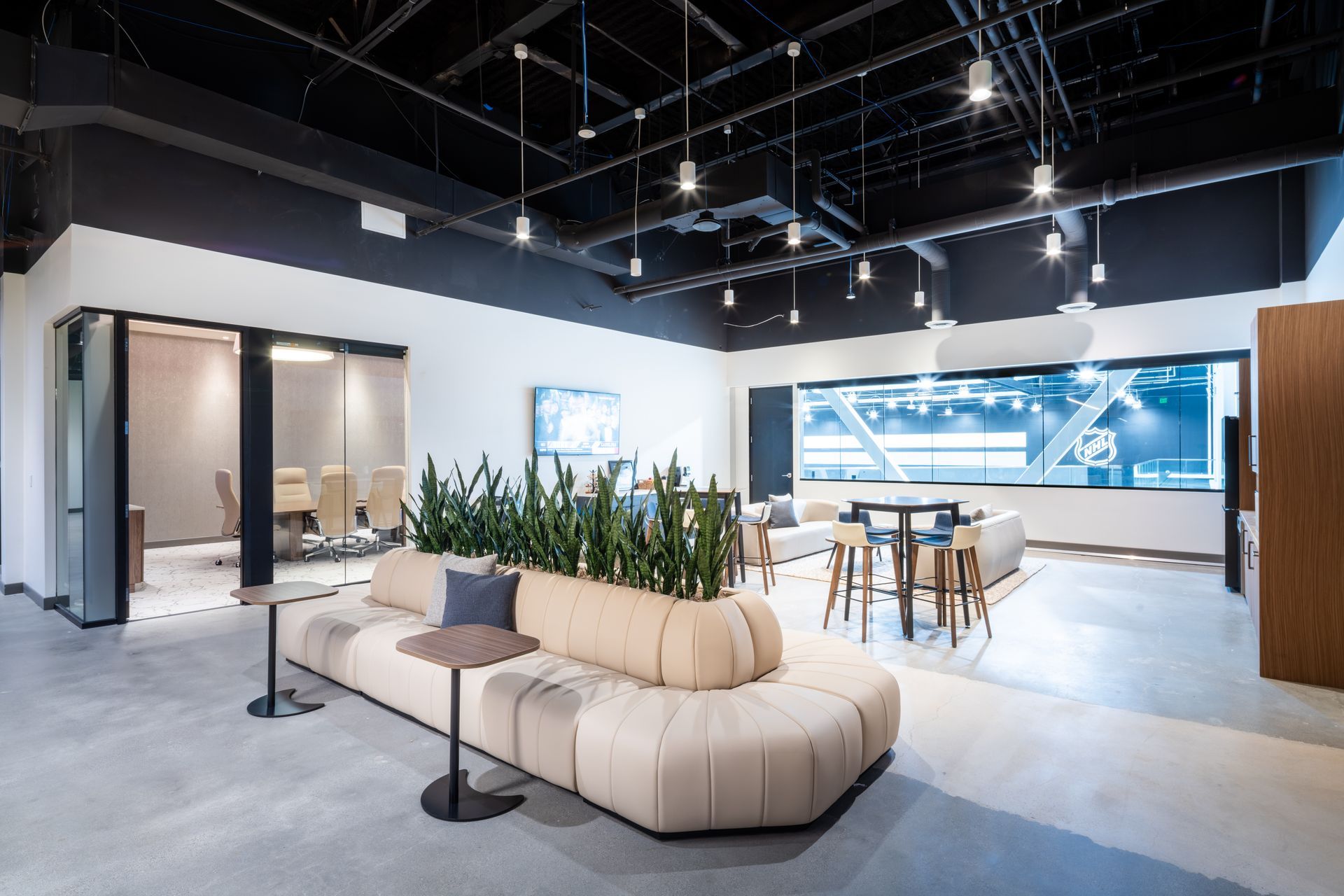
“We wanted people to feel like it’s a hockey space, but without overly branding it with logos and hockey sticks,” said Reynolds of the offices. Instead, design choices are “little easter eggs”, like the lighting fixture in the reception area shaped in a mammoth tusk, the subtle pill-shaped break lounge sectional and integrated planter that nod to ice rink geometry, and ombré ice-blue glass side tables that reference the team’s color and hockey’s playing surface.
While the offices are spacious, the interior design was constrained as the offices do not contain exterior-facing windows to bring in natural light.
“It was very important to bring natural life into the space,” she said of the challenge. Design brought in high-quality silk plantings and sandstone and granite colors that accentuated a more natural feel rooted in Utah geology. Colors, heavy weave and other textures, as well as natural and nature-inspired materials help soften and reflect the light.
“We worked hard in this space to ensure that we had a mixture of light that played off each other,” said Reynolds. Spatial constraints brought out their design best as they dialed in correct light temperatures for an elevated, focused, and comfortable work environment.
Breathing life into the space led Reynolds and her team to a favorite design feature, where executive office windows overlook the rink. Prioritizing the link between team, management, and community surpasses fandom—it’s culture-defining.
“Hockey is a community sport,” Reynolds began, “And [the Utah Mammoth] welcomes that and wants people to come watch them practice—they feed off of the crowd.” The offices follow that same trajectory, where staff can feel the hockey team’s energy during practices, harnessing it into their work to build up the Utah Mammoth and the community’s connection to hockey.
Interior Architecture
Elements and Amenities
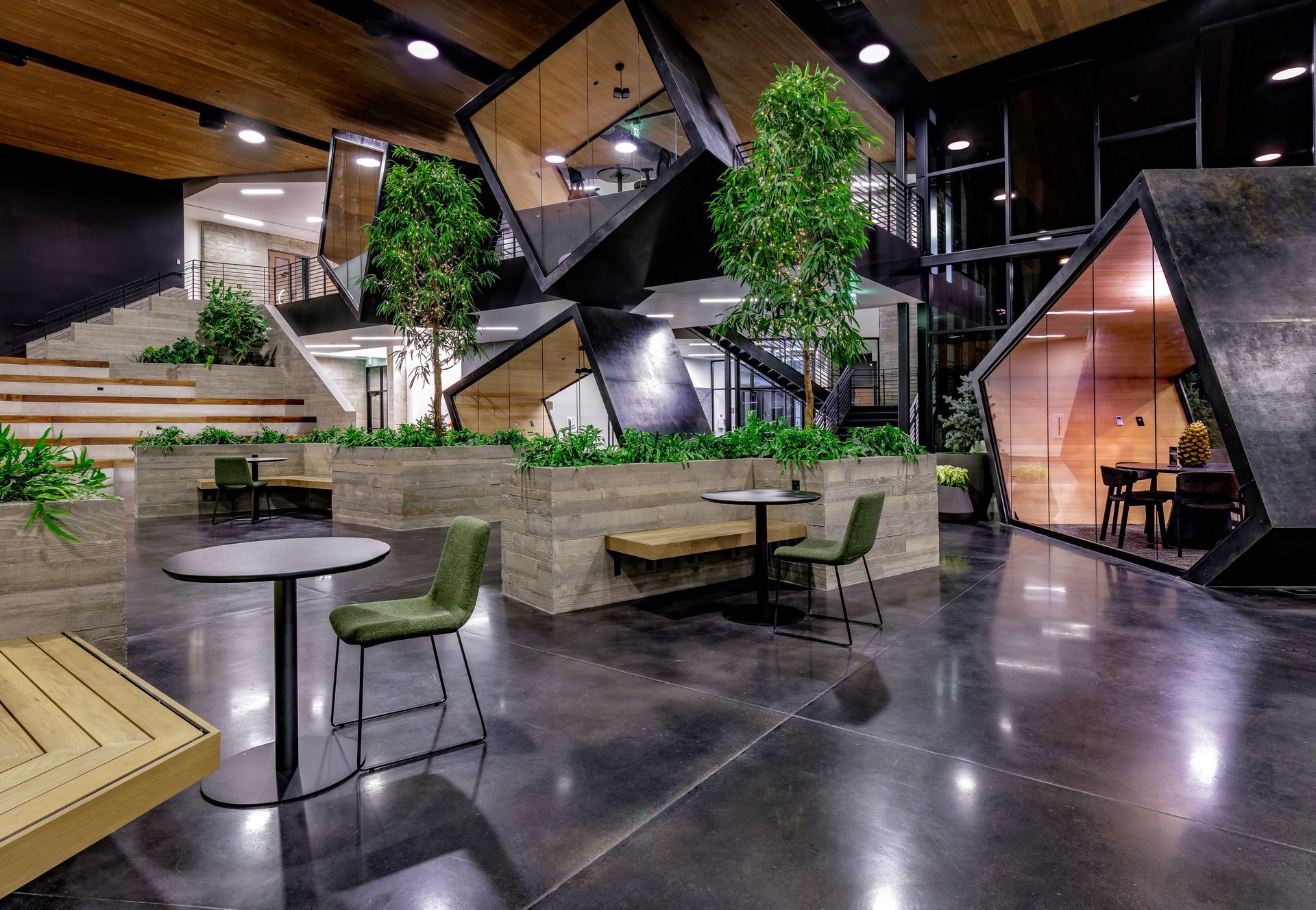
The curtain wall glazing at ground level continues that connection, where a high degree of visibility inside and out engages the public and team as they enter or exit the facility. Cottle noted how design keeps direct sunlight, ice’s kryptonite, limited to public spaces and away from the rinks. Blinds were also incorporated to further black out the sun from reaching the ice at certain points of the day.
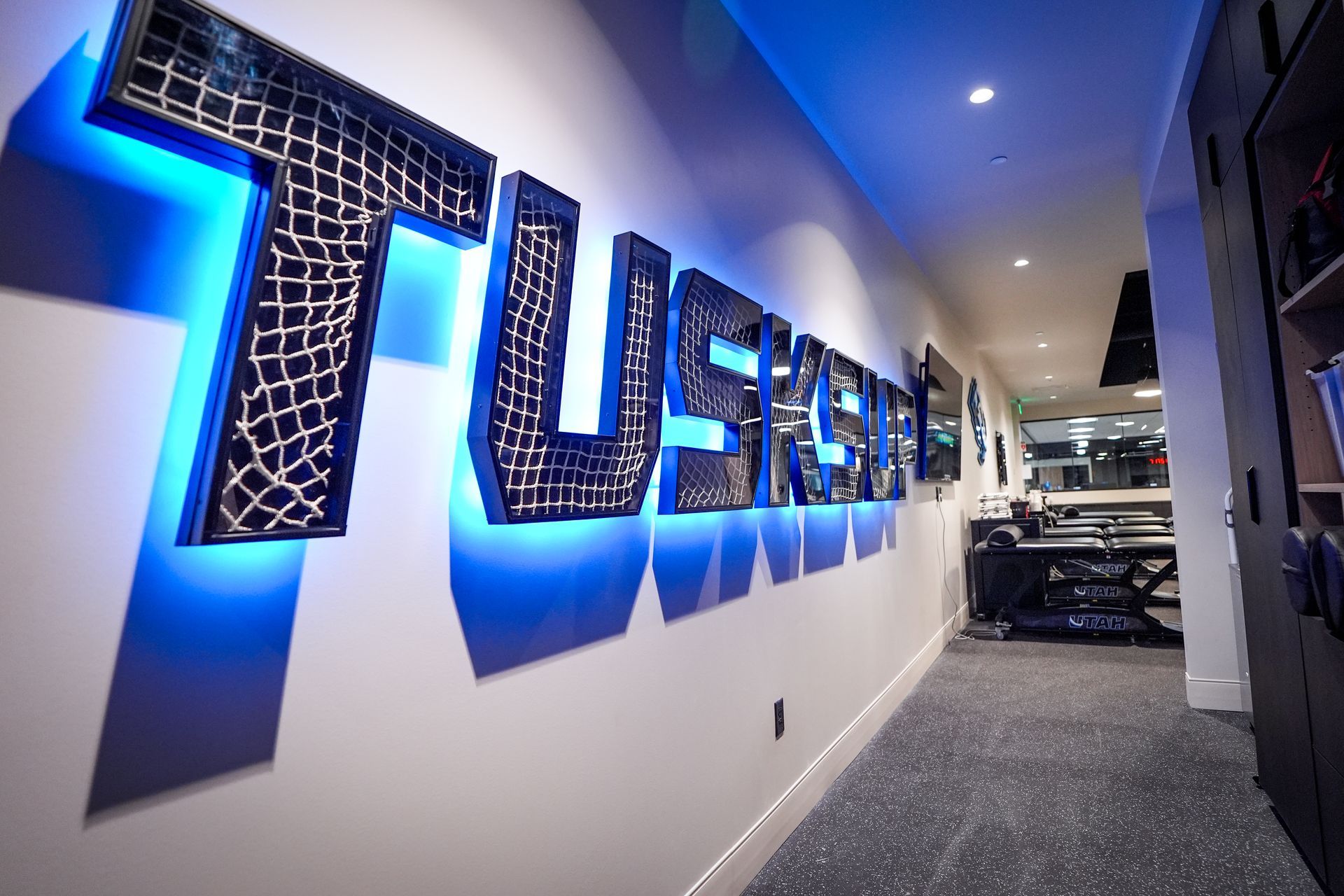
Beyond the ice box and entrance, the facility contains notable player-specific training and wellness features. For starters, the locker room is an exact match of the Mammoth’s game day locker room at the Delta Center. On the ice, a “Local Positioning System” above each rink tracks player performance analytics to optimize performance. After the skates are off, players can enjoy the 22-foot therapy pool inside a recovery suite swimming in other features and amenities. The facility even contains a barber shop and commercial-grade kitchen to serve up delicious meals.
For Jackie Black, FF&E Managing Partner for Babcock Design, the diverse mix of programming had to remain cohesive within the larger whole while still clearly communicating each space’s respective purpose.
High-performance spaces such as the ice rinks, locker rooms, and training areas are intentionally more dramatic, featuring higher contrast and moodier palettes to cue focus, intensity, and energy.
In contrast, wellness areas, like the spa and recovery rooms, shift to lighter palettes and softer lighting temperatures, creating an environment that supports restoration and healing.
Black detailed how even transition spaces became equally important moments within the design that surpass the functional, signaling to end users a shift in purpose and mindset. The stick storage area is a prime example, acting as a threshold as players move from the residential-feeling lounge and into the high-performance zones beyond. Darker materials, dimmed lighting, and more pronounced branding offer subtle cues to players as they mentally shift into preparation mode.
The player lounge epitomizes this cohesive design ethos. There, intentionally blurred boundaries between commercial, hospitality, and residential design combine for a space that feels like home while maintaining the durability required for a high-use facility.
“More than any single element, this space demonstrates our belief that great design is not just about how something looks, but how it feels, and how it influences behavior,” she said, detailing how the 30-person harvest table, fireplace lounge, and flexible seating areas within the lounge further encourage gathering, conversation, and relationship-building. “For Mammoth players, many of whom are new to Utah and rely heavily on their teammates for community, the facility needed to support both high-performance training and meaningful personal connection.”
The main focal wall in the player lounge is a definitive example of this intent and Black’s personal favorite. The composition unifies integrated shelving, a central fireplace, a media wall, and a continuous stone bench via a cohesive material palette. Each element is carefully detailed to stand on its own while working in harmony to create a dynamic, balanced whole.
“In many ways, that wall reflects the essence of a team: a collection of strong individuals, each contributing their own strengths, while collectively forming something more cohesive and impactful,” she said. “It’s a subtle but powerful expression of the values the space was designed to support.”
Slide title
Connections between team and staff, through visible connection, branding, were key in design (photos courtesy Layton Construction)
Button
Slide title
Write your caption here
Button
Slide title
Write your caption here
Button
Delivering Beyond NHL-Caliber Facilities
As a whole, the facility holds special meaning, especially for the industry.
“The Utah Mammoth Ice Center proves Utah’s A/E/C community can compete at a national level,” said Layton Executive Vice President Jeff Palmer. “This facility competes against anything in the NHL— all delivered by Utah talent.”
Deconstructing the Utah Mammoth Ice Center—an ice box with two rinks, offices, lockers, wellness facilities, and more on the south end of a suburban mall—doesn’t tell the full story of what it can accomplish for Utah. As Black explained of the focal wall within the player’s lounge, the whole is more than the sum of its parts—in hockey or the built environment. But there are levels to this that extend beyond exemplary programming, architecture, and construction to create a jumping off point for something bigger.
While team facilities finished in fall 2025, ground floor public spaces finished a few months later, with SEG hosting a three-day grand opening for visitors in February 2026. The event welcomed 5,500 folks to see the Utah Mammoth practice, tour the training facilities, and test out the ice in free skates and hockey training sessions. There, visitors could see the seamless flow between professional and public zones for skate rentals, concessions, and public locker rooms, reflecting SEG’s mission to be deeply rooted in the community.
Ownership sees the vision beyond just one facility, as Smith and the SEG team have gone public with plans to help finance up to 20 additional rinks across the state, building on Utah’s ongoing hockey legacy.
“Hockey has been here. This facility gives younger players a chance to join in on hockey and grow sportsmen,” said Reynolds of the arrival of the Utah Mammoth Ice Center. It’s more than an NHL-caliber facility, it’s the beginning of a new era for the sport in Utah, where a Utahn who grew up skating here—or even the Utah Mammoth—may one day hoist the Stanley Cup.