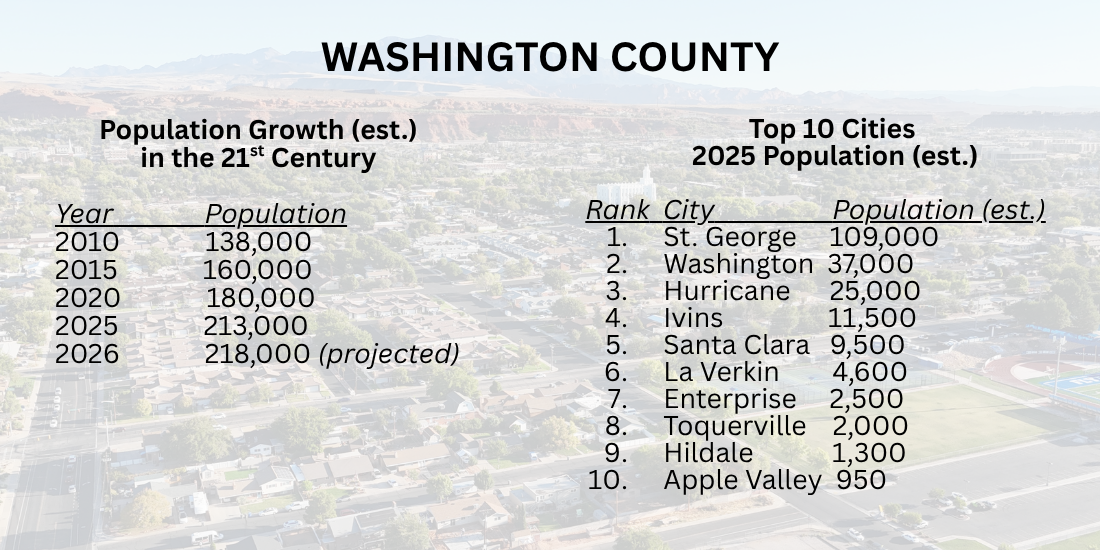









Led by the City of St. George, Washington County has experienced explosive growth of more than 50% over the past 15 years, ranking in the top 5% of all U.S. counties and fueling strong demand for commercial construction projects.
By Bradley Fullmer
As one of the fastest-growing regions in the entire nation, Southern Utah—specifically Washington County and the City of St. George—is experiencing a significant boom in commercial construction activity, transforming the once-sleepy southwestern county into a group of modern, thriving communities and spurring substantial economic growth county-wide.
"One thing that has amazed me [...] has been how fast this community has been growing while not losing its secret sauce," said Chad Thomas, Economic Development Director for the City of St. George. "When you look at the history of St. George and Southern Utah, and what has made it one of the best places to live in all of America, we've been fortunate to have this type of growth while not losing our identity."
"It's been interesting to see the expansion of businesses," added Darren Prince, Economic Development Director for Washington County, which has exploded from a population of 138,000 in 2010 to 213,000 in 2025. The 54% increase (highest in the Beehive State) puts it in the top 5% of all counties in the U.S. over the same 15-year period. "We've always been led [economically] primarily by St. George, and then it expanded to Washington City, and then a bit to Hurricane, which we're seeing explode. And there's even been significant business growth in Santa Clara and Ivins. The growth outside the metropolitan area has been quite amazing."
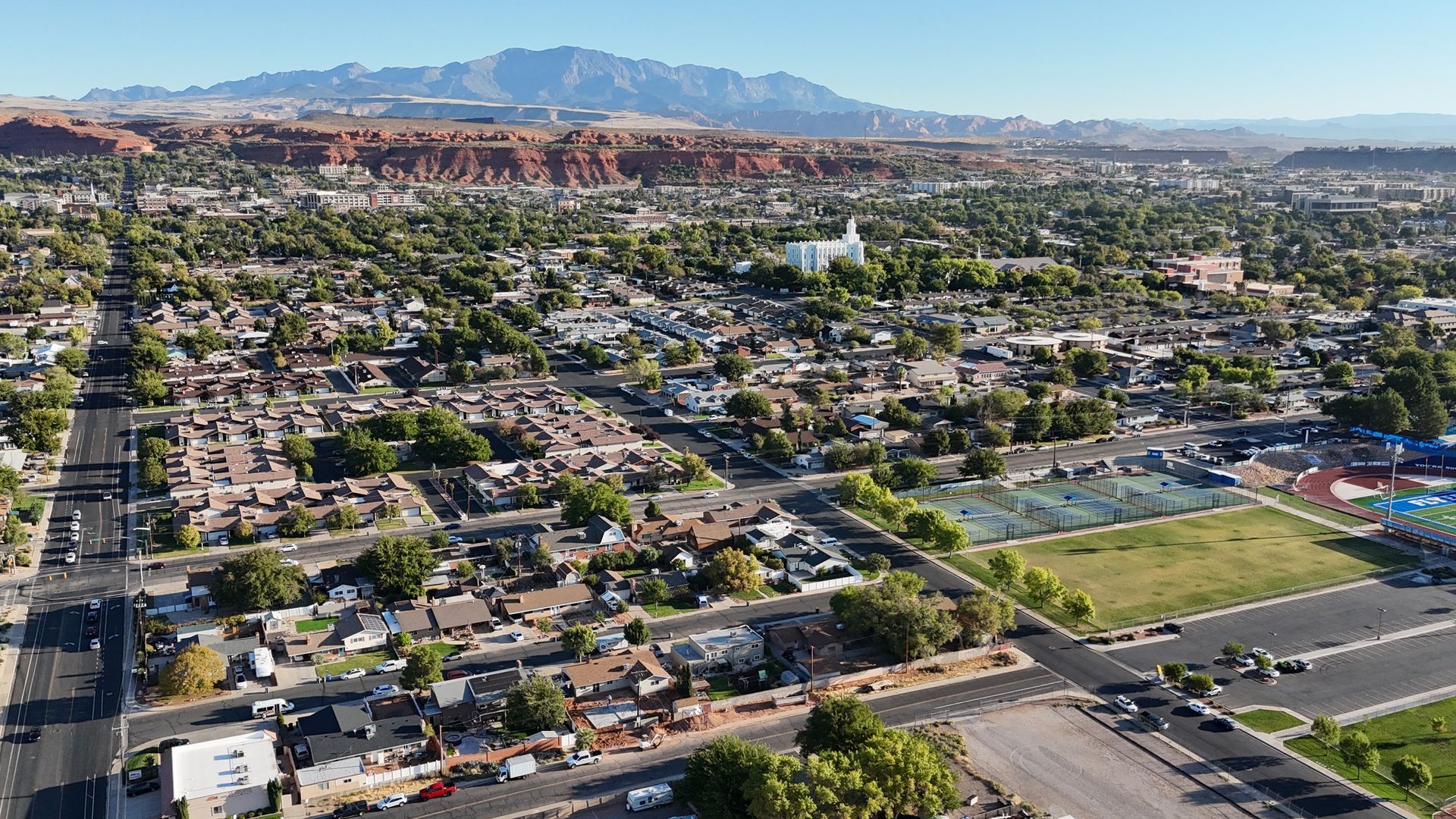
Indeed, St. George remains the heart and soul of Washington County, with similar growth numbers to boot. The city had just over 71,000 people in 2010, which grew to 82,000 in 2015, over 95,000 in 2020, and 109,000 last year, with estimates of more than 112,000 by the end of 2026.
A New Era of Leaders
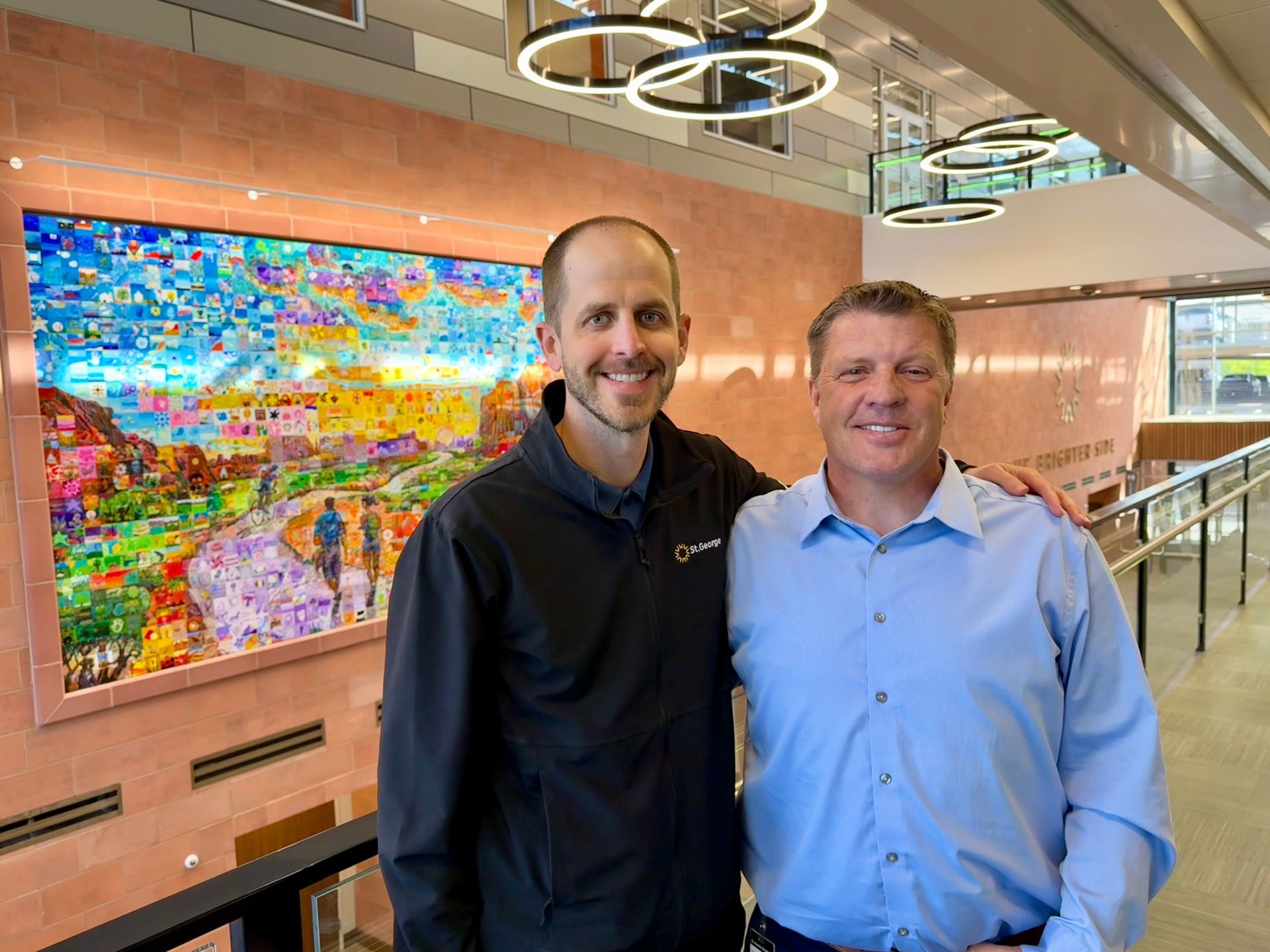
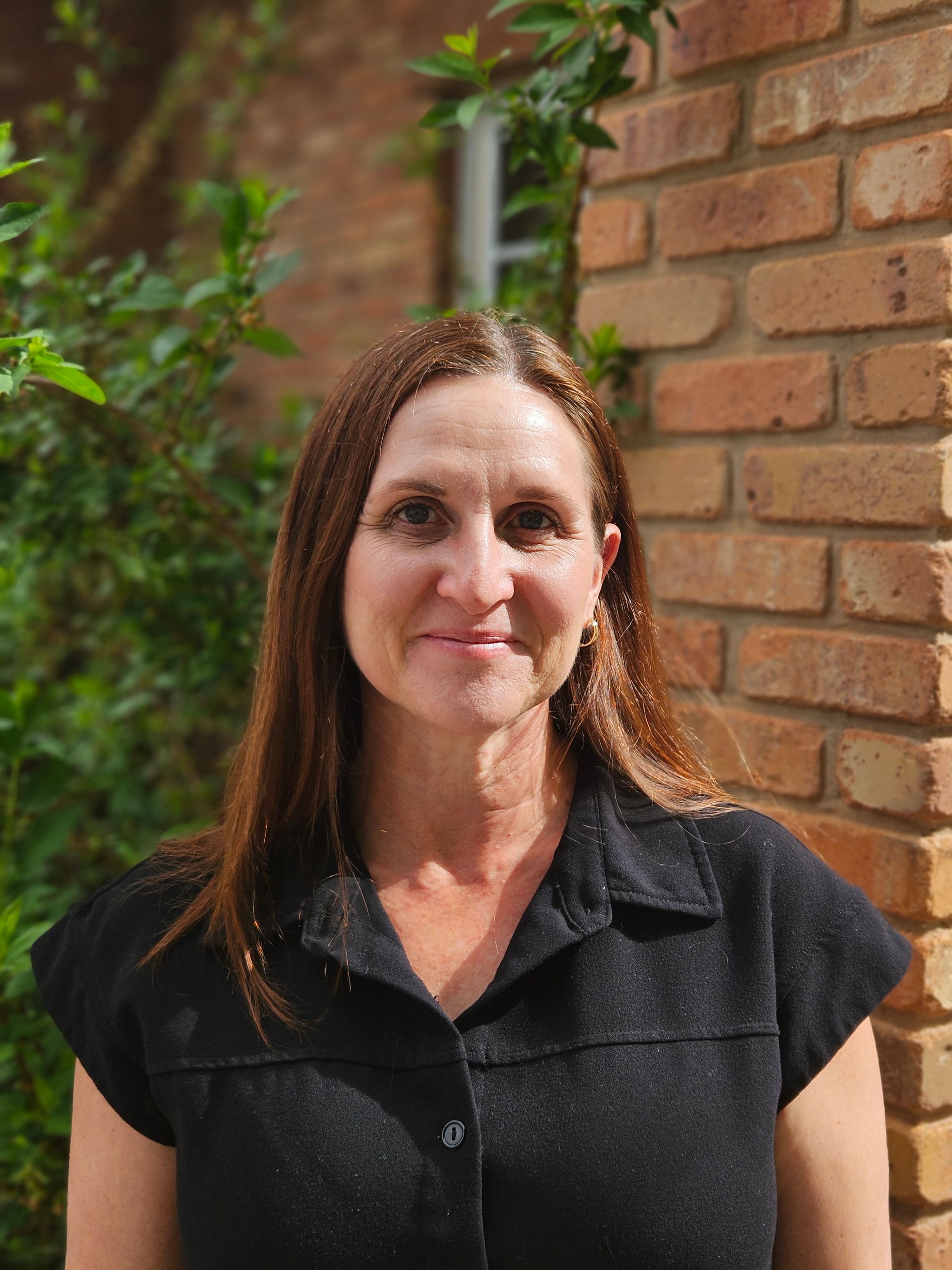
While Prince and Thomas were hired in 2023, Rusty Hughes became the Economic Development Director of Washington City in April 2021. She is an 11-year veteran driving economic growth in the region after previously working for six years at St. George Area Economic Development. Together, the trio works in tandem to spark new construction opportunities.
The unique synergy between them is evident, with a mix of playful banter and spirited discussions; each is highly competitive and fully committed to maximizing the region’s growth potential. They each understand that being 300-plus miles from downtown Salt Lake City means they're marching to the beat of their own drum, which they're fine with. Prince is a Southern Utah native, raised in La Verkin, and a graduate of Hurricane High. Thomas was raised in North Carolina, moving to Utah in July 2023 to helm St. George's economic team. Hughes spent time in the military before moving to Southern Utah more than two decades ago. Their passion for the area is palpable, and they are committed to driving the right kind of development in the region.
"In economic development, a rising tide lifts all boats—we're seeing that with all of our cities," said Thomas. "You look at all our communities, and they're seeing success. Even Cedar City has seen some really good [economic growth] announcements, so we're very complimentary to one another."
Hughes said her city—the county's second largest at an estimated 37,000 people—is experiencing phenomenal development and interest, particularly in the industrial market, as well as along I-15 at Exits 10, 12, and 13.
"Washington City is seeing strong momentum along the I-15 corridor, with multiple nodes of commercial growth taking shape," said Hughes. "The area is evolving into a more modern, service-oriented hub that supports both local residents and visitors."
They lean on each other for support and feed off their respective success and project wins.
"We're a good distance from Salt Lake," said Prince. "So, what Chad said is really applicable. We have to work together; we're kind of our own little island down here in the desert, and we can't rely on Salt Lake for economic growth opportunities."
"That [mentality] goes back to our pioneer heritage," added Thomas. "If this area was going to work, it was because the people here made it. You cannot rely on anybody else."


Airport Expansion, Transportation
Projects, Other Diverse
Amenities Key to Growth
Thomas and Prince both touted the influx of major amenities to the region in the past 15-plus years, starting with the new St. George Regional Airport. Built from 2008 to 2011, the airport relocated from the top of a mesa that is now called Tech Ridge to a desert plateau in Warner Valley, five miles from downtown St. George, just east of I-15.
The $175 million investment, funded primarily by the Federal Aviation Administration and the Airport Improvement Program ($140 million) and the City of St. George ($35 million), is perhaps the top amenity propelling economic growth.
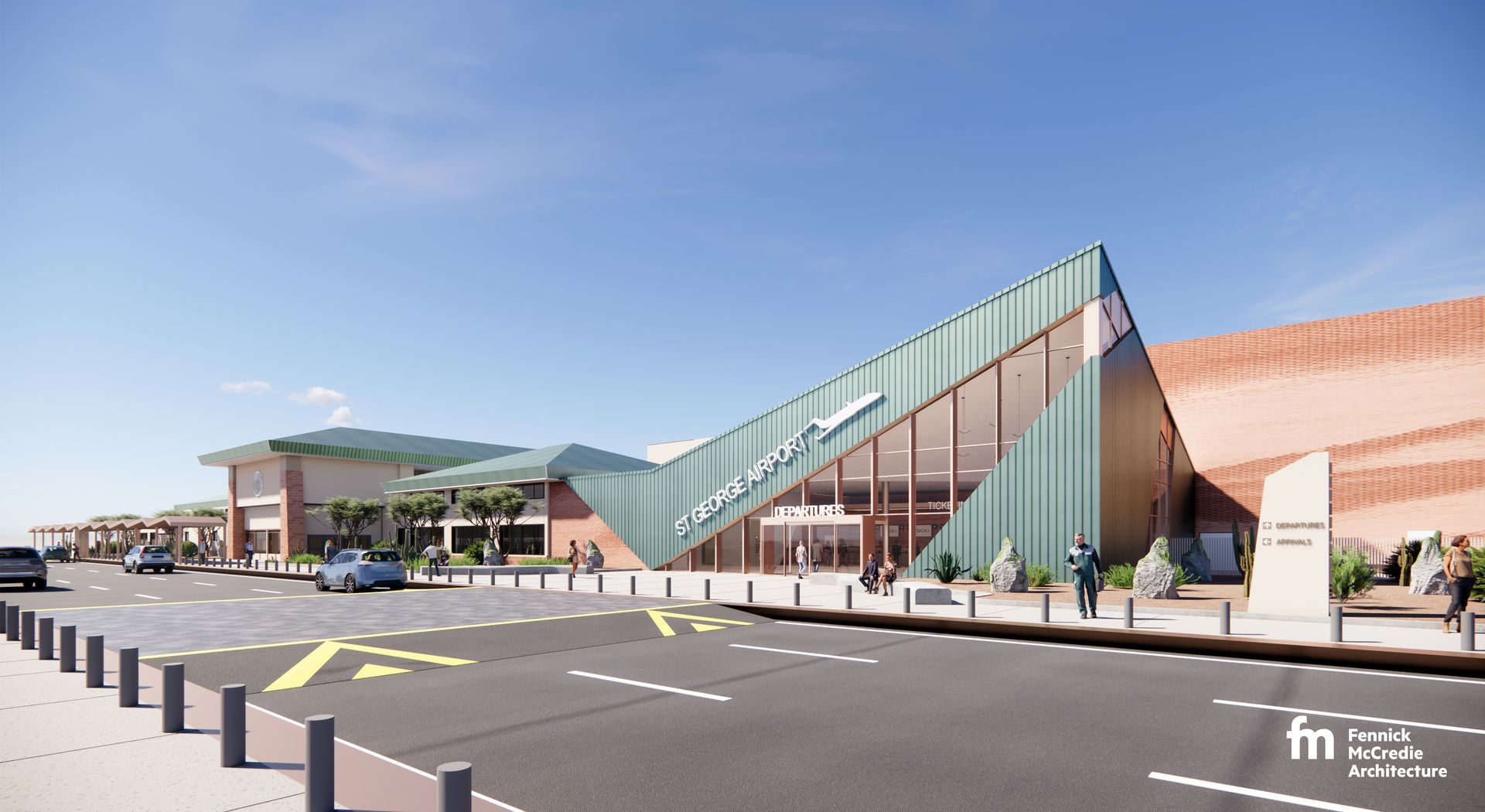
St. George Regional Airport is slated for a major $100 million expansion that is expected to break ground in 2026, with design by Boston-based Fennick McCredie Architecture nearing 100% completion. The 50,000-SF terminal addition will more than double the airport's current size, adding four new gates while also renovating the existing 30,000-SF terminal. Other aspects include expanding baggage claim and ticketing/check-in spaces, building a larger security checkpoint, new elevators/escalators, and a new passenger circulation space.
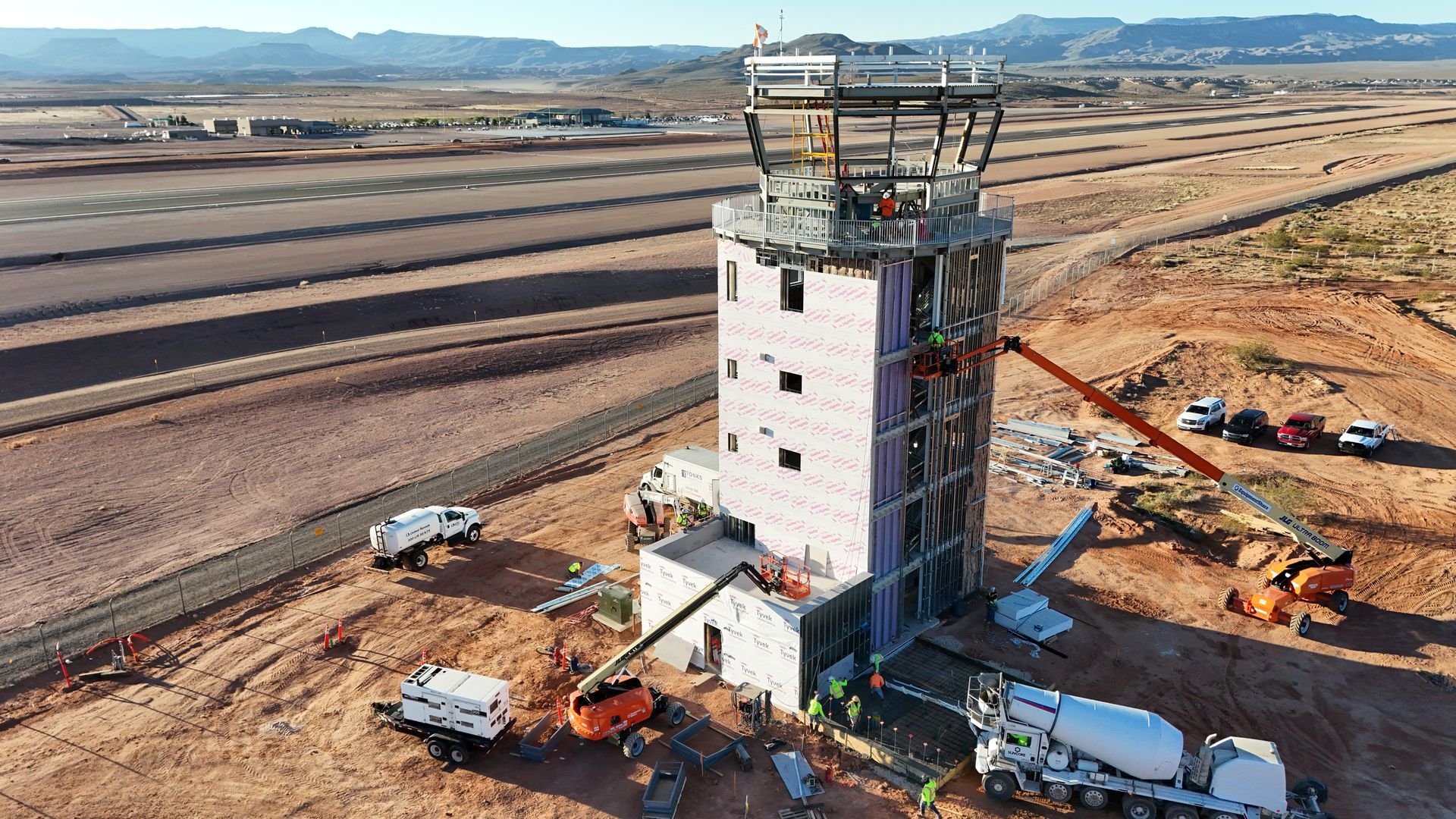
In addition, Sandy-based Layton Construction broke ground last August on a new $15 million airport control tower ($8 million construction cost), a critical addition to any modern airport.
The airport expansion marks a significant step in the region's infrastructure, said Thomas and Prince. So have recent UDOT-funded transportation projects like the 26-mile-long Southern Parkway (SR-7) that connects St. George to Hurricane (I-15 exit 2 to SR-9), a multi-phase project that kicked off in 2007, with the final segment delivered in May 2021. The approximately $250 million investment provides easy access to the airport, while creating a growth corridor for projects like Desert Color and current industrial warehouse-type projects that are rapidly being developed.
"Industrial growth in Washington City, particularly along SR-7, has been one of the region's most significant developments over the past few years," said Hughes, citing the rapidly expanding ARA Southwest Logistics Center (ARA), which has delivered 350,000 SF of completed buildings in operation, while nearing 1 million square feet of pre-leased space.
"The project has attracted a mix of national brands and local businesses that previously could not expand due to a lack of product in Washington County," Hughes added, noting that industrial vacancy has remained below 3% since 2020, underscoring the market's strong demand. Looking ahead, developers are aiming to bring 5- to 10-acre, fully improved industrial lots to market near ARA within the next 12 to 18 months.
Owned by Illinois-based developers Freeport West, ARA has the potential to span roughly 300-plus acres and more than 5 million combined square feet of warehouse-type buildings. It's a definite game-changer for Southern Utah, with the potential to attract business from Las Vegas and Southern California.
"Freeport West's ARA project is a perfect example of our excellent geo-location on I-15," added Cindy Powell, Southern Utah District Manager for the Associated General Contractors (AGC) of Utah. "[Developers] are even building spec warehouse buildings, which is a good sign."
Prince and Thomas also discussed the proposed Northern Corridor Highway project, a potential 4.5-mile-long road connecting Red Hills Parkway on the west to Washington Parkway/I-15 Exit 13 on the east. It would relieve east-west traffic congestion, while serving as the north end of a regional loop system (belt route) around St. George. The project, which cuts through the Red Cliffs Desert Reserve, was aiming to begin in January but remains on hold due to litigation spurred by environmental group Conserve Southern Utah. The group and others claim the project violates the Endangered Species Act and the National Environmental Policy Act, threatening native species like the Mojave Desert tortoise.
"The city and county would not be spending time [evaluating the project] if it wasn't important," said Thomas. "Growth is impactful on the environment. You want to preserve everything, but we also need to grow. We need to have the [traffic] circulation of a belt loop. I think if the lawsuits are taken care of, it would be all hands-on deck."
"That's been one of our big crutches with growth, an east-west connector," added Prince.
Retail Gain
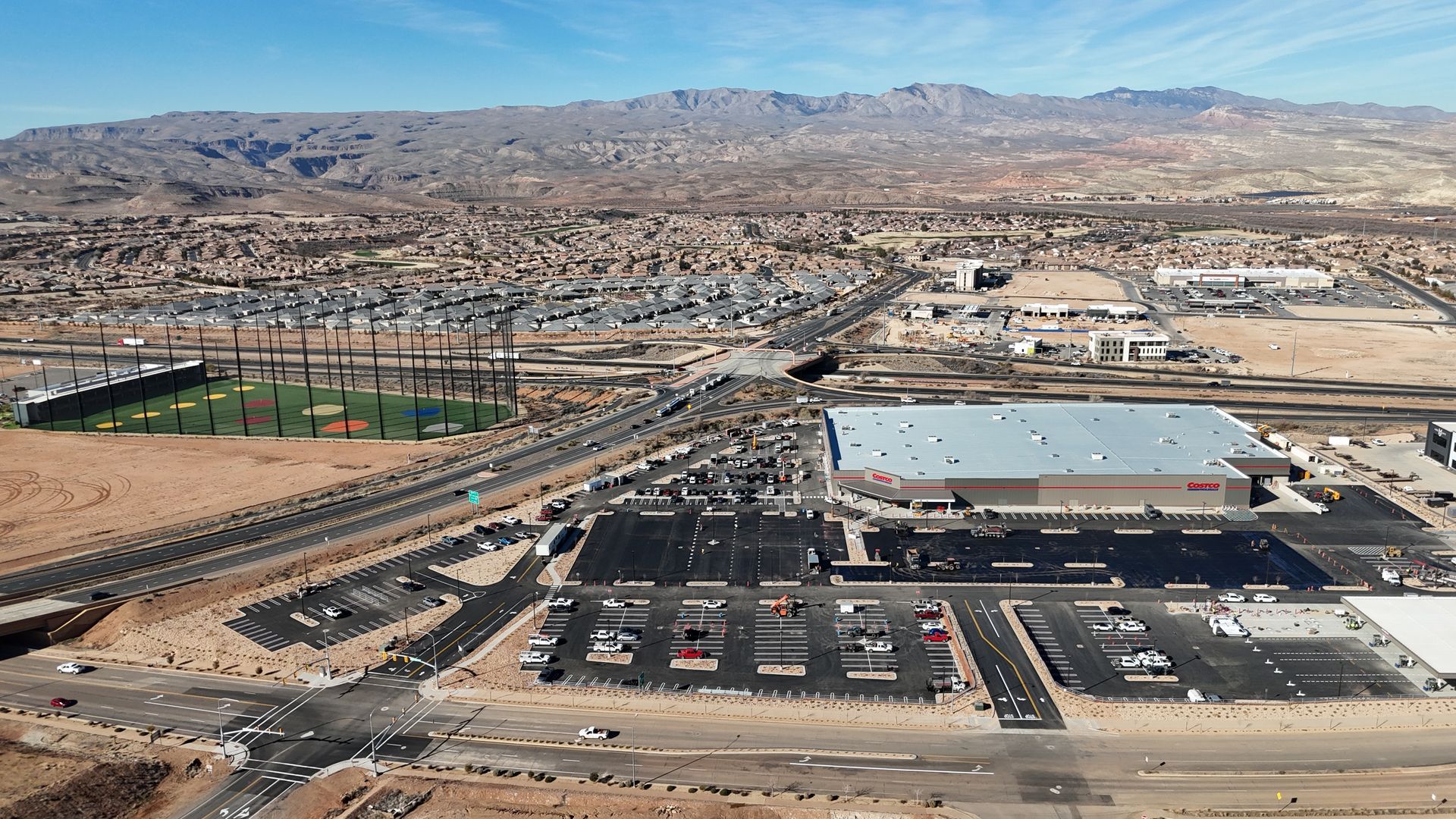
Major commercial retail projects have been popping up with increased frequency over the past three years, with Thomas citing a host of exciting new buildings, including a new Smith's Marketplace, a Sprouts Farmers Market, REI, Hobby Lobby, the redevelopment of St. George Place, and a second Costco near the sprawling Desert Color development, which opened in March.
"How many cities with less than 150,000 people have two Costcos?" mused Thomas. "I don't want to overemphasize that project, but when you look at that retailer, and what it needs to be successful, I think it tells a larger story, which is: our region is very healthy. Costco is a regional asset."
Hughes cited a host of exciting new projects in Washington City as further proof of the retail boom happening right now. At Exit 10, two new hotels and freeway-visible retail pads are drawing notice from out-of-state developers. At Exit 12, anchored by WinCo Foods and the One Health medical campus, new small-format retail and service users are beginning to cluster on the north side of the highway.
Other major projects in the region, such as the high-profile Black Desert Resort development in Ivins/Santa Clara, further illustrate the region's rising allure and popularity. Black Desert includes a 19-hole PGA-Championship level golf course (it has hosted one LPGA event, and two PGA events, with a third PGA event slated for October), resort center (hotel, conference center, condos), and represents a potential $2 billion overall investment on a 600-acre spread by Lehi-based owner Reef Capital Partners. The initial $290 million Phase I Resort Center was completed last year, with Phase II currently underway, including a 1,200-stall parking structure, myriad condo units, a water park, a pickleball complex, and future mixed-use projects including multi-family housing, hospitality, and a boardwalk retail/dining district. Reef is also looking at developing three more 18-hole golf courses, a hotel, a sports complex, and other mixed-use buildings in a joint venture with the Shivwits Band of Paiutes on more than 1,200 acres of tribal land.
The Question of Future
Available Water
All this amazing current and future development is predicated on the arid, desert region having an adequate water supply—always a concern for local city and county leaders, even more so in recent years as Southern Utah has hit a particularly nasty dry spell.
Washington County's Water Conservancy District is planning on spending millions on water infrastructure upgrades, including $52 million to expand the Quail Creek Water Treatment Plant. The district will spend another nearly $54 million on water storage projects, including the $33 million Chief Toquer Reservoir project currently under construction.
Another key project is a $70-plus million regional water reuse system—a projected 10-year project that aims to start laying pipes, installing pumps, and regulating ponds mainly in La Verkin and Toquerville.
Thomas believes local leaders will figure out what needs to be done to maintain a high quality of life, including looking at establishing a "one water" reuse system that effectively can reclaim dirty wastewater and transform it into safe potable water. He said the City of St. George is working on a regional wastewater management system that is similar to what Las Vegas is doing, where effluent can be put back into the environment.
Thomas believes local leaders will figure out what needs to be done to maintain a high quality of life, mentioning the water conservancy district’s goals to further expand the area’s water reuse capabilities, similar to those found in Las Vegas. The district’s 2023 plan outlined an estimated $1.6 billion for additional water reuse facilities and pipelines designed and built over the next 20 years, effectively transforming wastewater into safe potable water.
Construction Firms Battle
Myriad Challenges; Housing
Affordability is Sticky
Powell, who replaced retiring AGC District Manager Kathy Tolleson in December, said local AGC member firms—both general contractors and subcontractors—are experiencing increased competition to go along with the usual tight labor market and volatile materials availability and costs.
"I'm hearing members say a slowdown in residential construction is causing increased competition in the commercial market," said Powell. "They're also seeing contractors from up north bidding on jobs here." Other headwinds, she added, include rising labor costs, spikes in material prices, and escalating fuel costs, all of which impact project costs and contractor margins.
"It's a very competitive market right now," she admitted. "To win jobs, you have to be low on margins."
Ultimately, despite these challenges, new commercial development will continue to march forward, something Prince said is "bittersweet in some ways, because you always want to keep that small-town feel, you know."
"We want to be mindful and very careful how we grow," said Prince. "It's important for our families to have opportunities, not only in business, but in housing. The housing market has become one of the most expensive in the nation, right now. We're looking at solutions to more affordable housing. Some of our cities are afraid of higher density [...] they need to be more open-minded. That's the only way we're going to be able to get housing for our children."
Thomas said "St. George is doing its part by making sure to allow developers to create different product types. We've also made significant changes to our zoning ADU laws. We're not necessarily scared of density in our city—obviously we want [higher density projects] where it makes sense."
One way or another, population growth will continue throughout Washington County, and new construction will continue to dot the region's red rock desert landscape.
"It's a great place to live!" Thomas exclaimed.