







Sky High-End Club

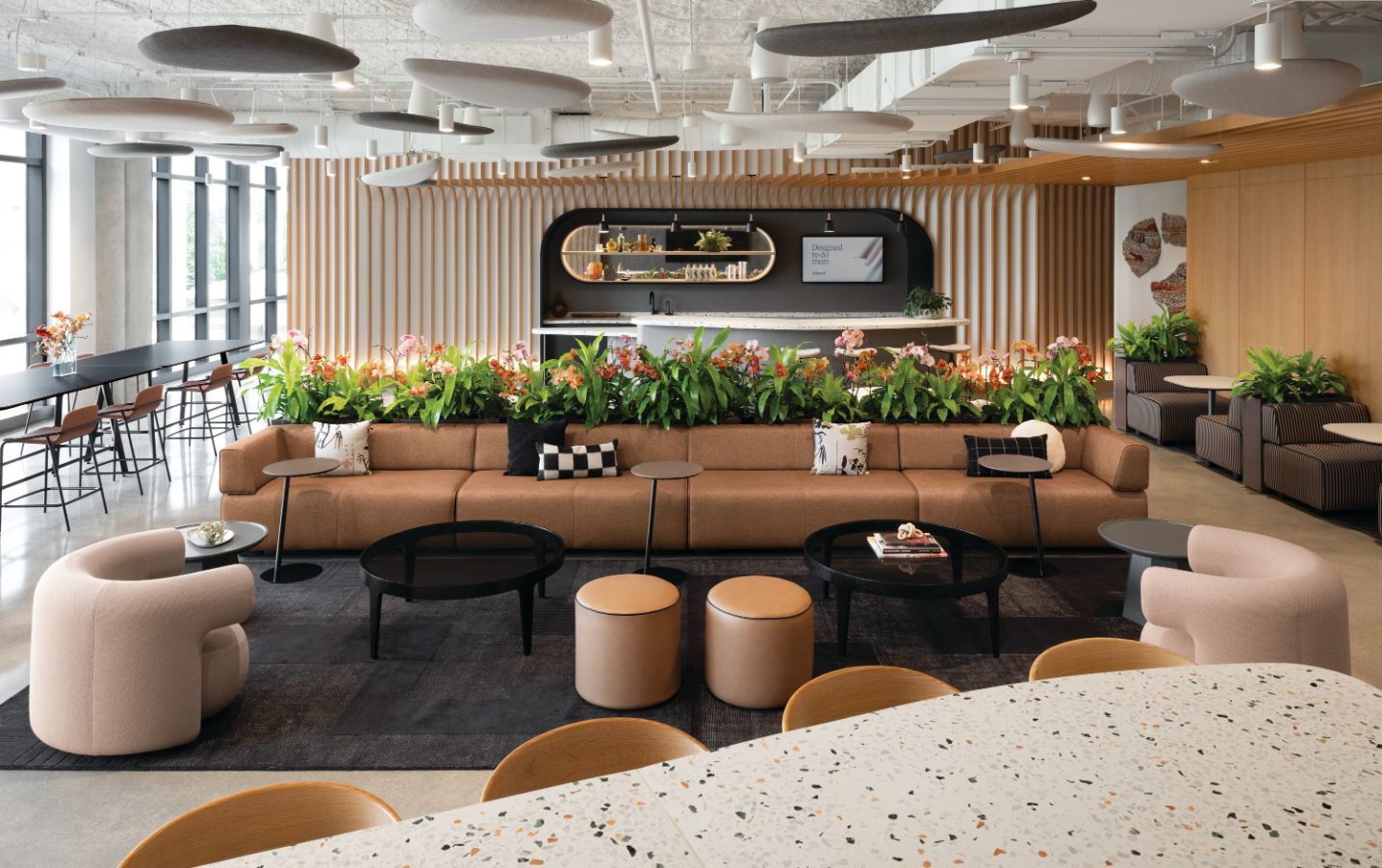
Opulent, classy, and spacious, the dazzling new 34,000-SF Delta Sky Club—Concourse B offers a world-class hospitality experience, including a first-ever Digital Immersion Room.
By B. H. Wright
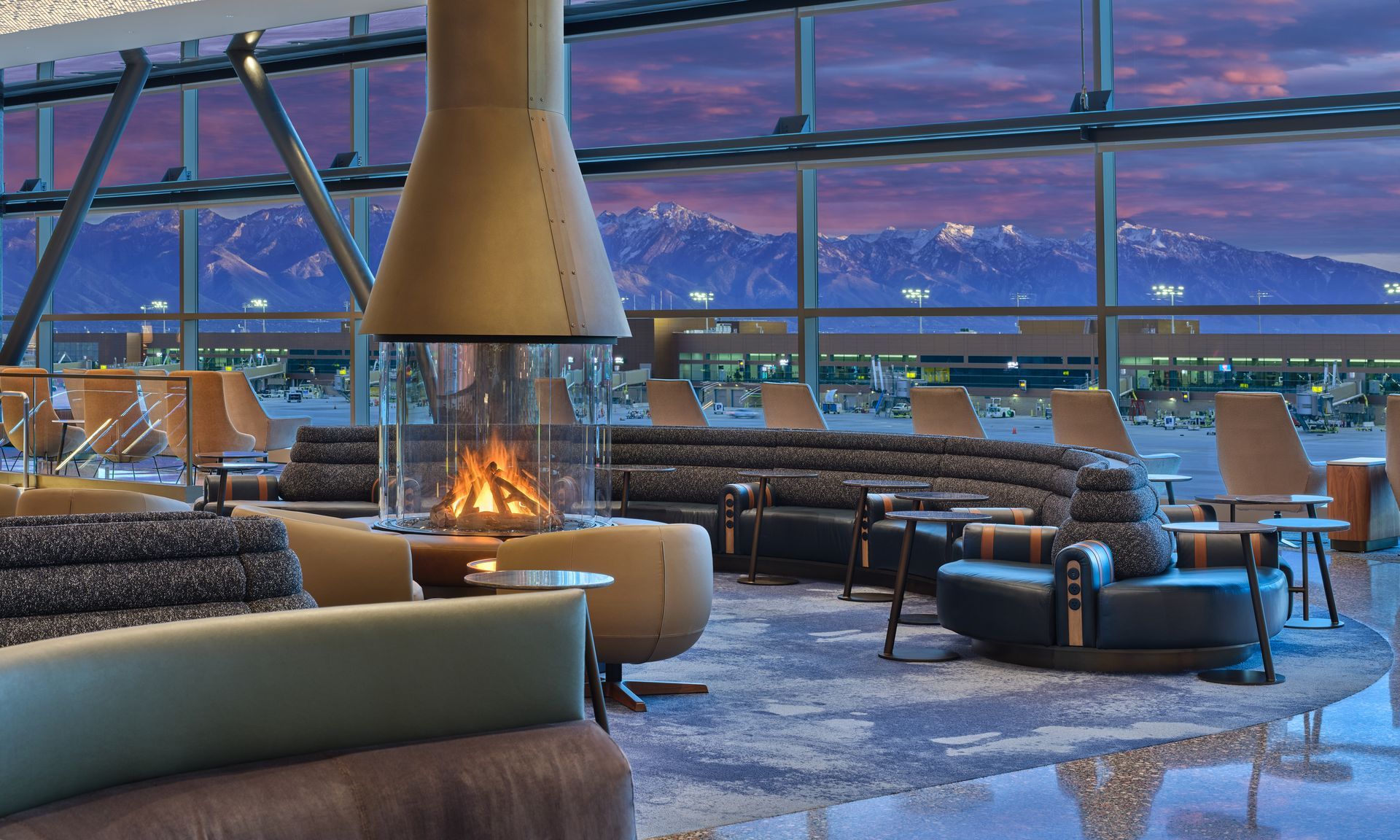
When it comes to classy sophistication, the sparkling new Delta Sky Club—Concourse B at Salt Lake City International Airport sets an incredibly high bar in both form and function.

The opulent 34,000-SF club—Delta's second at The New SLC—offers members myriad ways to relax and decompress from the rigors of travel, highlighted by the truly unique Digital Immersion Room.

Salt Lake-based HOK worked with Zenapptic of Novato, Calif., on the impressive display, which was designed with neuroinclusive principles in mind. The innovative space surrounds guests with seven expansive screens featuring aerial views of Utah’s iconic landscapes, including the state’s five national parks and cityscapes of downtown Salt Lake architecture. Synchronized natural soundscapes enhance the visuals, creating a calming, immersive, and four-dimensional experience. Velvet drapery, darker tones, and curved acoustic baffles further support the sensory environment.

As the only club in Delta’s network to offer this experience, Salt Lake City sets a new benchmark for innovation and traveler comfort.

"We wanted it to feel like a cocoon, a space you can get away from the hustle and bustle, even from what's going on within the club," said Sarah Oppenhuizen, Director of Interiors at HOK. The seven screens are tied into the speaker system, "so you're hearing birds chirping, or a plane flying by, or a storm rolling in. Zenapptic did a fabulous job of taking these scenes, images taken all across Utah, and splitting them into layers [...] that can move in a way that makes it feel like you are actually viewing that scene."

The material palette and lighting selections also reflect and amplify Utah’s natural beauty. From warm tones to reflective surfaces, every detail connects travelers to the spirit of the state. 

The club itself is a diverse wonder of breathtaking spaces created from a highly curated and layered material palette. Each space was meticulously crafted into "neighborhoods" appealing to myriad client tastes and preferences. 

There are eight specific ceiling systems, eight custom terrazzo blends, a dozen tile products, and dynamic specialty lighting—creating a refined ambience inspired by Utah’s diverse landscapes while maintaining the elevated experience synonymous with Delta's iconic brand.

The distinct neighborhoods highlight the club's supreme functionality supporting a robust 600-seat capacity—it's Delta's second-largest club after La Guardia in New York City—while maintaining comfort, intuitive circulation, and a soothing acoustical environment. 

Larger-scale stone flooring with red accents evokes a natural hiking path while providing durability and ease of movement for guests with rolling luggage. Sound-absorbing properties are integrated into ceilings and select walls throughout the space to maintain a serene guest experience.

“Creating distinct neighborhoods gave us the flexibility to increase seating capacity without sacrificing comfort,” said Mishael Thompson, Design Lead at Delta Air Lines. “Guests can easily find a space that fits how they want to travel—whether that’s social, private, or somewhere in between.”

“The goal was to bring a true sense of place into the space without overwhelming the guest,” added Oppenhuizen. “By layering materials, color, and technology, we were able to reference Utah’s landscape in a subtle way while maintaining the timeless, hospitality-driven feel of a Delta Sky Club.”

Design elements on Level 2, which serves as the entry experience, incorporate cooler whites and blues inspired by a Park City winter, while Level 3 transitions to warmer reds and bronze tones that reference Utah’s caves and caverns. A signature seating area at the top of the escalators—featuring layered blue furnishings and a rippled metal ceiling—draws inspiration from the Great Salt Lake. 

An expansive, curving bar is an eye-catcher—a unique reflective ceiling above with twinkling lights is a highlight that recalls the state’s copper mines. Blue-veined marble countertops in the space reflect crystal-like light fixtures reminiscent of stalactites, adding a sense of natural wonder.

Emphasis on High-Quality Finishes, Resort-like Feel
Maintaining the Delta brand is always a top priority for designers, and while explicitly branded elements in Delta Sky Clubs are minimal—primarily limited to the check-in area and select touchpoints—the broader brand strategy centers on elevating the airport experience through high-quality design, materials, and comfort. Branding is subtly expressed through a hospitality-driven environment that conveys both luxury and durability.

“We want all our guests to feel like they’ve just stepped into a high-end hotel lobby—not an airport,” said Thompson. “That sense of arrival, comfort, and quiet luxury is fundamental to how we think about the Delta Sky Club experience, and this project truly delivers on that vision.”

While program standards remain consistent across all Delta Sky Clubs to ensure familiarity, hub locations such as Salt Lake City provide opportunities to further elevate the experience through regionally inspired materials and design cues. This balance of consistency and localization reinforces Delta’s brand promise while allowing each club to feel distinctive and connected to its location.

The new club is larger than its sister Delta Sky Club in Concourse A—that one checks in at 29,000 SF. The expanded footprint provided opportunities to further elevate the experience through additional amenities, greater spatial variety, and a stronger emphasis on regional design elements while still maintaining consistency with Delta’s established Sky Club standards.

Attention to detail is a Delta hallmark, added Thompson, with high-quality finishes essential to the project's overall aesthetic. Achieving this level of quality required extensive coordination, including detailed submittal reviews to ensure each material and design element met Delta’s performance and durability standards. Attention to craftsmanship played a critical role in delivering a club that aligns with Delta’s elevated brand experience.

“Our guests notice the details,” Thompson emphasized. “From the durability of finishes to how materials feel and perform over time, quality was non-negotiable on this project.”

    Collaboration, Communication Critical During Design Process 

    Oppenhuizen said the team visited a handful of Delta Sky Clubs, including Los Angeles (LAX), Phoenix (PHX), and Kansas City (MCI), to get a sense of the high-quality, high-end elements found in these exquisite clubs. 


    During design, with Concourse B under construction as part of the multi-phase $5.1 billion Salt Lake City Airport Redevelopment Program (SLC ARP), Delta requested that Level 3—the Sky Club level—be expanded from 19,000 SF to nearly 30,000 SF. While the SLC ARP team was able to accommodate the expansion, the request resulted in an overlap between base building construction and interior design development.


    To maintain the schedule, the design team issued early coordination packages that allowed the base building contractor to complete essential infrastructure—including kitchen, restroom, bar and seat power systems—before the Sky Club construction team mobilized. This approach required close collaboration and rapid decision-making across all project partners.


    “Designing while the base building was still under construction required a high level of trust and fast decision-making,” said Elizabeth Paredes, Technical Coordinator for HOK. “The early coordination packages were critical to keeping the project on schedule and ensuring nothing was compromised in the final design.”


    From an interior design perspective, Delta’s core design principles of socialize, respite, focus, discover, relax, and journey are embedded in the club’s design and final construction. Guests can socialize at the bar, find respite in the immersion room, focus in one of the many phone booths, discover Utah’s beauty in the incredible views, relax by the fireplace, and take a journey through the state’s landscapes via the hiking path. 


    Familiarity with GC Leads to Smooth Construction Process

    The project was delivered by Atlanta-based Holder Construction via CMAR, creating a collaborative environment among the contractor, subcontractors, owner, and design team. This delivery approach was essential in resolving complex details and executing the high level of customization required for the space, where nearly every element was thoughtfully curated for this specific club and location.


    “The CMAR delivery method created a true team environment,” said Kenneth Dodson, General Manager of Corporate Real Estate at Delta Air Lines. “With so many custom elements, having everyone at the table early made a significant difference in solving challenges efficiently.”


    From a tenant improvement standpoint, the process was especially smooth because the Holder–Big-D (HDJV) joint venture—the general contractor for SLC ARP—had completed core and shell work. That continuity meant the Holder team was familiar with the existing infrastructure, minimizing impacts to active concourse operations and allowing a strong focus on premium finishes and specialty detailing.


    In addition, key Salt Lake-based subcontractors Archer Mechanical and Cache Valley Electric had experience working on the massive airport redevelopment and were proficient with the details of the mechanical and electrical systems, which Oppenhuizen said was a "huge advantage" that aided the construction schedule. 


    Due to the active airport environment, material deliveries were restricted to nighttime hours and required close coordination with Delta’s operations team. Large east-facing windows were temporarily removed to install a roll-up door and ramp for material access. These were removed approximately two months prior to TCO to complete interior finishes.


    Ultimately, Delta Sky Club—Concourse B stands as one of the finest clubs in all of Salt Lake, not just at the airport.


    "In a portfolio as broad as HOK's, this project is certainly meaningful," added Oppenhuizen. "The scale and the introduction of Delta's first Digital Immersion Room make it a special addition, but what really stands out is the collaboration behind it. It's a project we're proud of because it reflects what can happen when people come together to do something thoughtfully and well."


    Anna Katherine Daley from Delta contributed substantially to this article.


    Delta Sky Club—SLC Concourse B

    Location: Salt Lake City International Airport—Concourse B

    Cost:  $45,900,000

    Delivery Method: Construction Manager at Risk (CMAR) 

    Stories/Levels: 2

    Square Footage: 34,000 SF


    Owner:
    Delta Air Lines

    Owner's Rep: Corporate Real Estate (Kenneth Dodson); Delta Sky Club (Mishael Thompson)


    Design Team

    Architect: HOK

    Electrical & Mechanical Engineer: HOK

    Structural Engineer: HOK

    Interior Design: HOK


    Construction Team

    General Contractor: Holder Construction Group

    Interior Concrete: Suntec Concrete

    Plumbing: Archer Mechanical

    HVAC: Archer Mechanical, RM Chris Sheet Metal (subtier ductwork; sheet metal)

    Electrical: Cache Valley Electric

    Drywall & Painting: DAW Construction Group

    Wall Coverings: Quirk

    Tile/Stone: Wall 2 Wall Commercial Flooring, MLG Flooring (subtier tile)

    Millwork: ISEC

    Flooring: FW Specialties (terrazzo), Wall 2 Wall Commercial Flooring (carpet/resilient)

    Roofing: Flynn (patching) 

    Glazing/Curtain Wall: Mollerup Glass (interior), Steel Encounters (exterior/curtain wall)

    Misc. Steel: Intermark Steel 

    Food Service: Johnson-Lancaster & Associates

    Ceilings: Golder 

    Fire Protection/Sprinkler: Fire Engineering Company

    Custom Fireplace: Goodrich Chimney Services

    Doors/Frames/Hardware: Unified Door & Hardware Group,  Jensen’s Cabinets (custom restroom DFH)

    Signage: YESCO


    By Taylor Larsen March 10, 2026
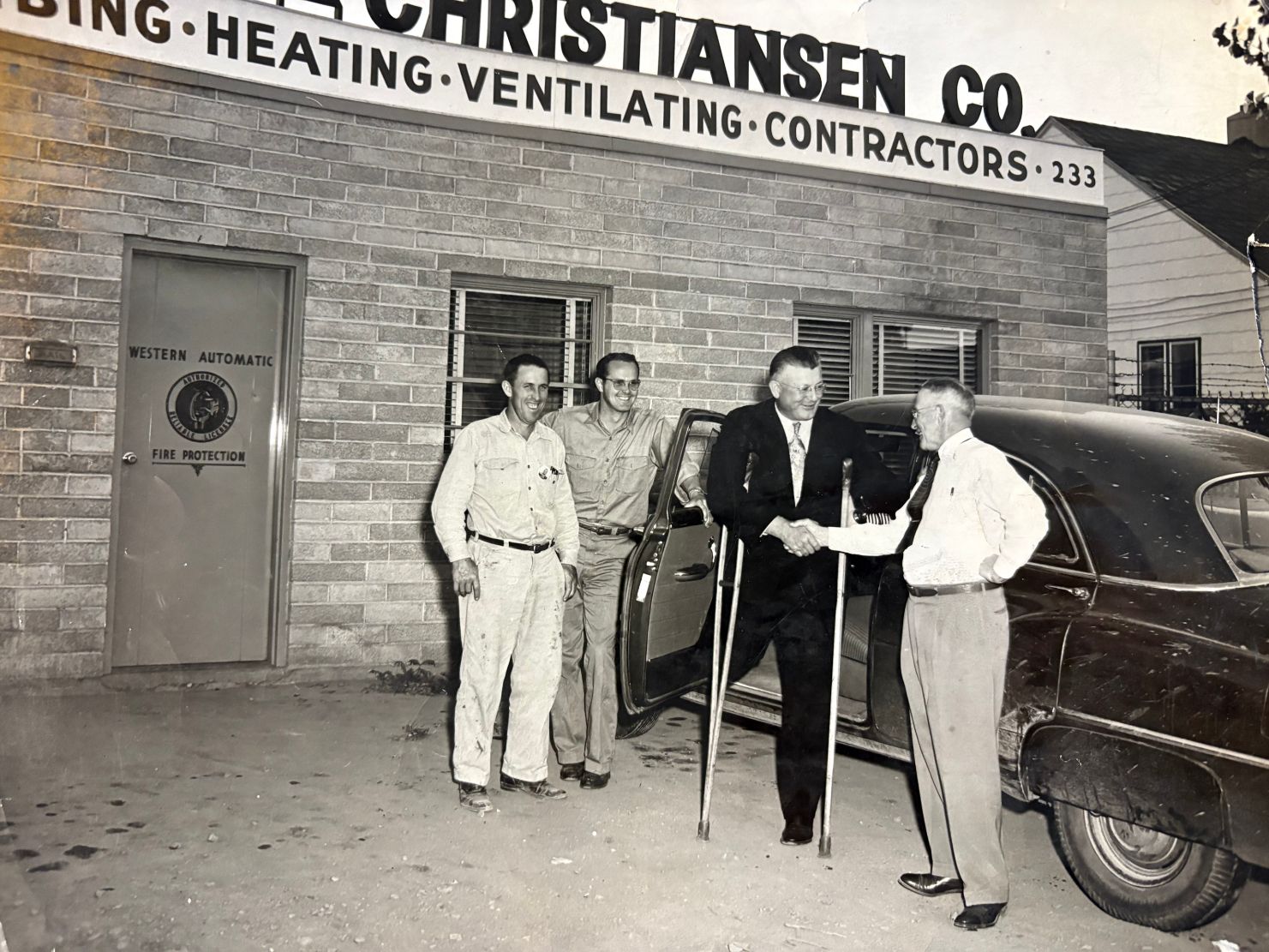
    Midlife crisis? Try mid-life calm for New Star General Contractors as the Salt Lake-based construction firm celebrates 40 years of building great projects. As President Jeff Pettit sits in the firm’s conference room on the second story of the New Star office (self-performed in 1996), he reminisces on his 37 years there, as well as plenty of lore established when the firm emerged. In 1986, carpenters Dave Love and Steve Williams were building a home for their boss’s lawyer in Salt Lake City’s Federal Heights. Their boss, Ranch Kimball, was the owner of Cannon Construction, and announced he would be closing shop later that year. Love and Williams vowed to continue the good work, but under a new venture—New Star General Contractors. Based in Bountiful, New Star performed any small project or remodel they could, even venturing east to remodel an Episcopal church in Vernal. The two owners ran New Star from a “carpenter’s perspective”, Pettit said with a smile, “A good, honest trade.” As employees gained a deep understanding of fieldwork and constructability, New Star self-performed much of the concrete, framing, and interior and exterior finishes, buoyed by a large pool of high-level union carpenters from Utah Carpenters Union Local #184, ready to build. Pettit came aboard New Star in 1989, joining his father and uncle at the firm, two journeymen union carpenters, while he apprenticed as the company grew. Early Years; Midlife Struggles Pettit praised the foundation established by Williams and Love in New Star’s first decade, recalling how both owners worked as estimators and project managers as they sought to win work, while Treasa Love and Patti Williams, Love and Williams’ respective wives, ran accounting, billing, and payroll. The firm was at the cusp of taking off when Williams passed in 1997, but Love and the few dozen members of the New Star team pressed on, working for Deer Valley’s former parent company, Royal Street, on projects like Royal Plaza and Goldener Hirsch Phase 1. “Those projects helped put New Star on the map,” Pettit said. Another foundational project was Peace House, a four-bedroom domestic violence shelter for women and children built in 1995. “It was Dave’s way of giving back to the community,” said Pettit of the relationship between New Star and Peace House that has burned brightly ever since. Love joined the organization’s board of directors, and New Star built Peace House’s 40,000-SF expansion over 20 years later—a massive upgrade that delivered eight units of emergency shelter and 12 units of transitional housing for mothers and children. The project, a monumental community victory, eventually earned UC+D’s “Publisher’s Pick” award in 2019. Company culture in those early years benefitted from the “New Star Band”, a six-member ensemble of New Star employees. Love, his office wall lined with a notable guitar collection, led the charge. “Dave was a great musician and a great guitarist,” said Pettit of the culture- and relationship-building efforts of the New Star Band. “Anyone who knew New Star knew of the band.” But it wasn’t all roses, as New Star’s union roots counted for little as the firm and many other general contractors battled trade unions in the early 2000s. Pettit recalled the picket lines that formed around their Salt Lake City office and their job sites. As the Great Recession hit in 2007 and dragged on into the next decade, Pettit grimaced at how New Star laid off many employees as he, Love, and the remaining executives took massive pay cuts, following through on Love’s advice: “Keep money in the company, because there will be lean times.”
    By Bradley Fullmer February 1, 2026
    Dejan Eskic was blunt in his assessment of Utah's 2026 economic outlook during a January 13 presentation to the American Concrete Institute (ACI), Intermountain Chapter, remarking in his opening statement, "I feel like we're living in a season of the [television] show '24', where every episode, you're holding your breath." Eskic, Sr. Research Fellow at the Kem C. Gardner Policy Institute at the University of Utah, was talking about geopolitics, specifically referencing the economic impact of the Trump Administration’s global tariffs after a year, and how economic outlooks are not so easy to predict when dealing with the potential impact of national and international factors. "Part of talking about economics, it can get political," he continued. "I try not to be political about it, but it's hard to unravel the two, right? Whatever [information] President Trump releaes on whatever media platform has influence on the market. Tariffs really brought a lot of uncertainty and made the market very skittish." Eskic said tariffs are his "least favorite subject, because we haven't had to talk about it for 100 years, and all of a sudden it's gone haywire—there's a lot of uncertainty with tariffs." He added that the Gardner Policy Institute will release a white paper detailing tariff impacts later this year. Interest Rate Cuts Not Anticipated in 2026 The Fed did not cut interest rates at its first meeting of the year on January 28, and Chair Jerome Powell believes keeping the current rate of 3.5% to 3.75% is prudent, with stabilizing unemployment and inflation rates signaling a steady economic year. "Employment rates have stabilized to the point where they're not forecasting a rate cut. I think they're anticipating steady rates between 3.5% and 3.75%," said Ryan Starks, Executive Director of the Economic Development Corporation of Utah. "Just having that predictability is the most important thing." Home mortgage rates took a sharp dip in January, Eskic reported, from 6.8% to 6%, which is something "you pay attention to" considering it happened in just a few days. Steady rates mean developers know exactly what to expect and can determine whether or not to pull the plug on projects that have been paused while more favorable rates are seen. Utah Expected to Have Moderate Economic Growth Eskic cited the Gardner Institute's 2026 Economic Report to the Governor when announcing a slew of favorable projected stats that underscore moderate 1.5% economic growth, including: • Steady job growth of 1.5%, including a robust 3.2% construction job growth (143,000 jobs); • Rising average wages of 3%-4%, with some construction trades expected to eclipse 5% wage growth; • Continued population growth, albeit at a slower 1.3% clip overall; Utah County led the way with 2.1% growth; • Low state unemployment rate of 3.3% in 2025, significantly better than the national average of 4.4%. While these numbers are down from peak totals within the past decade, they still portend a growing economy, with construction playing a vital role in the state's overall economic health. AGC Optimistic for Another Solid Year The Associated General Contractors of Utah (AGC of Utah) remains a steady voice for construction in the Beehive State, and its members "are cautiously optimistic about 2026, with the strongest confidence in infrastructure, power, and data-driven projects," said Joey Gilbert, AGC of Utah President/CEO, citing his association's record-level 700+ members statewide as an indicator of the health of the industry. “Utah's biggest structural advantage is that it's still a growth state with strong population gains and job growth creation with durable demand for housing, commercial space, and public infrastructure," added Robert Spendlove, Chief Economist for Zions Bank. "We also benefit from a relatively healthy labor market and strong household fundamentals. Utah's unemployment rate (hovering around 3%) remains lower than the national average (4.4%), and wage growth has been running above the U.S." That's not to say everything is peaches and cream, as job growth "has cooled compared to the post-pandemic surge," said Ken Simonson, AGC of America Chief Economist. "Contractors are still dealing with labor pressures, wages are expected to keep rising 4%-5%, and policy actions affecting labor availability could make staffing harder in 2026. At the same time, the national data show job openings have fallen, which is consistent with a market that's still tight in key trades, but less overheated than a year or two ago." Gilbert agreed that construction labor in Utah has steadied a bit, saying "the labor market is still tight but stabilizing, with steady wage growth and increased focus on workforce development and retention." There are other tailwinds in Utah's favor as 2026 begins. Spendlove said, "Utah's underlying economic fundamentals remain strong: population growth (about 1.5%) and employment growth (north of 2.0%) are still outpacing the U.S., which supports a steady pipeline of construction demand. “ Simonsen agreed that Utah remains a hot business market—yet again—to have another solid year. “Utah remains resilient. The opportunity set in 2026 looks best where demand is most durable—data centers, power, and infrastructure. Utah is well-positioned to compete [nationally] in those areas. Even with uncertainty, contractors are planning, not freezing. The main watchouts are financing conditions and cost volatility, but there's still meaningful work in the queue.” Gilbert added, ”Utah's construction industry is well-positioned in 2026 due to strong economic fundamentals and sustained demand in key sectors.” Demand Brisk for Data Centers, Infrastructure, Energy, Other Markets Contractors and designers recognize the rapidly rising demand for data centers, and therefore, the energy to drive power-thirsty—not to mention water-thirsty—projects, and are positioning themselves accordingly. Utah Governor Spencer Cox has "Operation Gigawatt" rolling, a 10-year initiative started in 2024 to develop new energy production across multiple power sources. "It's absolutely essential that we get in front of energy," said Starks. "We're seeing that from a population growth standpoint, but also from a commercial growth standpoint. With more development taking place, somebody's got to take the lead, and we feel like Utah is well-positioned to be that leader. The Governor wants to double energy production as part of the 'Operation Gigawatt' initiative. Our approach to energy is an 'all-of-the-above' approach—natural gas, solar, nuclear, geothermal." Gilbert said Utah's legislative leaders are keen to see Governor Cox's energy ideas come to fruition. "Their priorities are energy production and reliability," said Gilbert. "Senator [Stuart] Adams believes the state that controls AI will control the world. AI demands power and a lot of it. [State legislators are] dedicated to making sure Utah has infrastructure and power resources. We're looking at energy resources, from nuclear to solar and everything in between."
    By Bradley Fullmer November 15, 2025
    Residents have access to a wealth of modern, high-class amenities: Check out this open-air rooftop patio with tasteful lighting, pool, and spacious hot tub—it’s party time! (all photos courtesy Kier Construction)
    By LADD MARSHALL November 15, 2025
    Steve Green is out in McCornick, Utah. Where is that? And what’s near McCornick? “Nothing,” joked Green, the Sr. Vice President for Wheeler Machinery Co. While he may be far from even the smallest of small towns, with Holden and its 492 residents 13 miles away, he’s close to the site of a major development in data center technology. Isolated on the western edge of the Sevier Desert, the Joule Data Center will also be isolated from the grid—by design. Operation Gigawatt Rolls On Green is one of many energy and power professionals hoping to double Utah’s power generation capacity by 2034 as a part of Operation Gigawatt, an initiative launched by Utah Governor Spencer Cox in October 2024. Utah has long been an economic growth leader; Operation Gigawatt aims to make Utah a power player in energy development by increasing transmission capacity, increasing energy production, strengthening policy, and investing in energy innovation. While Governor Cox’s Operation Gigawatt moves forward statewide, out in McCornick, Green said, “We’re doing operation gigawatt and a half off grid.” The Joule Data Center project team will deliver “In-situ power generation”—power not connected to any electrical distribution or transmission system. It starts with Caterpillar G3520K reciprocating generator sets that produce 1.5 gigawatts of electricity. Waste heat and exhaust from the generators then move through an absorption chiller system as part of the overall systems combined cooling, heat, and power (CCHP) solution, providing much of the water required to cool the data center servers. Beyond the electric power to be generated for the Joule project, there will be 1.5 gigawatts of thermal energy and 1.1 gigawatts of available battery storage to meet the data center's peak electricity needs. Added Green, “And we’re not taxing the local utility grid.” Isolated or Community Power? The massive power capabilities delivered there are impressive, but they reveal a troubling trend in how Utah will double its power generation capabilities. Will it be from well-funded companies looking to power data centers and AI technology separate from the grid? Or will Utah fulfill the mission of Operation Gigawatt by creating power solutions accessible to all? According to Troy Thompson, Chief Operations Officer for Big-D Companies, power generation is about more than supplying data centers. “In my mind, how do we build a billion-dollar hospital downtown that needs ten megawatts of power?” he said, referencing Intermountain Health’s future downtown Salt Lake campus, “let alone the data centers, and manufacturers who we are hoping that will come here?” Ten megawatts of power may pale in comparison to what data centers require, but it is one of many projects seeking regulatory approval to move forward. The Utah Inland Port Authority, the Economic Development Corporation of Utah, and others continue to drive projects and jobs into Utah—data centers, too. But Thompson said he has heard from many potential clients who are hesitant to bring their energy-intensive projects to the state without firm guarantees of available power. Operation Gigawatt and state leaders have embraced an "all of the above" approach to energy sources, extending the design lifespans of coal plants, embracing new technologies and power sources, and developing new power-generating capabilities. While the industry is willing, the operating environment needs rewiring to meet state goals. Changing for 21st Century Needs “With as hot as the Utah market is,” began Eric Haslem, “there are too many obstacles for us to overcome.” The market may be ready to ramp up production, said Haslem, Chief Operating Officer for Vernal-based utility and heavy civil contractors BHI, “But the current system can’t handle it. We have this massive web of transmission and distribution infrastructure that was not designed or built for the power demands of the 21st century.” “In 1970, they didn’t know what a smartphone was,” Haslem said, “let alone AI.” Transmission projects have been developed. Rocky Mountain Power/PacifiCorp’s Energy Gateway South transmission line—a 416-mile, high-voltage 500-kilovolt transmission line that runs from Mona to Medicine Bow, Wyoming—certainly helped when it went live in 2024. Still, it's just one project amidst a plethora of needs. Haslem stated that Utah's growth over the last 10 years meant a large majority of the transmission line's capacity was accounted for when it went live. .
    By Bradley Fullmer November 15, 2025
    And the King shall answer and say unto them, "Verily I say unto you, inasmuch as ye have done it unto one of the least of these my brethren, ye have done it unto me."—KJV Matthew 25:40 From a social and community impact standpoint, few projects match the value to disabled and special needs individuals as the new Utah State Development Center (USDC) Comprehensive Therapies Building in American Fork. The $36 million, 65,000-SF facility was designed as a "one-stop shop," said Joe Jacoby, President of Salt Lake-based Jacoby Architects, whose team led the project’s design. It consolidates and modernizes myriad services under one roof, including physical therapy, occupational therapy, recreational therapy, speech, language, and hearing resources, and behavioral health resources. In addition, the new building offers full-service medical and dental clinics, an indoor therapy pool, an Autism treatment wing, and workshops for life skills and vocational training—all geared to helping people live independent, authentic lives, while striving to reach their full potential. "This building was very much about accessibility," Jacoby said, "and putting in many different types of resources for these residents—all in one building." Jacoby's firm has significant recent experience in projects that combine education and healthcare for people with special needs. The firm's design of the Sorenson Legacy Foundation Center for Clinical Excellence in Utah State University's College of Education and Human Services earned UC+D's 2016 Most Outstanding K-12 Project. Two years later, the firm earned another UC+D award for the C. Mark Openshaw Education Center for the Utah Schools for the Deaf and the Blind, a project similar to this one in that it contains an array of services, including education and therapy for varying levels of sensory, behavioral, physical, and cognitive abilities. "We've been working on different [design] aspects for many years, starting with a deaf preschool, which led to working with the Utah Schools for the Deaf and the Blind," said Jacoby. "With that came many other sub-specialties, like therapy for behavioral issues, cognitive issues, development disabilities, and even speech, language and hearing clinics. It helps people with a variety of disabilities and serves an underserved population of people."
    By Taylor Larsen November 15, 2025
    On a fall tour of Utah State University's (USU) Carolyn & Kem Gardner Learning & Leadership Building (Gardner Building), students and faculty are hard at work on a late Tuesday afternoon. Getting here, where USU's business school students could thrive, was a long time coming. The University commissioned the Gardner Building to meet a new mission for the school outside the traditional knowledge acquisition and transfer for which USU has excelled since its founding in 1888: Giving students a differentiated experience they cannot get anywhere else. Purpose Revealed Frank Caliendo, Senior Associate Dean of the Huntsman School of Business, said that the new building is the third and final piece of the business complex, "a realization of the longtime vision of Dean Douglas Anderson, the driving force behind the school's transformation, to meet the needs of students for generations to come." Caliendo, a longtime Aggie (USU BS, '98; PhD, '03), said that, even after the opening of the George S. Eccles Business Building and its faculty offices and classrooms in 1970, growth in business courses eventually outpaced the school's capacity. Jon M. Huntsman Hall's 2016 opening broke the campus bottleneck, with classrooms and other spaces dedicated to business school participants. "But we still needed space for our centers and experiential learning programs," Caliendo said, of the importance of collaborative spaces and differentiated experience for the five programs (see page XX) that would call the Gardner Building home. The design intent for this final piece wasn't a re-creation of Huntsman Hall, Caliendo said of the initial message to MHTN Architects, "But it does need to rhyme with Huntsman Hall." Working within a Busy Environment The first order of business was siting the building just east of the other two business school structures. Stan Burke, Project Manager for Jacobsen Construction, said the Gardner Building was part of a trio of projects that included Ridge Point Hall and a parking garage—three Jacobsen-led projects that utilized the same construction corridor as construction commenced from "An active campus is difficult enough," said Burke of the challenges of simultaneous construction, which required constant coordination amongst the three teams, made a tad easier as they shared a job trailer. "We had to stay cognizant of the school's activities and coordinate with them so that everyone was aware of what we were doing." Coordination went from important to critical, with the three teams meeting daily to discuss coordination and scheduling material and equipment deliveries in 15-minute intervals as the respective construction teams worked on each of the three structures.
    By Bradley Fullmer November 15, 2025
    Warren and Jennie Lloyd (above) have built Salt Lake-based Lloyd Architects into a well-rounded, versatile firm capable of excelling in both the commercial and custom residential markets, as evidenced by projects such as Snuck Farm in Pleasant Grove (main photo) and this cozy private Powder Mountain based cabin in Eden (below ).
    By Bradley Fullmer November 15, 2025
    The last five years have been a whirlwind for the Larry H. Miller Company (LHM), with the organization selling the majority of its beloved Utah Jazz franchise in October 2020 for a reported $1.66 billion, followed by the sale of its auto dealership empire of more than 70 properties for a reported $3.2 billion a year later. The influx of nearly $5 billion was parlayed into several jaw-dropping real estate and other corporate purchases, including: —1,300 undeveloped acres within the massive 4,100-acre Daybreak development in South Jordan in April 2021. —Advanced Health Care Corp. in January 2021, a transitional health care provider with operations in eight states (primarily in the west) and 3,500 employees. —The purchase of the majority stake in Swig, a leader in the flavored soda craze, in May 2023. — Partnering with Utah Trust Lands Administration to develop 1,200 acres in Saratoga Springs. — The acquisition of over 1,000 acres near Park City and Hideout will include multi-family units, housing, restaurants, and retail. —100+ acre mixed-use development in an area along North Temple being dubbed “The Power District”; the future home of not only Rocky Mountain Power’s new corporate campus but potentially a ballpark for a future Major League Baseball expansion team. —A reported $600 million acquisition of controlling interest in MLS team Real Salt Lake and NWSL team Utah Royals, along with associated infrastructure, including America First Field and Zions Bank Training Center. —The development of Downtown Daybreak, a 200-acre parcel that this year saw its 30-acre Phase I debut with the completion of the Salt Lake Bees' new 8,000 capacity stadium—dubbed The Ballpark at America First Square—in April, followed by a new Megaplex cinema entertainment center in July with luxury theatres, bowling, games and a scratch-made kitchen in addition to an open air plaza. A seven-story, 190-unit multi-family development is currently under construction and rising along the right field bleachers, with views that will look down into the ballpark upon completion next year. And LHM is just getting started, said Brad Holmes, President of Larry H. Miller Real Estate since 2018, calling Downtown Daybreak a "new urban center that is central to where the majority of growth is occurring" and combines a "full spectrum of business and year-round entertainment, culture and connectivity, as well as a wide range of housing options." When LHM executives first conceived of a new home for the Salt Lake Bees, Holmes said they went on a "ballpark tour" of MLB and minor league stadiums, and "really fell in love with a ballpark" in Durham, North Carolina—home of the Durham Bulls—which had buildings that framed in the stadium. So, The Ballpark at America First Square has the multi-family project underway in right field, with a proposed hotel slated to begin next year in left field. "In another two seasons, you'll have this urban setting for the ballpark that frames the mountain views. [The design is] really intentional, and I think it will bring a finished edge to Downtown Daybreak," said Holmes. "It was a process trying to figure out the best location, site plan, traffic, but it's in a great spot. The goal for us was to make it feel like it fit in with the community, almost like having a baseball stadium inside of a park, with an open corridor that connects to a plaza."  Holmes said the seemingly small 8,000-capacity stadium (about half the capacity of the Bees former home at Smith’s Ballpark) aligns with national trends. "It's better to play in front of a sold-out crowd than in a half-empty stadium. Some new MLB stadiums are at 30,000 [capacity]. The trend is smaller, more intimate venues with closer views of the field."
    By Taylor Larsen November 15, 2025
    Much has changed about Hogan & Associates Construction since the company's inception 80 years ago. The name may be the most obvious example, the size of the company may be another giveaway, and the difference in markets served might require a double take if the founders could see the company today. But what hasn't changed is the firm's desire to build communities. It has regularly built important, community-focused projects with a similar purpose since the company came to life in 1945.
    By Taylor Larsen November 15, 2025
    Imagine this: A company has just begun a meeting with the intent of moving forward with a major investment. One party knows something that will help minimize the investment's risk. Should that party tell everyone, it will save money, time, and everyone involved from future headaches. So when should that party spill the beans? At the beginning of the meeting At the end of the meeting At the right time during the meeting Never Bradley Crocker, Director of Preconstruction for Mollerup Glass, has seen how answering this question correctly—and choosing “A”—brings about successful and profitable investment in commercial construction. “I think that [project teams] need to bring in subcontractors early to help guide budgets in general,” said Crocker, detailing how every trade can bring a similar level of expertise to architects and owners by being involved from the beginning of the “meeting”, while the project is in design. Why? “We can vet cost versus performance and find the best value for the performance, which is essential as meeting or beating the budgets gets the project to construction on time,” said Ben Hiatt, Chief Estimator for Steel Encounters. After all, he said, “Nothing moves if budgets are not met.” Design-assist is a positive step forward, where subcontractors assist in matching design intent with a deep understanding of building envelopes to ensure glazing, roofing, walls, and fenestrations perform at their highest level. Glenn Rainey, Salt Lake City Branch Manager, and Larry Luque, Senior Estimator and Business Developer for Flynn Companies, each said efforts in design-assist fulfill what owners and architects want: buildings that meet the design intent and perform at their highest level for as long as possible. It’s not just architects who benefit from that early involvement. “More GCs realize they need us right up front,” said Luque. With teams whose combined experience totals thousands of hours, building envelope contractors stay up to date on changing codes, materials, and specifications, which is highly beneficial to the project. Their close involvement with vendors can help ensure a variety of solutions that meet each job’s needs and help optimize building envelope performance. Consultant Involvement Other parties are lending their expertise. Brandt Strong said building envelope quality has increased with the arrival of more building envelope consultants in Utah and a greater dedication to the building envelope in general. “We had a time where we could say ‘This is a Vegas project, and we have to have the belt and suspenders,’” said Strong, Director of Operations for Mollerup Glass. On Utah projects, the building envelope used to be an afterthought. But it’s changed for the better over the years. “The Utah teams are as sophisticated as anywhere else.” While the markups on shop drawings can draw some ire, both mentioned how working with consultants has led to better, more efficient projects, potentially reducing the need for future repairs by inspecting every material and transition on the building envelope. Said Crocker, “We cannot discredit the envelope consultants’ role in making us, and the industry as a whole, perform at a higher level.” Hiatt credited each party overseeing the building envelope scope for learning and adapting to create a better building environment, specifically in understanding seismic drift and its relationship to glazing, as well as thermal performance and continuity. Improvements to air-barrier coordination and tie-ins to stop water and air leaks are helping buildings operate at peak efficiency. “The architects, general contractors, consultants, and trades have improved their knowledge over the years,” said Hiatt. “Design and execution of façades are better coordinated and executed.”