New Midvalley Express BRT line showcases the impressive collaboration required to deliver 25 stations and further connect the mid-valley to an expanding public transit network.
By Taylor Larsen
If we’re talking inflation, 1.5% sounds ideal.
But a 1.5% increase in bus ridership for Utah Transit Authority (UTA)? Not quite as sexy… until you consider UTA reported 31,000 more bus boardings in 2025 than it did in 2024—a total of 20.6 million bus boardings in 2025—passing the bumps from COVID and returning bus ridership to pre-pandemic levels.
Things are moving along the public transit front. Speaking of moving, how about the speed to delivery on the Midvalley Express (MVX), the newest bus-rapid transit line in UTA’s system?
Slide title
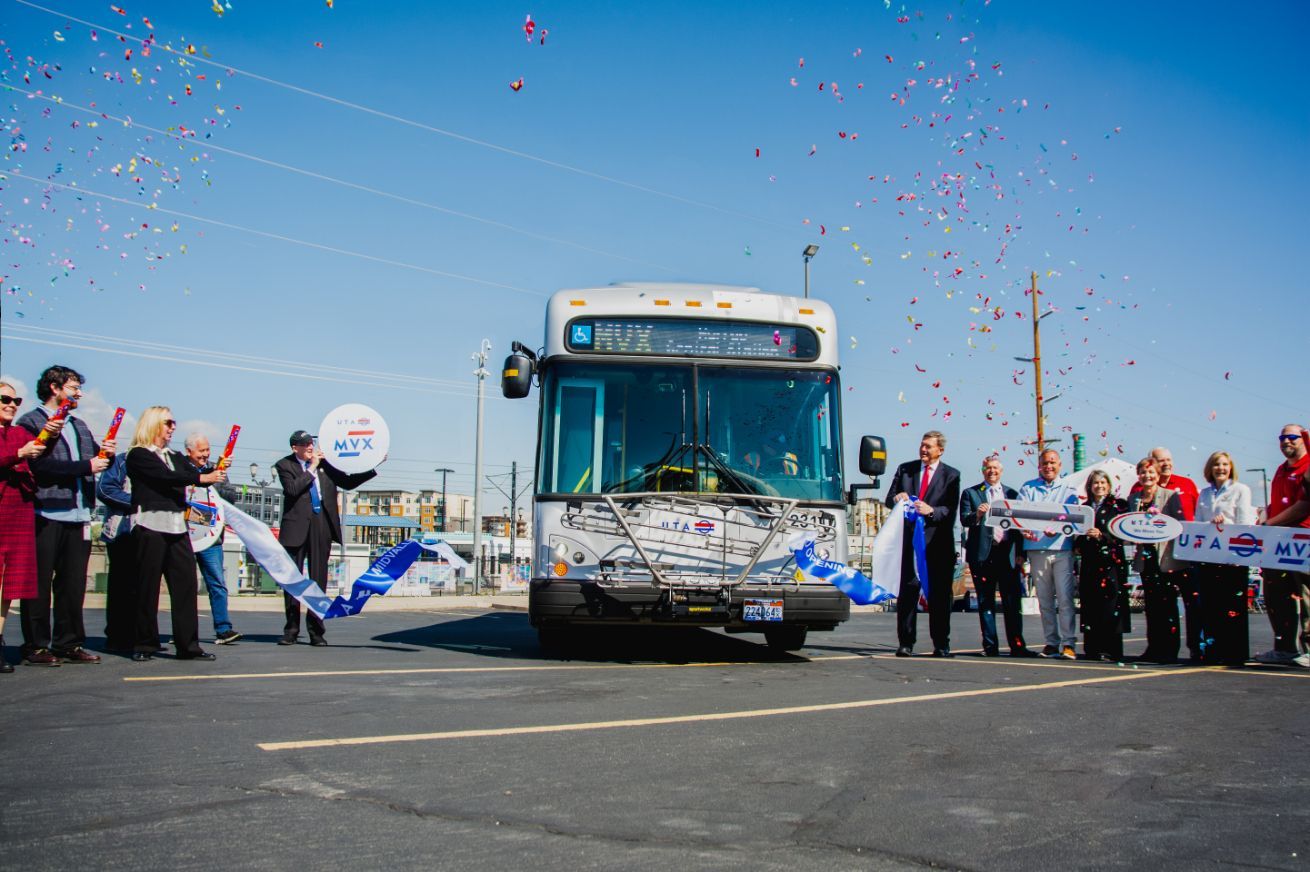
UTA and other project team members celebrate the MVX grand opening. (photo courtesy UTA)
Button
Slide title
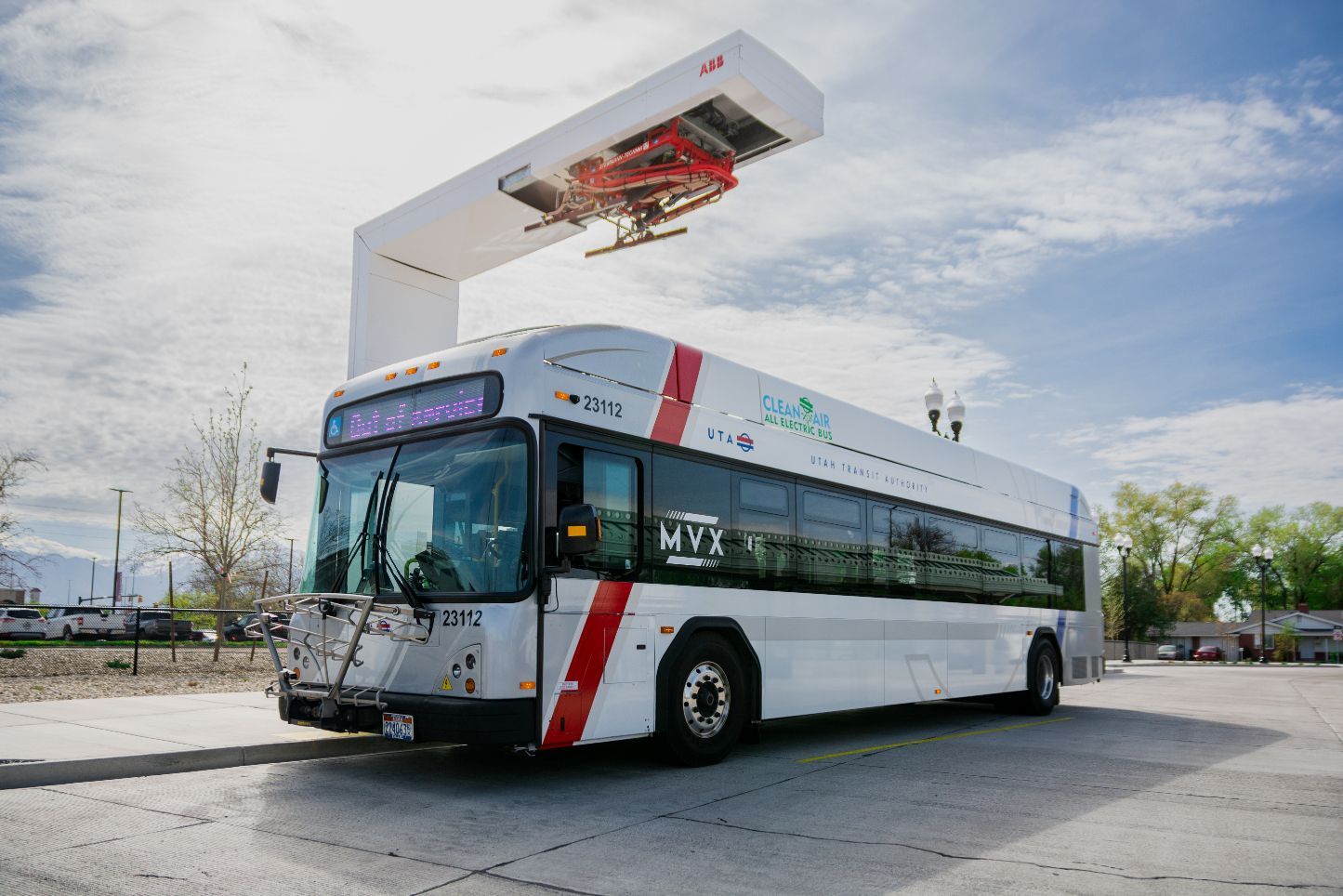
Electric infrastructure for bus charging stations was installed by Cache Valley Electric. (photo courtesy UTA)
Button
Getting Everyone on the Bus
Work on the MVX began long before general contractors from Stacy Witbeck’s Salt Lake office and trade partners began construction efforts in 2024. The project began in earnest in 2008, identifying the SR-266 corridor as a strong candidate for transit investment.
According to UTA representative Gavin Gustafson, Sr. Public Information Officer, the time invested in refining the service from 2008 onward proved to be a major project strength.
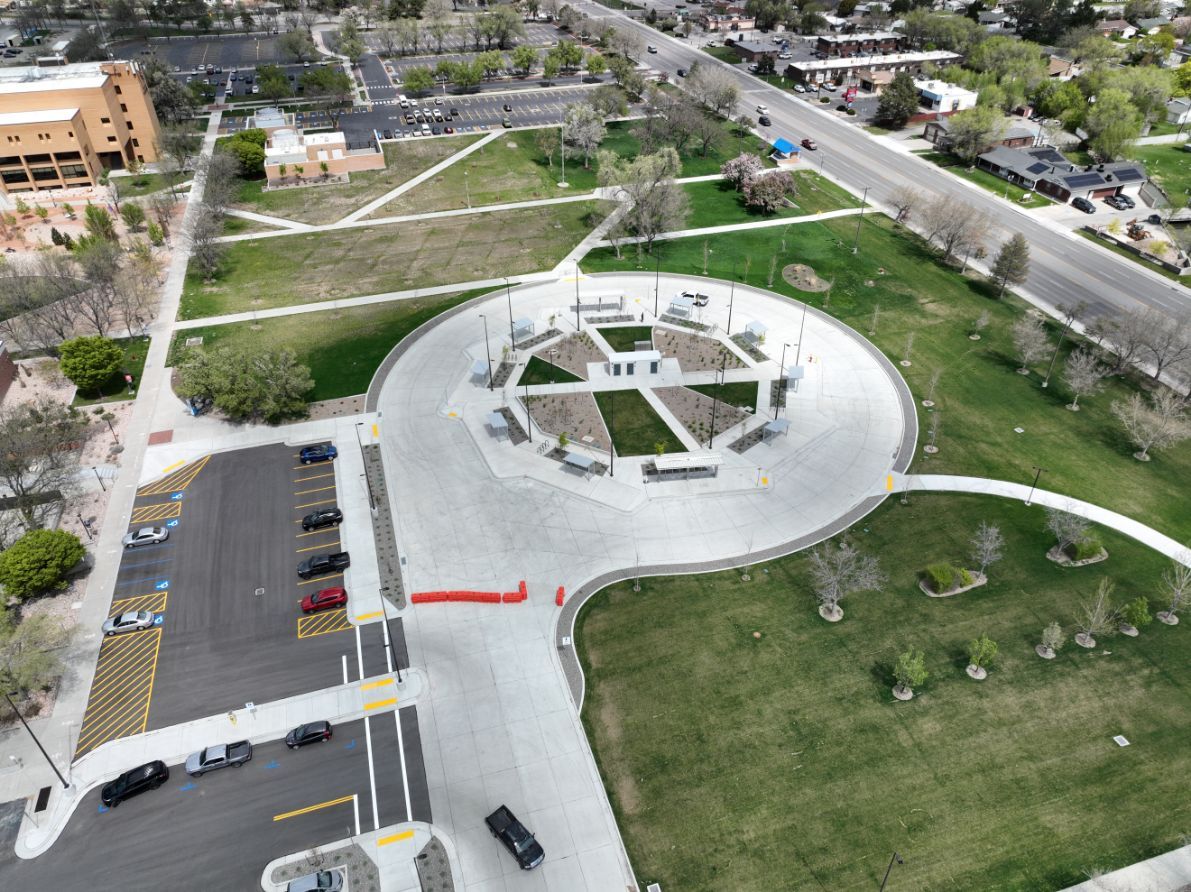
“Over multiple planning efforts, partners reached consensus on a route that connects major existing transit centers while adding a new transit hub at Salt Lake Community College's Redwood Campus,” he said. “Dedicated bus lanes along [SR-266] were also identified as a critical investment to improve travel time reliability and make the service easy for riders to recognize and access.”
Studies completed in 2013 and 2015 helped refine the route and service plan, dictating the level of investment required to serve not just the communities of Murray, Taylorsville, and West Valley who joined the project in 2018, but the thousands who would use the new mid-valley transit infrastructure in the future.
Gustafson said city officials from Taylorsville were exemplary in their efforts to champion the project, beginning in 2019. “The city completed the state environmental review, advanced the project to 60% design, and secured significant funding commitments, positioning MVX for the next phase of development,” he said.
Taylorsville Mayor Kristie Overson credited previous city administrations for the foresight to continue to champion an east-west transit line through the city. “They had vision of what we could do,” she said of Taylorsville’s efforts to be a connector—not just for personal vehicles. “But we knew there was no way to see this through as just a Taylorsville project.”
Collaboration extended across borders and organizations; West Valley City contributed property at its City Hall campus to enable the expansion of the West Valley Intermodal Hub and improve ridership connections; Murray City provided critical environmental inspection and construction oversight at Murray Central Station, where work required specialized safety protocols because of the site's underground soil conditions and its operating status as a multi-modal hub for buses, light rail, and commuter rail. Salt Lake County, Wasatch Front Regional Council, UDOT, and federal and state representatives were integral in planning and securing funding for the new public transit asset.
Engineers at Jacobs, from the firm’s Holladay office, were brought on as the prime consultant in 2021 to advance the design and develop bid documents. Doug Stremel, Sr. Project Manager with Jacobs, said design challenges included a short shutdown window for the North Jordan Canal concrete box extension and numerous utility relocations—waterlines, sanitary sewer, and fiber optics along SR-266. As design progressed, UDOT requested upgrades to certain communications lines and an additional fiber optic extension incorporated further east of the project.
UTA resumed project leadership in 2020 to pursue federal funding and finalize project development, completing the federal environmental review process in 2022 and design in 2023; Stacy Witbeck came aboard as the general contractor in late 2023. All the while, UTA prepared a grant application that eventually became $62.8 million awarded to UTA in 2024 from the Federal Transit Administration to help fund the $109.6 million project.
Slide title
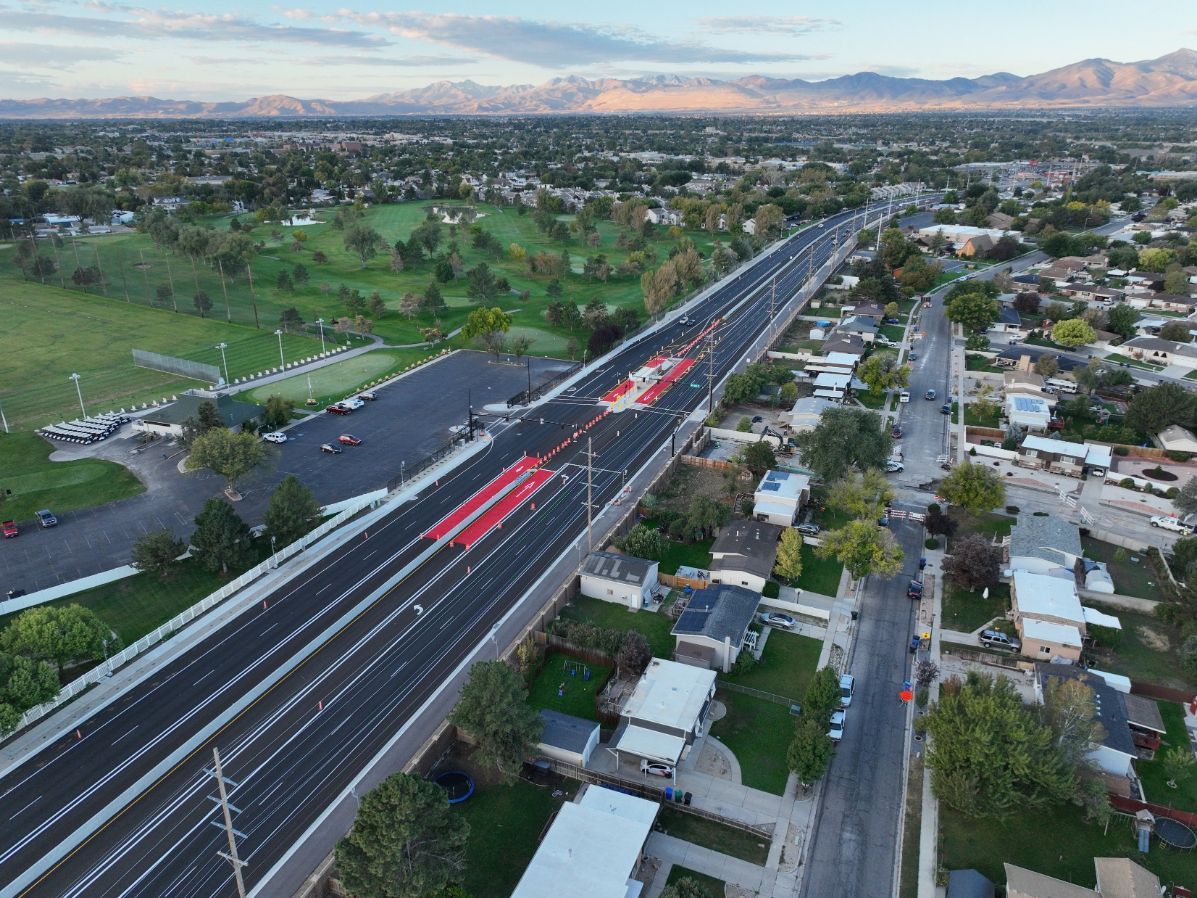
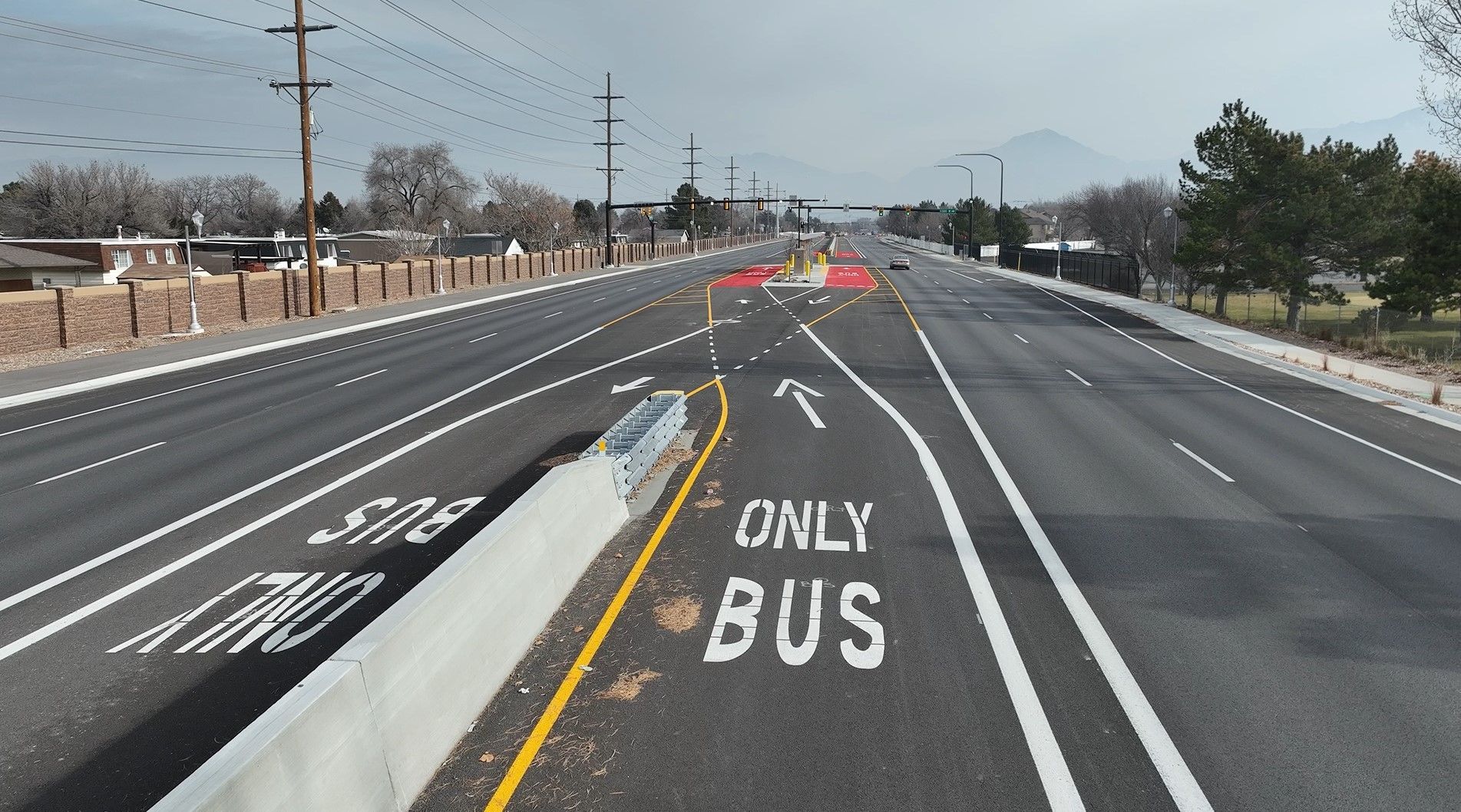
Doug Stremel, Sr. Project Manager with Jacobs, said extensive design work went into roadway geometry to ensure buses could navigate crossovers, like those pictured in the foreground, as they enter the boarding platforms in the background. (photo courtesy Stacy Witbeck)
Button
Slide title
SLCC's new hub was a major project feature built to aid the college as a ridership anchor for the new BRT project. (photo courtesy Stacy Witbeck)
Button
Slide title
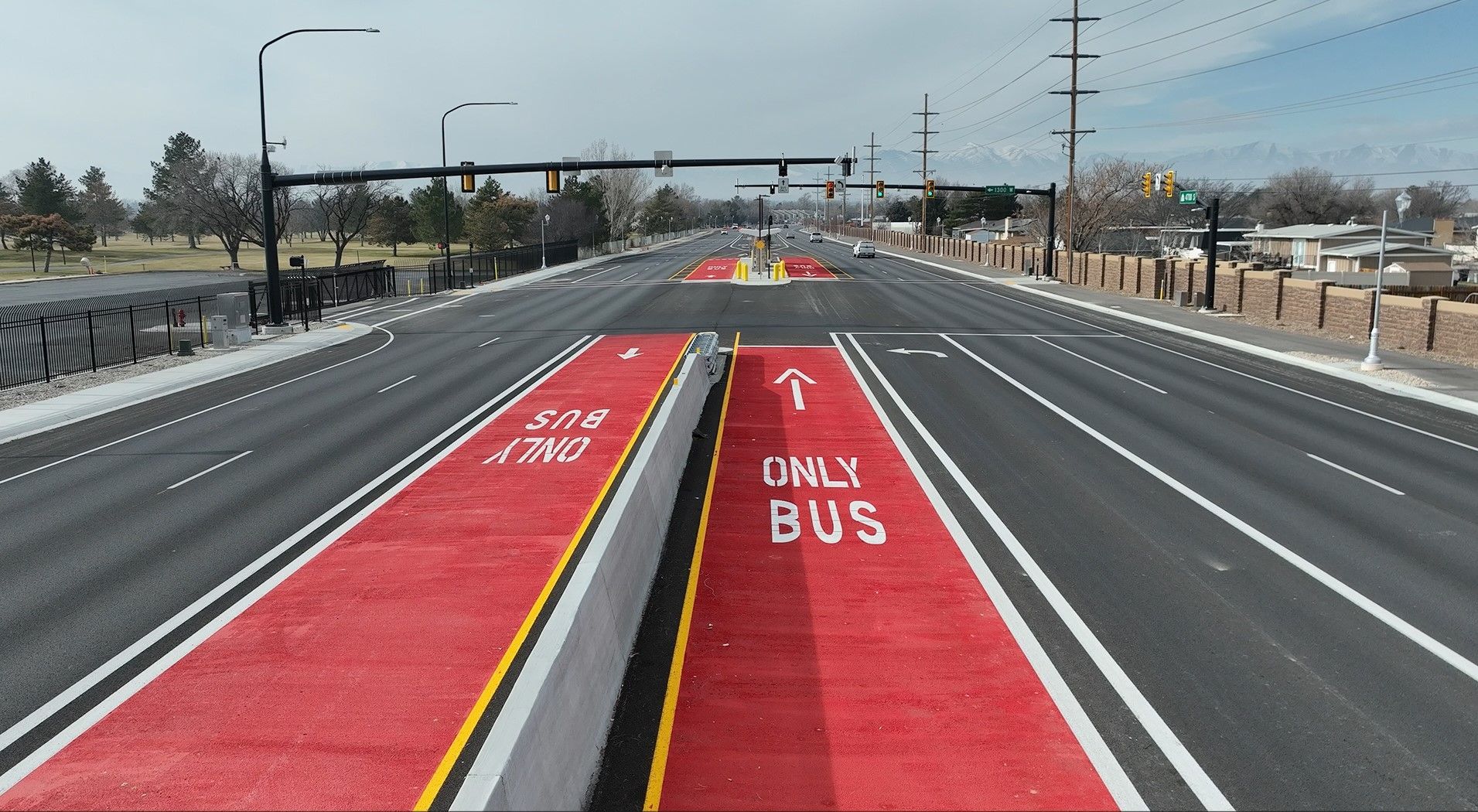
Bus rapid transit lane crossover looking east. (photo courtesy Stacy Witbeck)
Button
Slide title
Bus rapid transit lane crossover looking west. (photo courtesy Stacy Witbeck)
Button
Simple Build; Complex Scheduling and Coordination
Interfacing with a college, state transportation agency, three cities, three water departments, and two power departments could have easily been a case of “too many cooks in the kitchen” once planning turned to construction, but Stacy Witbeck representatives said that close coordination with all stakeholders ensured that construction met each and every directive for a successful project.
For Mitch Schwab, Field Engineer with Stacy Witbeck, scheduling infrastructure projects across such a complex and extensive stakeholder network usually means fighting the uphill battle to meet deadlines.
Not here.
“I watched us move eight months ahead of schedule—a position that came with a kind of pressure nobody warns you about,” he said.
While an early FTA funding delay pushed the schedule back, Schwab said the Stacy Witbeck team effectively used the downtime to order materials and secure submittal approvals long before they were needed. Bi-weekly stakeholder meetings and weekly schedule syncs kept things humming, and builders rode an unseasonably warm and relatively snow-free winter to move ahead of schedule.
“Every one of those wins compounded,” he said. “Before we knew it, we had pushed the project eight months ahead of plan.”
The firm and its trade partners had to keep their eyes on the prize to ensure to stay ahead of construction’s constantly-arriving unknowns and hiccups, like ensuring that the North Jordan Canal culvert could be replaced within the canal company’s two-week maintenance window. The construction team performed culvert removal, grading, rebar placement, formwork, concrete placement, and backfill successfully during the shutdown period, allowing services to resume in April 2025.
Schwab said performing regular schedule syncs, trusting in dedicated crews to deliver their respective scopes, and shifting coordination to match the new schedule helped MVX reach the finish line in April 2026, where crews had installed 20,000 tons of asphalt paving, 1 mile of drainage pipe, 64 precast columns, 4 miles of curb and gutter, 3,000 SF of colored decorative concrete flatwork, and much more—all before the expected Fall 2026 completion date.
Slide title
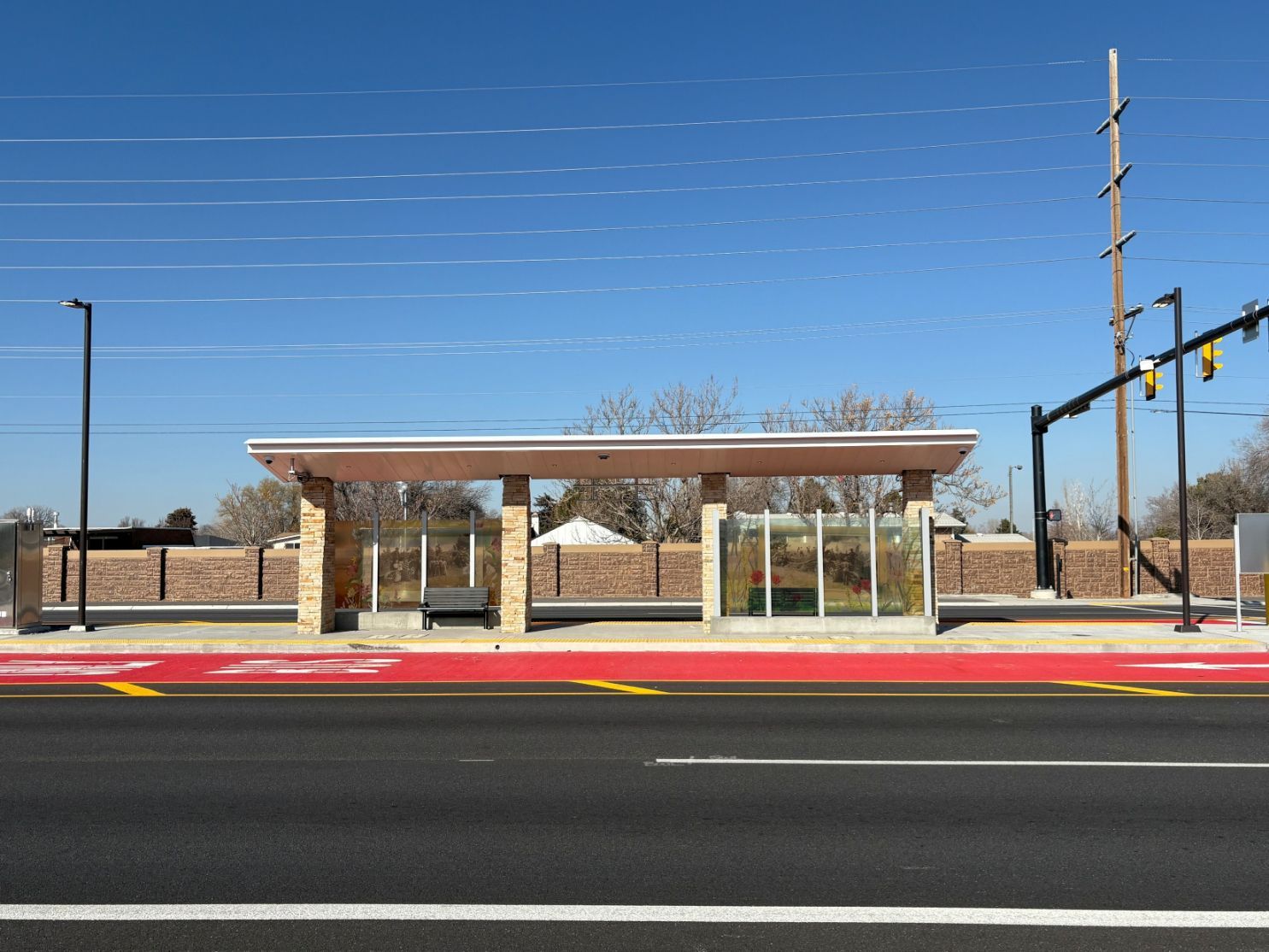
Specifications to build up these median platform shelters and additional supporting infrastructure were substantial—with extensive concrete, rebar, and steel deliver longevity and durability.
Button
A True Mid-Valley Route
As the third of UTA’s BRT lines in operation, Gustafson noted that MVX design incorporated lessons learned from Utah Valley Express and Ogden Express BRT lines by prioritizing connection to a college campus as a ridership anchor.
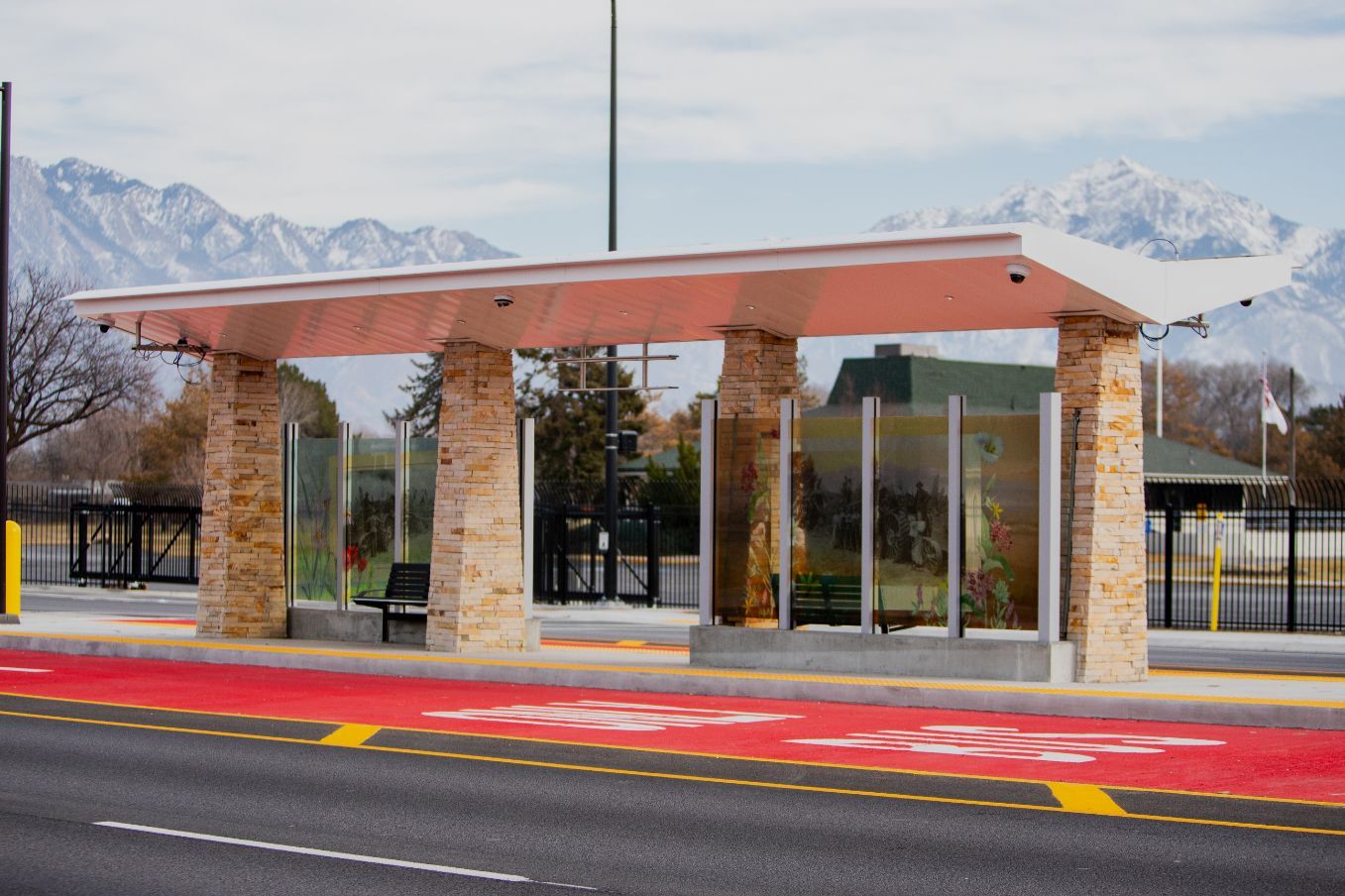
Beyond the campus connection, the mid-valley route incorporates the same red paint marking the dedicated bus lanes; MVX contains 1.4 miles of these lanes across its 7-mile route, all engineered to allow buses to efficiently enter and exit the three center loading platforms along SR-266 from East Atherton Drive to Redwood Road in Taylorsville.
Stremel said extensive design work went into these platform layouts and the roadway geometry to ensure buses could navigate crossovers before and after the platforms on SR-266, where barrier openings with end treatments for smooth and safe bus operations. These upgrades, as well as the transit signal priority added to all signalized intersections, keeps transit delays to a minimum while MVX’s 10 electric buses pass along 15-minute intervals across the route’s 25 stops.
Stremel said the plans and specifications to build up these platform shelters and additional supporting infrastructure were substantial. “These are hefty shelters built in place to endure time,” he said, noting the extensive concrete, rebar and steel required for these platforms.
Even as absolute units, Stremel said design included bollards placed outside the bus lane engineered to “stop a veering Mack truck” and ensure life safety for the passengers waiting at the stops while keeping the platform structure safe.
Midvalley Express Station Art Installations
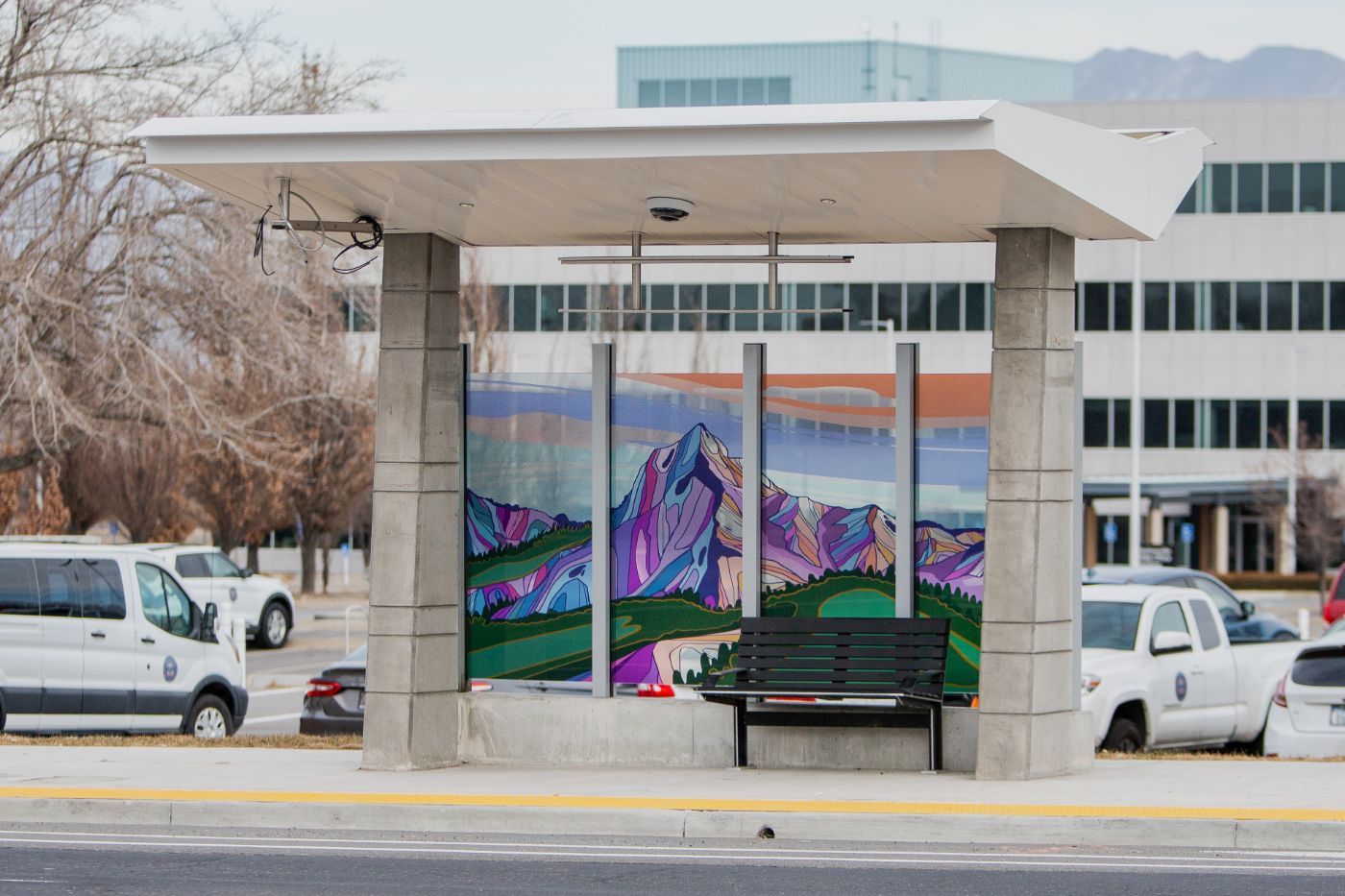
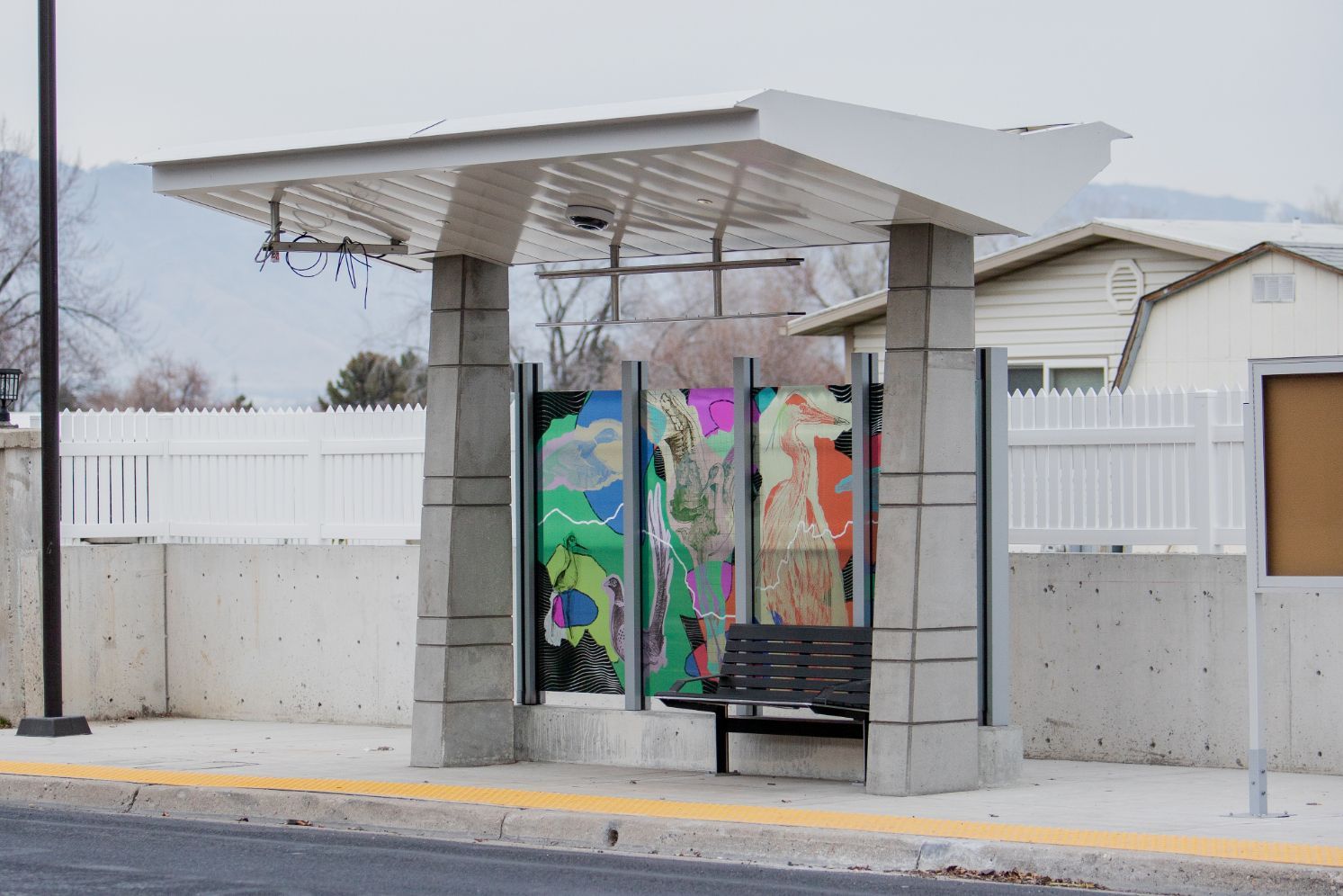
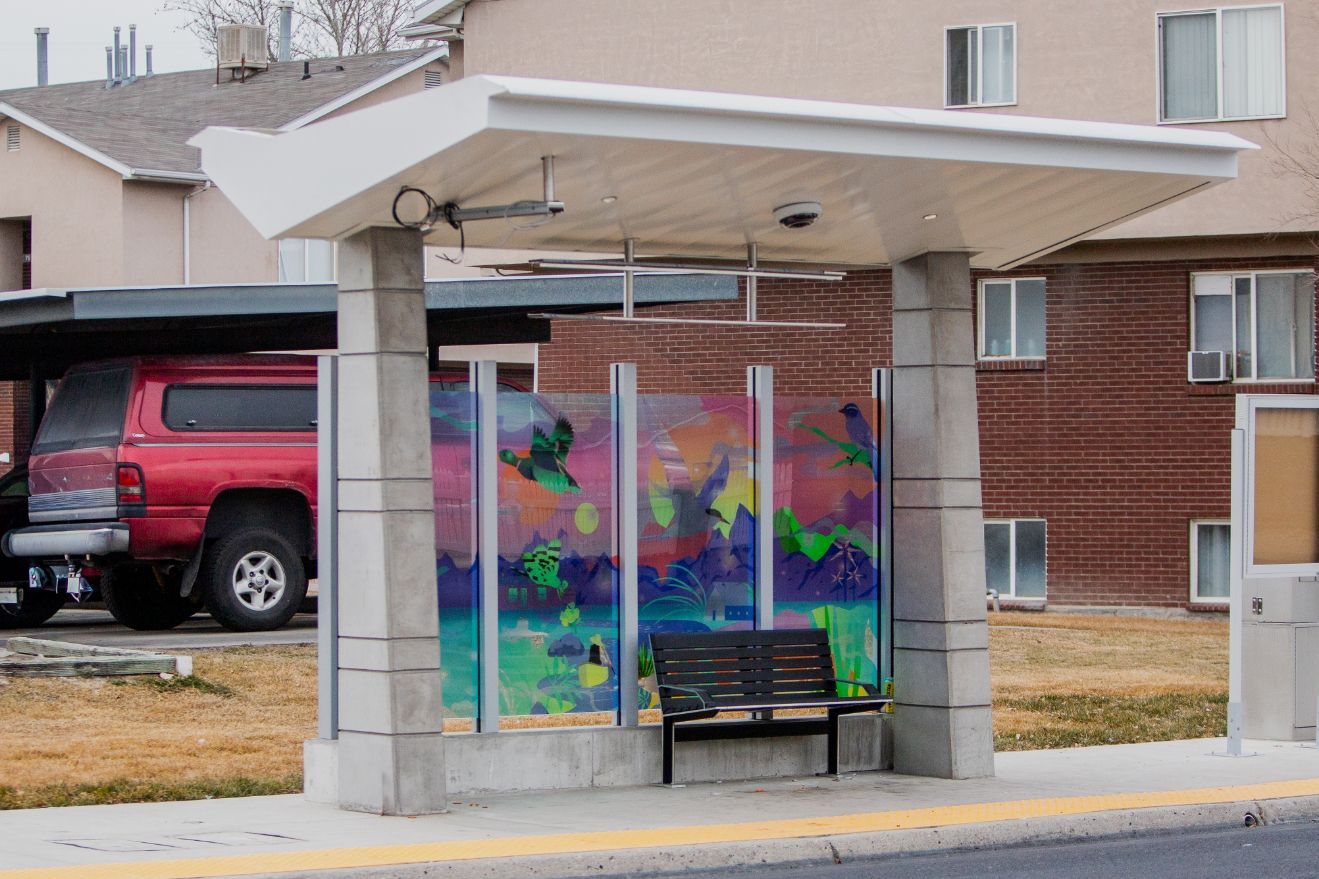
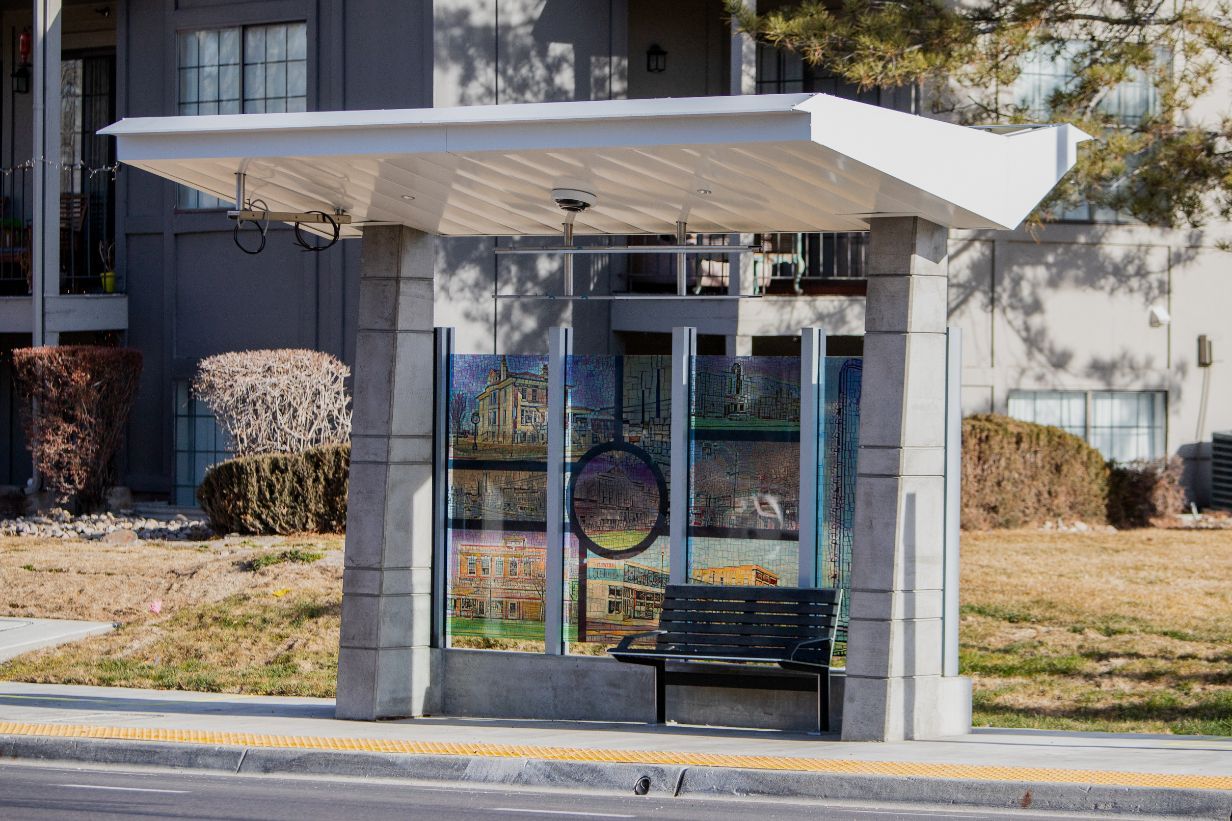
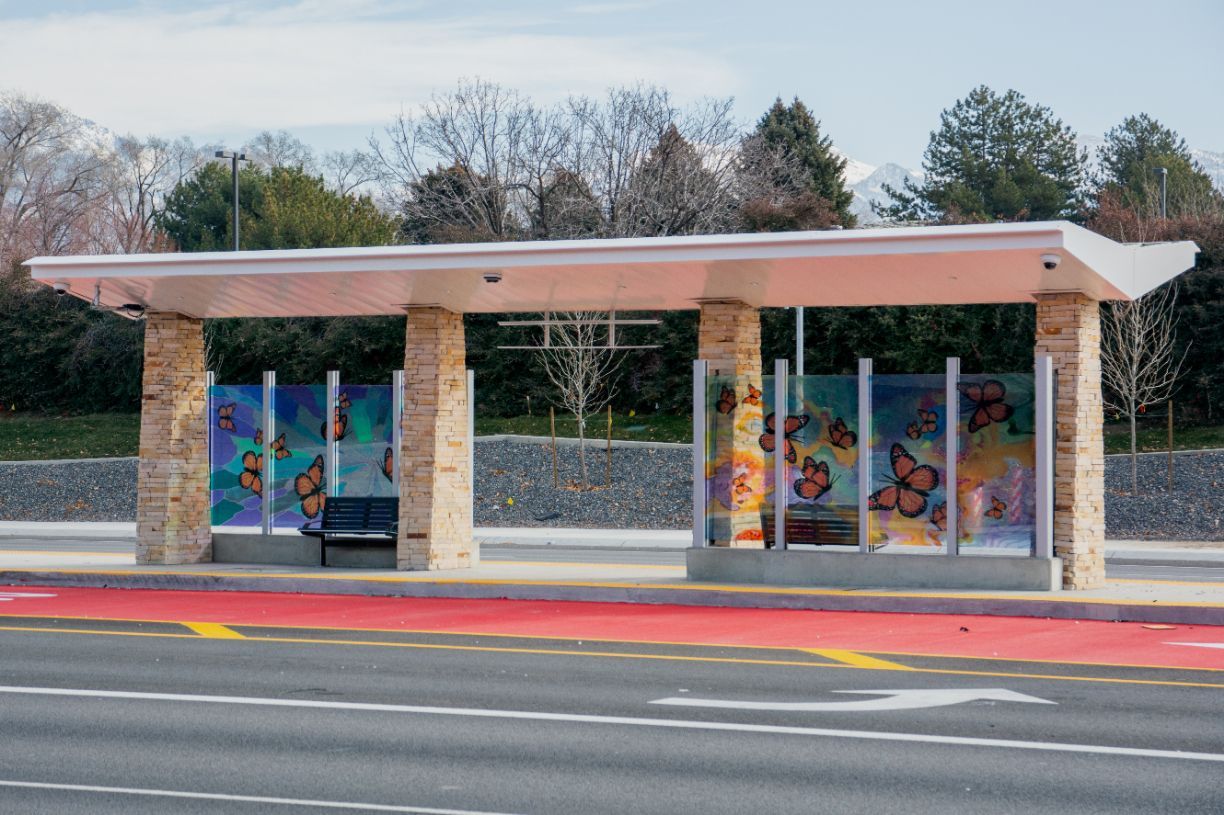
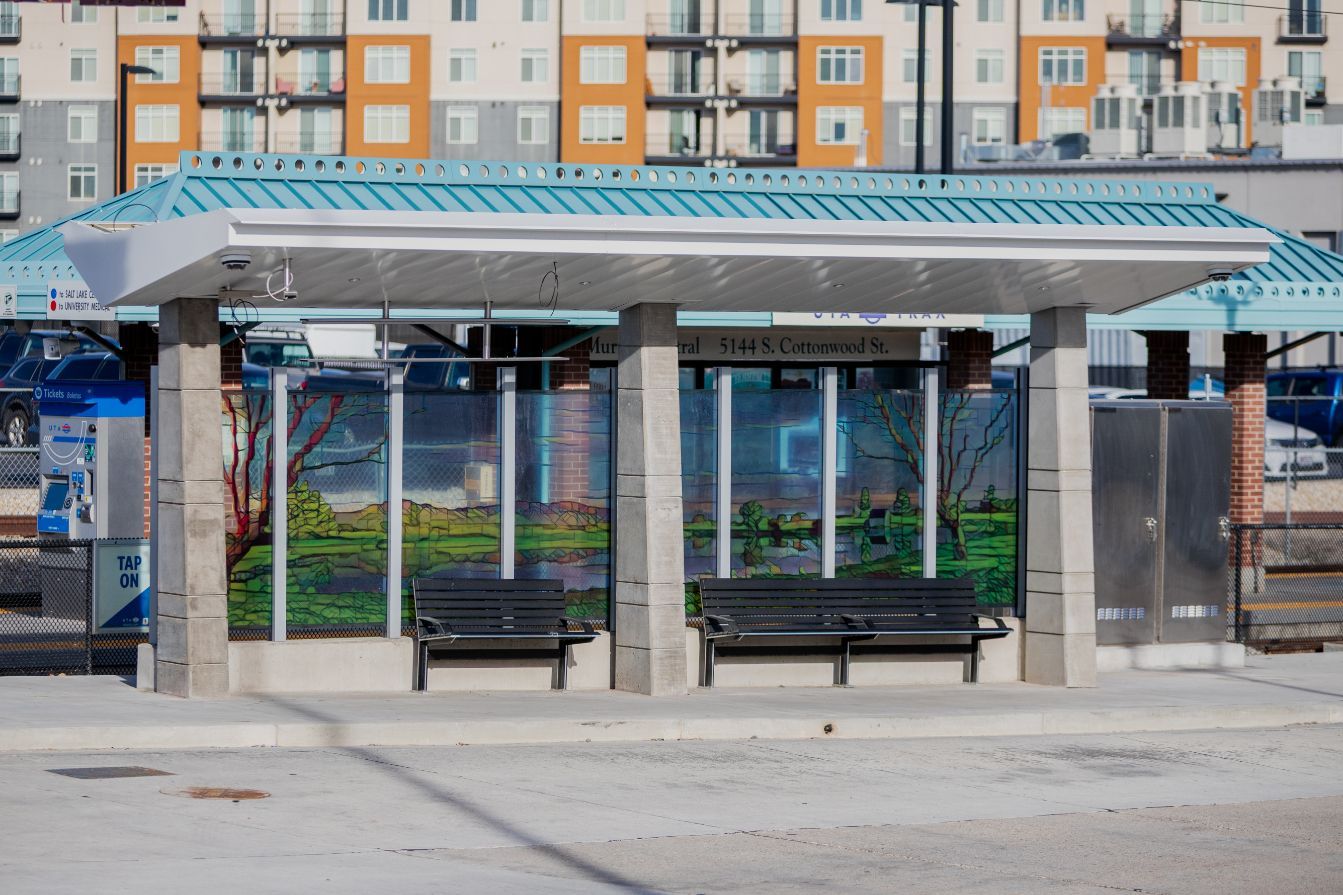
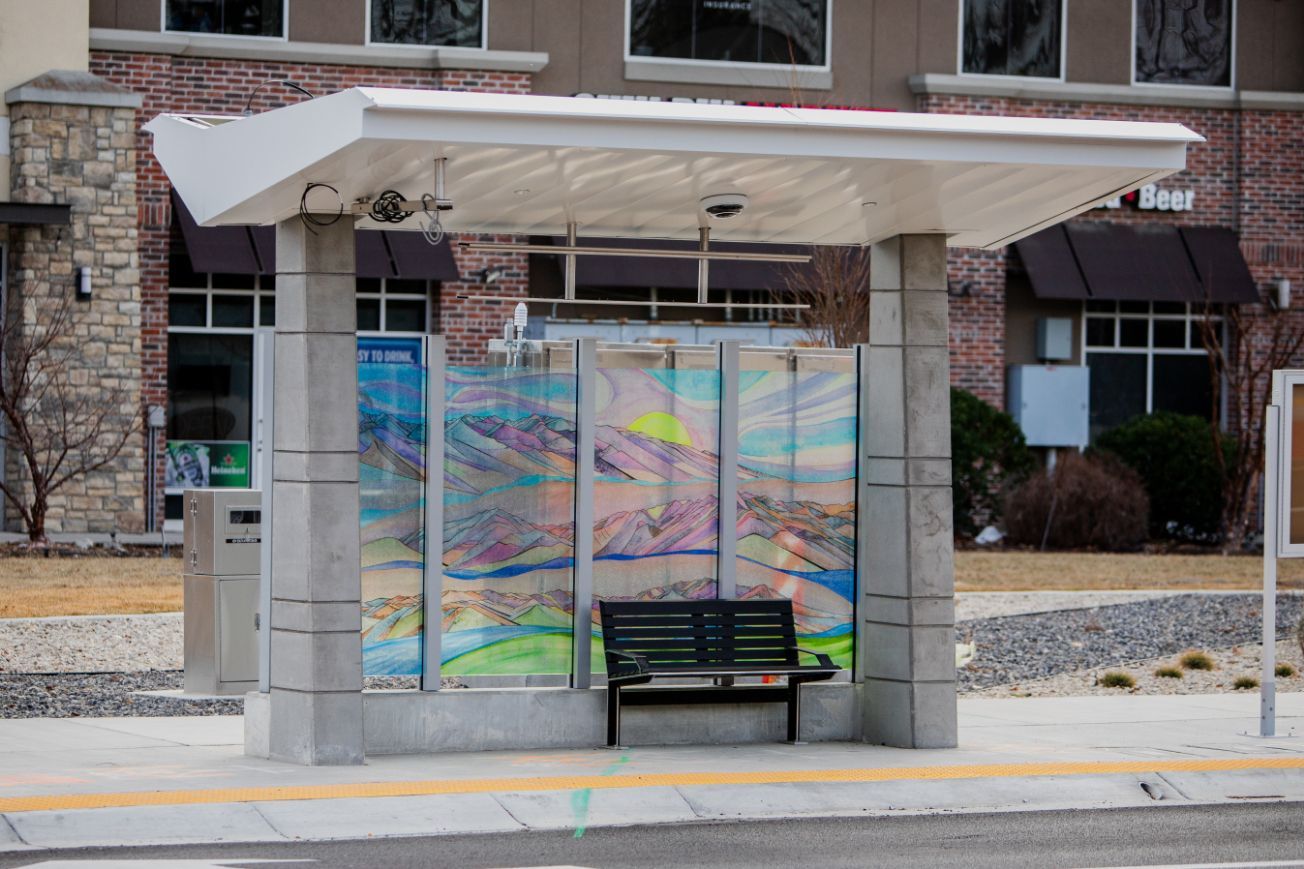
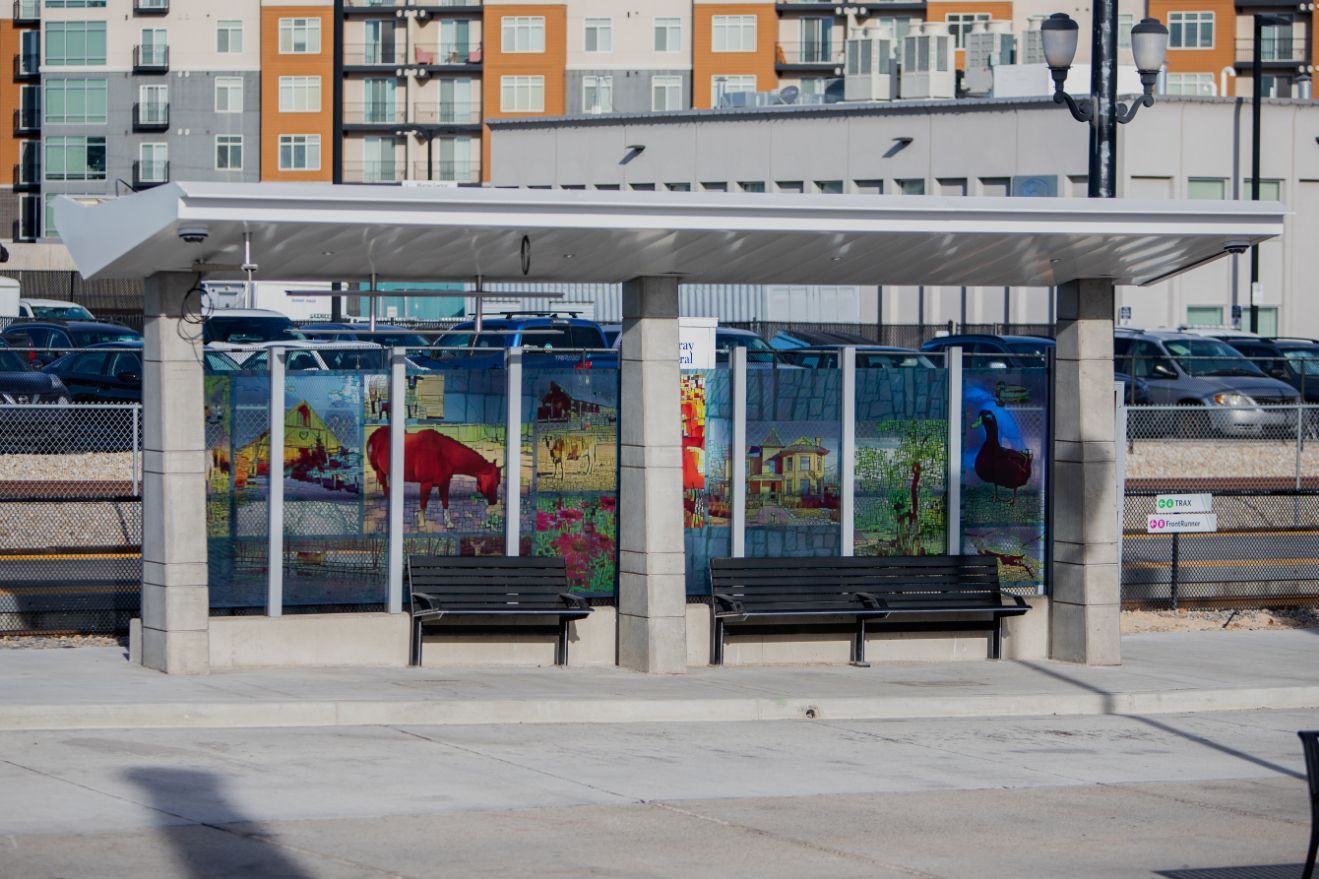
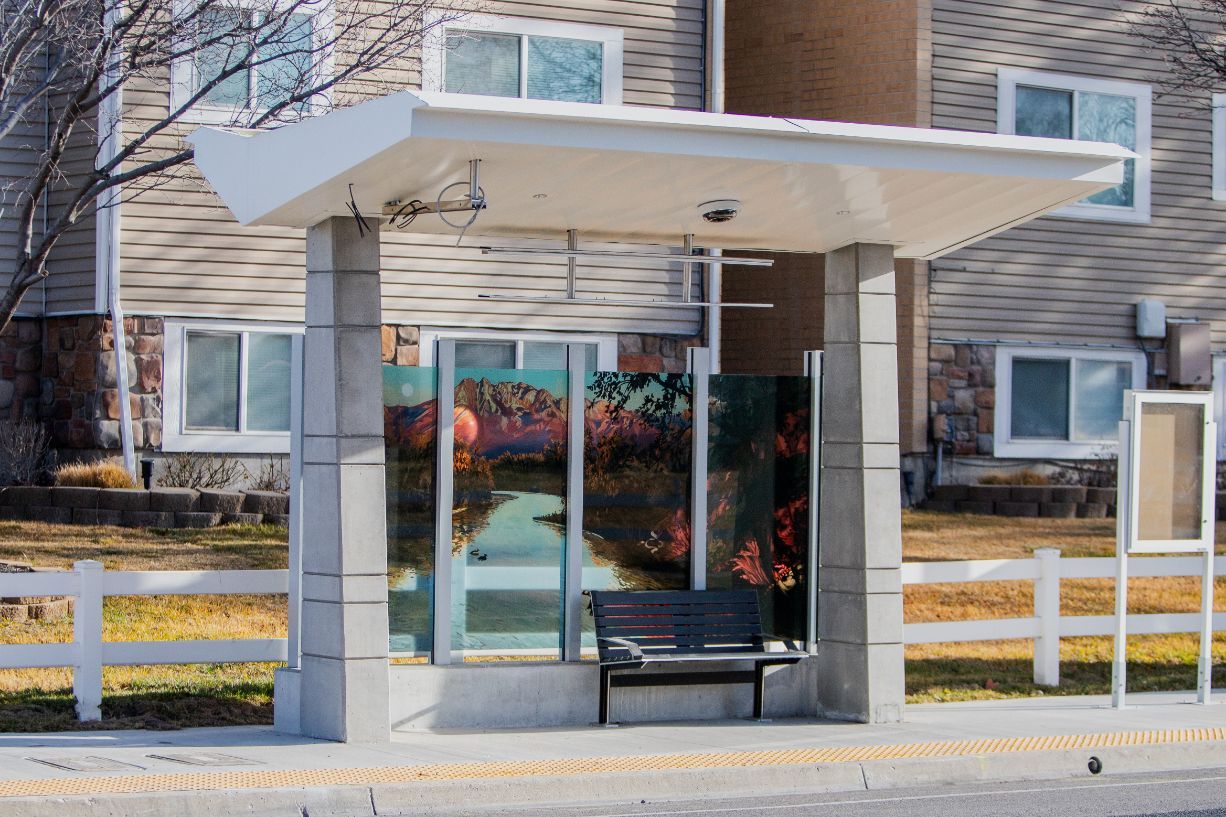
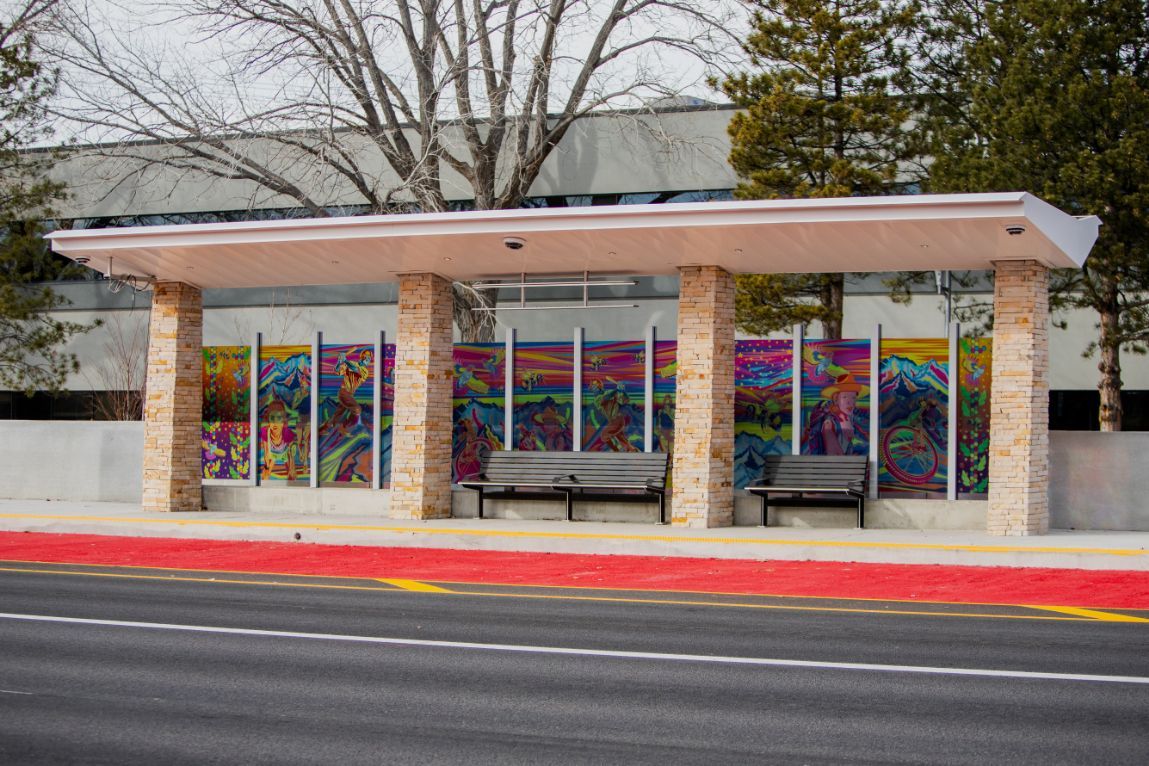
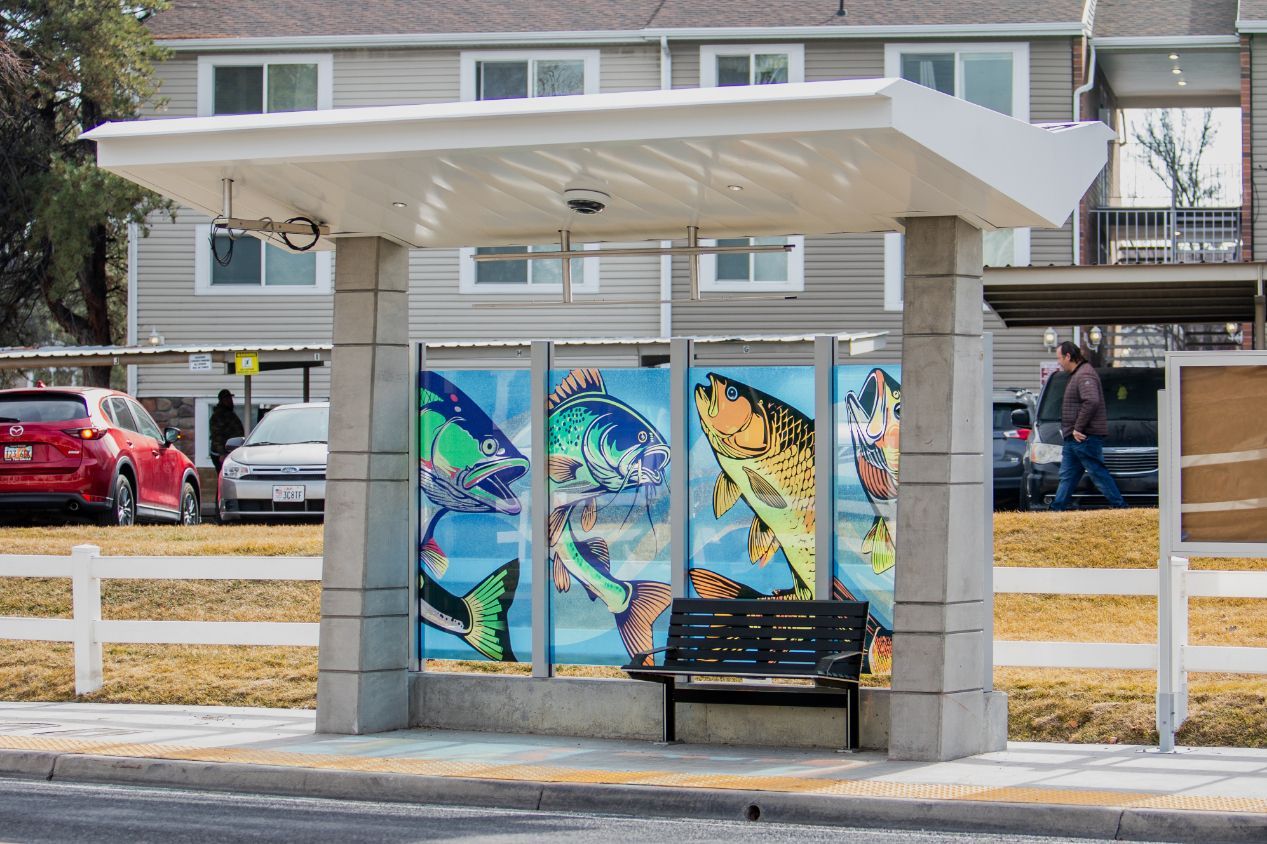
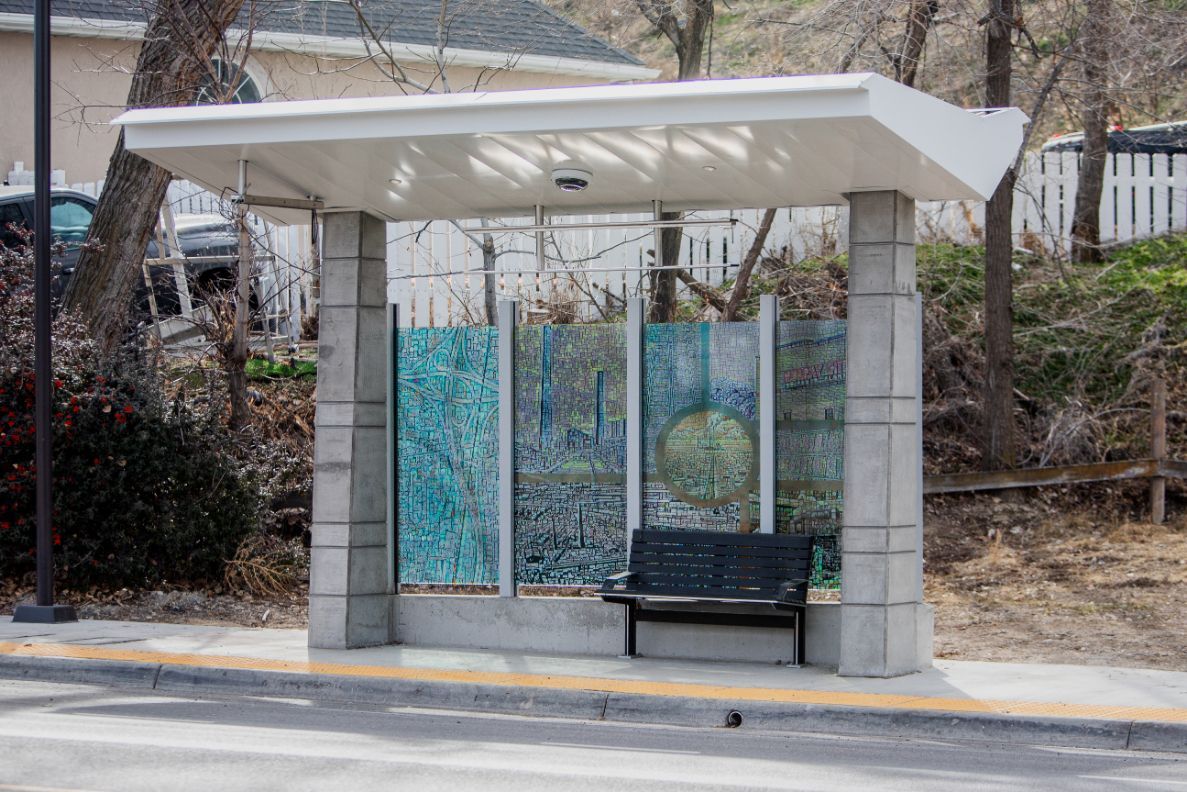
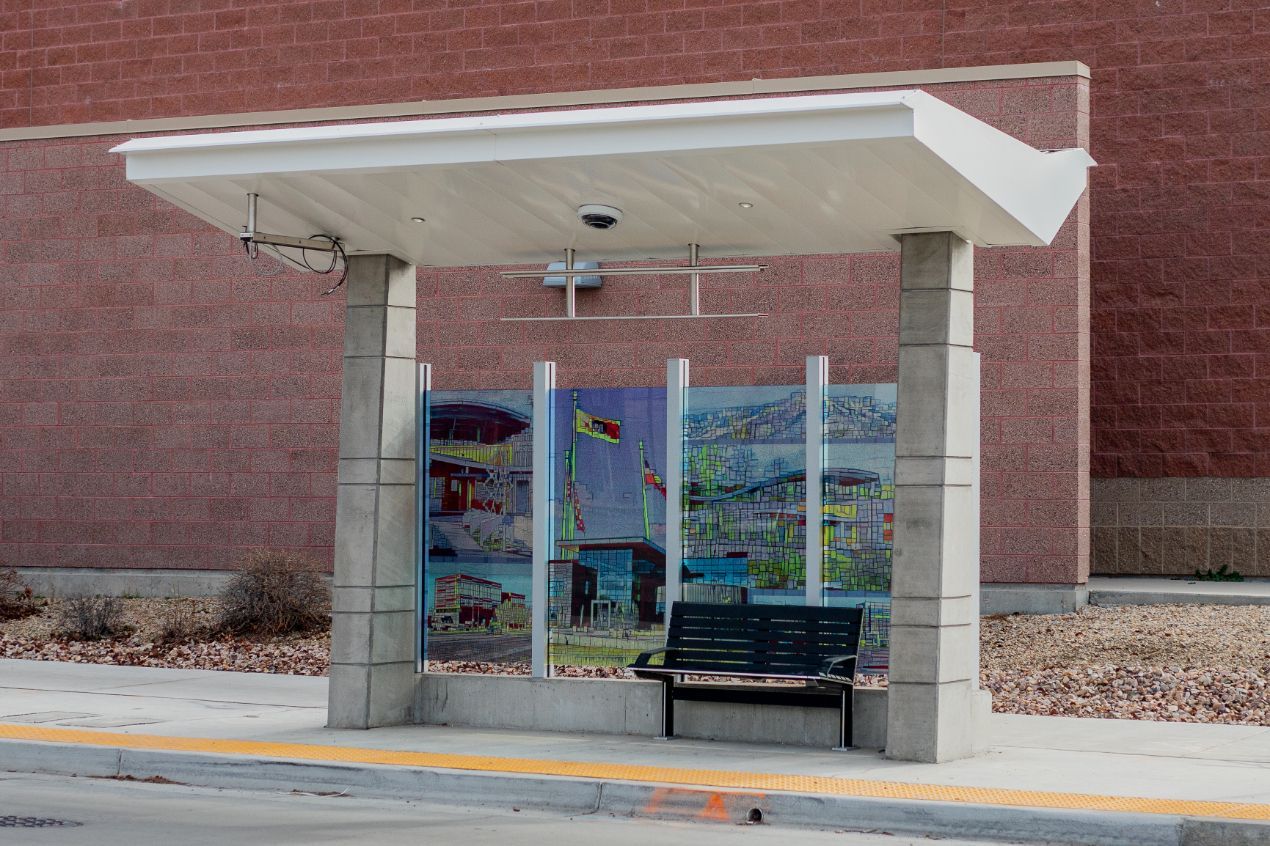
The median stations may receive the lion’s share of attention, but smaller stops along the route weren’t an afterthought. Many newly created stops contain custom glass panel artwork developed in collaboration between UTA, the trifecta of municipalities, and SLCC. Each of the glass art pieces—designed by a cadre of 14 local artists—was inspired by the people, culture, and natural landscapes of the area; transit improvements colored by community character.
The route begins at newly installed high-efficiency bus charging stations installed at Murray Central (westbound) and West Valley Central (eastbound) and passes SLCC’s Redwood Campus, the expanding State of Utah office campus on 2700 West, Valley Fair Mall, and other destinations, connecting riders to all three TRAX light rail lines and FrontRunner commuter rail for transit access to the entire Wasatch Front.
“This BRT line is an amazing amenity for our community,” Mayor Overson said of the completed project. “MVX is not just an outlier BRT—this is a connector.”
MVX will be fare-free for the first three years of operation for new riders to give public transit the ol’ college try. There, riders can experience the power of collaboration and stakeholder engagement in bringing about a welcome new ride.