








Well over a decade since mass timber began gracing Utah’s commercial projects, the question remains: what will it take for mass timber to become commonplace?
By Taylor Larsen
“Why aren’t we doing this?” asked Rich Thomason.
The question came in the year 2000—11 years since Thomason started his own framing company, Ogden-based Timber Works. At that time, glued laminated timber (glulam) had been in use for well over a century while cross-laminated timber (CLT) was still in its infancy.
But in commercial construction? “Mass timber wasn’t even in the vocabulary,” said Thomason.
The mass timber production market, or what existed of it at the time, was warped like a wet 2x4—Thomason recalled that procuring timber elements was a headache, prices were exorbitant, and the service was poor. No surprise, the quality of these timber products followed suit.
But Thomason was certain the demand was there from what he saw in his early projects.
“There was framing involved,” he said, “but there were these timber elements in the design to do the Park City style.”
So he and the Timber Works team began adjusting processes to build up modeling and fabrication capabilities to integrate timber trusses and post and beam, helping to plant the seed for mass timber use in Utah.
Seedling to Sapling
If anyone knows the state of Utah’s mass timber market, it's Thomason. He’s seen the industry and owners gradually embrace the many benefits of mass timber—enhanced environmental stewardship, faster construction, increased occupant wellness—especially once mass timber sprouted up outside of the Wasatch Back, beginning with the bid to renovate Alpine’s Star Mill in 2014.
“The bid requested post and beam construction and these weird things called CLT panels,” Thomason said. He connected with SmartLam North America to win the project—Timber Works fabricated the post and beam; SmartLam sent over the CLT panels. “And with a little bit of coaching, we started installing the panels,” Thomason added.
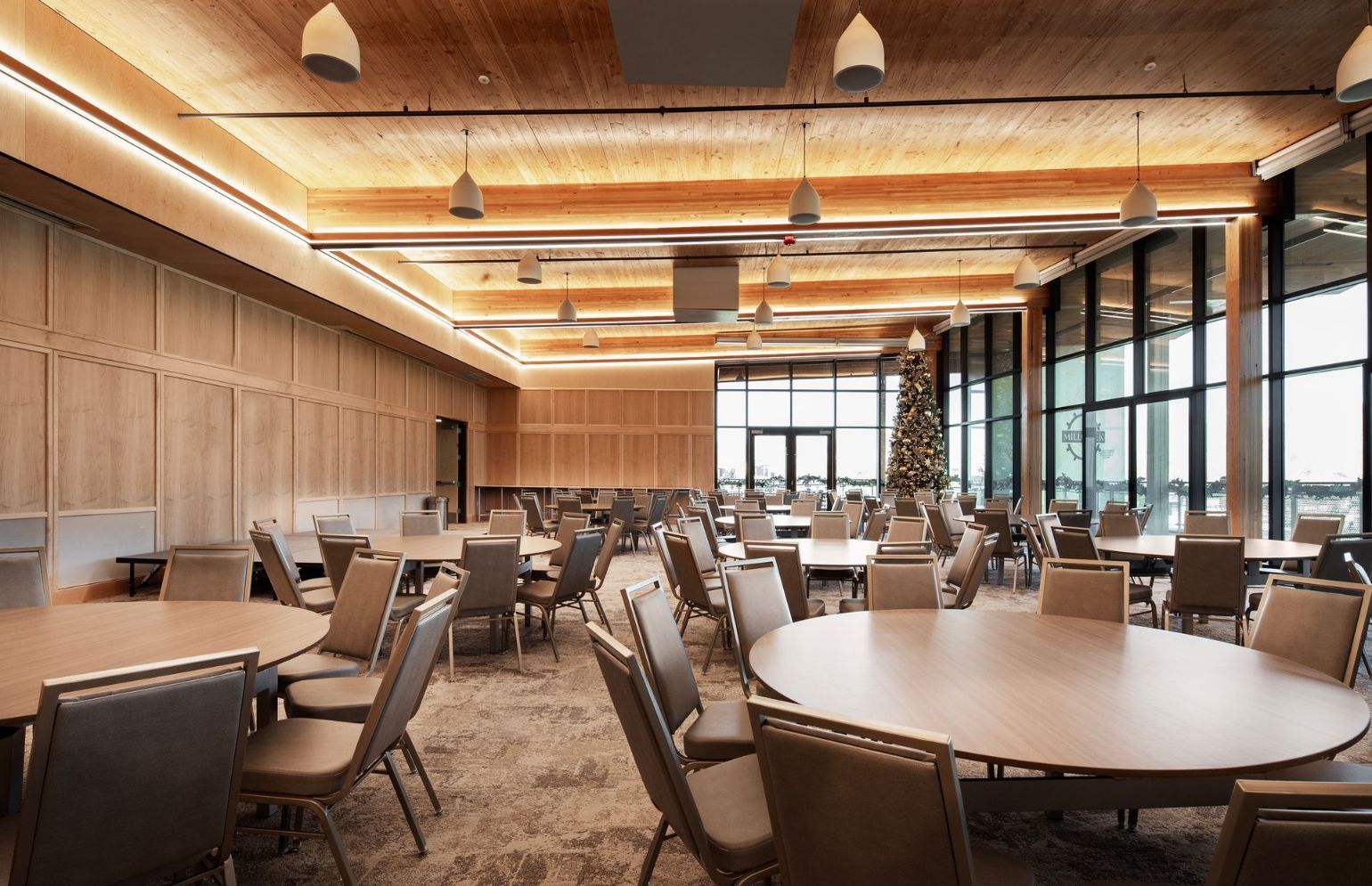
In the 12 years since, Timber Works has installed mass timber elements to numerous award-winning projects—Herriman State Liquor Store, Millcreek City Hall, Baltic Point, among others—as Utah’s mass timber industry has grown from seedling to sapling.
Much like a forest, this portion of the industry is served by a healthy floor layer of timber suppliers—SmartLam (Montana), Kalesnikoff (Canada), Boise Cascade (Idaho)—and an emerging group of connection fabricators—Rothoblaas (Italy), Simpson Strong-Tie (California).
Mass timber’s growth from seedling to sapling has been great for the building community, even as Thomason noted that Timber Works has competition to stay at the canopy layer. RedBuilt (Idaho), Timberlab (Oregon), and Western Wood Structures (Oregon) are three more within a cadre of mass timber specialists blown in via Utah’s economic tailwinds, setting roots and delivering great mass timber work within the state.
Maturity
But the inverse of the initial question is worthwhile, too: why
are we using mass timber?
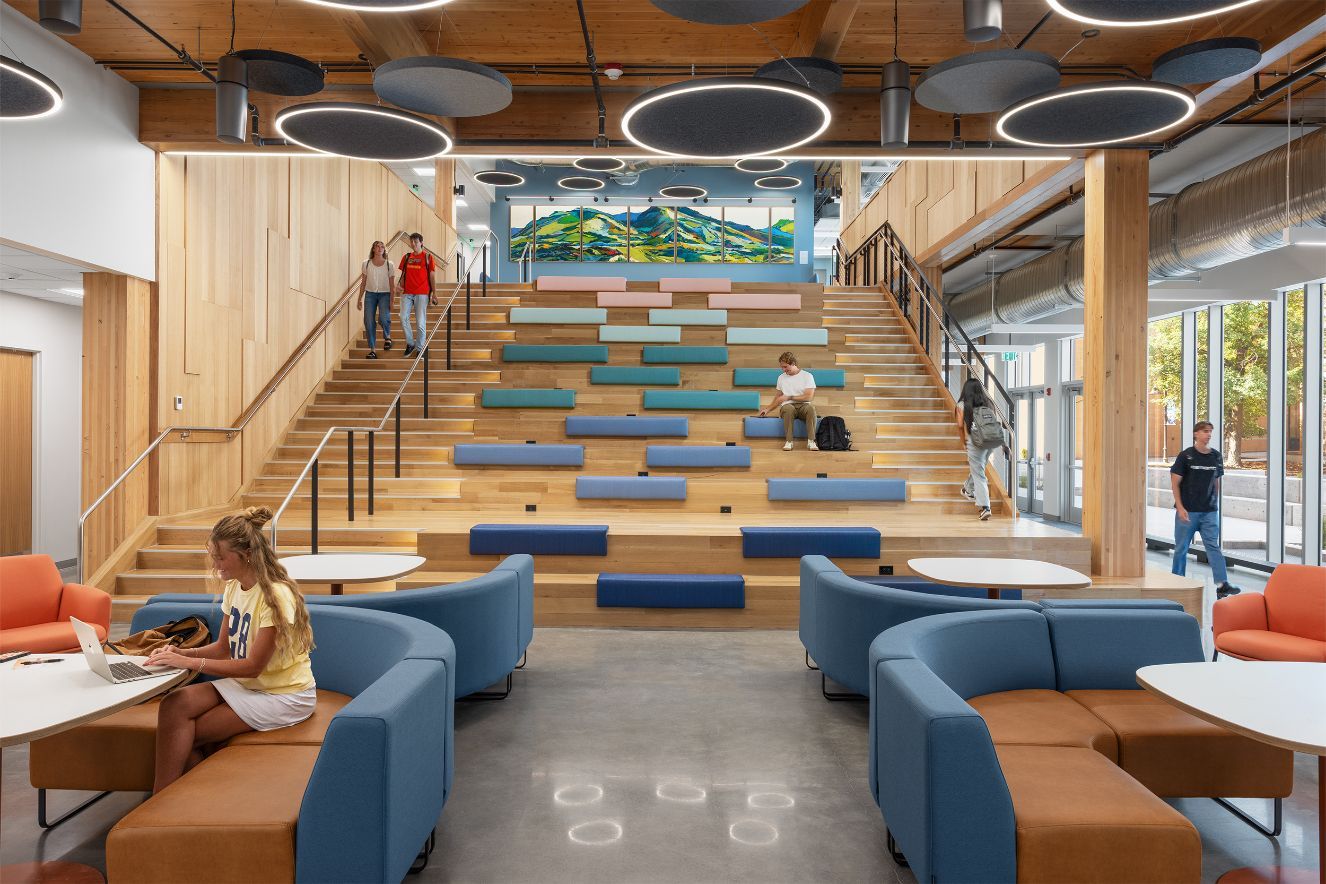
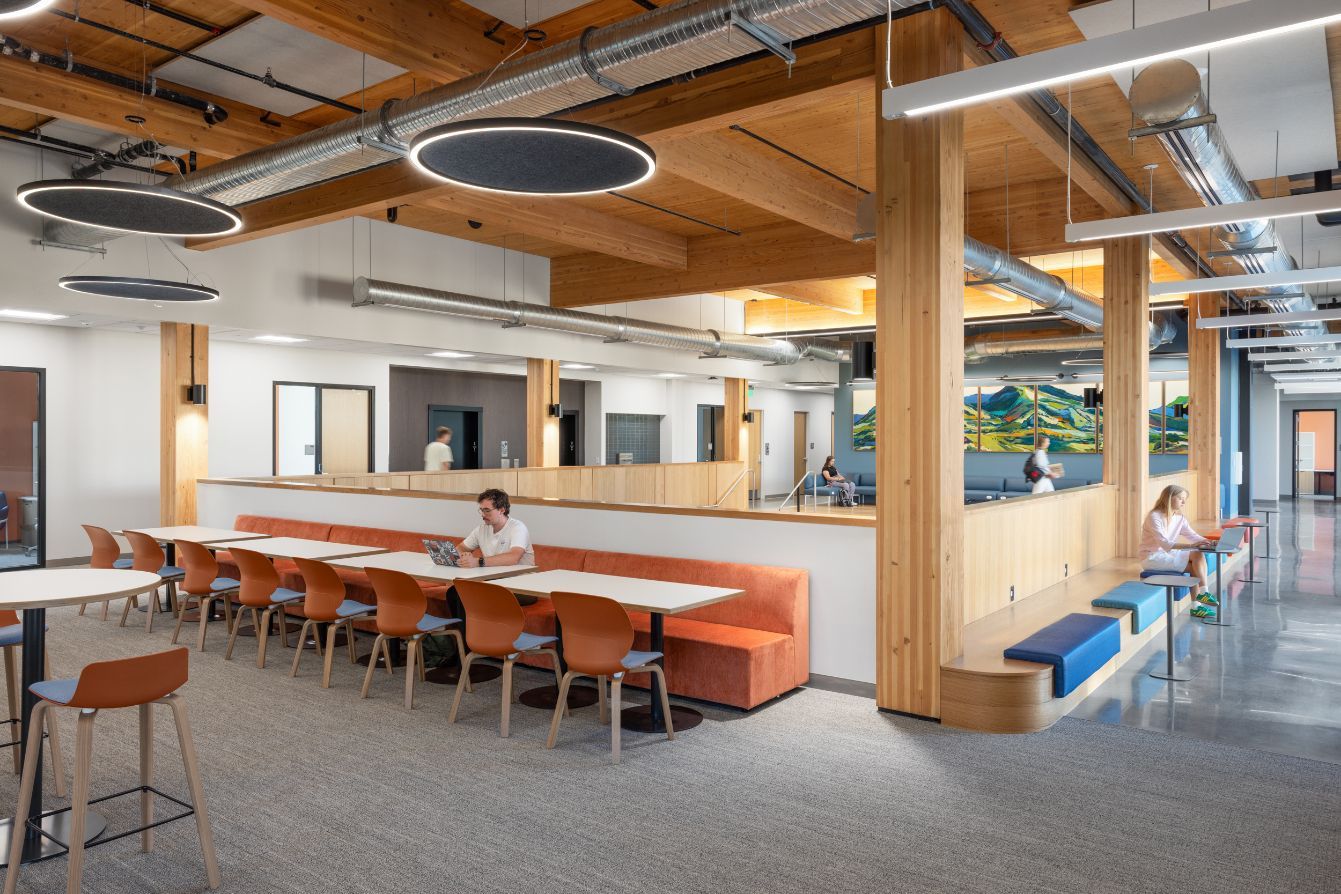
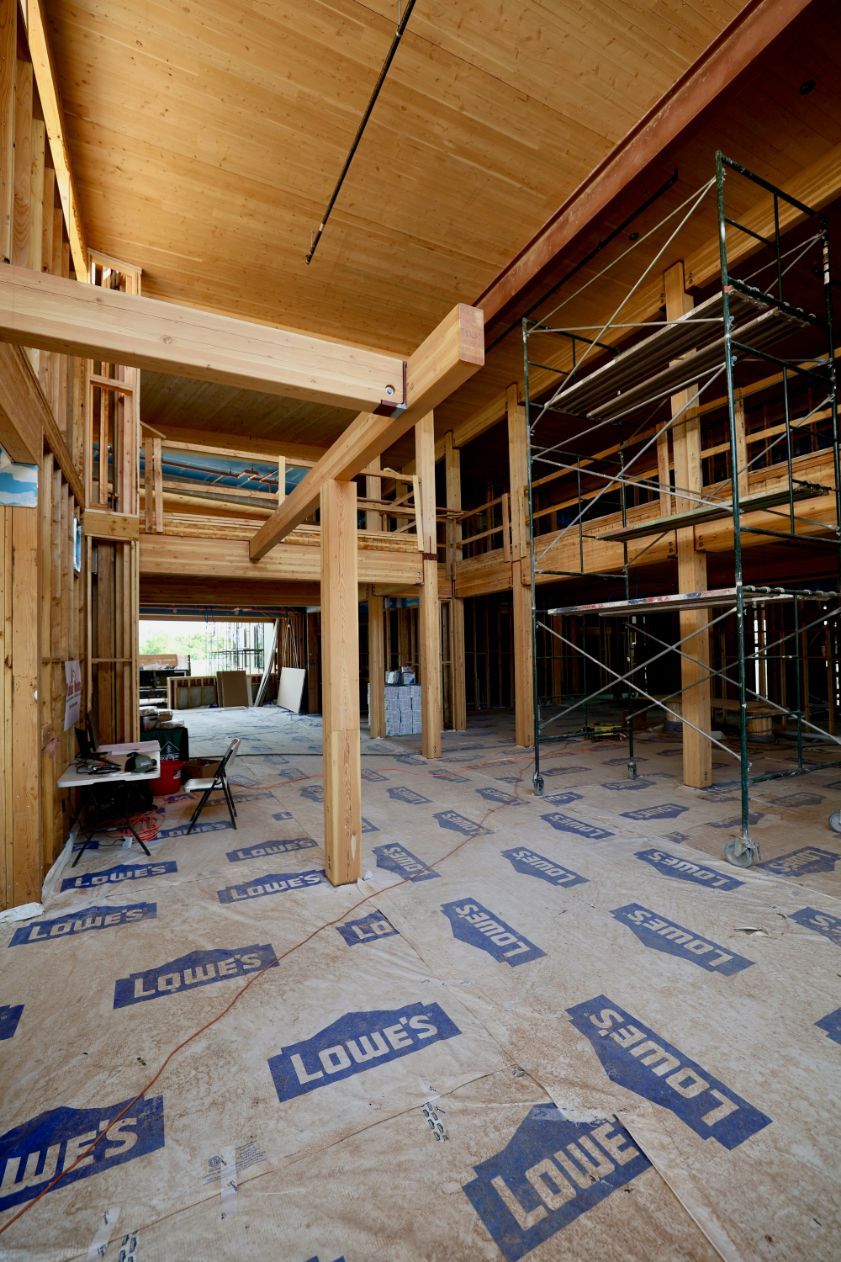
On the construction side, Thomason said mass timber’s prefabricated nature and straightforward assembly take what were once weeks-long floor assemblies utilizing steel and concrete and finishes installation within a week. It may share visual similarities with other wood products, but mass timber’s 1.5 inch/hour char rating puts it in a class above.
The product’s environmental qualities offer a unique selling point. Since trees take carbon dioxide out of the atmosphere and store it within their biomass in a process called carbon sequestration, studies comparing same-sized steel and concrete builds to mass timber show how mass timber construction significantly reduces construction phase emissions (69%) and overall global warming potential (26.5%) over the life cycle of the building. Mass timber products often derive from sustainably managed forests or from utilizing small-diameter trees cleared out for wildfire prevention; suddenly, mass timber is solving a lot of today’s challenges.
If the best time to plant a tree is 10 years ago, the best time to sequester carbon within some glulam beams and CLT panels and use it in today’s built environment is… also 10 years ago. The next best time for both is today—Thomason said the case in point for doing so in Utah comes every winter. “All you gotta do is wait for the inversion and see the stinky air we have on the Wasatch Front,” he said.
The original question becomes more urgent: why
aren’t we doing this?.
Headwinds
The learning curve is steep, according to KIER Construction Project Manager Will Nicholson. On his and KIER’s first mass timber project—Timberwood Creek, a permanent supportive housing project in Layton for Davis Behavioral Health—the builders had to shift into a higher gear on structural coordination.
“With so many prefabricated components, small design changes can affect multiple trades, so communication and planning become even more important than on a conventional project,” said Nicholson.
He noted that installation is impressively fast, but the product requires an intensive procurement process. Mass timber may be a lumber product, but it’s not a widely available one; nearly all of it that arrives on Utah job sites comes from out of state or out of country.
Coordination in design to ensure proper building system installation is even more intense. Penetrations into mass timber must be pre-planned and minimally invasive, and routing MEP in a place other than the ceiling creates conflicts with soundproofing.
ASSIST, the Salt Lake-based architects for Timberwood Creek, looked up an equally steep learning curve and sought out the experts to summit the challenge, according to Sam Ball, ASSIST’s Community Design Director, enlisting SmartLam in a design-assist role and adding Thomason’s team at Timber Works to the project as soon as possible. WoodWorks, the non-profit wood building design experts, proved to be another invaluable support throughout.
When Timberwood Creek finishes construction in the coming months, it will join rarefied air. According to WoodWorks’ Innovation Network database that tracks mass timber projects nationwide, there are less than 30 projects in Utah, either completed or under construction, that even utilize mass timber elements. Thomason said only Baltic Point is a fully mass timber project—where columns, beams, roofs, and floors are all made from mass timber elements. Everything else is a hybrid that utilizes mass timber elements with either structural steel, concrete, or traditional wood framing.
Mass timber’s benefits as a natural, biophilic material are enticing, but it’s an unconventional building style in Utah, “and anything unconventional drives costs,” added Thomason, who simplified it further: “It’s more expensive.”
Of course it comes back to cost.
For commercial developers concerned about first costs and the bottom line, “Mass timber often can’t compete in that regard,” said Jordan Terry, SE, Principal for KPFF who leads the firm’s Salt Lake office.
At the time of publication, KPFF colleagues Ashley Thompson, SE, and Emma Ellrich, PE, will have travelled to the Mass Timber Group Summit in Denver to present a framework, Terry said, that “fleshes out the advantages of one system versus the other, for any decision you would want to make."
“The framework is going beyond the bottom line,” said Terry, “but that’s still important for sure." It’s not a trick to convince owners to utilize mass timber based on benefits alone, but a review of the different advantages provided by any system or product type to see if it aligns with an owner’s overarching goals. When the price is revealed at the end, owners can answer the question: is the additional cost worth the advantages?
Having previously worked in the Pacific Northwest, Terry is particularly familiar with mass timber’s advantages and its drawbacks. The heavily forested region creates a natural connection to mass timber product use—known as “forest to frame”—and is a major selling point for owners.
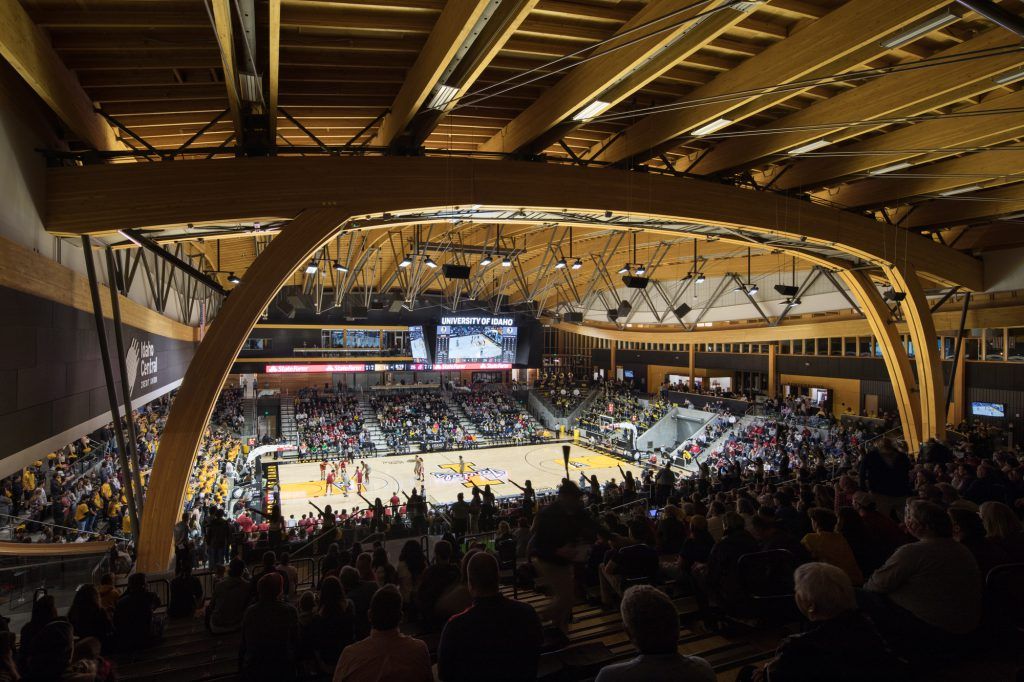
Idaho Central Credit Union Arena at the University of Idaho in Moscow is perhaps the grandest and best example of forest to frame. Most of the sourced wood came from the University’s own 10,000-acre Experimental Forest and was milled and fabricated by Idaho firms, delivering a wholly unique sporting venue and mass timber masterpiece.
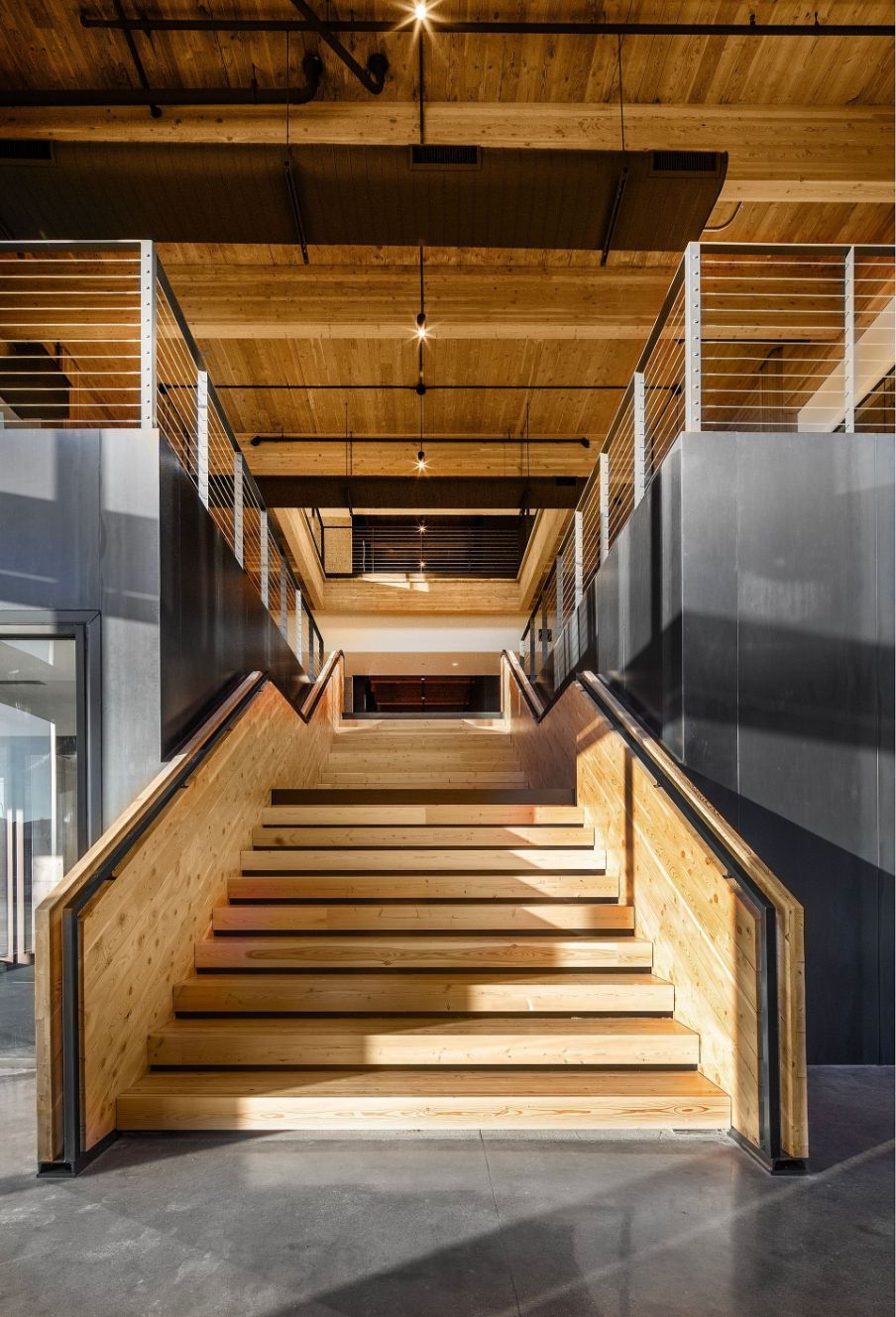
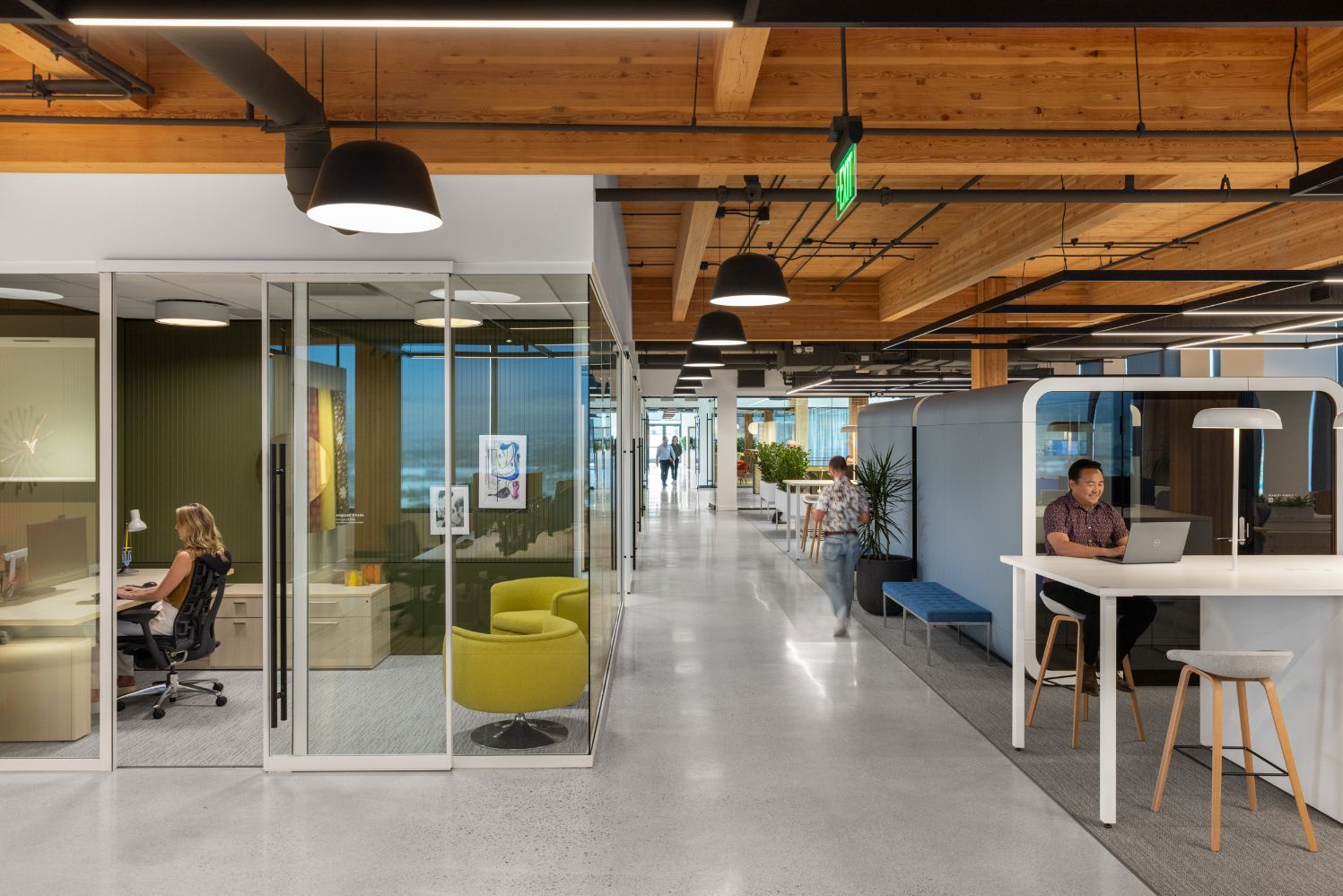
With less than 30 projects incorporating mass timber so far in Utah, Terry sees its distinctness as an untapped advantage within highly competitive commercial markets. Case in point: Baltic Point—in a slumping office sector, the Draper project reached 100% occupancy in less than two years.
New Growth
That differentiating quality applies to the similarly crowded multifamily market. While most owners of this building type are primarily focused on cost, Terry sees the product’s potential in permanent supportive housing.
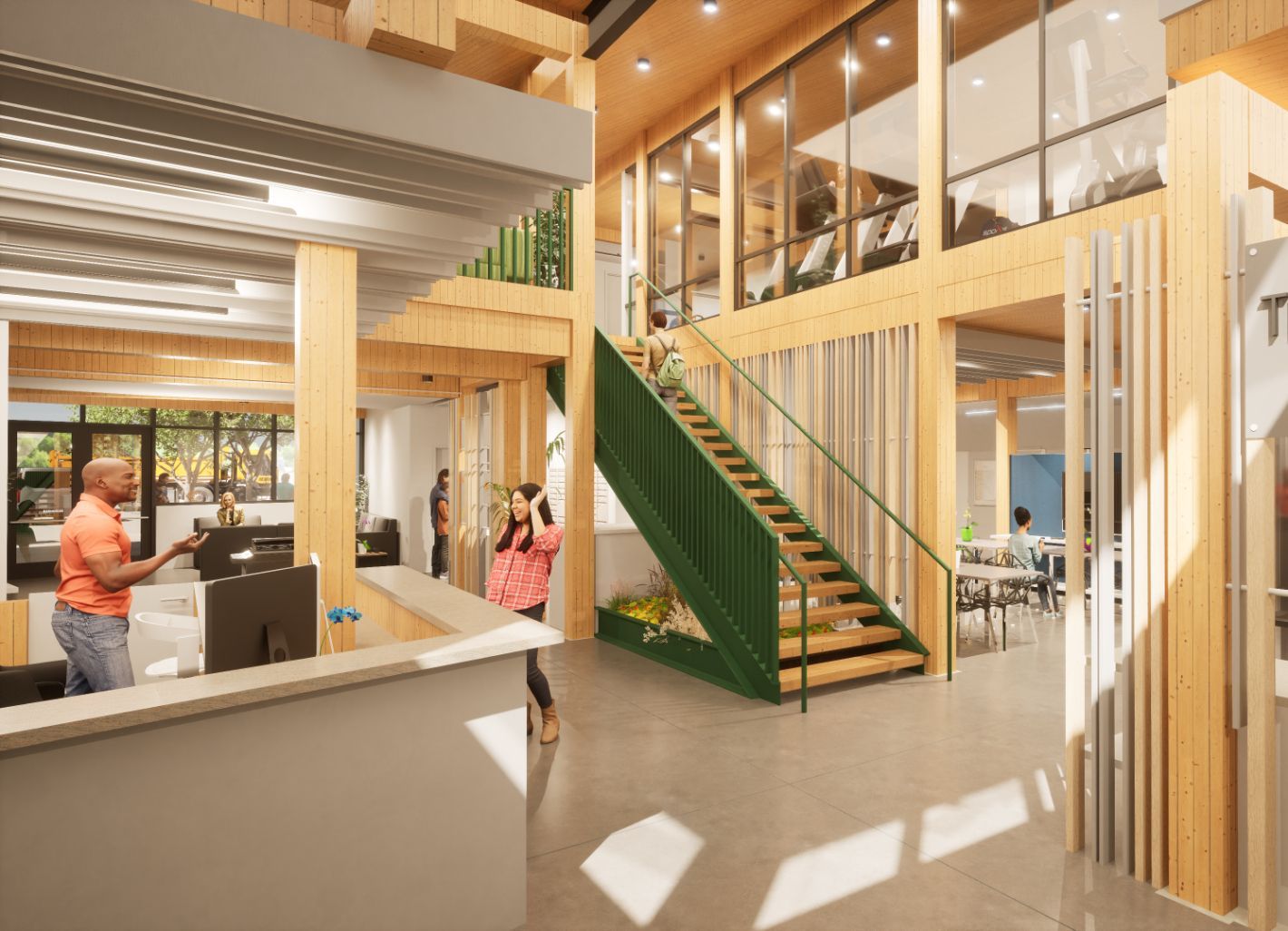
Timberwood Creek is Utah's seedling of a case study. Ball said the design ethos for ASSIST called for a dignified living environment that fosters mental health, supports recovery, and promotes the overall well-being of its future residents, saying: “A mass timber structure felt like a natural choice.”
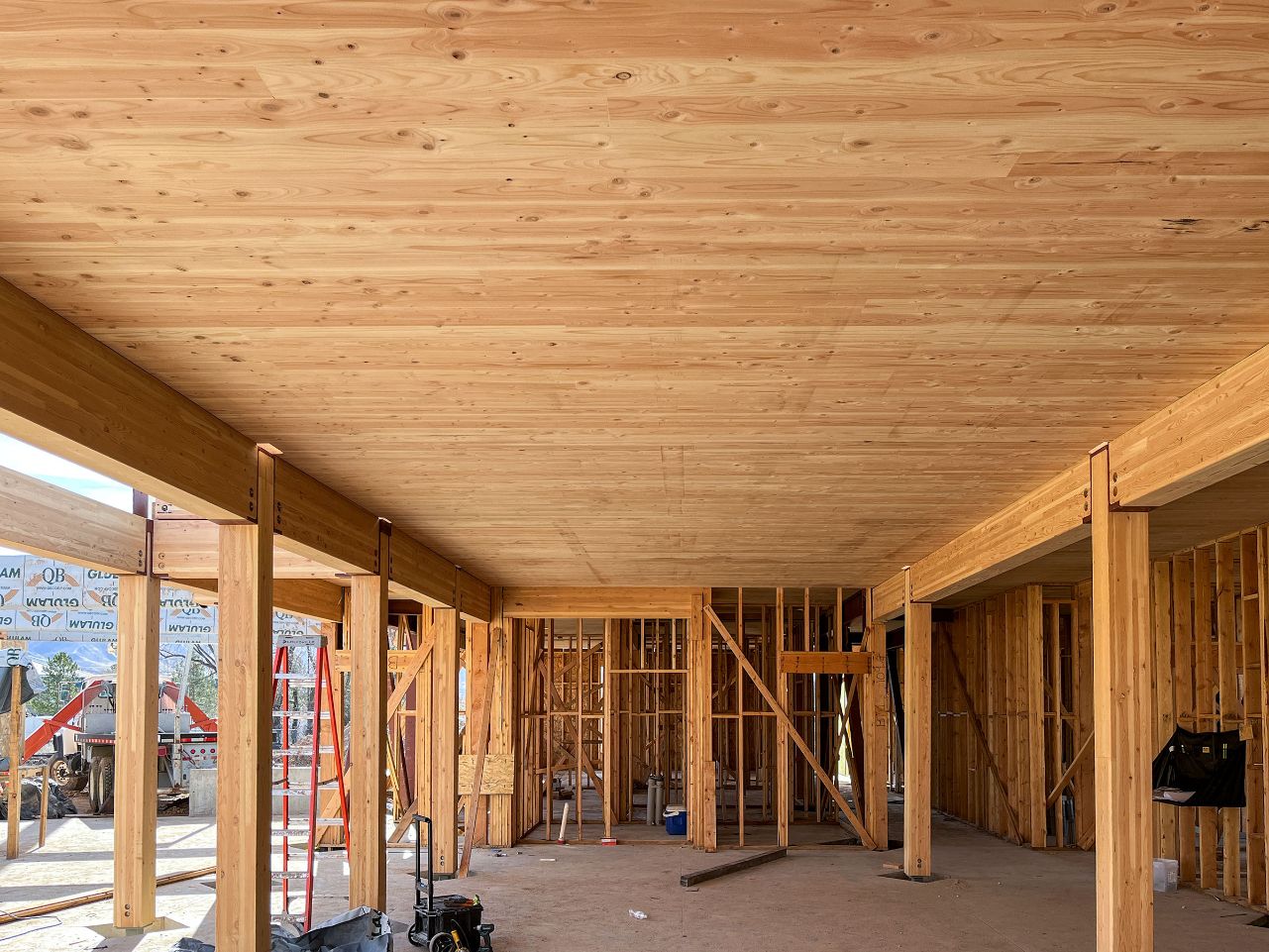
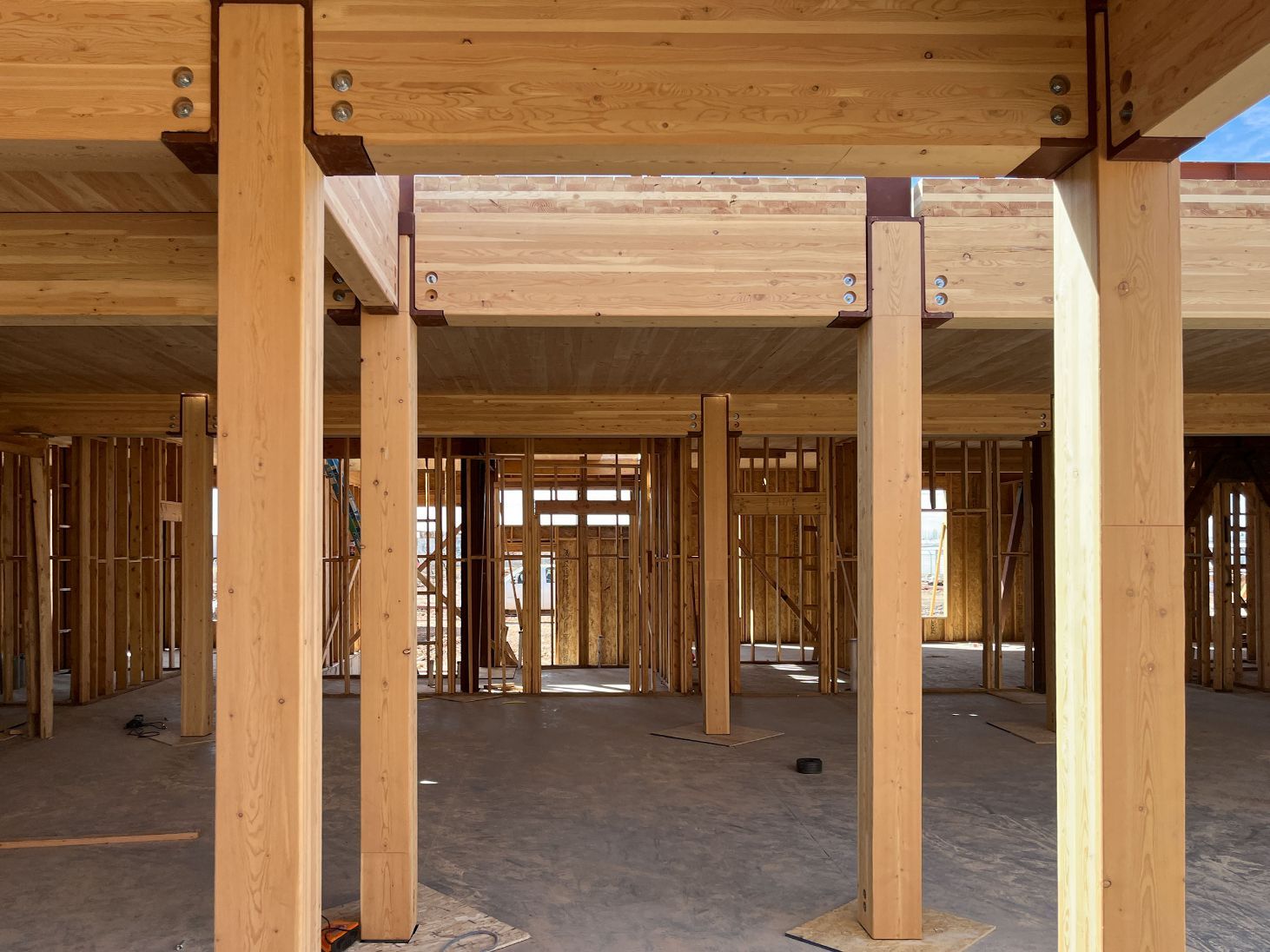
Designers proposed a hybrid mass timber structure—a concrete foundation system; a combination of three-ply and five-ply CLT floor plates and roof panels supported by 4”x18” glulam beams and 10”x 10” glulam columns; with structural steel and conventional wood framing—leveraging mass timber’s advantages across significant areas of the building while staying true to the owner’s budget.
KIER's Nicholson said working through the early coordination challenge delivered a massive benefit to Timberwood Creek—utilizing CLT panels increased ceiling heights throughout the building.
Higher ceilings, combined with the larger structural spans facilitated by glulam columns and beams, delivered major trauma-informed design benefits by making “small living areas feel larger,” according to Ball. “They also provide a sense of spatial openness or breathability that can help address the potential trauma experienced by the building’s residents.”
Mass timber also delivered a biophilic aesthetic that is continuous throughout the building. “This biophilic aesthetic innately connects residents to nature,” Ball said, “and by doing so, has been proven to reduce stress, improve mental health, and overall well-being.”
Timberwood Creek is near completion, and Nicholson has seen the long-term benefits of mass timber construction firsthand, saying: “The finished product is definitely a unique look that you don't get with conventional construction."
Canopy
More are seeing the vision that Thomason and Terry described.
Said Ball, “The use of hybrid mass timber construction types has greatly improved the viability of using mass timber on a variety of projects.”
With more examples to come in offices, apartments, clinics, and other building types—and a greater pool of owners, architects, and contractors with the requisite knowledge and willingness to make it happen—the canopy will continue to grow.
Ball’s quote about mass timber on Timberwood Creek as “a natural choice” is equally powerful when considering how mass timber can align with so many project goals: a choice that doesn’t miss the forest for the trees.