






Ice, Ice Baby

Innovative ice storage tank system at Security National II in Murray mitigates peak energy demand costs. 
By B. H. Wright

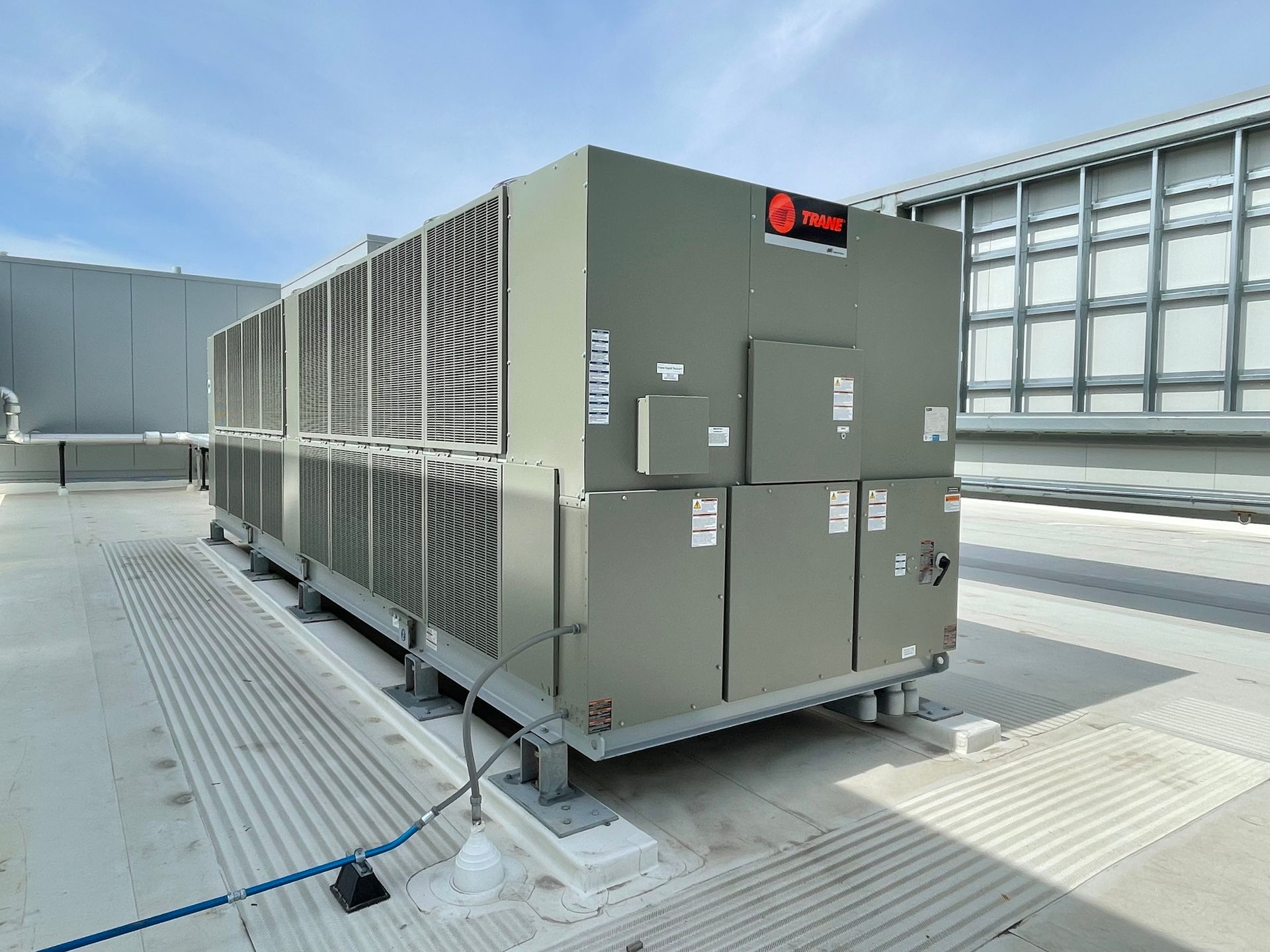
The design-build of Security National's second project at the 53rd Corporate Park campus—a six-story, 220,000 SF Class A office building in Murray—featured a unique ice storage system on its roof as a way to mitigate peak energy demand costs from Murray City Power, which are considerably higher during daytime hours.

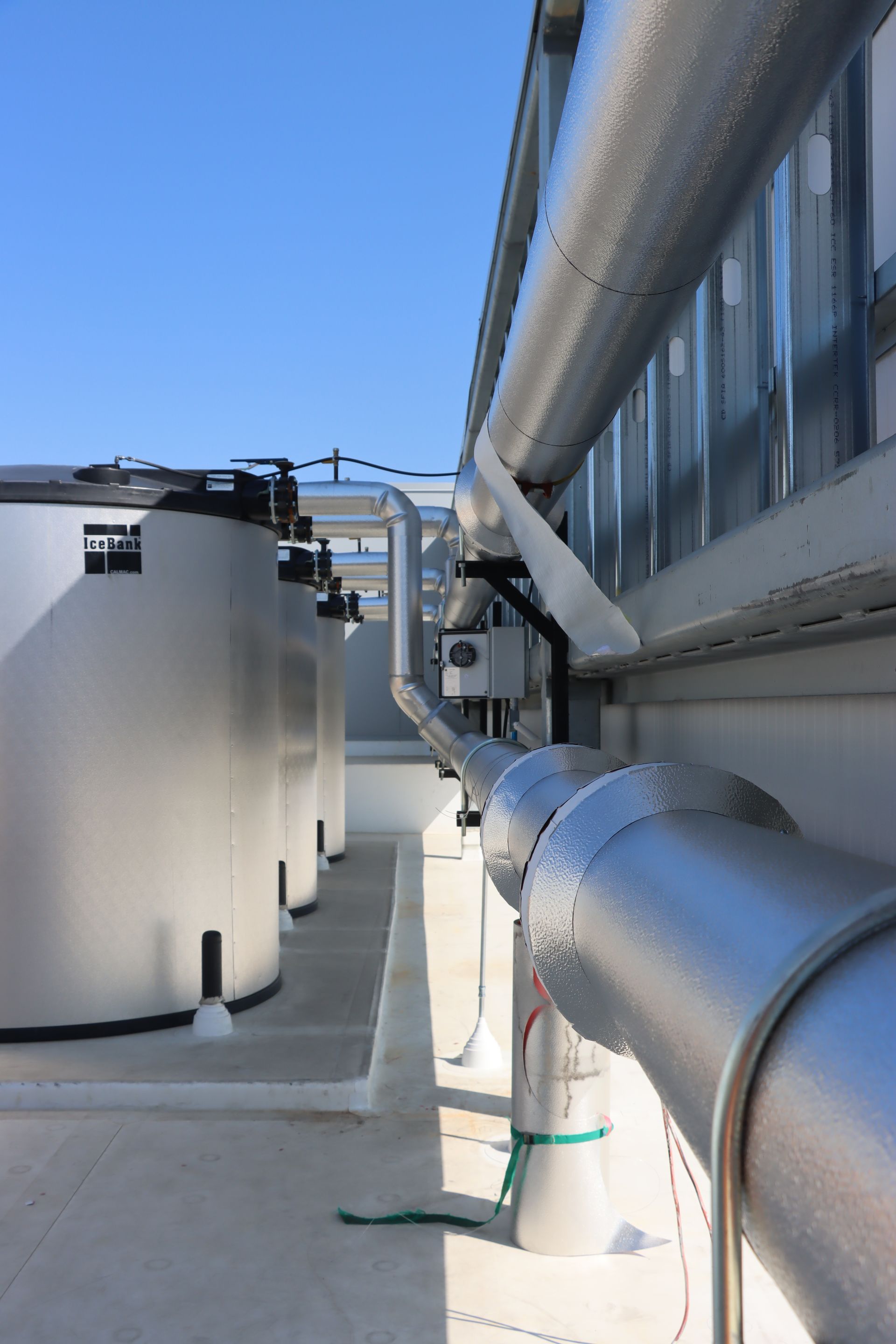
According to Brandon Federico, Manager of Corporate Real Estate for Security National, during the design of the project, an ice storage tank system (Ice Bank) with low temperature variable air volume (VAV) was selected as the most cost-effective and sustainable option for the cooling of this building.
"I love it—it was definitely the most efficient system because demand charges for Murray power are so high during peak hours," said Federico. "Owners need to know what other municipalities have high demand charges, because it adds up."

Salt Lake-based CCI Mechanical installed the Ice Bank cooling system in quick fashion, with all chilled water piping prefabricated in house and installed on site in only three days. The mechanical room supporting the system was also prefabbed and installed in less than 10 days. Greg LaHue, Preconstruction Manager for CCI, said the design-build process saved time and money. "We cut two months off the schedule because every design team member was on the same page during preconstruction," he said. "Design-build eliminates change orders. If the team misses something the owner doesn't pay. It's a better delivery method."

Prefabricating everything in CCI's shop offers myriad advantages including faster and safer installation and excellent quality control.
"All welding is done in controlled areas," said McKayla Flach, Design Engineer for CCI. "We know it's been tested, know there won't be leaks." 

  • Slide title

    (Photos courtesy CCI Mechanical)

    Button
  • Slide title

    (Photos courtesy CCI Mechanical)

    Button
  • Slide title

    (Photos courtesy CCI Mechanical)

    Button

The ice storage VAV system utilizes a thermal storage system comprised of ice storage tanks (Ice Bank) which provide chilled water to the building cooling coils. The ice storage tank is charged during peak off hours and discharges when cooling loads peak. Using this thermal storage system reduces the demand on the chiller and electrical grid compared to a traditional VAV system. This allows for decreased demand charge as well as a level building load profile. This innovative design of the cooling system ensured low life cycle cost and better overall mechanical costs for the owner. The design also created excellent tenant flexibility and maximum sustainability for the life of the building. It's also good for the city, as it lessens demand on Murray City's overall electric grid.


It was also apparent during design that the ice storage tanks and supplemental equipment would be an eyesore and take away from its aesthetics, given the building's visible location just west of I-15. A screen wall was designed to conceal the mechanical roof equipment, one that was painted to match the building and maintain the attractiveness of the building's design.


Federico believes this system could be utilized effectively across many building types.

"This was a great project for us," he said. "The best markets for this are industrial, manufacturing, life sciences [...] anything that has technical processes, chilled water for manufacturing. I could see this in the industrial market."

By Bradley Fullmer April 30, 2026
The new St. George City Hall is a shining example of a collaborative process between owner, architect, and general contractor, producing a world-class facility that will serve the community for the next 40-plus years.  By Bradley Fullmer
By Bradley Fullmer April 30, 2026
After more than a half century designing buildings, 73-year-old Jim Child remains a fixture in Utah’s architectural community, with a genuine passion for his craft that inspires those around him.  By Bradley Fullmer
By Taylor Larsen April 30, 2026
Three Salt Lake City projects showcase the immense talent of the local A/E/C industry to achieve supreme levels of sustainability through adaptive reuse, turning drab offices into vibrant housing. By Taylor Larsen
By Taylor Larsen April 30, 2026
Design and construction teams working at “ludicrous” speeds delivered more than the Utah Mammoth’s new practice facilities, but also a fitting tribute to Utah’s strong hockey culture.
By Bradley Fullmer April 30, 2026
The passage of HB 355 in 2025 provided stability for Utah's construction aggregate producers. The question moving forward is: How long will the finite supply of materials last at existing operations along the Wasatch Front?
By B. Garn April 30, 2026
The new Deseret Peak High School delivers out-of-this-world design for a welcome addition to the growing Tooele Valley. 
By Taylor Larsen April 30, 2026
The eight-year odyssey to deliver Cyprus High was worth the voyage, as designers and builders created a stellar learning environment for Magna’s growing community.
By Taylor Larsen April 30, 2026
Engineers note the emerging trends among Utah’s different transit modes and how evolving technology and partnerships set the state up for success.  By Taylor Larsen
By Bradley Fullmer April 30, 2026
UC+D profiles four new firms who aim to make a name for themselves in an A/E/C market that refuses to slow down. By Bradley Fullmer
By Bradley Fullmer April 30, 2026
Led by the City of St. George, Washington County has experienced explosive growth of more than 50% over the past 15 years, ranking in the top 5% of all U.S. counties and fueling strong demand for commercial construction projects.  By Bradley Fullmer