






End of and Era

With the demolition of the final major structure at the site of the former Utah State Prison, initial infrastructure work at The Point is getting closer to becoming a reality. 
By Brad Fullmer
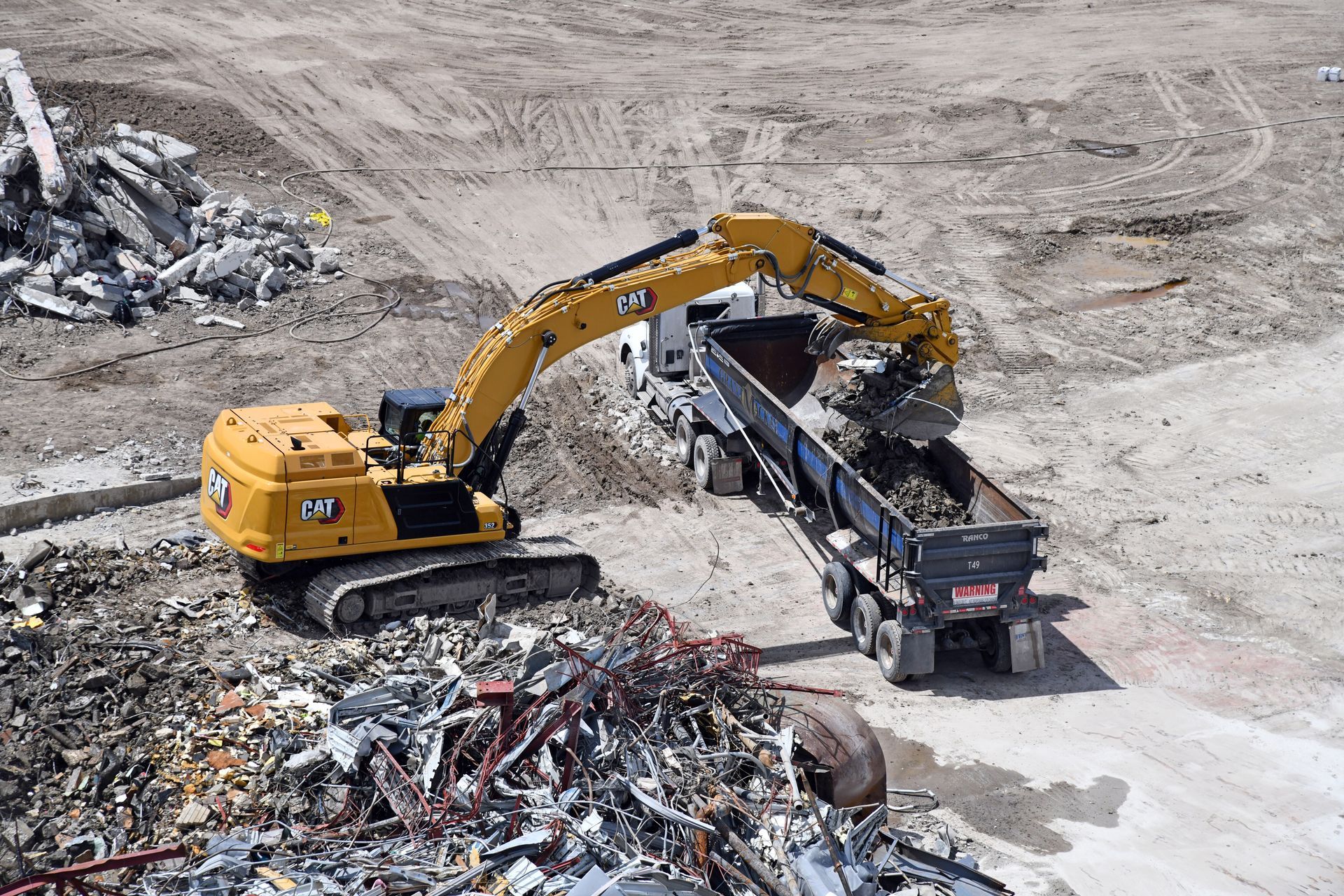
Workers from Grant Mackay Demolition of West Bountiful are wrapping up demolition of the former 600-acre site of the Utah State Prison by October 31, paving the way for initial construction infrastructure at the soon-to-be home of The Point, the state's next generational development.
 
"It's the beginning of a new era at the point of the mountain," said State Rep. Jordan Teuscher (District 44, South Jordan), Co-Chair of the Point of the Mountain Land Authority (Land Authority). "Demolition has progressed quickly and is [...] on track for completion in October, less than a year after it started. Special thanks to all the workers who worked so hard to get this done." 

State and local leaders, including Land Authority and State of Utah Division of Facilities Construction Management (DFCM) reps, met August 30 to celebrate the demolition of the last major structure at the prison site—a more than 100-ft. tall guard tower that was toppled after a few minutes of strategic maneuvering by Mackay's heavy equipment operator. 

It was symbolic for an old guard tower to be the last major structure to come down, as they are relics of the past. They are increasingly recognized as an outdated form of surveillance and are being removed at correctional facilities across the country. 

Mackay's team has done yeomanlike work since officially starting some small jobs last November, but really getting after it in January. According to Tyler Mackay, Site Superintendent, this project offered every unique challenge you could think about on a large-scale demolition job that is without precedent in his company's history. 

"It's not every day you get to tear down a prison," said Mackay, a fourth-generation descendent of founder AJ Mackay. "There were some unique [designs] of some of the buildings, with the prison cells and other structures—there were no cookie cutter buildings out here. We had to think through each one differently."

The company had more than 40 workers on site during peak demo activity and was still running a crew of 30 during the home stretch in October. In all, crews demolished over 250 structures totaling an impressive 1.5 million SF, in addition to concrete and asphalt surfaces exceeding another 3 million SF. 


"The biggest challenge was just tackling the vast space, over 600 acres," said Mackay, adding that in addition to all the building structures, crews removed all infrastructure including pavement, sidewalks, utilities, etc. "You make a lot of little messes instead of one big mess." 


"This has been a momentous project for our company, and it's because of all the guys here—they are the reason we are successful," said Caleb Townes, Project Manager for Grant Mackay. "One of the big [accomplishments] is that we've recycled 70% of materials demolished from this jobsite—157,000 tons of material was either repurposed or reused. This wasn't an easy task. This material will help build the infrastructure of [The Point]. We are literally paving the roadways of the next generation." 


Sophisticated and heavy-duty concrete crushing operations on site has eliminated approximately 160,000 miles of truck traffic, mitigating air pollution, reducing wear and tear on adjacent roads, and lessening impacts to neighboring communities. In addition, the Land Authority and DFCM have removed invasive species such as the Russian olive tree and ground the trees into mulch for use in dust mitigation. The mulch will also be repurposed for landscaping in the first phase of development. 


"From day one we made a commitment to Utahns that we would conduct our work at The Point in a sustainable manner. Our demolition efforts directly reflect that commitment," said Alan Matheson, The Point Executive Director. "Concrete from the old prison buildings is being crushed onsite for use in the foundation of new buildings and to build future roads. We believe that this is not only a sustainable approach to development, but also literally and figuratively transitions the site from a place of constraint into a place of openness, learning, and opportunity." 


"The decades-old prison facilities surrounded by razor wire and guard towers are virtually gone. The land that was previously isolated, closed, and restricted will soon become open and accessible for all Utahns to enjoy," added Teuscher. "We are transforming this site into Utah's Innovation Community where Utahns will have the freedom to choose from a variety of high-paying jobs, world-class shopping venues, family-friendly activities, recreational amenities, entertainment venues, and so much more."


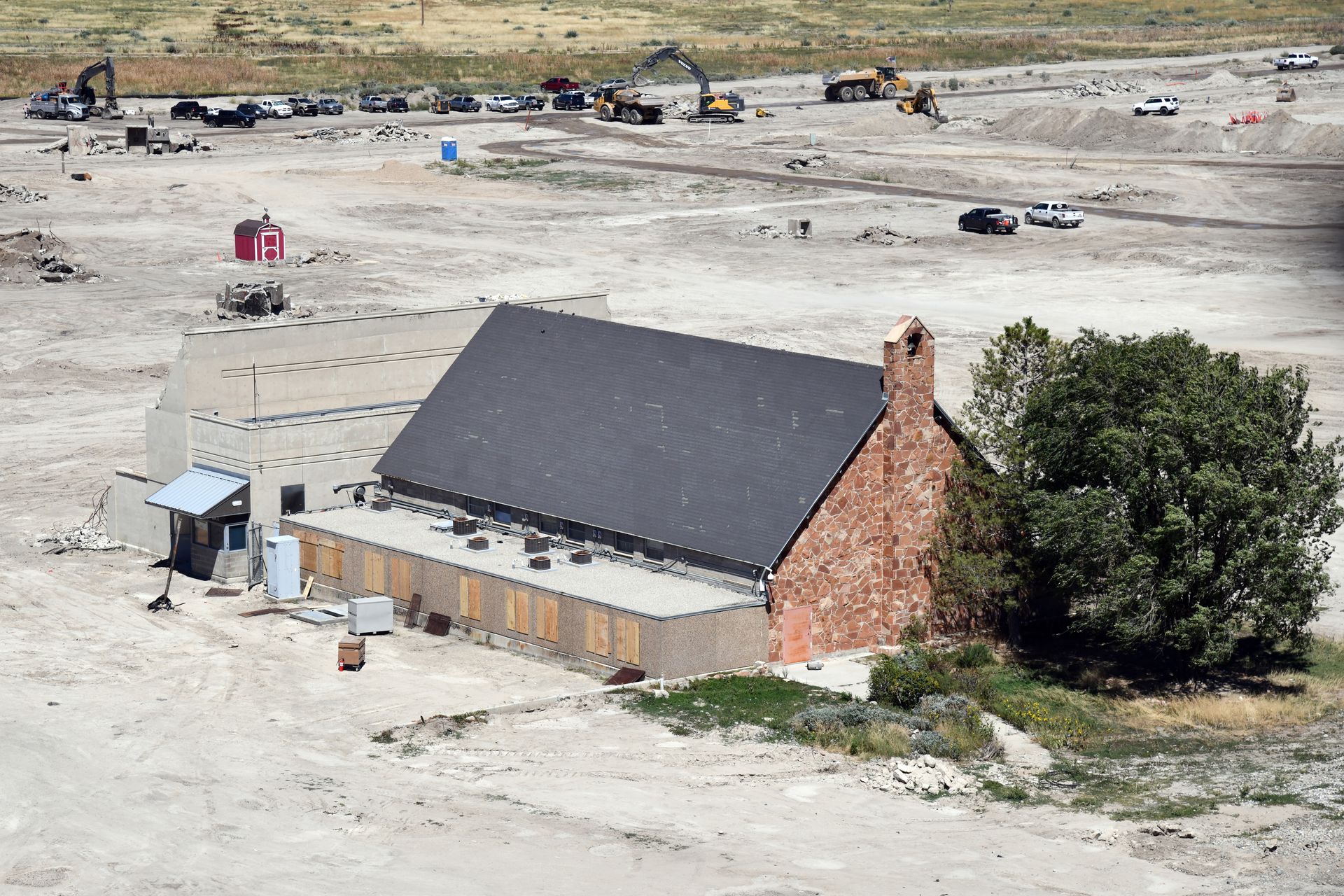
While most of the aging and outdated facilities are removed, the Land Authority has preserved the prison chapel, known as the "Chapel by the Wayside". Offenders built the chapel in the early 1960s with a multi-denominational group of community organizations and citizens who helped to fund its construction. Since 1961, the prison chapel provided offenders a place to exercise their spirituality. It will continue to be an important part of the site's future as a symbol of redemption and hope. 


The numbers behind Mackay's demolition recycling efforts are eye-popping, to say the least. Consider the amount of these respective materials that have been repurposed, reused, or recycled: 


Concrete—Enough concrete to lay the foundation of 1,040 homes.

Steel—Enough steel for 66 four-story commercial office buildings.

Asphalt—Enough asphalt to construct over five miles of road.

Rebar—Equivalent weight of over 541 cars. 

Iron—Equivalent weight of approximately 22,795 iron beams.


By Bradley Fullmer April 30, 2026
The new St. George City Hall is a shining example of a collaborative process between owner, architect, and general contractor, producing a world-class facility that will serve the community for the next 40-plus years.  By Bradley Fullmer
By Bradley Fullmer April 30, 2026
After more than a half century designing buildings, 73-year-old Jim Child remains a fixture in Utah’s architectural community, with a genuine passion for his craft that inspires those around him.  By Bradley Fullmer
By Taylor Larsen April 30, 2026
Three Salt Lake City projects showcase the immense talent of the local A/E/C industry to achieve supreme levels of sustainability through adaptive reuse, turning drab offices into vibrant housing. By Taylor Larsen
By Taylor Larsen April 30, 2026
Design and construction teams working at “ludicrous” speeds delivered more than the Utah Mammoth’s new practice facilities, but also a fitting tribute to Utah’s strong hockey culture.
By Bradley Fullmer April 30, 2026
The passage of HB 355 in 2025 provided stability for Utah's construction aggregate producers. The question moving forward is: How long will the finite supply of materials last at existing operations along the Wasatch Front?
By B. Garn April 30, 2026
The new Deseret Peak High School delivers out-of-this-world design for a welcome addition to the growing Tooele Valley. 
By Taylor Larsen April 30, 2026
The eight-year odyssey to deliver Cyprus High was worth the voyage, as designers and builders created a stellar learning environment for Magna’s growing community.
By Taylor Larsen April 30, 2026
Engineers note the emerging trends among Utah’s different transit modes and how evolving technology and partnerships set the state up for success.  By Taylor Larsen
By Bradley Fullmer April 30, 2026
UC+D profiles four new firms who aim to make a name for themselves in an A/E/C market that refuses to slow down. By Bradley Fullmer
By Bradley Fullmer April 30, 2026
Led by the City of St. George, Washington County has experienced explosive growth of more than 50% over the past 15 years, ranking in the top 5% of all U.S. counties and fueling strong demand for commercial construction projects.  By Bradley Fullmer