Commercial furniture dealers and manufacturers continue to adapt to ever-changing market conditions.
By Milt Harrison
The commercial furniture industry in Utah has experienced one of the most dramatic transitions in its history over the past five years. The COVID-19 pandemic initially brought office furniture sales to a near standstill as companies were forced to embrace remote work. Since 2023, however, the market has stabilized and entered a new phase—not a return to pre-pandemic norms, but an evolution centered on hybrid work, workplace experience, and space flexibility.
For Utah dealers, manufacturers' representatives, designers, and workplace strategists, business is healthy but fundamentally different than it was in 2019.
Utah Construction + Design held a roundtable on July 9 with the Beehive State's top five commercial furniture dealers, in addition to two local major manufacturer representatives. Each said the industry as a whole is solid, while lamenting various headwinds and significant changes that pose challenges on myriad fronts. By and large, the group expressed optimism for the future in a market that will continue to thrive as the 2030s come closer into view.
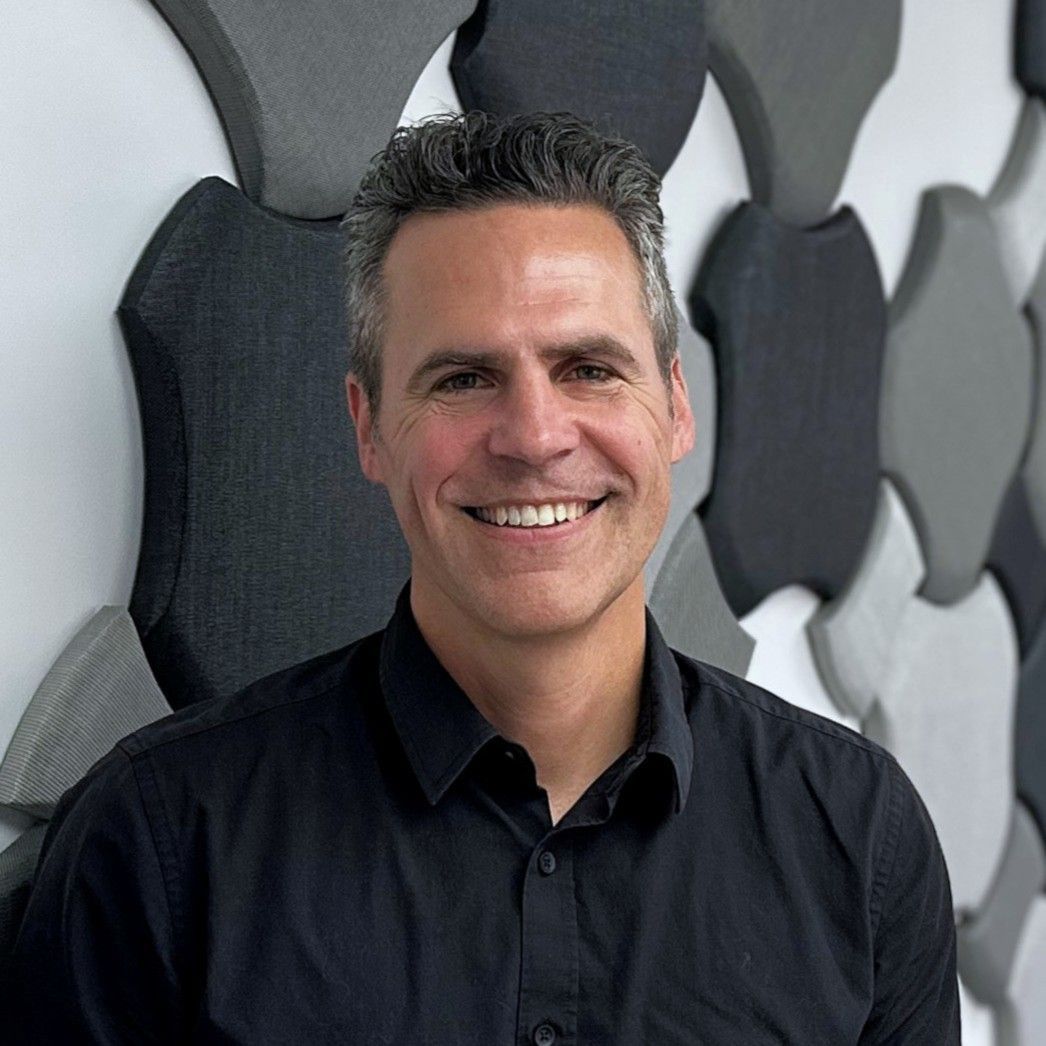
Britt Badger
VP of Sales and Business Dev.
HB Workplaces
Amanda Jones
Design Director
Midwest Commercial Interiors
Mark Larsen
Chief Operating Officer
CCG
Ben Jenkinson
Account Manager
Workspace Elements
Aaron Harden
General Manager
Interior Solutions
Emily Gretsky
Sr. Business Dev. Executive
Haworth
Sadie Romney
Business Development Manager
Allsteel
View more
"An obvious [concern] is that there's not a lot of office development," said Mark Larsen, COO for Salt Lake-based CCG. "There are some corporate projects, but overall, there is a lack of new office space. Companies are also working existing furniture into new deals—we're reconfiguring spaces or doing 10% to 20% of what previously would have been a 100% furniture package. They're two of my biggest concerns and I don't see that changing anytime soon."
Emily Gretsky, Sr. Business Development Executive in Salt Lake City for manufacturer Haworth echoed the sentiment. "Utah is exciting, there's a lot of growth and development,” she said. Outsiders may look at Utah and see the many cranes and busy job sites dotting the state, “but many decisions are happening outside our market. […] a much smaller percentage of the [furniture] decisions are being made locally. Global accounts, acquisitions, and company consolidations all play into that. Depending on who acquired whom, one furniture standard survives while another disappears."
Aaron Harden, General Manager for Salt Lake-based Interior Solutions, said post-Covid furniture costs have skyrocketed, leading clients to be more cautious with budgets.
"Factors like Covid, inflation, tariffs, and the uncertainty with the Middle East has increased pricing significantly," he said. These rising costs, year-over-year, are a main factor influencing client decisions to scale back or repurpose existing furniture.
"A legacy client will look at keeping their standard going, and then they get pricing and decide to go in another direction," Harden continued. "Maybe they open it up to other options and inquire about other lines. Prices have just increased dramatically from prices three to five years ago.”
All of these factors mean the market has grown increasingly competitive over a smaller number of projects.
“Another challenge is being competitive. We're all thinking about diversification; how to get into other markets,” said Harden. But that comes with its own pitfalls. “As you get into other markets, it's a whole different competitive set and a different decision-making process."
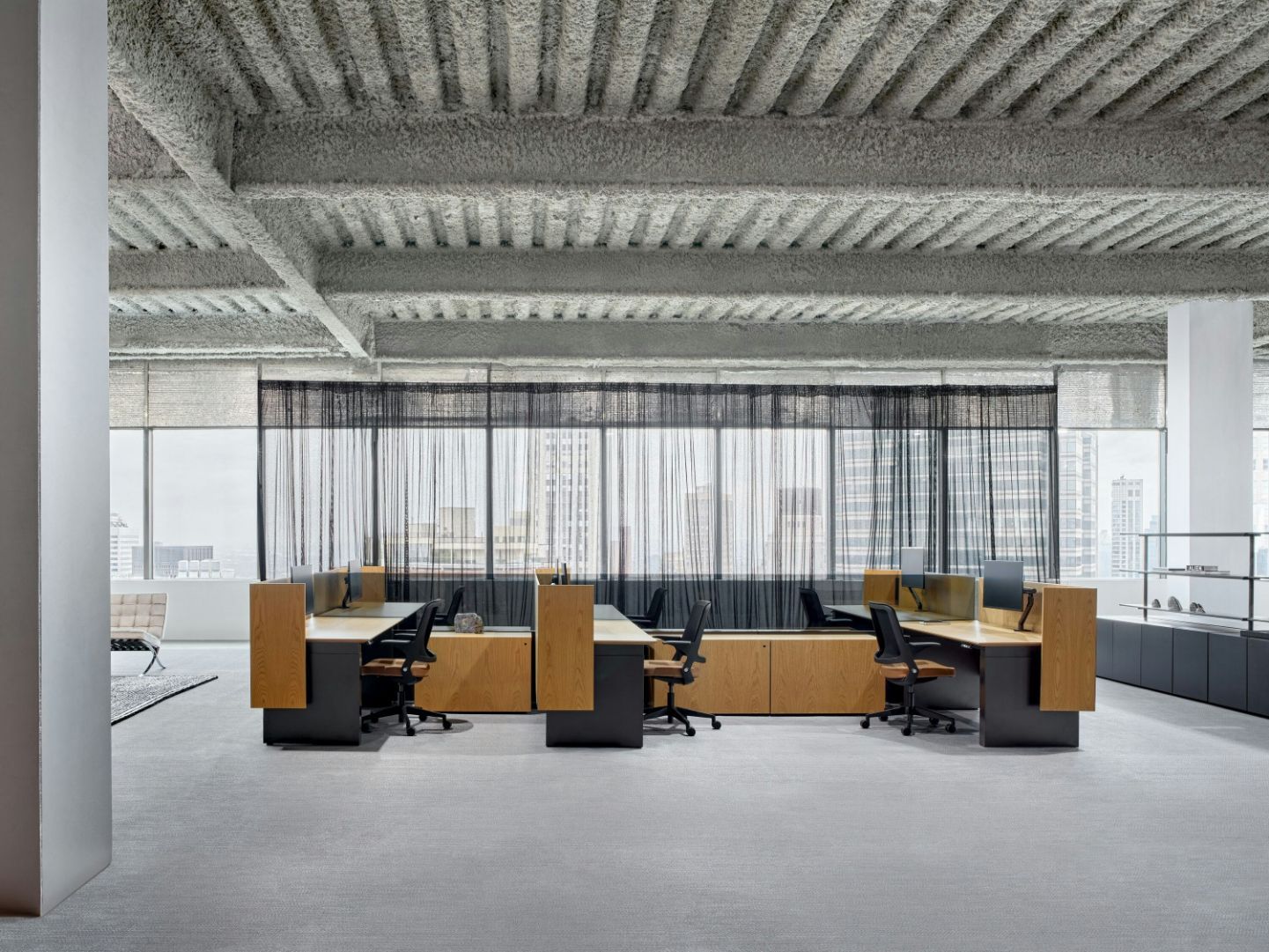
Slide title
Photo courtesy HB Workplaces
Button
Utah Market Overview
Utah's commercial furniture industry is closely tied to a handful of primary vertical building markets, including:
- Office construction and tenant improvements (TIs)
- Corporate relocations and new headquarters
- Healthcare facilities
- Higher education
- Government/municipal projects
- Technology companies
- Industrial office space
- Hospitality and mixed-use developments
Research from commercial real estate brokers at Cushman & Wakefield noted that new office development in Salt Lake and Utah counties has yet to surpass the 10-year rolling average (1.1 million SF) of new product added to the market, with a total of 800,000 SF delivered from 2023 onward. In that same timeframe, 957,000 SF of existing office was removed from the market for multifamily conversion.
But Utah’s fundamentals—strong population growth, business expansion, and relatively healthy commercial development—seem to be appearing in the tenant improvement market. That office sector has remained comparatively strong as companies renovate existing space instead of building entirely new offices.
Companies are also cutting costs where applicable, with commercial furniture often being one of the first things to be scaled back or eliminated altogether.
"We've got an awesome economy, but our clients are extremely price sensitive," said Brit Badger, VP of Sales/Business Development for Draper-based HB Workplaces. "We'll meet them, tour their facilities, and ask what their three most important things are. They'll say, 'Quality, warranty, and having a really strong partner'. Then they'll make a decision where those three things are no longer a priority. That's especially challenging for us representing MillerKnoll. We're not the cheapest option in the market—we sell quality, warranty, design legacy, and long-term support—all the things they originally said they valued. Once they make a final decision, suddenly those factors aren't what drive the purchase."
"We're seeing a significant increase in workplace reconfigurations," said Amanda Jones, Design Director at Salt Lake City-based Midwest Commercial Interiors. "Organizations are adapting their spaces to meet changing needs, whether that means accommodating growth, downsizing, or integrating existing furniture with new products. Our role is to help clients create a cohesive, functional environment while maximizing the value of their current assets. While these projects may involve furnishing only a portion of a space, they require more planning, coordination, and design effort than outfitting a completely new office. Our priority is always to deliver the best solution for the client."
Sadie Romney, Business Development Manager in Salt Lake for manufacturer Allsteel, agreed that integrating old and new has become more commonplace. "A client will say they want 75% of it new, but how do we reuse and incorporate all of this other [existing] furniture?” she said. “It becomes a juggling act—how do we make them happy and how do we meet their financial goals while being realistic?"

Slide title
Photo by Kyle Aiken; courtesy Haworth/CCG
Button
Major Trends 2021-Present
1. Hybrid Work Has Changed Furniture Specifications
Covid-19 changed the mindset on how companies deal with a workforce that proved it could work remote, forcing executives to give employees more latitude with hybrid work schedules. Hybrid work has permanently changed furniture specifications, and dealers must respond to that change with more flexible interior solutions. Companies are buying fewer traditional workstations and investing more heavily in collaborative environments. Pre-Covid, a typical office furniture budget focused primarily on cubicles, private offices, and individual desks. Today, budgets increasingly emphasize collaboration spaces, lounge seating, team rooms, informal meetings areas, focus rooms, and hospitality-inspired environments.
"Something we've seen in the past was a lot of startups and entrepreneurial type companies that were more exciting and wanting to push the limits a bit more," said Ben Jenkinson, Account Manager for Salt Lake-based Workspace Elements. Where high-tech companies—think those operating within Silicon Slopes—once committed major resources to creating diverse, fun, and flexible spaces as a recruiting tool to draw in top talent, Jenkinson continued, ”That isn't happening as much.”
"There were firms that wanted to have a slide in their headquarters—big-tech firms driving to compete and be the loudest, the biggest, the craziest, the most fun, the unlimited PTO, the sky is the limit," said Gretsky. "Anything to top their competitor within the tech unicorn sector. That is either all gone, or it's slowed down significantly. It's not being pushed the way it was five, eight, ten years ago."
"Clients are increasingly focused on understanding what makes employees want to come into the office and what contributes to a positive workplace experience," said Jones. "Workplace design trends often move in cycles. After a period of pushing creative boundaries and embracing bold concepts, many organizations are now prioritizing practical, people-centered environments that support productivity, well-being, and long-term flexibility."
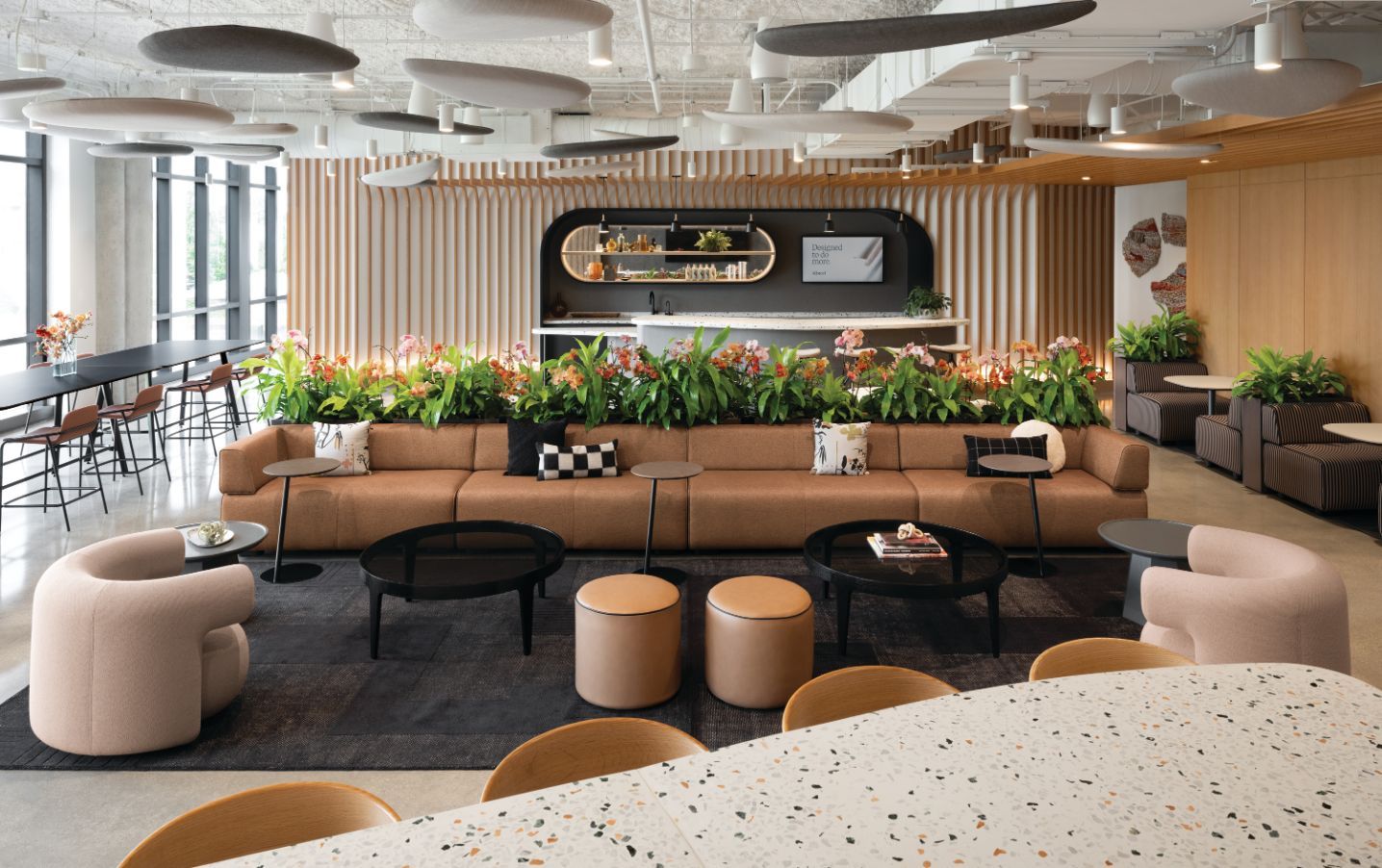
Slide title
Photo courtesy Workspace Elements
Button
2. Flexible Spaces a Must; Hospitality-inspired Spaces Popular
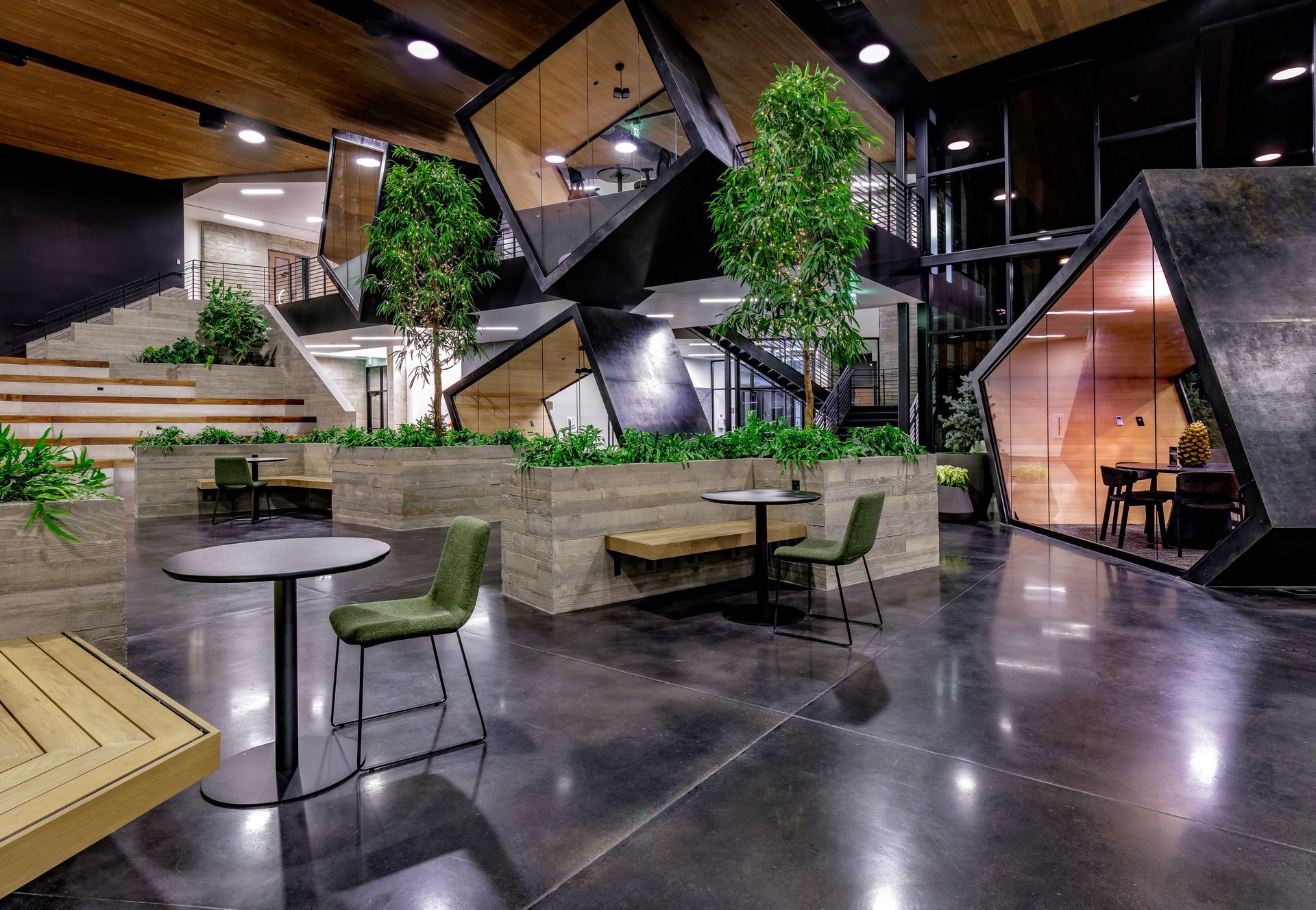
Changing office dynamics mean employers are valuing flexible spaces to adapt to hybrid work schedules and employees who enjoy working in various spaces vs. being confined to one workstation or desk. Community spaces, including individual or small group pods, technology-driven conference rooms, couches, and other comfy seating options, are all in play in modern workplace environments. Height-adjusted workstations have become standard over the past decade, particularly among tech firms, professional services firms, and healthcare organizations. Ergonomics is a driving decision-making factor and considered a must for growing companies who value their employees.
The line between residential and commercial design continues to blur with current workplace interiors emphasizing:
- Softer seating
- Warm wood finishes
- Comfortable lounges
- Coffee-bar environments
- Living room aesthetics
- Wellness spaces
The objective is to create high-quality working environments that encourage hybrid employees to actually want to be in the office vs. staying at home.
“Year over year, the definition of those quality spaces continues to improve; the bar continues to be raised. From a well-being perspective, we're seeing that impact materials and the types of spaces," said Gretsky. "In addition to that, clients are willing to invest in natural materials. We're seeing a huge increase in wood, wood veneer, and things like marble, softer metal finishes, softer edges. I'm really excited about the caliber of spaces we're creating."
"Clients are really starting to think about their space and their furniture as a business strategy," said Jones. "They're cognizant of the impact of interiors and furniture on attracting and retaining talent. They consider how furnishings influence the overall experience of a space. It's exciting to see that trend and I'm hoping that it continues."
Romney said the trend of employers being keyed into the importance of having a dynamic and aesthetically pleasing workplace has been a continuously evolving factor over the past 10-15 years.
"It's getting better and better, where employers and businesses are genuinely concerned about their people, not just ergonomically, but mentally," said Romney. "It's exciting to see how that trend is impacting spaces. Clients continue to place an emphasis on flexibility and being more intentional, creating a more engaging work experience. So, we need to put on our thinking caps and intentionally create furniture packages that support these needs."
"Having multiple uses throughout a space is important," added Jenkinson. "One day, this space is a conference room. The next day, it's a place to take a private phone call. Having that flexibility is very important."
Requests for quiet spaces and acoustic treatments are growing, too.
"Working at home, it's nice and quiet and I don't get distracted," said Badger. "So, we're having more conversations with owners about employee proximity and quiet zones and the factors that go into acoustics."
"In that same vein, the pod booth space is a growing trend," said Larsen. "Employees are looking for that separate space."
Jones said the desire for spaces that mirror a residential or hospitality-inspired design is a key trend.
"Cooler tones are definitely on their way out, and warmer tones are in, which is very exciting," she said. "Designs are being driven to have a hospitality or residential feel to them, but with a commercial grade and the warranty that goes with that. We're looking at curves, softer seating, more comfortable, inviting furniture, and bringing in natural elements like wood, stone, and biophilia. Also, organic textures are very in right now. Again, it's all about comfort and the well-being of the people using that space. It's a big trend right now."
"I can't help but think it's not directly influenced from us spending so much time at home," said Romney.
"It definitely is," added Badger. "It's like choosing the comfiest spot to work. Across every vertical market—healthcare, higher ed, all of them—they're all wanting these warm, comfortable, curved edges and all kinds of organic shapes."
Comfort is king, added Gretsky, which directly relates back to when employees worked at home during the pandemic and got used to being comfortable while grinding away at daily tasks.
"I think Covid really gave us a gift in that it helped people be aware of the types of spaces they liked to work in, and where they were intentionally choosing to be," she said. "So, all these physical and emotive elements are becoming drivers, and we have a foundation to build on to create overall better spaces."

Slide title
Photo by Kyle Aiken; courtesy Haworth/CCG
Button
3. Sustainability Remains Important to Clients Across the Board
Corporate clients, particularly among tech firms and larger government and municipal clients, continue to value sustainability in regard to interior finishes and furniture. That includes:
- Low VOC emissions
- Recycled materials
- Environmental certifications
- Circular manufacturing programs
- End-of-life recycling options
Top manufacturers such as MillerKnoll, Steelcase, Haworth, Allsteel, and others continue emphasizing environmental certifications as part of the sales process.
"Sustainability has always been a hot topic," said Jenkinson. "In the past, it was more expensive, but it's now becoming more of a standard, and manufacturers have responded to producing more sustainable products. And designers are also more conscious of what they're specifying and making sure that we're using sustainable products."
Badger said local owners and architects are truly interested in sustainability, but cost often trumps the desire to "do the right thing" environmentally, especially within this market.
"Our manufacturers are making a really solid sustainability effort with new products," she said. "But when it comes to the bottom line, are they really going to choose a chair made out of ocean-bound plastics even though it's $85 more?"
"I had an architect recently say to me, 'Prove to me that you can [achieve] this level of sustainability, and give me the list'. And my response was, 'Yes, we can do this,’" added Jenkinson. "They may not be getting [a project] LEED Certified because there is a cost to that, but clients are specifying [sustainable] products that lend themselves to that kind of project."
"It's always interesting to see what an [environmentally conscious] client ends up purchasing, but I love those types of questions," said Badger. "We get to dive in with our manufacturer and find out the materials in products."
Even though clients will choose the less expensive furniture option, Larsen added, manufacturers inherently are making all products more sustainable than even a decade ago.
"When the rubber hits the road, and they really have to buy the chair, are they choosing the more expensive, more sustainable options?" said Larsen. Not as much as he and the other participants would like, he continued, “But I think the entire evolution of manufacturers being more sustainable is super positive and a great move in our industry."
"I feel like [owners] in Utah are a little bit slower to adopt more sustainable practices, but they are coming around, and designers absolutely care," said Jones, adding that manufacturers are creating more sustainable products that are ultimately better for the end user, and better for the environment long-term.
"On the manufacturing side, we all hope [sustainability] is as important to the customer as it should be," said Gretsky, adding that clients rarely, if ever, want to spend considerably more money just because a product is more sustainable. So instead, the manufacturer sets the course. "Haworth has been aiming for zero waste to landfill since 2009—that's been a part of our leading values and a decision the Haworth family made. Being privately held, they have a different set of requirements and can make those decisions. Whether that's important to our customers locally or to our dealers, it's a way we can positively make an impact on sustainability."
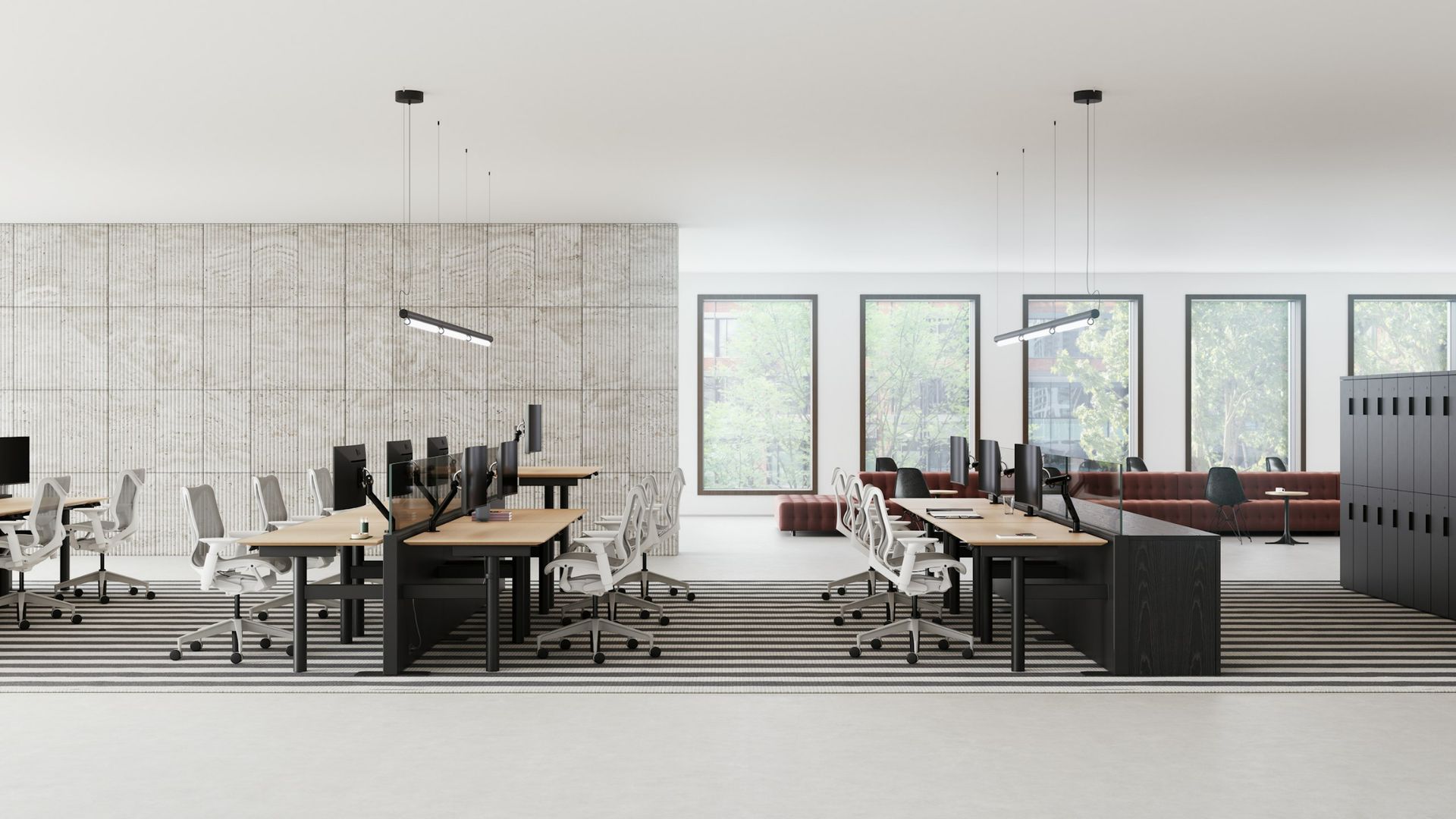
Slide title
Photo courtesy HB Workplaces
Button
Market Outlook: Utah's Economy Still Positive, but Clients Ever Budget Conscientious
Ultimately, the commercial furniture industry has a bright future in Utah, and despite budget-conscious clients and a highly competitive market, the economic outlook is favorable for these dealers and manufacturers.
They will continue to adapt to changing market demands, while offering clients in all vertical markets the very best products possible, ones that are sustainable, that improve physical and mental well-being, and that help create aesthetically pleasing workplace environments.
Overall, the outlook for Utah's commercial furniture market is cautiously optimistic, with the industry perpetually redefining itself. Business has shifted from selling rows of desks to creating workplaces that attract employees, support collaboration, and adapt to changing organizational needs.
Dealers that combine workplace strategy, interior design expertise, technology integration, and project management are positioned to outperform those focused primarily on furniture sales.