








The new corporate headquarters for the outdoor cooking brand stays local to its Cache Valley roots while the building’s modern design soars above its “backyard” location in Providence. By Taylor Larsen
Backyards are for grillin’ and chillin’, and nobody understands it better than Weber Blackstone, the company formed from a merger between the iconic Weber barbecue brand headquartered outside of Chicago, with the up-and-coming—and Cache Valley-based—Blackstone Products. When the opportunity came to build out a new corporate headquarters, it had to be local.
So why not house it in Blackstone’s own backyard in Providence?
Providence in Location
Long before Weber and Blackstone completed their merger in 2025, Joe Jacoby detailed how the design ethos for the new office took shape. Providence isn’t just a city in Cache Valley; it’s the timely preparation for future eventualities.
“Since the Blackstone griddle was making huge strides in the industry of outdoor cooking and backyard entertaining, the concept for the building and site design took inspiration from the idea of the backyard,” said Jacoby, President and Director of Design of Salt Lake-based Jacoby Architects.
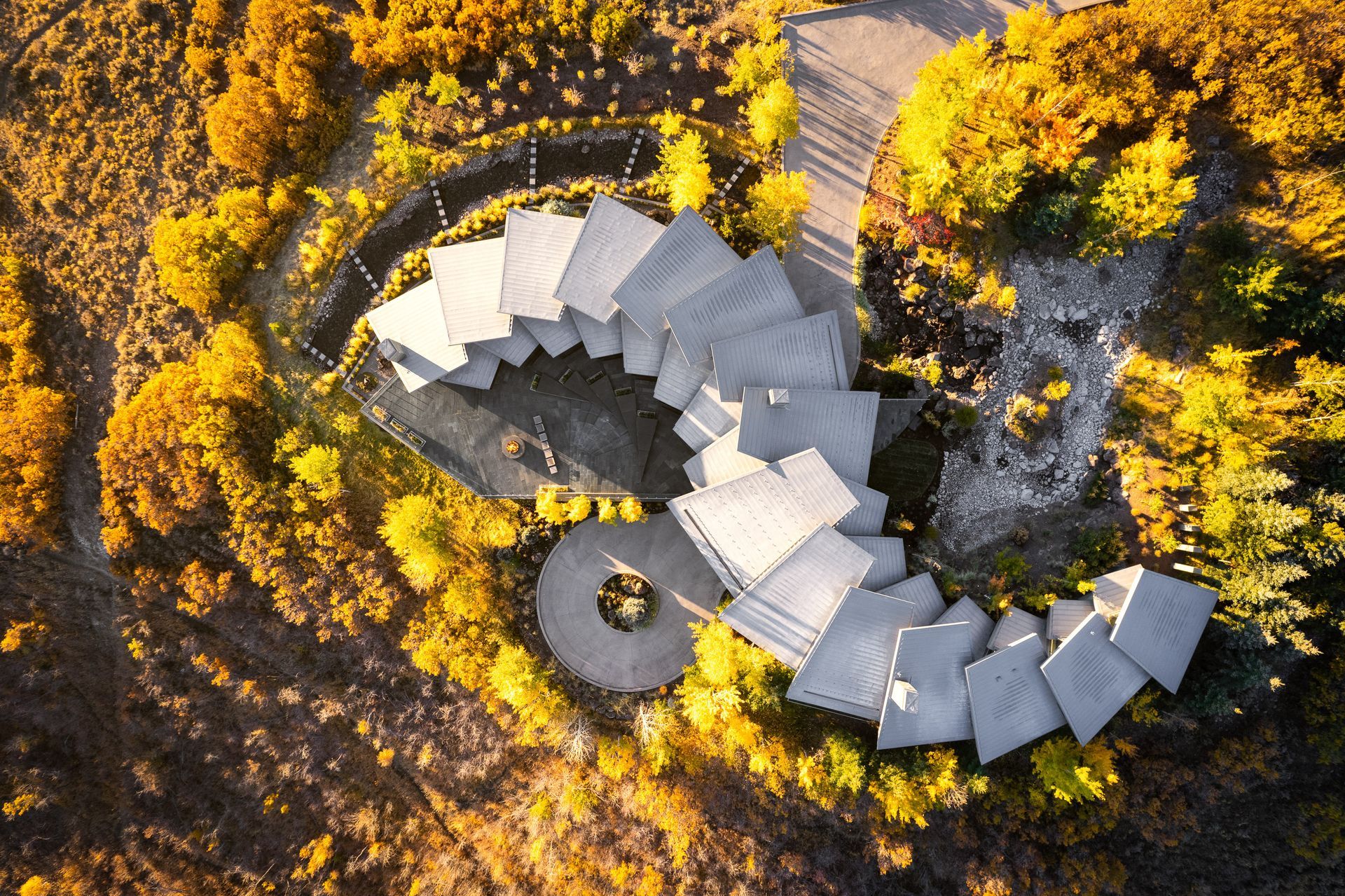
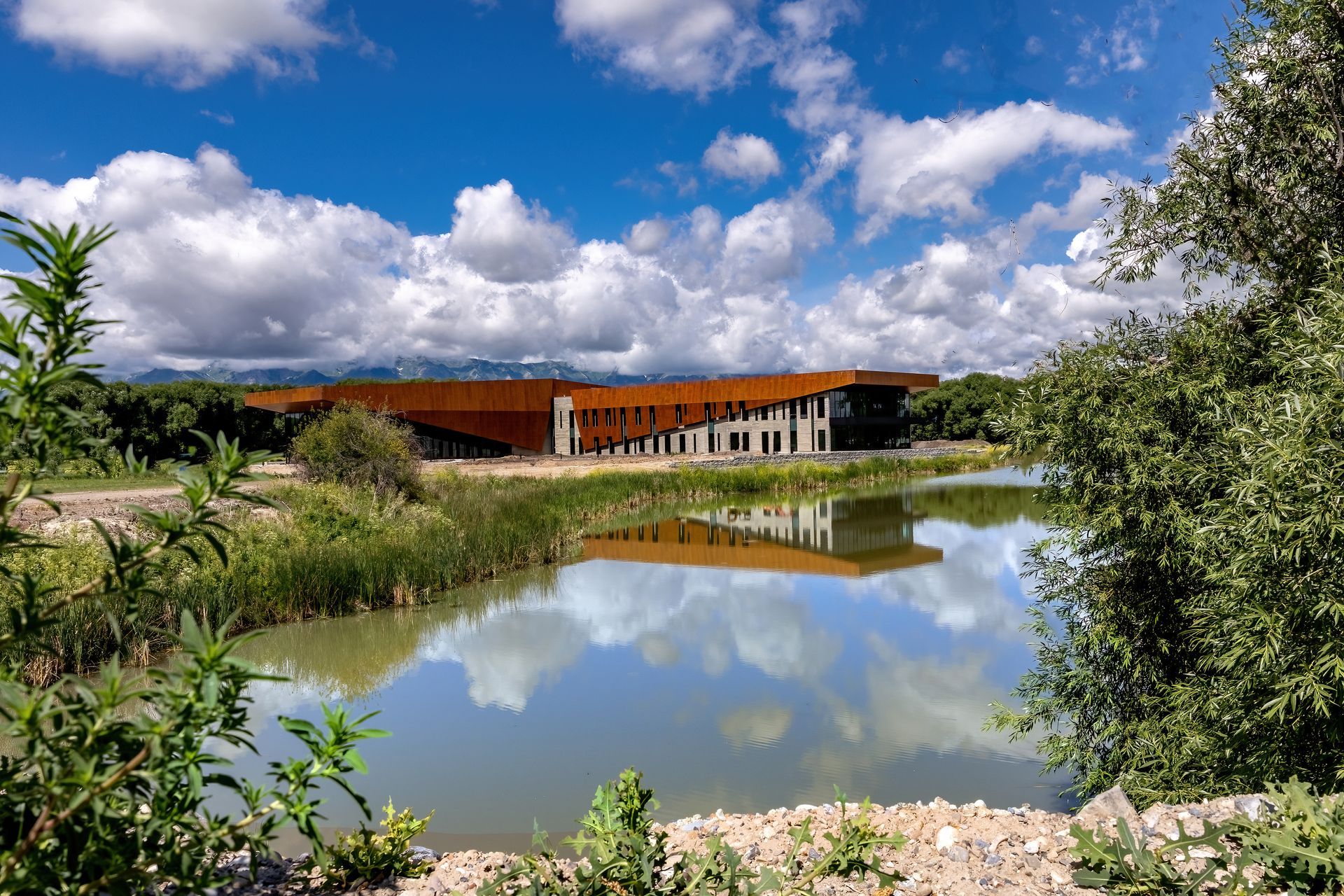
“The building form took on the shape of wings, delicately landing on this beautiful site,” Jacoby said, mentioning the symbolism of the Blackstone team using those wings to take off as successful product designers. “The footprint of the building was oriented such that it opened its arms to the backyard concept—looking out to the river and springs in the backdrop.”
Sited near the Blacksmith Fork River and Big Ballard Springs, the rural area surrounding the newly built headquarters is dreamy in its water features and foliage. Water may be beautiful, but it is rarely welcome in construction. For Will Haymond, Project Director for R&O Construction at the firm’s Ogden office, the first of multiple challenges involved the nearby river and springs, as well as the high water table. A significant portion of the site was considered wetlands, meaning Haymond and R&O Construction Superintendents Russ Maughan and Willie Stewart would work hand in hand with building trade partners and the Army Corps of Engineers (USACE) for a successful project that preserved the surrounding ecology.
“We had to put mitigating barriers in place through the site, and spent four months dewatering the site to prepare it for utilities,” said Haymond, crediting work from Logan-based LeGrand Johnson Construction for their civil and utilities scopes that had the hometown firm on site for nearly 18 months. Some involved collaborating with the USACE on permits and inspections for the eventual 1,000-foot-plus water and sewer runs that traversed the site.
While the working relationship with the USACE improved over time, the area’s rustic charm kept spirits high throughout construction.
“We loved working there,” Haymond said of efforts with city officials and on-site. “We had the chance to spread out a little bit on site, and it helped us attack that building, especially tackling all the structural concrete in the dead of winter.” Trade partner Frontline Concrete was able to use the expansive pastoral site to cast their 65 board-formed sandwich panels for nearly all of the structure’s concrete walls.


Prodema Prominence
Jacoby explained how the building’s timeless feel comes through in simple materials—steel, concrete, glass, and an outer superstructure clad with a geometric-formed Prodema rain screen.
Wait. What was that last one?
Pronounced Pro-DEE-muh, Prodema is a manufactured wood material from Spain that offers unparalleled resistance to the elements as well as a warm and timeless architectural feature for the Weber Blackstone Global Headquarters.
Construction is best within a relationship of trust and understanding—materials included. R&O Construction had no prior familiarity with Prodema, which was further complicated by the product’s nine-month lead time, followed by an additional month of acclimation before installation.
“Jacoby felt very strongly about the product, even though we had our doubts,” Haymond said. The builders put their faith in the Jacoby Architects team, including Project Manager Kraig Wilkes, and a stellar trio of building envelope and steel trade partners who brilliantly combined to make the design pop.
The Hazel Matte-colored rain screen architectural feature is supported by 277 uniquely shaped and sized vertical trusses mounted to the board-formed concrete tilt-up walls. Haymond detailed how HA Fabricators delivered the highest level of precision on their steel fabrication scope, saying, “I can’t think of a single piece of incorrect steel delivered.” Steel Krest matched the precision in placing each part, where Haymond credited the Farr West-based firm for their deft execution in creating a superstructure that holds the panels away from the main structure with concealed fasteners on a rail system. These efforts set the table for Flynn Companies to install the rectangular panels for a fantastically unique 3D design, as Jacoby described, in which the building’s outer skin appears to be taking flight.
Board-formed concrete background cladding was created with various-sized cedar planks to continue the outdoor theme. Black glazing frames fade into the shadows of the building’s main forms, finding an enviable balance of striking and complementary.
“When you approach the building from far away,” said Jacoby, “it feels like it enhances the surrounding natural setting—like it belongs. […] Even though the background structure is board-formed concrete, the geometrically folded wings made of Prodema paneling make the building feel lightweight, as if it landed gently on the site.”
Interiors Come Alive
The backyard concept continues inside, “blurring the boundary where indoor ends and outdoor begins,” Jacoby said, detailing how the collaboration with Michelle Dunker Design perfectly blended natural and industrial elements.
The lobby is the most breathtaking example. Trees and plants rise from raw board-formed concrete planter boxes. Daylight from the curtain wall glazing and wood paneling on the walls and ceilings combine with cool industrial layers—blackened steel, charcoal-colored polished concrete floors—for the perfect balance.
Massing and forms continue the theme. The concrete collaboration stairs are topographical, with a layer of Douglas Fir sitting atop like a mountain tree line. Four geometric “boulders” serve as small collaborative or breakout spaces for an employee or two. These inverted cubical boulders are scattered throughout the common area, where the two on the ground floor seem like massive rocks dropped from the sky, plunging into the lobby’s dark, polished concrete floor.
Haymond described how boulders were constructed, noting that the shell was formed by aligning and assembling six-inch black antique tube steel frames. Frameless glazing encloses the room and provides a window inside the boulders, revealing interior tongue-and-groove wood. Alta Fire (fire protection), Cache Valley Electric (electrical), Carson Plumbing & Mechanical and Western Mechanical (HVAC) then routed their respective scopes under and into the boulders for full functionality.
Functional, Fantastic Office
From grilling and griddling through the years, Weber Blackstone certainly understands the truth that form needs function, and vice versa.
The new headquarters is a worthy example of the cause, supporting employees across a plethora of uniformly designed, job-specific spaces. The commercial kitchen adjacent to the ground-floor lobby and reception area offers employees discounted meals, where Chef John gives a tour of all their gadgets and prep areas that help feed up to 250 employees at the offices and the firm’s nearby distribution facility. The new HQ includes a test kitchen, a showroom, and outdoor kitchens, too.
Across two stories, work areas are supported by conference rooms, break rooms, and breakout spaces that continue the building’s warm yet industrial look and feel, where wood paneling, black metal features, and polished concrete reign. The structure even contains a first-floor indoor gymnasium with a basketball court, as well as a second-floor running track and fitness room.
Ownership requested a 40-foot-long expansion across two levels mid-construction for the company’s R&D teams. The change would allow Weber Blackstone to expand its operations to meet the internal growth during the construction schedule. Expansion added new features, new functionality, increased occupancy, and a way to diversify the firm’s program spaces.
Jacoby said, “It was an on-the-fly decision mid-construction between the owner, contractor, subcontractors, and architect seamlessly put into motion without any negative impacts to the existing construction scope.”


Weber Blackstone Continues to Fly
Inside or outside, what may have felt inevitable throughout the process—that Blackstone Products, eventually Weber Blackstone, would have the global headquarters of their dreams—only makes seeing the new space in person unforgettable.
As the merger between the two outdoor cooking standouts continues, the team on site, longtime Blackstone employees, said that this first build is part of a future campus for the growing company. Expect the outdoor cooking conglomerate to continue expanding the site with additional trails and backyard features, adding to the pathways adjacent to the river and the natural springs on site.
For now, many on the project team reminisce. Like Jacoby, who refocused the attention on the delicate balance struck in design: “It feels warm, cozy, and luxurious—while also feeling industrial and built for function.”
Or Haymond, who said, “Working with owners and the design team, it was a fun project. We put together an A-Team of subcontractors. […] it’s what makes it fun to work through the challenges,” he continued. “I can’t think of a single company I wouldn’t back.”
“It’s one of those projects that I’ll never forget.”
Weber Blackstone Global Headquarters
Location: 549 S. Highway 165, Providence, UT 84332
Square Feet: 86,000 SF
Levels/Stories: 2
Project Team
Owner: Weber Blackstone
Owner’s Rep: Colby Gill
Design Team
Architect: Jacoby Architects
Structural Engineer: TBSE
Mechanical Engineer: WHW Engineering
Electrical Engineer: Envision Engineering
Civil Engineer: Civil Solutions Group
Landscape Design: Ag-Trac Enterprises
Food Service Design: Jedrziewski Designs
Interior Design: Jacoby Architects, Michele Dunker Design
Lighting Design: Michele Dunker Design, Envision Engineering
Furniture: Michele Dunker Design, Interior Solutions
Construction Team
General Contractor: R&O Construction
Concrete: Frontline Concrete
Plumbing & HVAC: Carson Plumbing & Mechanical, Western Mechanical
Electrical: Cache Valley Electric
Drywall/Acoustics: K&K Drywall
Painting: Accent Painting & Specialty Coatings
Tile/Stone: Spectra Contract Flooring
Carpentry: RJP Construction
Millwork: Clients Design
Flooring: Wall 2 Wall Commercial Flooring, Stone Touch
Roofing: Redd Roofing
Glass/Curtain Wall: Flynn Companies
Waterproofing: Guaranteed Waterproofing & Construction
Steel Fabrication: HA Fabricators
Steel Erection: Steel Krest
Excavation: LeGrand Johnson Construction (Kilgore)
Landscaping: Waterscape Landscaping