







For 30 years, KMA Architects has delivered joy to rural and suburban K-12 clients by providing efficient, beautiful designs from the firm’s relatable approach. By Taylor Larsen
Maintaining the Relationship Business
As architecture went digital, KMA welcomed new teammates, such as Taggert Brower, Architectural BIM Technician, who joined the firm as a high school intern five years ago. Those pre-digital days are foreign to him, he said, “I feel like the work-life part is pretty balanced. But every year it seems that our work gets faster and faster.”
As work accelerates, the relationship-based business of architecture grows more meaningful, especially for those with strong local project ties.
“Almost all my clients, facilities managers, and administrators went to the schools I’m working on,” Brower said.
Others agreed, noting that the pride KMA takes in design is mirrored by their clients. Scott Johnson, Project Architect who rejoined KMA after working for the Alpine School District for over a decade, just returned from a visit to Altamont High, 12 years since the project was completed.
“It looks like the day we turned it over,” said Johnson. “They take pride in it and care for it. They have community events outside of school, and it’s a central hub of that community.”
Work Comes Home
KMA’s “second story” began after design and programming on Altamont High, which Steven Carter, Sr. Project Manager with 26 years at the firm, called “The new KMA.”
Their efforts opened a treasure chest of jobs—Uintah High in 2013, Richfield High in 2015, and Union High in Roosevelt in 2018—all firmly establishing KMA as one of the most sought-after designers at all levels of K-12.
While Madsen retired in 2017, KMA continued under Christensen at the helm and set out that same year to design replacements for the three veteran high schools—Spanish Fork, Payson, and Springville—in Nebo School District, KMA’s “home” district.
“We went to these schools, our kids go to these schools, and we’re right here to do it,” said Christensen. He, Carter, Johnson, and fellow teammate Casey Carrick were all Spanish Fork “Dons” once upon a time.
The firm even moved its office within home district boundaries in 2020, the same Spanish Fork Main Street location that Christensen’s father, Larry—“Chris” to his customers—used as his barbershop from 1972 to 2020.
Independent of the office locale, the KMA team has maintained a commitment to listening first and then maximizing their clients’ budgets to design efficient, long-lasting community beacons.
“With rural districts, many times what we are designing is going to be the city’s largest building,” Christensen said. These structures are more than schools; they are community gathering places, shelters, and generational investments in these towns.
Jacob Ricci, Project Manager & BIM Technician, spoke to how that responsibility informs their practice, detailing KMA’s efforts to show the Piute School District teachers, administrators, and school board what the classrooms and auditoriums would look like in two upcoming schools—Circleville Elementary and Oscarson Elementary—the first schools built for Piute County’s 1,400-plus residents in 30 years.
Ricci said their listen-first approach helps incorporate specific learning opportunities that meet community-specific needs, which help build local industries. Dialogue between client and architect helped incorporate extensive footings and foundations to support a crane for Emery High’s welding and metal shop in Castle Dale, and helped expand the performing arts space in Marysville’s Oscarson Elementary to host the town’s annual Christmas pageant. The team is currently designing durable concrete floors and an efficient drainage system for Bear River High's FFA program in Tremonton, where students can bring in livestock to show, clean, and learn veterinary care.
Design charrettes are part of the process to get KMA and their clients moving in the same direction, Christensen said, “But I feel like our rapport comes off better in just how we interact with them.”
No snobby architect stereotype?
“Not here,” laughed Rob White, Sr. Project Manager and the longest-tenured of the KMA team since joining in June 1999. Instead, when they arrive at the job site in boots and flannel under their high-vis, they’re relatable in a way appreciated by both contractors and clients.
The relatability comes through in design, too. White said the firm always aims to thread the needle in form and function with durable, easily maintainable schools that incorporate plenty of steel, stone, and masonry elements that students, staff, and residents can also enjoy for their architectural beauty.
“These school buildings have to stay up for a long time,” said White. “These are going the distance. We’re aiming for a 75-year design life.”


Unified Approach
KMA’s 12-member team is as local as it gets. While a couple of the staff live further north in Orem, many in the firm live in Spanish Fork, and Ricci lives the furthest south in Payson.
How do they maintain diversity of opinion with so many folks from similar upbringings?
Carter said hierarchy doesn’t get in the way of good design. The best decisions for their clients may be found in the KMA office or even awaiting discovery. Christensen mentioned a field trip the KMA team took in 2023 to Frank Lloyd Wright’s Taliesin West in Scottsdale, Arizona. There, the team saw elements used by the famous architect before touring an Arizona high school and witnessing different circulation styles, and how certain features could be used back home.
It helps that these people are friends, where a culture of fun permeates the office—just ask any KMA teammate about their two-year “Smoked Salmon” gag that went beyond the architects to involve contractors and clients—they tease each other like close family.
Madsen laughed, recalling the good-natured ribbing he received from the rest of the team.
“I’m a bit of a hick,” he said of his ranching lifestyle he’s enjoyed in pastoral Palmyra, just west of Spanish Fork. “And those guys would call us Kevin Madsen & Associates Cattle Company.”
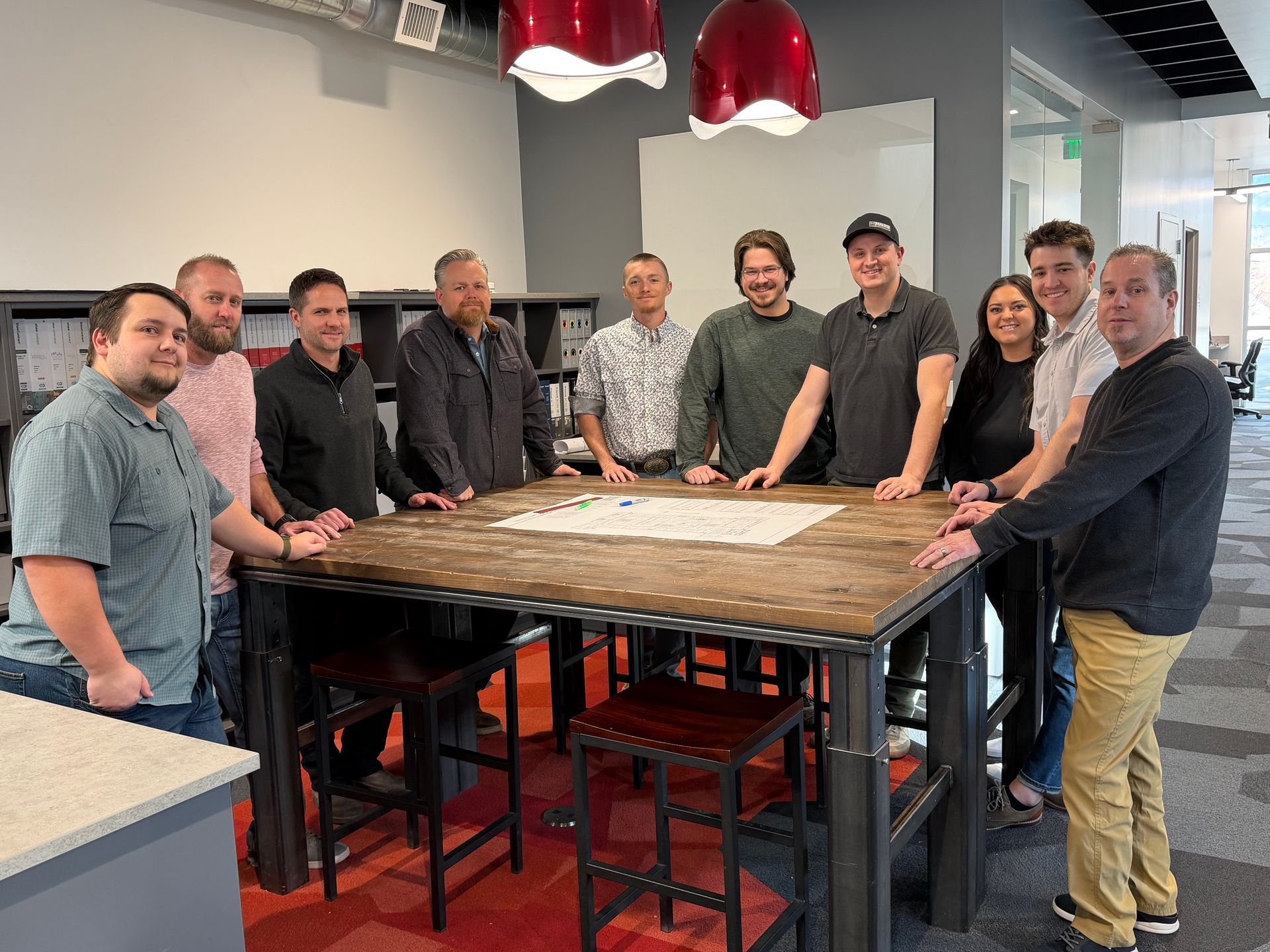
The interview is another case in point of how KMA operates. Over half the team is in the conference room with the freedom and confidence to speak their minds. This way of working extends to every client as they decide design solutions together, especially in communities where new projects come around once in a generation.
Christensen said KMA’s duty to their clients became abundantly clear after he watched a recent school board meeting—a passionate five-hour affair between the residents. The next day, Christensen declared the firm’s principal responsibility: designing the most appropriate building to fit the district’s needs without overspending or over-designing.
“We have to take that seriously,” Christensen said of that mantle they hold as design stewards of public funds, “because it’s taxpayer money going to these projects.”
Making Hay in the People Business
Architecture is a relationship-based business, where clients may come for the design, but stay for the camaraderie. It’s been that way since 1996 and has continued since Christensen purchased the firm from Madsen in 2017.
Carter called the relationship portion the best part of the job.
“We’re working with some of these people for five years, every week,” he said. “Sometimes, by the end of it, we have made lasting friendships that go beyond the jobsite.”
One project led to a side-by-side ride organized by the KMA team. Carter and Christensen recalled how clients, contractors, and trade partners journeyed to Moab, over a dozen machines in tow with double the riders aboard, and trekked through the Grand County wilderness together.
Casey Carrick, the newest member of the KMA team since joining in summer 2025 as Office Manager, said these relationships are genuine, pointing to her teammates and saying, “These people are truly friends with those clients and school districts.”
It goes beyond common interests—it’s who they are.
Christensen smiled as he distilled the KMA approach: “We joke, we talk their language, and we’re not unreasonable to work with.”


KMA Top Projects
Name City - School District Year Completed
Thanksgiving Point Lehi 2001
Museum of Ancient Life
Altamont High School Altamont - Duchesne 2014
Richfield High School Richfield - Sevier 2016
Union High School Roosevelt - Duchesne 2018
Alpine SD Single Story Alpine School District 2017-2026
ElementarySchool Design
Spanish Fork High School Spanish Fork - Nebo 2024
Payson High School Payson - Nebo 2025
Emery High School Castle Dale - Emery 2025
*Springville High School Springville - Nebo Fall 2026
*under construction