







The Long and Winding Road

As Lloyd Architects marks 25 years, the husband-wife team of Warren and Jennie Lloyd
reflect on their unique journey of architectural design and travel, and on a quarter century of
building a successful architecture practice.
By Bradley Fullmer
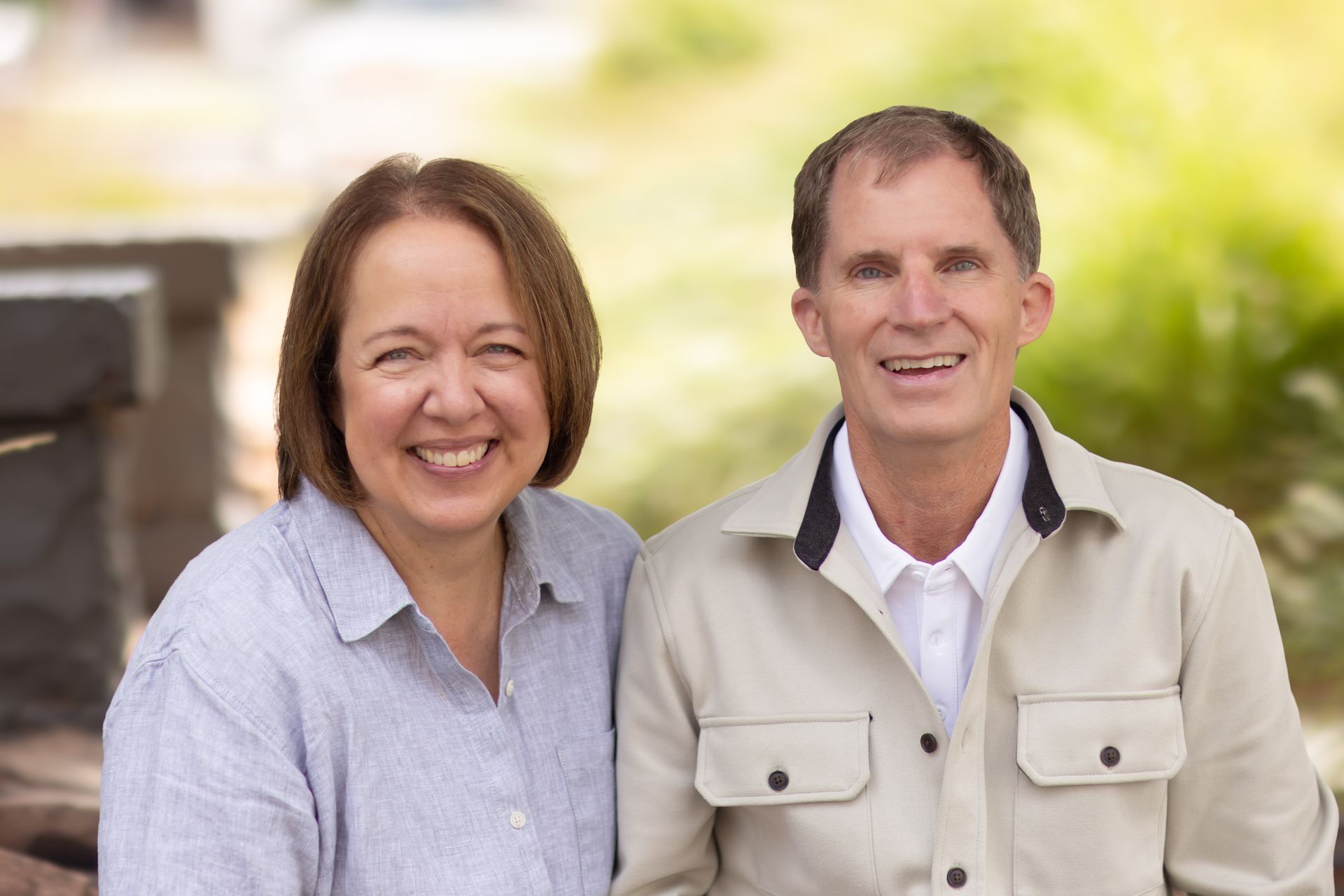
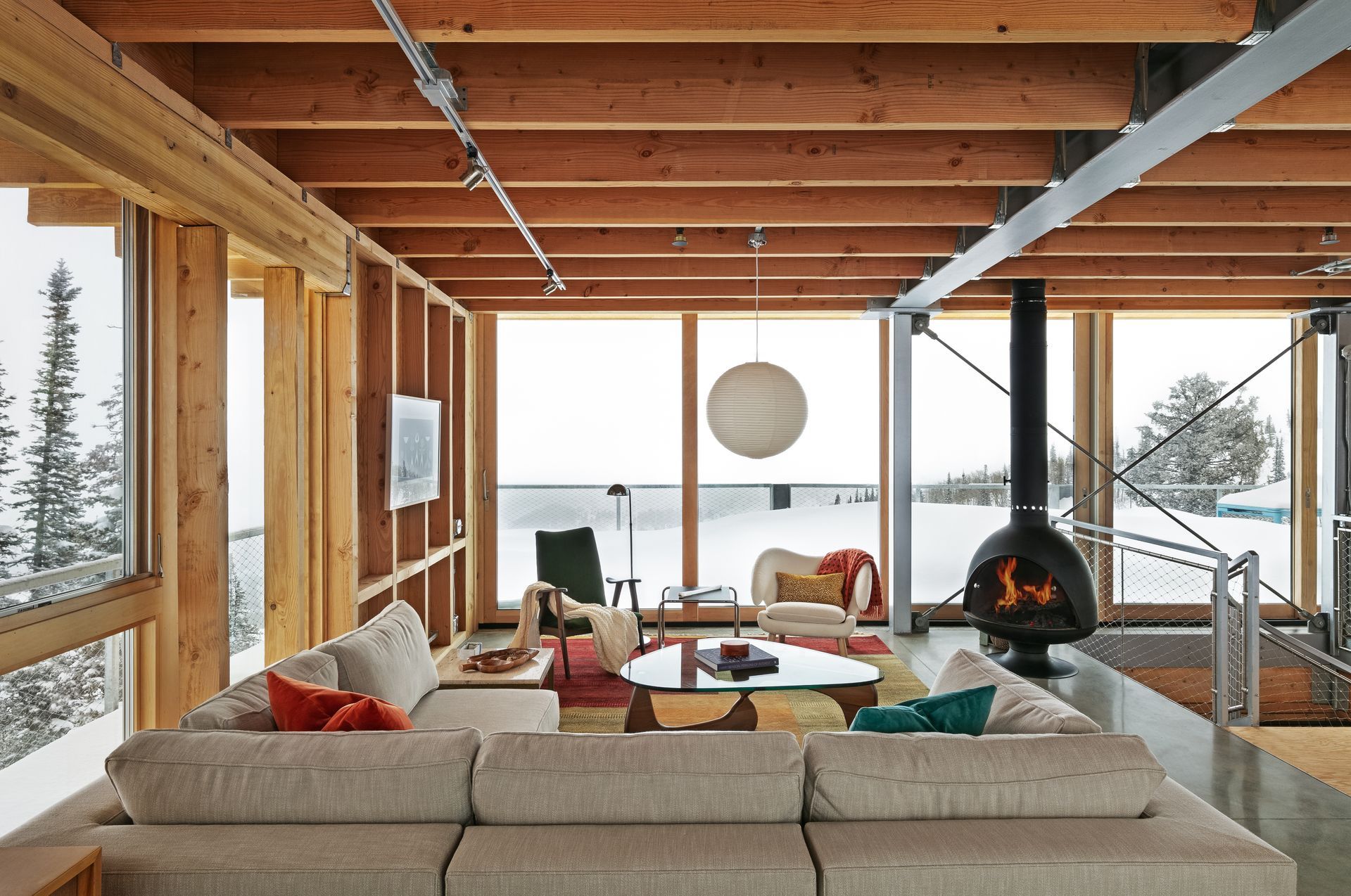
Warren and Jennie Lloyd (above) have built Salt Lake-based Lloyd Architects into a well-rounded, versatile firm capable of excelling in both the commercial and custom residential markets, as evidenced by projects such as Snuck Farm inPleasant Grove (main photo) and this cozy private Powder Mountain based cabin in Eden (below ).

It's been quite a ride for Warren and Jennie Lloyd since they married 33 years ago and embarked on a journey of architectural design and traveling that has taken them to myriad interesting places—both domestically and abroad—where they learned about different cultures, lifestyles, and design philosophies.


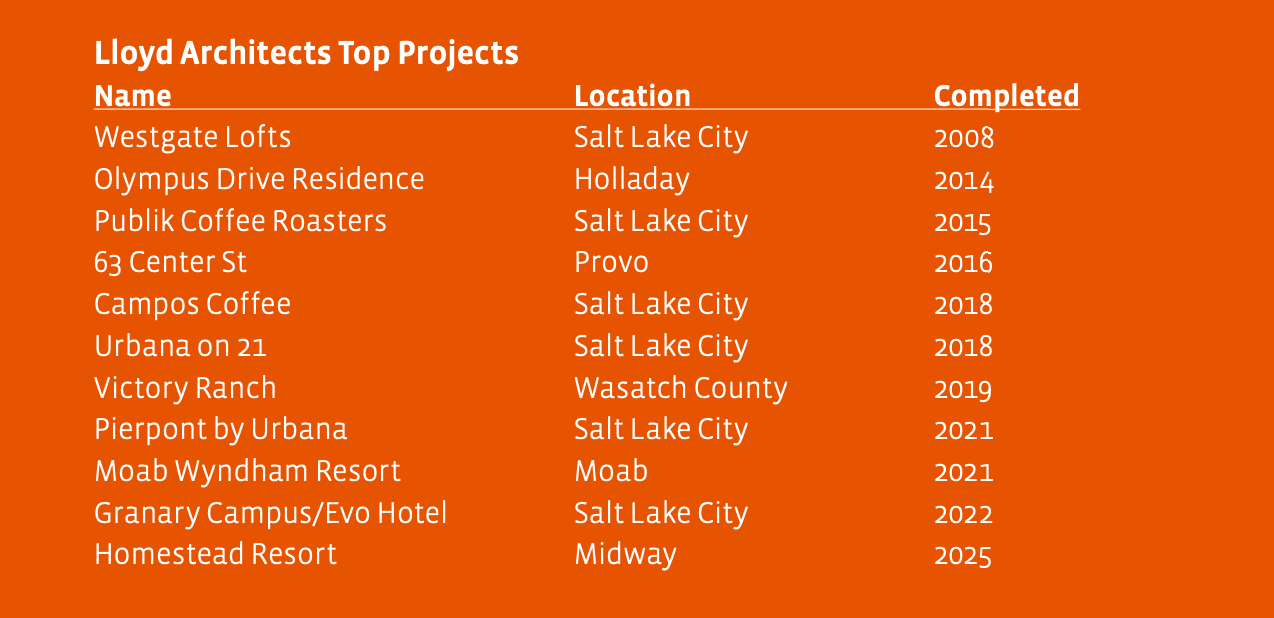
The past quarter-century has been particularly interesting as they have owned and operated Salt Lake-based Lloyd Architects, a 17-person firm celebrating its 25th anniversary, while also carrying on the legacy of Warren's father, Glen Lloyd, a well-respected, talented architect who practiced in Utah from 1959 to 2000. Glen began a planning and architecture practice with Ron Molen in the early 1960s, which evolved into Lloyd and Butler Associates through the 80s, then Lloyd Design Group through the 90s.


The significance of reaching a quarter century of operating their own firm is not lost on the Lloyds, who have taken time throughout the year to reflect on a winding, up-and-down path that has produced a thriving firm with substantial annual revenues and consistent growth in recent years, while also acknowledging the need to figure out how to transition firm ownership to the next generation.


For now, Warren, the firm's Founding Partner, and Jennie, who serves as Managing Partner, plan to guide the firm into the early 2030s, perhaps on a more part-time schedule depending on how things transpire.


"It does force some contemplation about your longevity," said Warren, 62, about nearing “traditional” mid-60s retirement age and figuring out the next chapter in life—both for him and Jennie, and the firm and its employees. "When we came back [from Seattle in 2000], I didn't know what we'd look like in 25 years."


Forging His Own Architectural Path

Warren graduated from West High in 1980 and then served a mission for The Church of Jesus Christ of Latter-day Saints in Tokyo, Japan (1981-1983), where he developed a genuine passion for the country and its people. He attended Brigham Young University (BYU) in Provo, intending to go to medical school. "I said I didn't want to be an architect, despite having grown up working summer jobs in construction.”


“During my Junior year, my microbiology coursework was offered at Timp Lodge near Sundance, where the research for my environmental science and ecology courses took me outdoors, where the relationship between nature and design finally clicked for me. I realized that architecture and design could fuel a passion to create, and I transferred into the design department and chartered my path towards architecture.”


Warren earned a Bachelor of Arts with a minor in Japanese from BYU in 1986 and headed to Seattle to pursue a Master of Architecture from the University of Washington. The Pacific Northwest served as a bridge between his interests in Japan and wood construction, and in 1989, Warren was awarded a Mombusho Research Scholarship at Kobe University to study the spatial development of traditional Japanese architecture. Meanwhile, Jennie also graduated from BYU and returned to her home in Seattle for a Master of Arts in Slavic Languages & Literatures. 


Warren gained experience during his time in Seattle, spending a summer at both NBBJ and Miller Hull, two high-profile, northwest firms that gave him valuable insight into the profession. He then spent several years working for Tom Bosworth, FAIA—his university professor and thesis advisor—in his respected studio, crafting custom homes, primarily in the San Juan Islands.


"We designed a handful of exquisite residences—Tom practiced at a really high level for some great clients," said Warren, specifically recalling the design of a 64-SF guest house tower near Friday Harbor. "I had designed houses before, but to have that kind of experience was unique for me. Being able to board a floatplane for site visits in the San Juan Islands was pretty compelling. I realized architecture has the power to build emotions and to support family living in a variety of different ways." 


Upon earning their respective master’s degrees in 1992 and subsequently getting married, the next eight years were a whirlwind for the couple, including time in Utah (1992-1993),  St. Petersburg, Russia (1993), Seattle (1995-1997), Yamagata, Japan (1997-1998), and back to Seattle (1998-2000). That final stop, working for the Shelter Company, offered a look at a unique Japanese wood-frame structural system ultimately used on four Latter-day Saint Temples from 1998 to 2000.


It may have been an unconventional way to begin a career, but living abroad offered amazing experiences, and having to scramble speaks to a willingness to do whatever it takes to get by.


"I spent time doing my own thing, doing some work with dad's office in Salt Lake while working for Tom Bosworth [...] you just sort of figure it out and do a little bit of everything. I thought, at some point, I wanted to be doing my own thing. You work for other firms to try and build your work portfolio."


In 2000, Warren's parents were called to serve in the England Leeds Mission, prompting Warren and Jennie to return to Utah and take over Lloyd Design Group for Glen, restructuring the firm as Lloyd Architects, with the intention that Glen would return and assist Warren in carrying on the family name. "They were just in heaven," said Warren. "They felt great joy in searching for lost sheep from my mom’s parents' hometown." Tragically, nine months into their mission, Glen died suddenly of a heart attack in July 2001 at the age of 72.
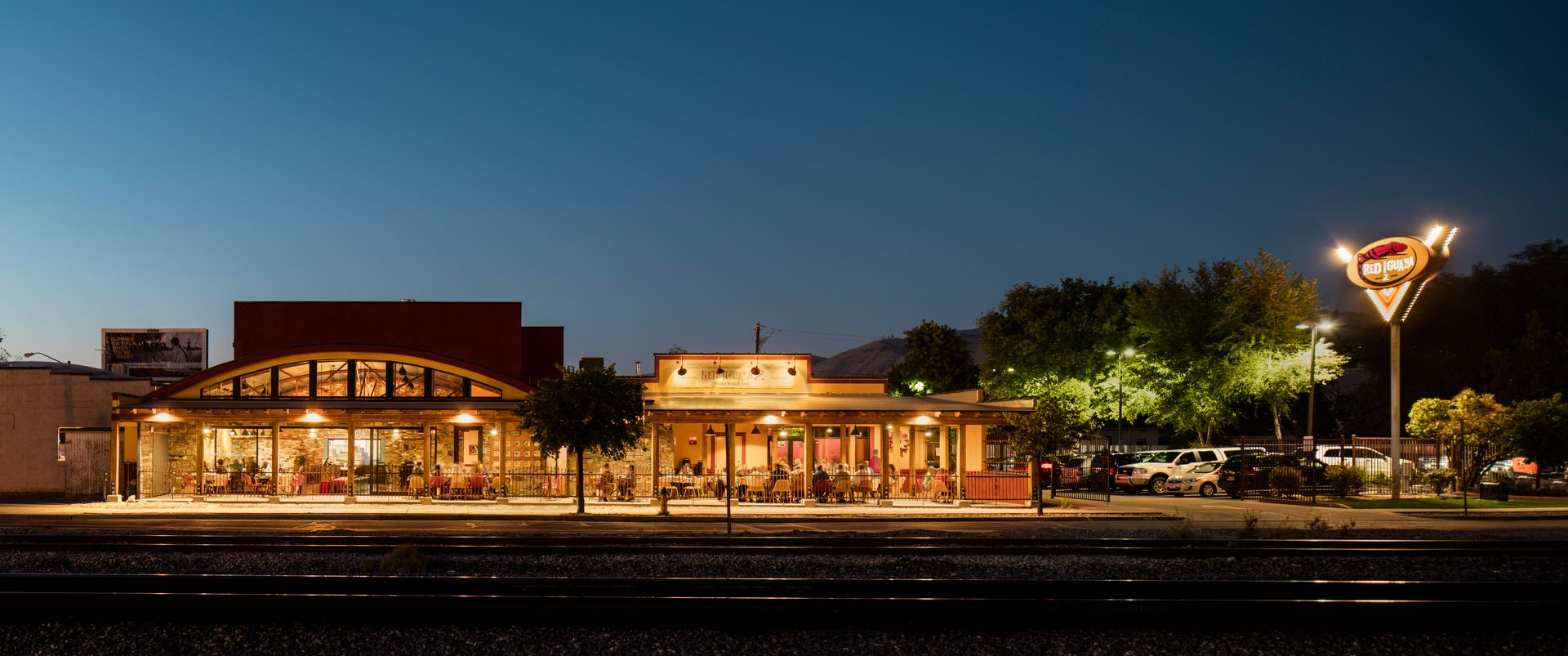
Red Iguana 2 in Salt Lake City was built in 2016. (photo by Mark Weinberg)

Transitioning Back to the Beehive State

Jennie had already planned to help Warren, but upon Glen's passing, she was prompted to assume a more full-time role, particularly in business administration.


"I sort of accidentally backed into it in a way," said Jennie of gradually developing her role at the firm while also raising their three children and foster children as a stay-at-home mom as much as possible. "I could just see that he needed some help with things, and it allowed him to focus on what he loved to do and was good at. [My role] started initially a few hours a week, but then just kept adding [responsibilities] as we went along."


"I am so blessed to have her," said Warren. "She realized if we weren't sending out invoices, we wouldn't be around very long. What we inherited was an analog practice—we had to reinvent how we operated based on what I'd seen from Bosworth. As we started organizing the firm, she was helping figure out systems, and as we grew, her role expanded."


Those early years in the 2000s were spent tending to Glen's existing clients, closing out some projects, and then figuring out which markets to pursue.


"I was just feeling my way," Warren said of those first five years or so. "You have to be somewhat selective about what kind of work you want to do, but we took whatever came in the door. I always liked residential work; I just wasn't sure we could support a firm around it."


The firm landed projects within developments like Promontory and Glenwild (then Red Hawk), with Warren adamant that a commercial architect could thrive with a healthy mix of high-end residential work and small-to-medium commercial projects.


"We realized Utah was a great place [for future building], and that there were a lot of great architects coming out of school, but the residential architecture community wasn't as mature. I was interested in exploring residential architecture at its best and see if we could sustain that type of practice."


The recession hit right as the Lloyds moved into their new office in January 2009, where they still reside at 573 E. 600 S. in Salt Lake City. Warren said the firm "went 18 months without a new project start.” Fortunately, because of their involvement in community preservation and neighborhood events, they were able to scratch out enough work through residential remodels and adaptive reuse projects to keep the doors open.


In 2006, Aaron Day joined the firm while still in college, bringing further structure and creativity and approaching design through a practical lens.


"I'm more on the analytical, critical thinking side," said Day, 48, who was promoted to Principal in 2024, and then named a Junior Partner in October, with the plan of taking over as the firm's top executive when the Lloyds decide they're ready to retire. "I know construction well," Day added, having spent considerable time in the field interacting with contractors on larger multi-family and other commercial projects.
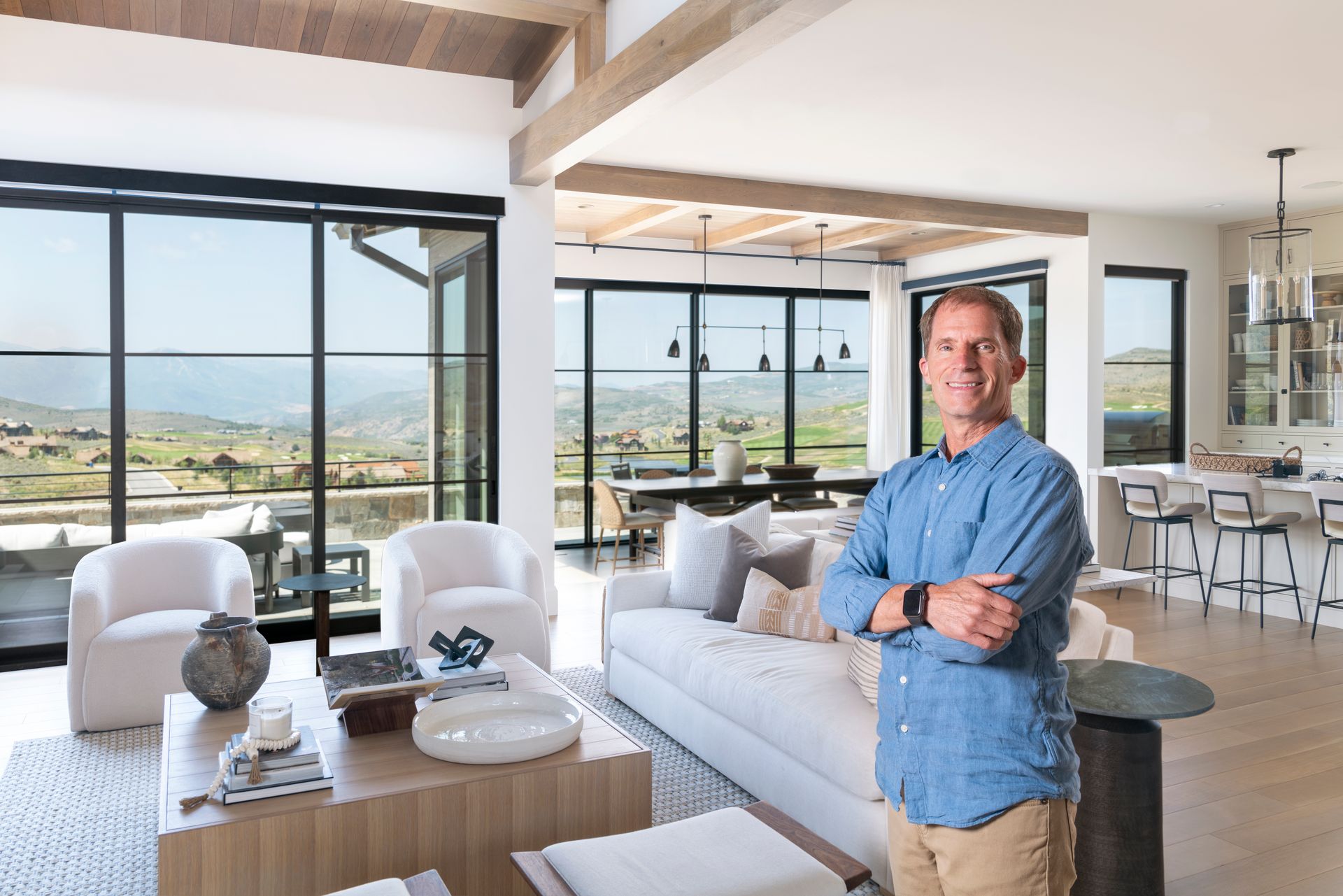
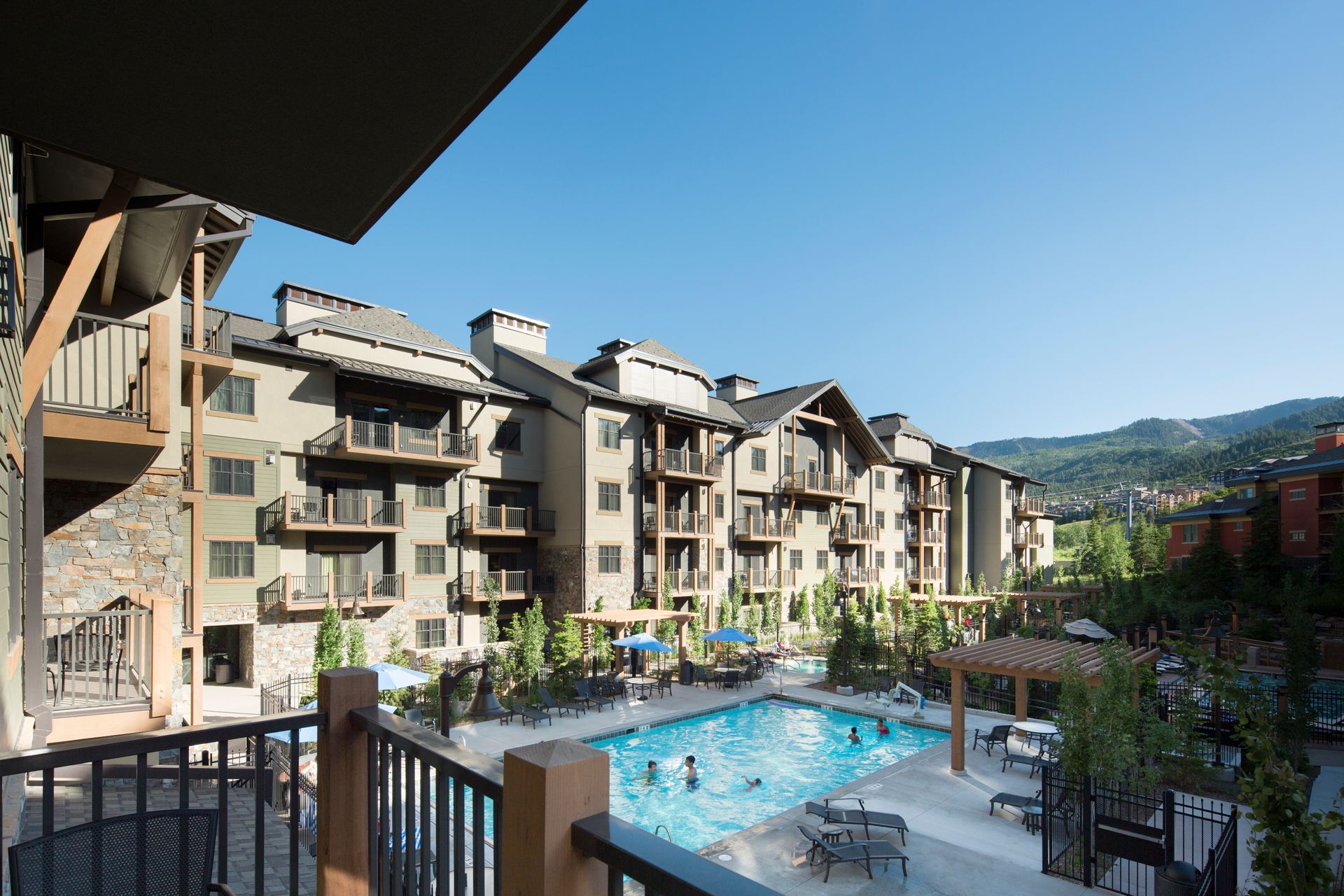
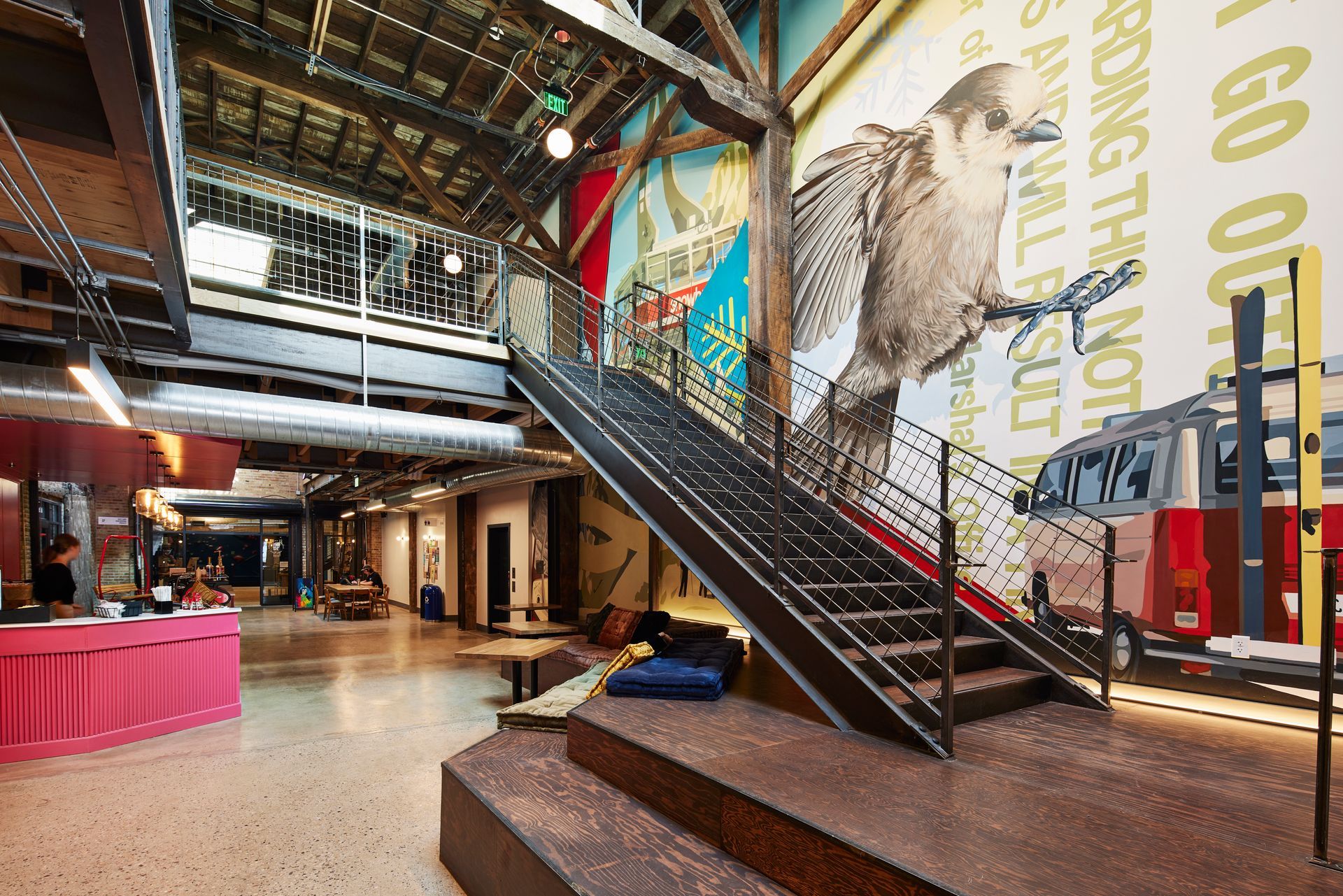
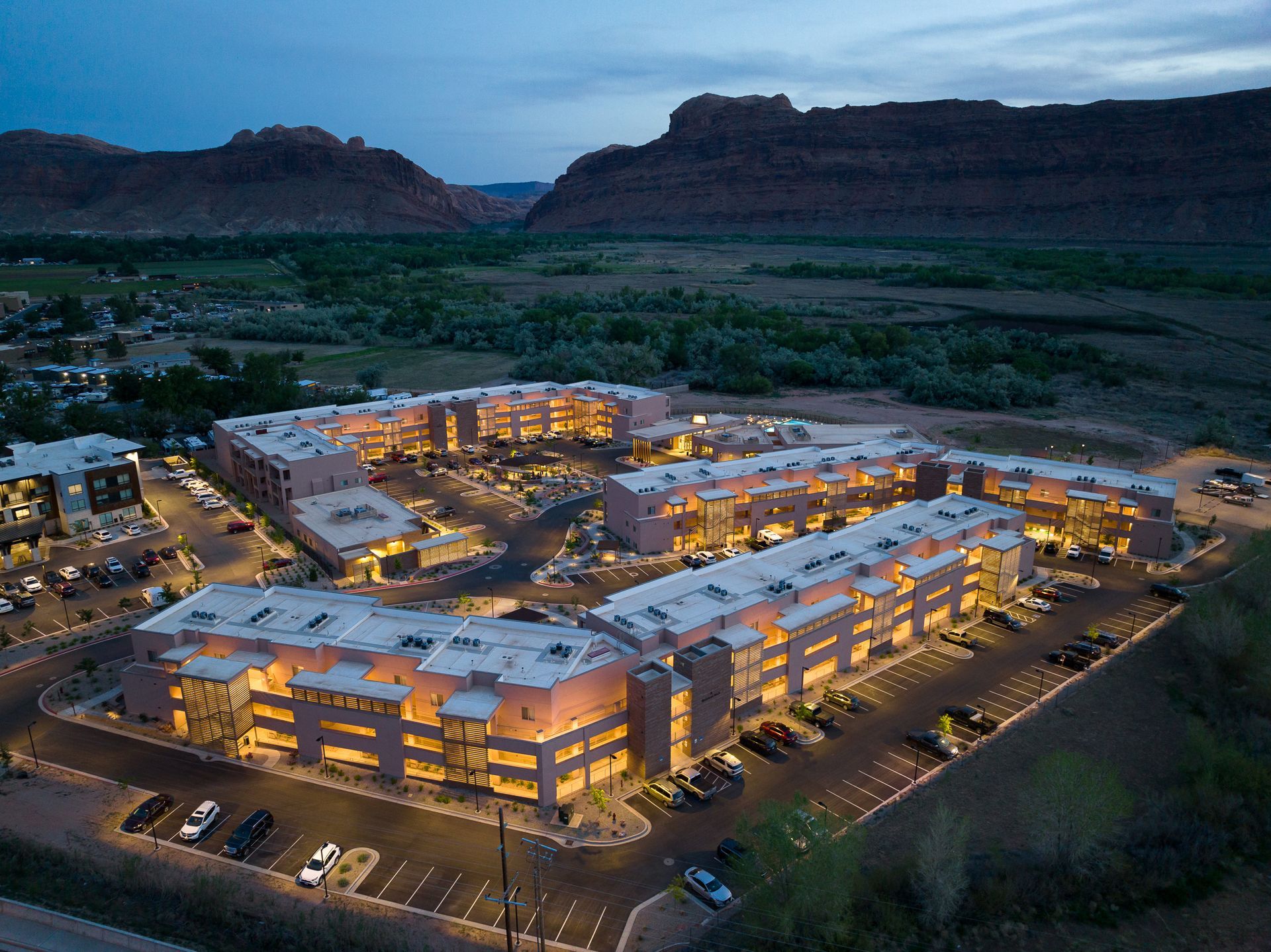
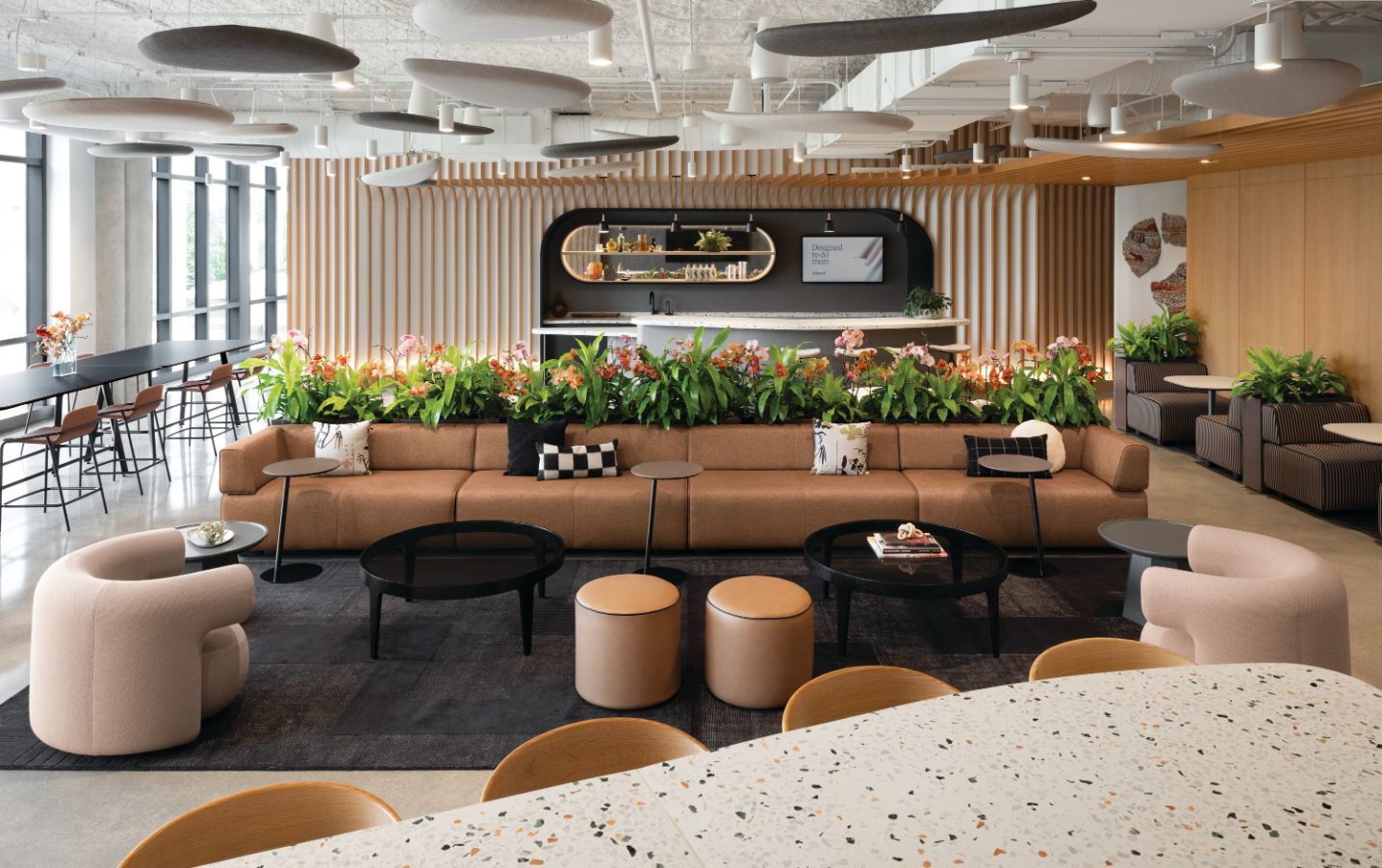
(clockwise from top left) Warren Lloyd stands in a Victory Ranch residence in Kamas; Wyndham Resort in Park City; Moab Worldmark in Moab (photo by Whit Richardson); Evo Campus interior (photo by Mark Weinberg).

Growth Through Market Diversity, Repeat Clientele


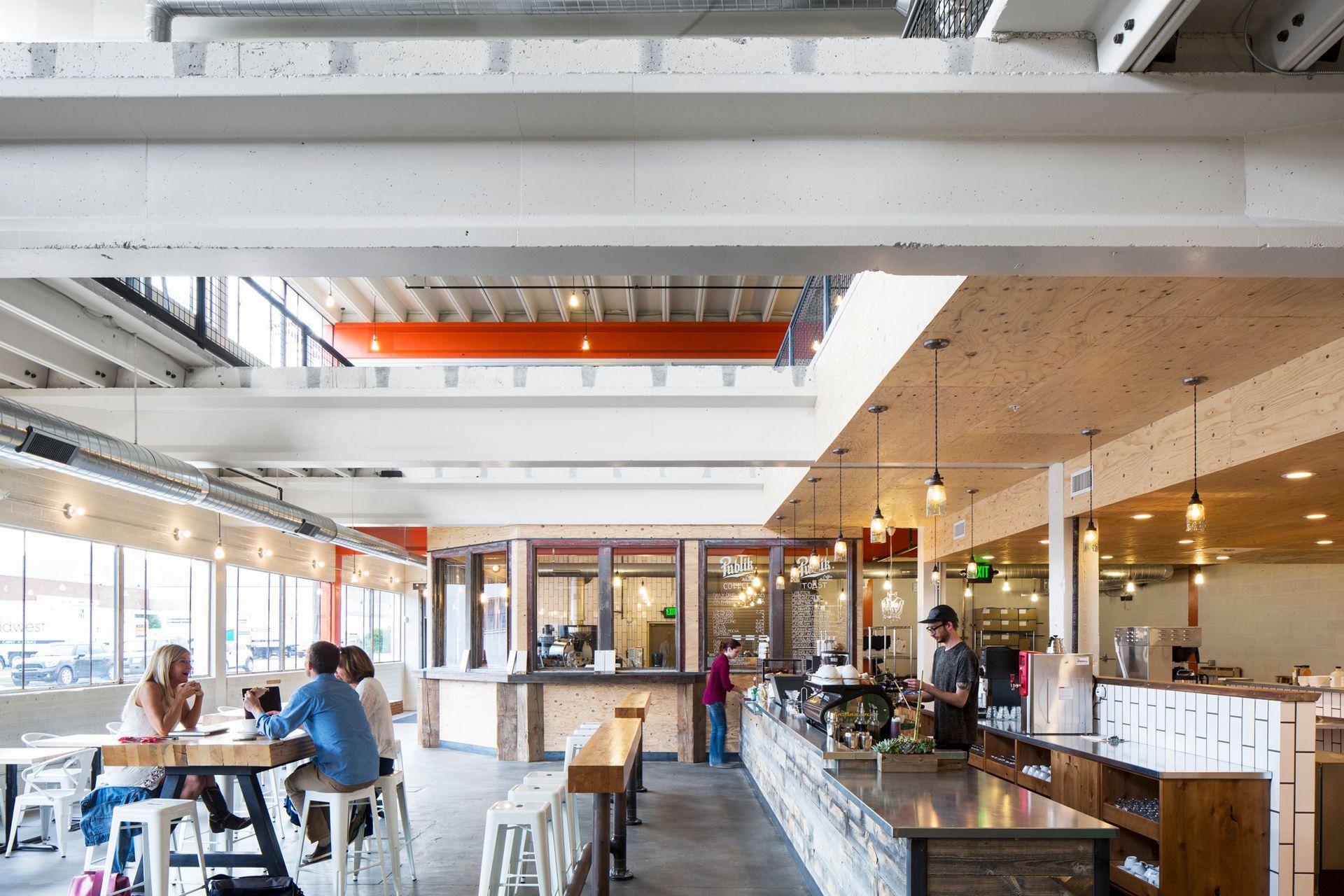
By 2012-2013, the firm had crawled out of the recession, busy with a mix of high-end residential design and smaller commercial projects, including Publik Coffee House and Campos Coffee, two creative adaptive reuse projects.


In 2018, Warren's connection to Seattle and expertise with historical renovation and adaptive reuse projects led to one of the firm's most impressive projects to date—the Granary Campus Salt Lake/Evo Hotel.


Developed by Seattle-based Lake Union Partners and Evo Founder Bryce Phillips, the award-winning adaptive reuse project comprises five connected historic warehouse buildings and helped to transform a formerly dilapidated area of Salt Lake into a hot entertainment zone and catalyze further development.


It was a complex, transformative project that showcased Lloyd Architects' skill set and ability to turn a historic industrial space into a cutting-edge, modern hospitality and mixed-use project, one a little larger than past projects.


Warren said when Lake Union and Evo executives came to Salt Lake, they were hanging out in Publik and Campos, so "they could see we had an interesting understanding of the Granary District, and understanding of adaptive reuse, and we had a good track record with [retail] and hospitality spaces, plus we had done tax credit projects," Warren said.


The firm's work in the custom residential space is among the finest of any commercial architect in Utah, with Warren's prowess extending to the American Institute of Architects (AIA), and specifically the National AIA CRAN Knowledge Community—the Custom Residential Architects Network—of which Warren was National Chair in 2023. He was also recently elected as President-Elect of the AIA Utah chapter in 2026, with a commitment to serve as AIA Utah President in 2027.


"For me, AIA is a valuable institution,” said Warren, adding his reason to get involved with AIA Utah is that a primarily residential architect hasn't led it in recent memory. “I think one of Utah's biggest construction expansions has been luxury custom residences—the Wasatch Back is one of the biggest things happening. So, it was worth it to me to represent all firms, including small firms and residential architects.”


Lloyd Architects has designed multiple signature custom homes in luxury confines like Powder Mountain, the exclusive Wasatch Peaks community, Sundance, Park City, and more. These owners are highly particular about what goes into their homes—the experience rivals any big-time commercial developer in terms of complexity and detail.
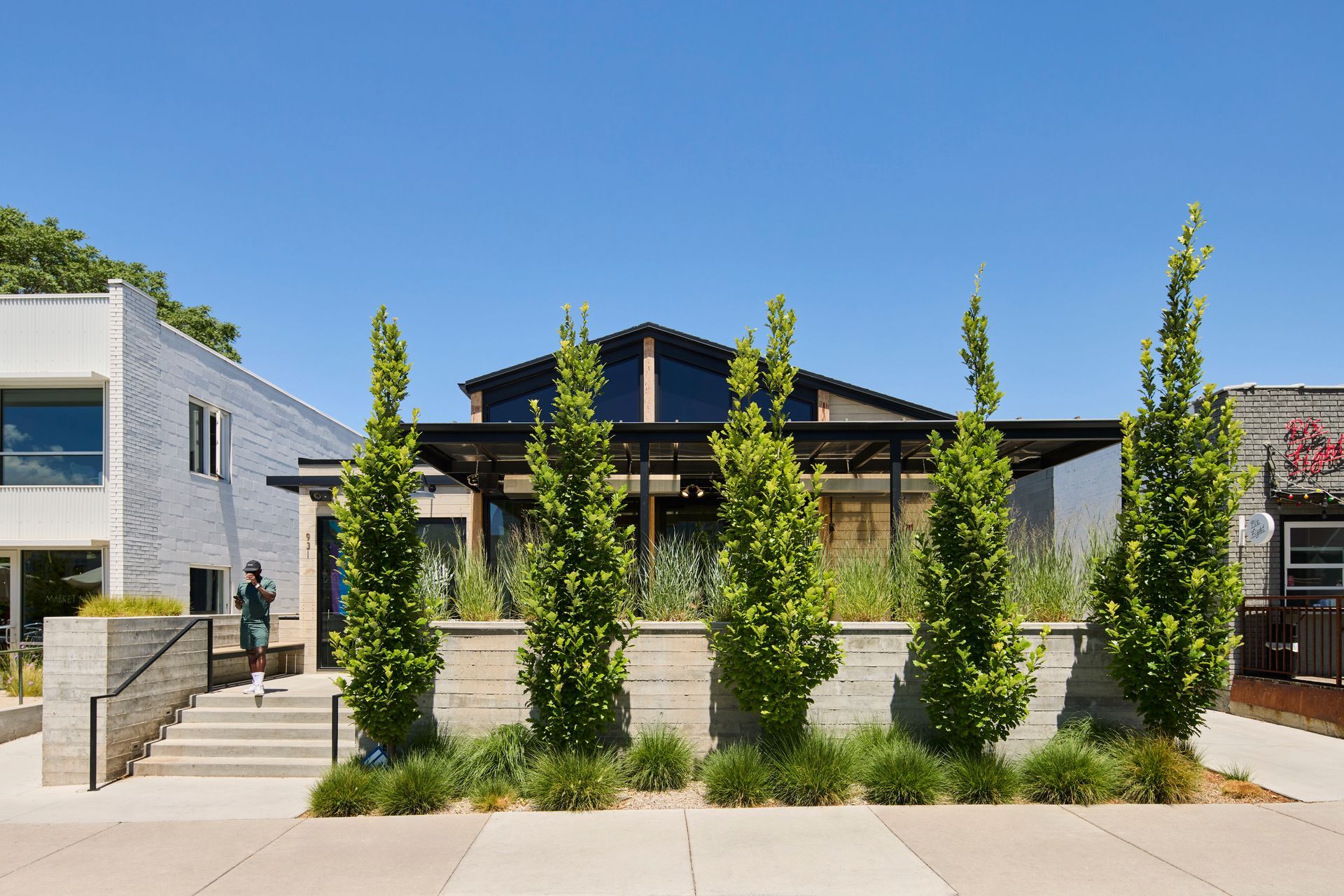
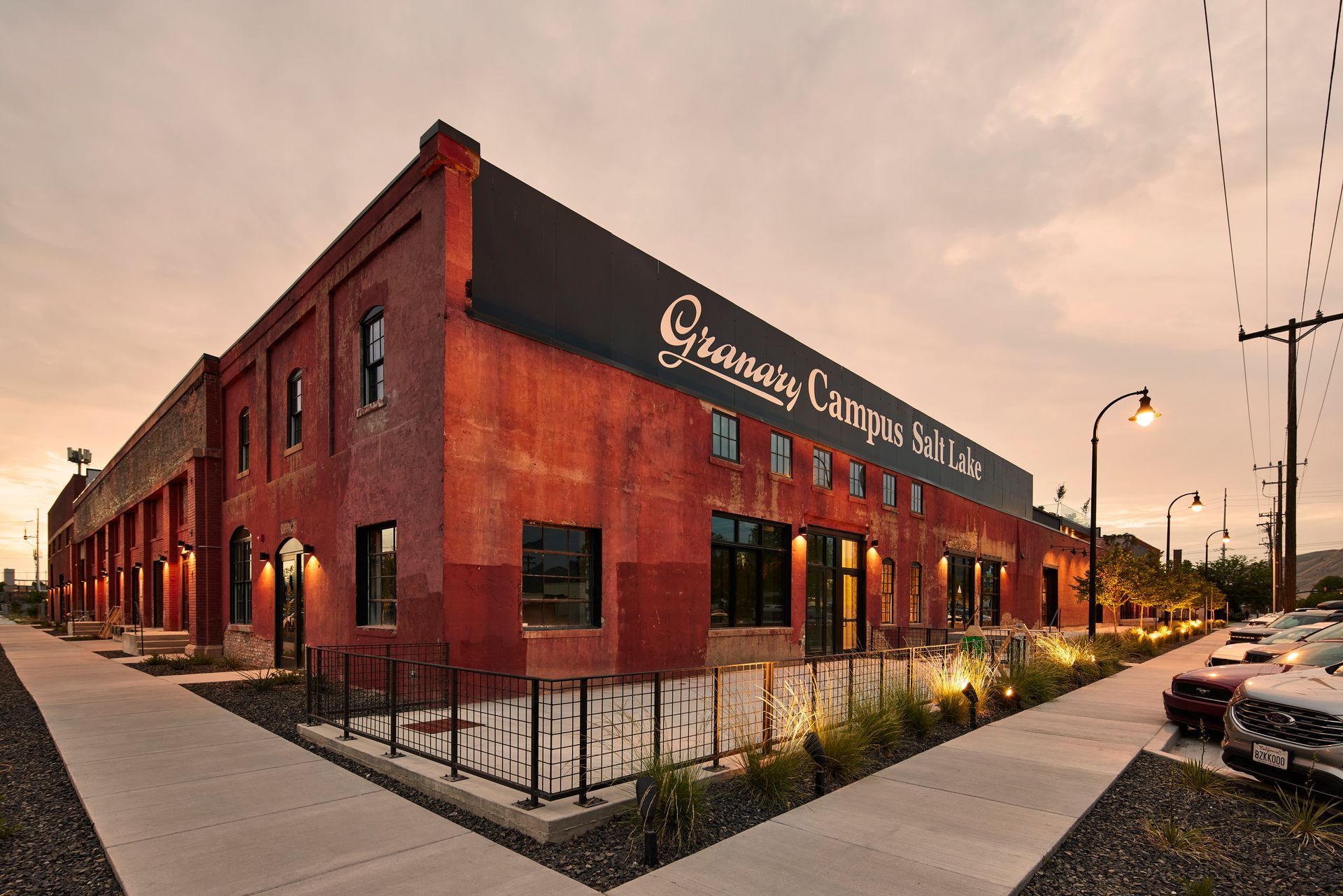
(clockwise from top left) Publik Kitchen in Salt Lake; Granary Campus exterior; Publik Coffee interior (photos by Mark Weinberg); Pierpont by Urbana (photo by Chris Knoles).

Ownership Transition Underway; Lloyd Remains Passionate About Work


With Day being named a Junior Partner and obtaining part of Jennie's ownership stake in October, the first formal step to a second generation of leadership at Lloyd Architects is underway. As he closes in on 20 years at the firm, Day is excited about the prospect of ownership and committed to working harder than ever to justify the Lloyds' faith in him.


"For me, it's seeing where we can keep improving with operational efficiencies," said Day, regarding his approach to ownership and balancing the Lloyd's strengths. "Where I look at [a project] analytically and conservatively, Warren looks at it as futuristic. His entrepreneurial spirit, he has in spades. Between the three of us, we all have different skillsets that make us compatible and that work well."


While Jennie is ready to wind down to part-time work, Warren is still pedal-to-the-metal passionate about the architectural profession and has no intention of slowing down. He even recalled a conversation he had with Niels Valentiner, FAIA, legendary founder of Salt Lake-based VCBO Architecture, who continues to work, even as he closes in on being an octogenarian.


"I had a conversation with Niels about the Rome Temple, and what life experience an architect can bring to a design project," said Warren, emphasizing the value of experiences and what a veteran architect can bring to a client's project versus an architect within their first decade of practice. "Architecture is such a broad, deep, encompassing field—I'll never feel like I'll master it."


"I don't know that I'm ready to retire," he continued, chuckling. "There is nothing more interesting than being involved in the design process."


As for the firm, he said, "I feel that we're creating a structure where hopefully the best generation of Lloyd Architects is the one to come, because we've got great people here. If I practice for 10 or 15 more years, I feel like I'm still in good company with relevant architects—and even prolific—into their 80s. I rely on collaboration with team members, so I can share and encourage those around me, as another way to stay relevant. If there is a secret to remaining relevant, it's not thinking that you know it all, it's being inquisitive."


"It's been an amazing journey for us," he added. "I remember the faces, the people who have worked here, as much as the buildings. It's really heartening to think about creating an environment where young designers can learn and grow. The majority of our employees came to us right out of school—we've grown with them."


"It's been really fun to reflect on the past 25 years," said Jennie. "When we started, I would not have imagined being where we are now. It's amazing to see the growth and to think about all the people we've met over the years. We were reflecting [recently] on meeting the right person at the right time. Sometimes, that was a client or someone who helped us grow professionally or understand marketing or operations better. We've been around a lot of good people, and things have worked out very nicely in ways we wouldn't have anticipated."
By Bradley Fullmer November 15, 2025
Residents have access to a wealth of modern, high-class amenities: Check out this open-air rooftop patio with tasteful lighting, pool, and spacious hot tub—it’s party time! (all photos courtesy Kier Construction)
By LADD MARSHALL November 15, 2025
Steve Green is out in McCornick, Utah. Where is that? And what’s near McCornick? “Nothing,” joked Green, the Sr. Vice President for Wheeler Machinery Co. While he may be far from even the smallest of small towns, with Holden and its 492 residents 13 miles away, he’s close to the site of a major development in data center technology. Isolated on the western edge of the Sevier Desert, the Joule Data Center will also be isolated from the grid—by design. Operation Gigawatt Rolls On Green is one of many energy and power professionals hoping to double Utah’s power generation capacity by 2034 as a part of Operation Gigawatt, an initiative launched by Utah Governor Spencer Cox in October 2024. Utah has long been an economic growth leader; Operation Gigawatt aims to make Utah a power player in energy development by increasing transmission capacity, increasing energy production, strengthening policy, and investing in energy innovation. While Governor Cox’s Operation Gigawatt moves forward statewide, out in McCornick, Green said, “We’re doing operation gigawatt and a half off grid.” The Joule Data Center project team will deliver “In-situ power generation”—power not connected to any electrical distribution or transmission system. It starts with Caterpillar G3520K reciprocating generator sets that produce 1.5 gigawatts of electricity. Waste heat and exhaust from the generators then move through an absorption chiller system as part of the overall systems combined cooling, heat, and power (CCHP) solution, providing much of the water required to cool the data center servers. Beyond the electric power to be generated for the Joule project, there will be 1.5 gigawatts of thermal energy and 1.1 gigawatts of available battery storage to meet the data center's peak electricity needs. Added Green, “And we’re not taxing the local utility grid.” Isolated or Community Power? The massive power capabilities delivered there are impressive, but they reveal a troubling trend in how Utah will double its power generation capabilities. Will it be from well-funded companies looking to power data centers and AI technology separate from the grid? Or will Utah fulfill the mission of Operation Gigawatt by creating power solutions accessible to all? According to Troy Thompson, Chief Operations Officer for Big-D Companies, power generation is about more than supplying data centers. “In my mind, how do we build a billion-dollar hospital downtown that needs ten megawatts of power?” he said, referencing Intermountain Health’s future downtown Salt Lake campus, “let alone the data centers, and manufacturers who we are hoping that will come here?” Ten megawatts of power may pale in comparison to what data centers require, but it is one of many projects seeking regulatory approval to move forward. The Utah Inland Port Authority, the Economic Development Corporation of Utah, and others continue to drive projects and jobs into Utah—data centers, too. But Thompson said he has heard from many potential clients who are hesitant to bring their energy-intensive projects to the state without firm guarantees of available power. Operation Gigawatt and state leaders have embraced an "all of the above" approach to energy sources, extending the design lifespans of coal plants, embracing new technologies and power sources, and developing new power-generating capabilities. While the industry is willing, the operating environment needs rewiring to meet state goals. Changing for 21st Century Needs “With as hot as the Utah market is,” began Eric Haslem, “there are too many obstacles for us to overcome.” The market may be ready to ramp up production, said Haslem, Chief Operating Officer for Vernal-based utility and heavy civil contractors BHI, “But the current system can’t handle it. We have this massive web of transmission and distribution infrastructure that was not designed or built for the power demands of the 21st century.” “In 1970, they didn’t know what a smartphone was,” Haslem said, “let alone AI.” Transmission projects have been developed. Rocky Mountain Power/PacifiCorp’s Energy Gateway South transmission line—a 416-mile, high-voltage 500-kilovolt transmission line that runs from Mona to Medicine Bow, Wyoming—certainly helped when it went live in 2024. Still, it's just one project amidst a plethora of needs. Haslem stated that Utah's growth over the last 10 years meant a large majority of the transmission line's capacity was accounted for when it went live. .
By Bradley Fullmer November 15, 2025
And the King shall answer and say unto them, "Verily I say unto you, inasmuch as ye have done it unto one of the least of these my brethren, ye have done it unto me."—KJV Matthew 25:40 From a social and community impact standpoint, few projects match the value to disabled and special needs individuals as the new Utah State Development Center (USDC) Comprehensive Therapies Building in American Fork. The $36 million, 65,000-SF facility was designed as a "one-stop shop," said Joe Jacoby, President of Salt Lake-based Jacoby Architects, whose team led the project’s design. It consolidates and modernizes myriad services under one roof, including physical therapy, occupational therapy, recreational therapy, speech, language, and hearing resources, and behavioral health resources. In addition, the new building offers full-service medical and dental clinics, an indoor therapy pool, an Autism treatment wing, and workshops for life skills and vocational training—all geared to helping people live independent, authentic lives, while striving to reach their full potential. "This building was very much about accessibility," Jacoby said, "and putting in many different types of resources for these residents—all in one building." Jacoby's firm has significant recent experience in projects that combine education and healthcare for people with special needs. The firm's design of the Sorenson Legacy Foundation Center for Clinical Excellence in Utah State University's College of Education and Human Services earned UC+D's 2016 Most Outstanding K-12 Project. Two years later, the firm earned another UC+D award for the C. Mark Openshaw Education Center for the Utah Schools for the Deaf and the Blind, a project similar to this one in that it contains an array of services, including education and therapy for varying levels of sensory, behavioral, physical, and cognitive abilities. "We've been working on different [design] aspects for many years, starting with a deaf preschool, which led to working with the Utah Schools for the Deaf and the Blind," said Jacoby. "With that came many other sub-specialties, like therapy for behavioral issues, cognitive issues, development disabilities, and even speech, language and hearing clinics. It helps people with a variety of disabilities and serves an underserved population of people."
By Taylor Larsen November 15, 2025
On a fall tour of Utah State University's (USU) Carolyn & Kem Gardner Learning & Leadership Building (Gardner Building), students and faculty are hard at work on a late Tuesday afternoon. Getting here, where USU's business school students could thrive, was a long time coming. The University commissioned the Gardner Building to meet a new mission for the school outside the traditional knowledge acquisition and transfer for which USU has excelled since its founding in 1888: Giving students a differentiated experience they cannot get anywhere else. Purpose Revealed Frank Caliendo, Senior Associate Dean of the Huntsman School of Business, said that the new building is the third and final piece of the business complex, "a realization of the longtime vision of Dean Douglas Anderson, the driving force behind the school's transformation, to meet the needs of students for generations to come." Caliendo, a longtime Aggie (USU BS, '98; PhD, '03), said that, even after the opening of the George S. Eccles Business Building and its faculty offices and classrooms in 1970, growth in business courses eventually outpaced the school's capacity. Jon M. Huntsman Hall's 2016 opening broke the campus bottleneck, with classrooms and other spaces dedicated to business school participants. "But we still needed space for our centers and experiential learning programs," Caliendo said, of the importance of collaborative spaces and differentiated experience for the five programs (see page XX) that would call the Gardner Building home. The design intent for this final piece wasn't a re-creation of Huntsman Hall, Caliendo said of the initial message to MHTN Architects, "But it does need to rhyme with Huntsman Hall." Working within a Busy Environment The first order of business was siting the building just east of the other two business school structures. Stan Burke, Project Manager for Jacobsen Construction, said the Gardner Building was part of a trio of projects that included Ridge Point Hall and a parking garage—three Jacobsen-led projects that utilized the same construction corridor as construction commenced from "An active campus is difficult enough," said Burke of the challenges of simultaneous construction, which required constant coordination amongst the three teams, made a tad easier as they shared a job trailer. "We had to stay cognizant of the school's activities and coordinate with them so that everyone was aware of what we were doing." Coordination went from important to critical, with the three teams meeting daily to discuss coordination and scheduling material and equipment deliveries in 15-minute intervals as the respective construction teams worked on each of the three structures.
By Bradley Fullmer November 15, 2025
The last five years have been a whirlwind for the Larry H. Miller Company (LHM), with the organization selling the majority of its beloved Utah Jazz franchise in October 2020 for a reported $1.66 billion, followed by the sale of its auto dealership empire of more than 70 properties for a reported $3.2 billion a year later. The influx of nearly $5 billion was parlayed into several jaw-dropping real estate and other corporate purchases, including: —1,300 undeveloped acres within the massive 4,100-acre Daybreak development in South Jordan in April 2021. —Advanced Health Care Corp. in January 2021, a transitional health care provider with operations in eight states (primarily in the west) and 3,500 employees. —The purchase of the majority stake in Swig, a leader in the flavored soda craze, in May 2023. — Partnering with Utah Trust Lands Administration to develop 1,200 acres in Saratoga Springs. — The acquisition of over 1,000 acres near Park City and Hideout will include multi-family units, housing, restaurants, and retail. —100+ acre mixed-use development in an area along North Temple being dubbed “The Power District”; the future home of not only Rocky Mountain Power’s new corporate campus but potentially a ballpark for a future Major League Baseball expansion team. —A reported $600 million acquisition of controlling interest in MLS team Real Salt Lake and NWSL team Utah Royals, along with associated infrastructure, including America First Field and Zions Bank Training Center. —The development of Downtown Daybreak, a 200-acre parcel that this year saw its 30-acre Phase I debut with the completion of the Salt Lake Bees' new 8,000 capacity stadium—dubbed The Ballpark at America First Square—in April, followed by a new Megaplex cinema entertainment center in July with luxury theatres, bowling, games and a scratch-made kitchen in addition to an open air plaza. A seven-story, 190-unit multi-family development is currently under construction and rising along the right field bleachers, with views that will look down into the ballpark upon completion next year. And LHM is just getting started, said Brad Holmes, President of Larry H. Miller Real Estate since 2018, calling Downtown Daybreak a "new urban center that is central to where the majority of growth is occurring" and combines a "full spectrum of business and year-round entertainment, culture and connectivity, as well as a wide range of housing options." When LHM executives first conceived of a new home for the Salt Lake Bees, Holmes said they went on a "ballpark tour" of MLB and minor league stadiums, and "really fell in love with a ballpark" in Durham, North Carolina—home of the Durham Bulls—which had buildings that framed in the stadium. So, The Ballpark at America First Square has the multi-family project underway in right field, with a proposed hotel slated to begin next year in left field. "In another two seasons, you'll have this urban setting for the ballpark that frames the mountain views. [The design is] really intentional, and I think it will bring a finished edge to Downtown Daybreak," said Holmes. "It was a process trying to figure out the best location, site plan, traffic, but it's in a great spot. The goal for us was to make it feel like it fit in with the community, almost like having a baseball stadium inside of a park, with an open corridor that connects to a plaza."  Holmes said the seemingly small 8,000-capacity stadium (about half the capacity of the Bees former home at Smith’s Ballpark) aligns with national trends. "It's better to play in front of a sold-out crowd than in a half-empty stadium. Some new MLB stadiums are at 30,000 [capacity]. The trend is smaller, more intimate venues with closer views of the field."
By Taylor Larsen November 15, 2025
Much has changed about Hogan & Associates Construction since the company's inception 80 years ago. The name may be the most obvious example, the size of the company may be another giveaway, and the difference in markets served might require a double take if the founders could see the company today. But what hasn't changed is the firm's desire to build communities. It has regularly built important, community-focused projects with a similar purpose since the company came to life in 1945.
By Taylor Larsen November 15, 2025
Imagine this: A company has just begun a meeting with the intent of moving forward with a major investment. One party knows something that will help minimize the investment's risk. Should that party tell everyone, it will save money, time, and everyone involved from future headaches. So when should that party spill the beans? At the beginning of the meeting At the end of the meeting At the right time during the meeting Never Bradley Crocker, Director of Preconstruction for Mollerup Glass, has seen how answering this question correctly—and choosing “A”—brings about successful and profitable investment in commercial construction. “I think that [project teams] need to bring in subcontractors early to help guide budgets in general,” said Crocker, detailing how every trade can bring a similar level of expertise to architects and owners by being involved from the beginning of the “meeting”, while the project is in design. Why? “We can vet cost versus performance and find the best value for the performance, which is essential as meeting or beating the budgets gets the project to construction on time,” said Ben Hiatt, Chief Estimator for Steel Encounters. After all, he said, “Nothing moves if budgets are not met.” Design-assist is a positive step forward, where subcontractors assist in matching design intent with a deep understanding of building envelopes to ensure glazing, roofing, walls, and fenestrations perform at their highest level. Glenn Rainey, Salt Lake City Branch Manager, and Larry Luque, Senior Estimator and Business Developer for Flynn Companies, each said efforts in design-assist fulfill what owners and architects want: buildings that meet the design intent and perform at their highest level for as long as possible. It’s not just architects who benefit from that early involvement. “More GCs realize they need us right up front,” said Luque. With teams whose combined experience totals thousands of hours, building envelope contractors stay up to date on changing codes, materials, and specifications, which is highly beneficial to the project. Their close involvement with vendors can help ensure a variety of solutions that meet each job’s needs and help optimize building envelope performance. Consultant Involvement Other parties are lending their expertise. Brandt Strong said building envelope quality has increased with the arrival of more building envelope consultants in Utah and a greater dedication to the building envelope in general. “We had a time where we could say ‘This is a Vegas project, and we have to have the belt and suspenders,’” said Strong, Director of Operations for Mollerup Glass. On Utah projects, the building envelope used to be an afterthought. But it’s changed for the better over the years. “The Utah teams are as sophisticated as anywhere else.” While the markups on shop drawings can draw some ire, both mentioned how working with consultants has led to better, more efficient projects, potentially reducing the need for future repairs by inspecting every material and transition on the building envelope. Said Crocker, “We cannot discredit the envelope consultants’ role in making us, and the industry as a whole, perform at a higher level.” Hiatt credited each party overseeing the building envelope scope for learning and adapting to create a better building environment, specifically in understanding seismic drift and its relationship to glazing, as well as thermal performance and continuity. Improvements to air-barrier coordination and tie-ins to stop water and air leaks are helping buildings operate at peak efficiency. “The architects, general contractors, consultants, and trades have improved their knowledge over the years,” said Hiatt. “Design and execution of façades are better coordinated and executed.”
By Bradley Fullmer November 15, 2025
Taylor Electric proved its mettle on the challenging Salt Lake International Airport, Southeast Concourse project, with their portion of work concluding in October 2023. (all photos courtesy Taylor Electric)
By Bradley Fullmer and Taylor Larsen November 15, 2025
By Bradley Fullmer It's been a whirlwind 18 months for Adam Del Toro and Nick Pexton, who co-founded Fountain Green-based Reliance Engineering Services in May 2024, a company specializing in full-service telecommunications engineering, including design, project management, permitting, and funding and grant applications. Two years ago, Del Toro was more than a decade into his career as a Research & Development Supervisor for natural gas giant Dominion Energy, while Pexton was working for Nephi-based Rocky Mountain West Telcom (RMWT) as a Sr. Director of Business Development, with just over four years at the company. The two had met a couple of years earlier while collaborating on a potential fiber optic network project in Mona that never happened. Neither was particularly content with their respective positions, so when Del Toro got a random call from Pexton in March 2024, the timing could not have been better. "I was planning on leaving the natural gas industry and start my own firm [...] Nick happened to call the day I was putting in my two weeks [at Dominion],” said Del Toro, 39. "It definitely felt like Providence was helping us." "Somebody was looking after us, because the timing was unbelievable," added Pexton, 35. "It's crazy how things lined up." Del Toro is a native of St. George and earned a Bachelor of Mechanical Engineering from Utah State University in 2011. After 2.5 years as a USU Graduate Research Assistant, he joined Dominion Energy in January 2013, where he designed major natural gas systems and structures. Del Toro also earned a Master of Clinical Mental Health Counseling from the University of the Cumberlands (Williamsburg, Kentucky) in 2023, and moonlights as a counselor at The Center for Hope in Springville, where he helps clients address life challenges both personally and professionally. Pexton is a native of Nephi and studied at Utah Valley University from 2008 to 2010, and earned the Certified Telecommunications Network Specialist designation from Teracom Training Institute (2013-2014). Pexton joined Nephi-based Mid-State Consultants, a telecommunications engineering firm, in March 2011 and spent more than nine years there. He joined RMWT in June 2020, gaining experience in project management and operations. After that fortuitous phone call from Pexton to Del Toro, the pair met four times from March to May to "make sure we were aligned on what the company would look like," Pexton said. "It was a pretty quick process," added Del Toro. "We got talking about goals, how to build a general company vision. I trusted Nick's background and experience, and his character, as well. It was a big risk, but I'm a sink-or-swim guy. If those are my options, I'm going to swim!" Since teaming up, the pair have been aggressive regarding company growth, having exploded from just the two of them to 30 employees, with revenues expected to more than quintuple from $560,000 in 2024 to nearly $3 million by the end of this year. Both expect the telecommunication market to be a fruitful, busy market given the need for fiber optics to rural America, in addition to the "Internet for All" initiative in May 2022 that was part of the National Telecommunications and Information Administration's (NTIA) implementation of the infrastructure law that allocated $65 billion to improve high-speed Internet access. Utah, specifically, received $330 million, with the goal of reaching some 40,000 unserved homes and businesses. The firm's location in Sanpete County puts them in the center of the state geographically, and they're committed to working with communities of all sizes to improve their internet capacity. In addition to Utah, Reliance is working in Michigan and Oklahoma, and Del Toro and Pexton expect to land significant future work throughout the Midwest. They want to grow intentionally while ensuring a diversity of revenue streams. "We set some early goals, and we've been able to do really well—we're on track to beat our goals," said Del Toro, crediting the many employees who have joined the firm. "Those individuals took great risks coming on board. We anticipate we'll be even larger next year with the work coming down the pipeline." "Our outlook has been wise," said Pexton. "We've taken into consideration diversification into other sectors—that's a key element. Adam has experience in the natural gas industry, and we want to further our diversification and get into the power side of the industry." Major clients include the federal government (USDA), utility companies, and municipalities, with a focus on rural communities. "We love Sanpete County," said Del Toro. "We value helping the communities we live and work in and providing services that help build up the community and hopefully help the residents." "We depend on repeat work from 18 major clients, and continuously getting work from them," said Pexton. "The minute we stop doing a good job, they can go someplace else. As long as we do a good job, we'll keep getting work." The pair expect Reliance to maintain its explosive growth, perhaps even doubling its employee total in another 12 months. "Next year's [revenue] goal is $4.8 million," said Pexton. "We have confidence in what our workload will be like. We are scaling quite dramatically and want to grow at a healthy pace, where we're not stringing ourselves out too thin. We're in a good position right now."
By Brad Fullmer October 15, 2025
When Lehi-based Reef Capital Partners (Reef) initially announced plans in 2018 to build a sprawling, estimated $2 billion mega-resort with a championship-caliber golf course on 600 acres covering parts of Ivins and Santa Clara—small towns with just over 15,000 combined residents at the time—it was difficult to fathom what a project of that magnitude might look like. Fast forward seven years, and Black Desert Resort is indeed a shining oasis amidst Southern Utah's famed red rock cliffs, sitting atop an ancient lava field, with buildings strategically carved into the land to produce a resort unlike anything else. "This is the biggest project we've ever done—we feel really good where we are," said Brett Boren, President of Real Estate for Reef, acknowledging the general completion of the $290 million, 806,000-SF resort center, along with significant ongoing work—including a 1,298-stall parking garage, condominiums, and a private water park. As of September, all aspects of the main resort center were open and fully complete, with the hotel celebrating its first official year in business after partially opening in September 2024 as it hosted the inaugural PGA Black Desert Championship October 10-13. The second installment of the tournament—now dubbed the Bank of Utah Championship—is slated for October 23-26, with a third tournament signed for 2026.