








Centerville-based Hogan Construction has followed a straightforward approach to build community assets in Utah and elsewhere across their 80-year history. By Taylor Larsen

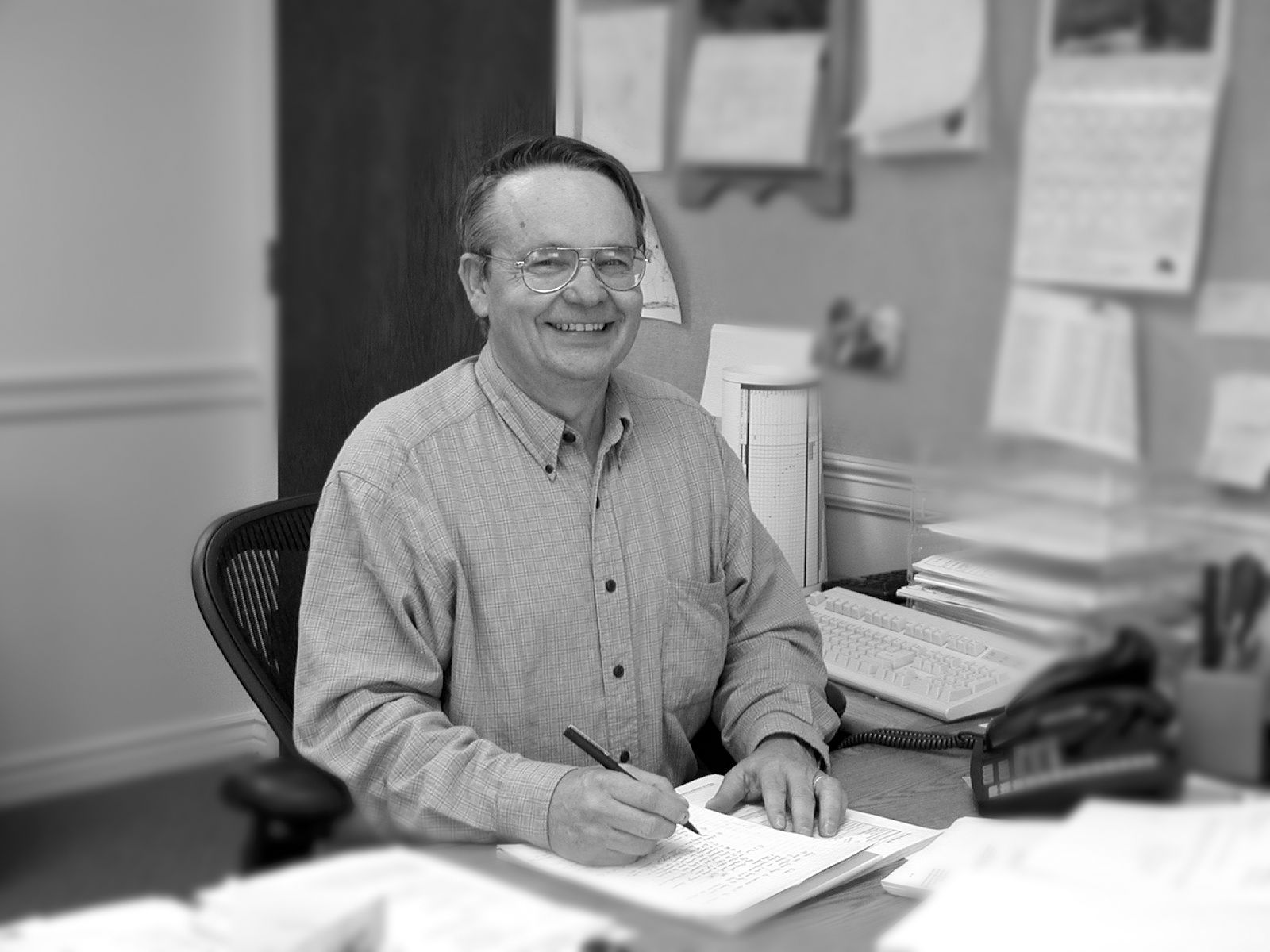

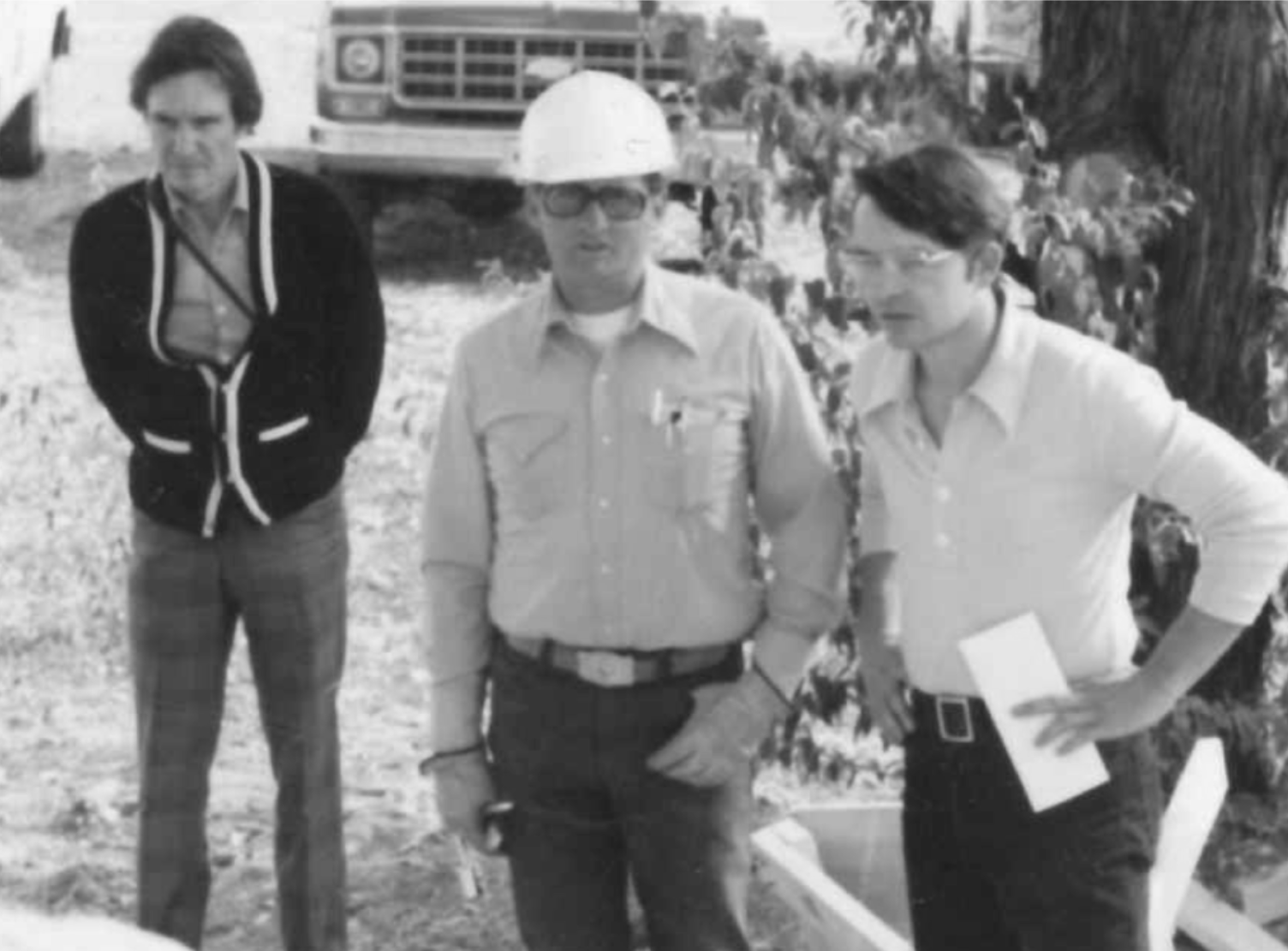
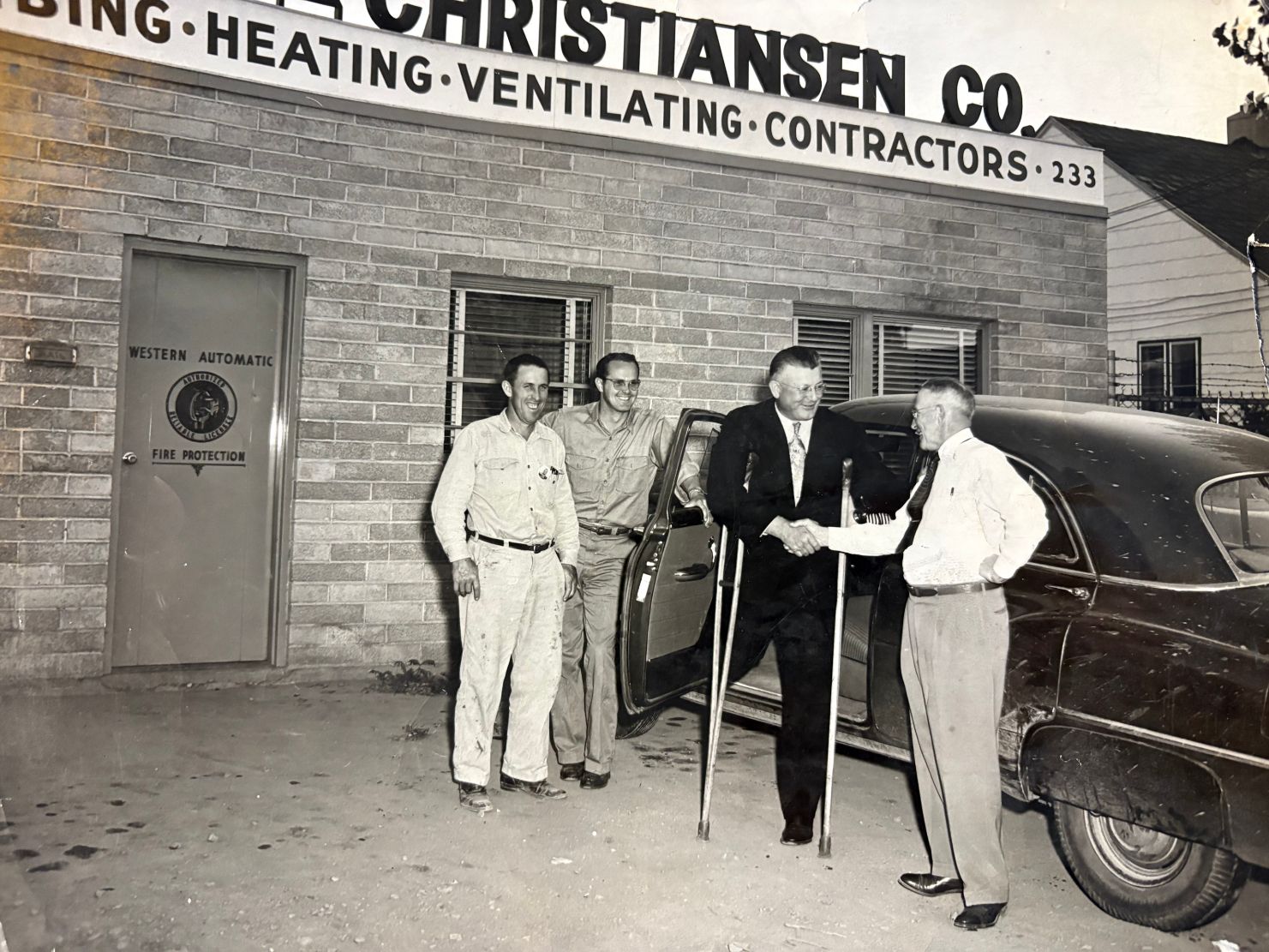
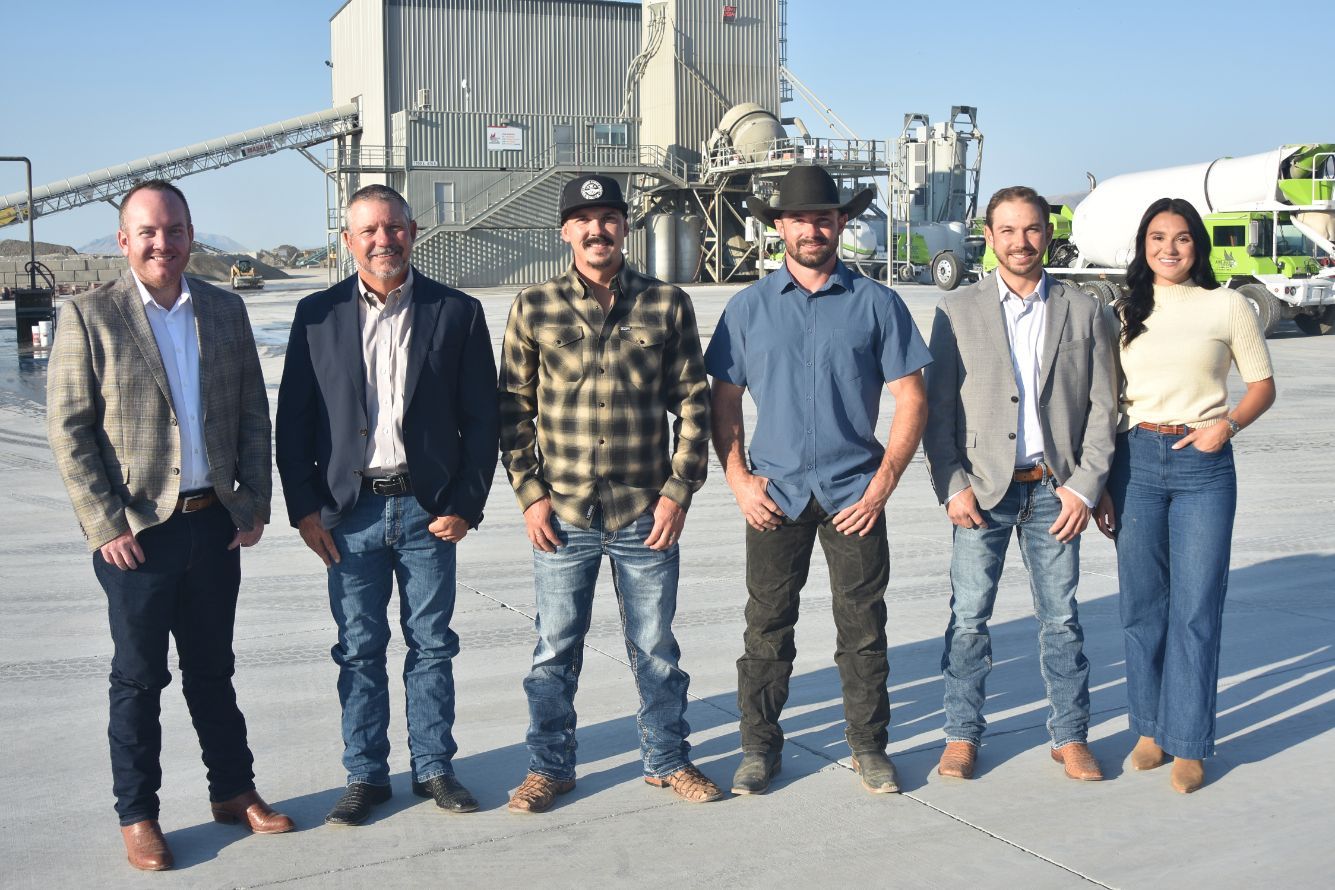
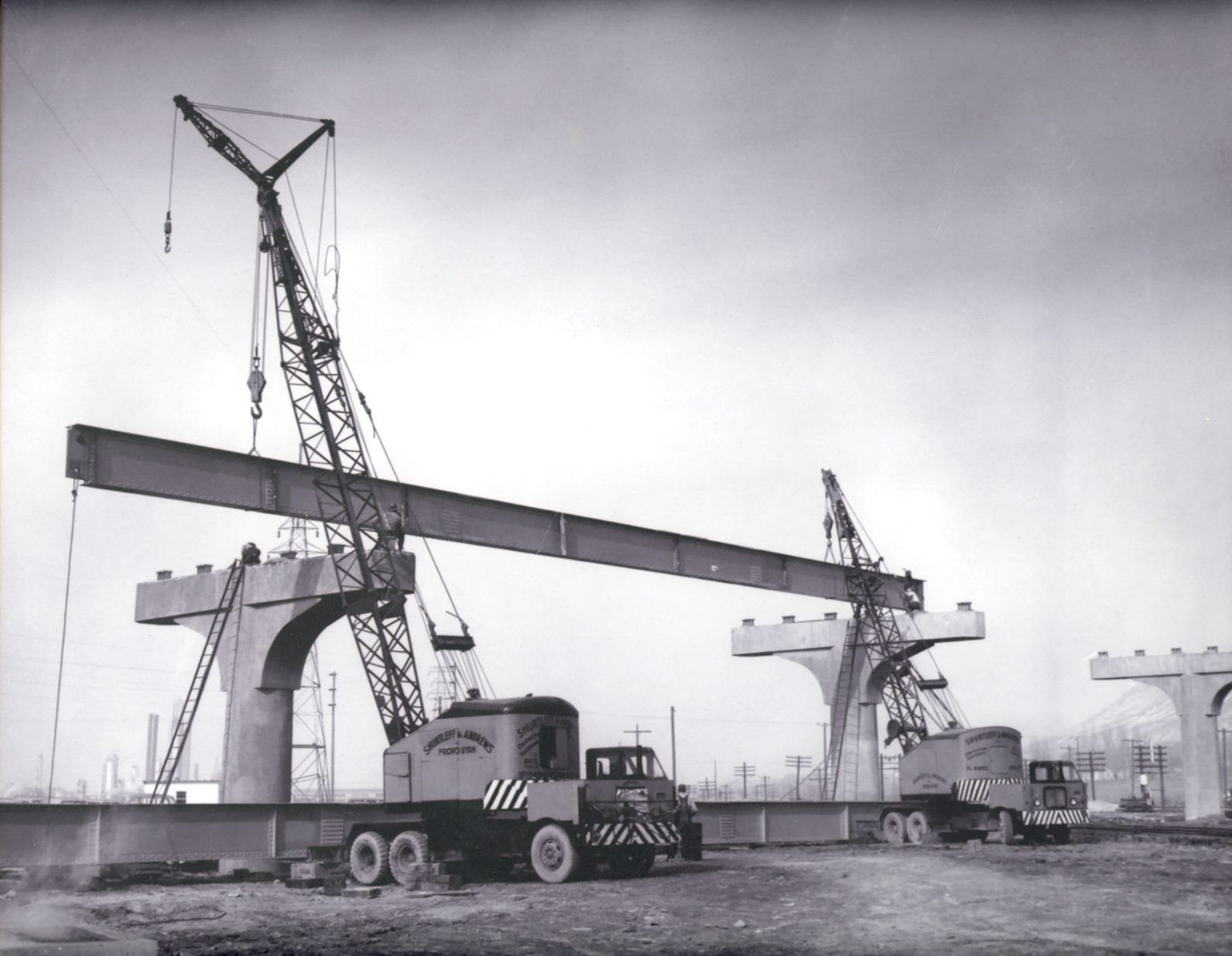
Hogan & Tingey Construction began after Eric Hogan (pictured top left; top right) returned from Air Force service after World War II. His son, Mike (pictured bottom; middle right), continued the construction legacy into a second generation.
Company Beginnings and Family Legacy
As World War II came to a close and Eric Hogan returned home from his Air Force service, he partnered with his childhood friend Daryl "Bud" Tingey to form Hogan & Tingey Construction.
"Dad had the construction expertise," said Mike Hogan of his father, who passed away in 2007. "He was raised in a family of Centerville rock masons, and [he and Tingey] became general contractors."
Where Eric knew construction, Tingey kept the books. The latter had a lumber source in the Pacific Northwest, a material in very short supply as the war ended. Their small firm built houses in Centerville and across Davis County—"home territory,” said Mike—for troops returning from the war. The company has operated in Centerville since its inception, with a pioneer-era brick home at 310 South Main Street as its first headquarters.
As Hogan & Tingey grew, they started building commercial buildings. Mike joined in at age 10 as a water boy, taking water to the workers. He worked under Superintendents Richard "Hod" Hodson, Clifford Forbush, and Arthur "Sparky" Forbush. ”They were all hard-working construction guys like Dad," said Mike.
Working in construction wasn't an expectation from his father, Mike described, "I just never did anything else." Mike continued working as a union carpenter, earning wages that helped put him through his engineering degree at the University of Utah.
With so much time in construction, why did the young builder choose engineering?
"I wanted to know the theory and understanding behind what I was doing," Mike said. "I wanted to know why concrete mixes work, the strength of steel beams, and why we built trusses in a certain way."
Mike graduated in 1970 and, after four years working for Morrison Knudson, earned his professional engineering license.
Three of Mike's sons followed their father into the family business, starting as laborers and progressing through the ranks. Andy created the company's safety program, building the safety culture that still permeates the company today. Eddy worked on jobsites for many years as he worked toward his college degree in Construction Management. He currently serves as Project Executive, overseeing and managing key projects.
Cris followed his father's career arc as a carpenter who worked through school to earn an engineering degree in 1995 from the University of Utah. Like his father, he never felt pressured to join the family business, saying, "Construction is just in my blood, and I never wanted to do anything else." He moved into the office during college as a scheduler using the cutting-edge P3 CPM software on a new 386 desktop PC running DOS. He joined the estimating team and then led it for more than a decade.
When Mike retired in 2019, Cris stepped into the role of President, the third generation to lead the company.
Pioneering CM/GC
But before the company's succession came a pivotal moment. In 1988, the firm submitted a proposal to serve as the construction manager on the new Northridge High School in Layton. The proposal requested a general contractor that would also act as the construction manager, providing budgeting and other preconstruction services, managing the bid process for trade subcontractors, and then serving as the general contractor to build the project—Construction Manager/General Contractor (CM/GC).
"That was right up our alley," said Mike.
The project would be a game-changer for the company and the local construction industry, as the new delivery method came to town.
"[CM/GC] was taking off nationally," said Mike of the state of the industry at the time. "Owners were starting to think how low bid wasn't working for them."
Cris mentioned how the company was already involved in that type of work in an unofficial capacity, and jumped at the chance to be the “first in Utah” to work in a CM/GC capacity when the delivery method became contract-based and formalized with Northridge High.
"[CM/GC] is relationship-based," said Cris, mentioning how the contractual agreement that prioritized working in a spirit of quality and collaboration fit their values like a glove. "We care. We want things to be done right."
The Hogan team, with Mike as Project Manager and "Hod" as Superintendent, enjoyed the experience under the new contractual agreement. Mike detailed how that first CM/GC job removed the adversarial relationship among stakeholders inherent in low-bid contracted projects.
Who would have guessed?
Not only did the job go well, "The Davis School District saved all kinds of money and got a better end product," said Mike. "And so then from there on, not only Davis, but other school districts started doing the same things, and then it spread to other public entities."


The company became Hogan & Associates Construction in 1995 after Hogan and Tingey split, and continued to develop iconic projects in Utah, including South Davis Recreation Center, Moab Regional Hospital, and Millcreek Common.
From Hogan & Tingey to Hogan & Associates
The firm partners went their separate ways in 1995. Mike and Cris described the division as amicable and respectful; one that allowed each company to pursue its desired goals. While the Tingeys' efforts diversified beyond the construction industry, the Hogans would pursue commercial construction.
With Mike as President and Cris as Vice President, the company purchased and moved into the Ideal Concrete batch plant in Centerville, which would serve as headquarters for the next 17 years as the newly named Hogan & Associates Construction.
The 25-member field team was supported by four teammates in the office, with longtime employees Dennis Forbush and Dave Andersen shifting roles from superintendent to project management. Capable management, active projects, and a half-century of good customer service helped the company expand quickly across the Mountain West.
One landmark project at the time was the new Star Valley High School in Afton, Wyoming. Forbush, who was experienced with out-of-state construction, managed the project after serving as superintendent on several distant projects for the company, including two for the Navy in California.
Another memorable job came as Mike and longtime employee Bob Bennion led a complete remodel, seismic upgrade, and eight-story addition to Questar Gas's Salt Lake headquarters.
"I just remember trying to drive piles right by operating natural gas generators, that was exciting," Mike said as he smiled, underselling the complexity of the job.
Cris jumped in to remember conversations as those piles went in. "You can't shake the building!" he repeated as he laughed from the comforts of their present-day headquarters.
Self-Perform as a Core Competency
Hogan Construction has always been a general contractor that sought to self-perform much of the work. It began with concrete, but as opportunities came along, the firm would build a team to fill the need. One example is an addition to the Cokeville High School in Wyoming, where the firm couldn't find a masonry contractor willing to bid on the project. So the Hogan team stepped up, got out the trowels, mixed up the mortar, and laid the CMU blockwork.
While it may have been in Eric Hogan's DNA growing up in a family of masons, both men laughed that it would be the first and last time the company self-performed the masonry scope.
Reflecting on doing masonry in the unforgiving environment of Wyoming, "It was hard," said Mike. "It was a whole different world."
Over the years, the company developed in-house capabilities to self-perform excavation, site utilities, structural and miscellaneous steel fabrication, steel erection, rough carpentry, millwork and stone countertops, and finish carpentry.
"It highlights our values, and the first one of them is being a builder. We build," said Cris. "We come through the trades, and it's important to us to be the guys that physically build something."
The firm's current Centerville headquarters is a case in point. After moving out of the batch plant as Legacy Highway went in its place, the company constructed an office that would serve as a testament to their self-perform prowess, according to Mike. "We wanted to make a place that would emphasize what we're good at."
It's also a testament to the quality of people working at the firm: "It was built by the craftsmen we have here," Cris smiled.
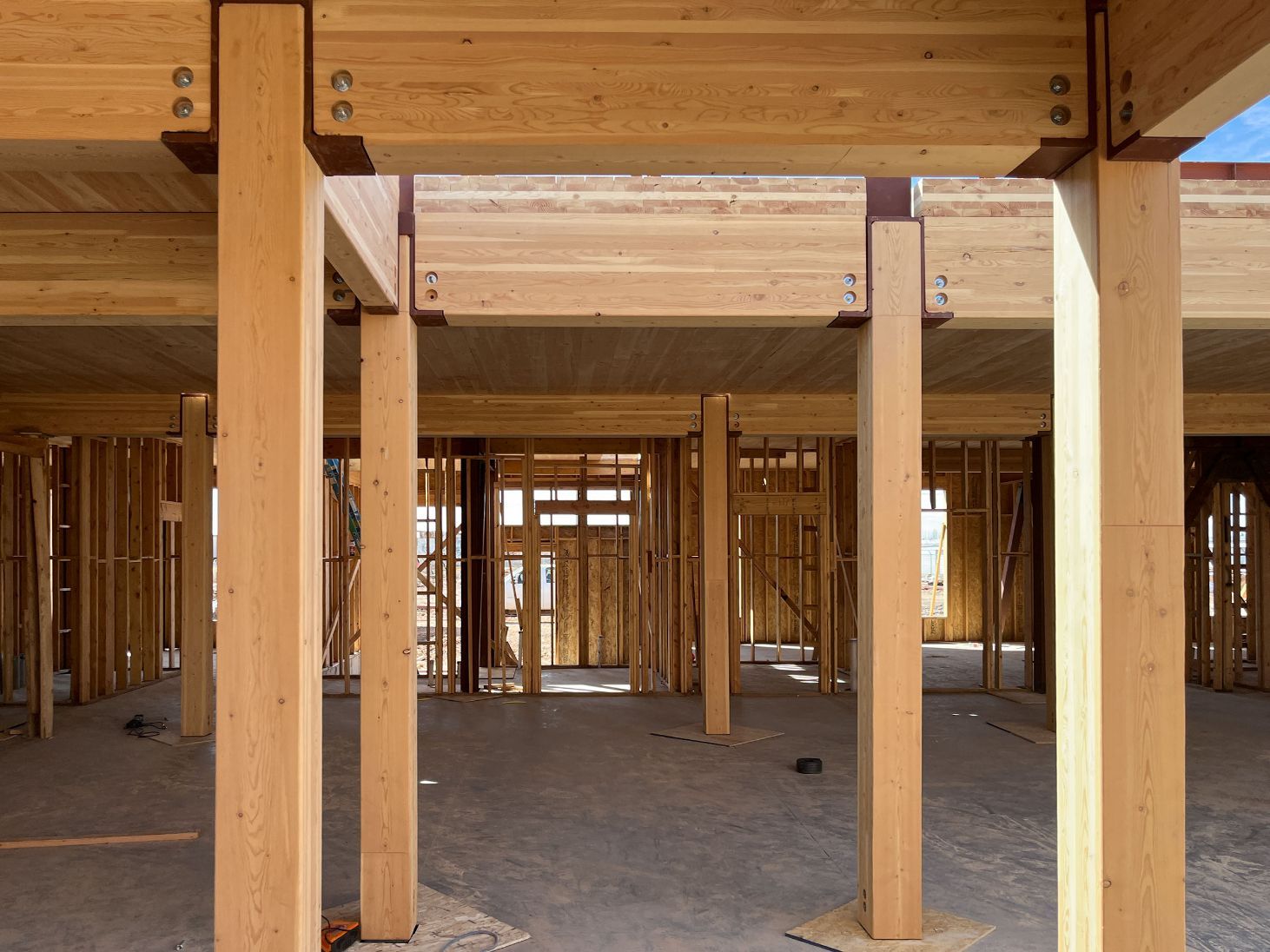
Brett Horne, longtime employee and General Superintendent, helped mill and install the wood finishings and post and tendon beams, which Mike said are not just a façade that covers structural steel, but are assembled in true pioneer fashion with actual wooden dowels holding them together.
All of the walls at the office are tilt-up concrete—with a twist.
"If you look at the outside of the building, we inlaid images right into the concrete to make it a showpiece of a construction scene, using photos of Hogan's actual projects, then under construction," said Mike. "You can even recognize the people doing the work."
Just above the glass ceiling of their conference room is one of several heat pumps that make up the building's ground source heat exchanger system. The purpose of the glass ceiling is to demonstrate the company's capabilities to build financially and operationally efficient systems.
The two said that self-performing allows for greater control on the job—quality, scheduling, and cost—to ensure a high-quality building that maximizes value for owners and the community.

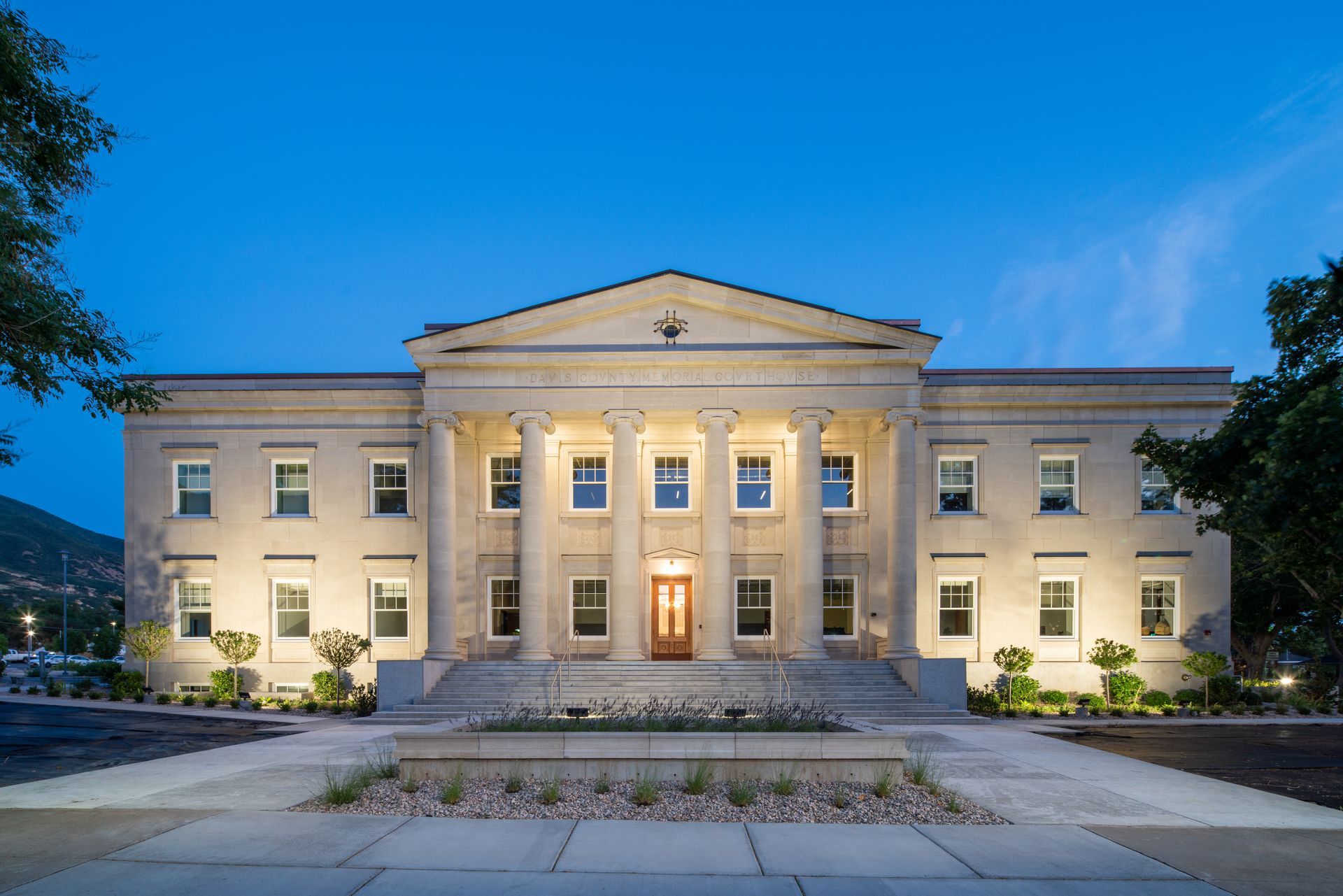
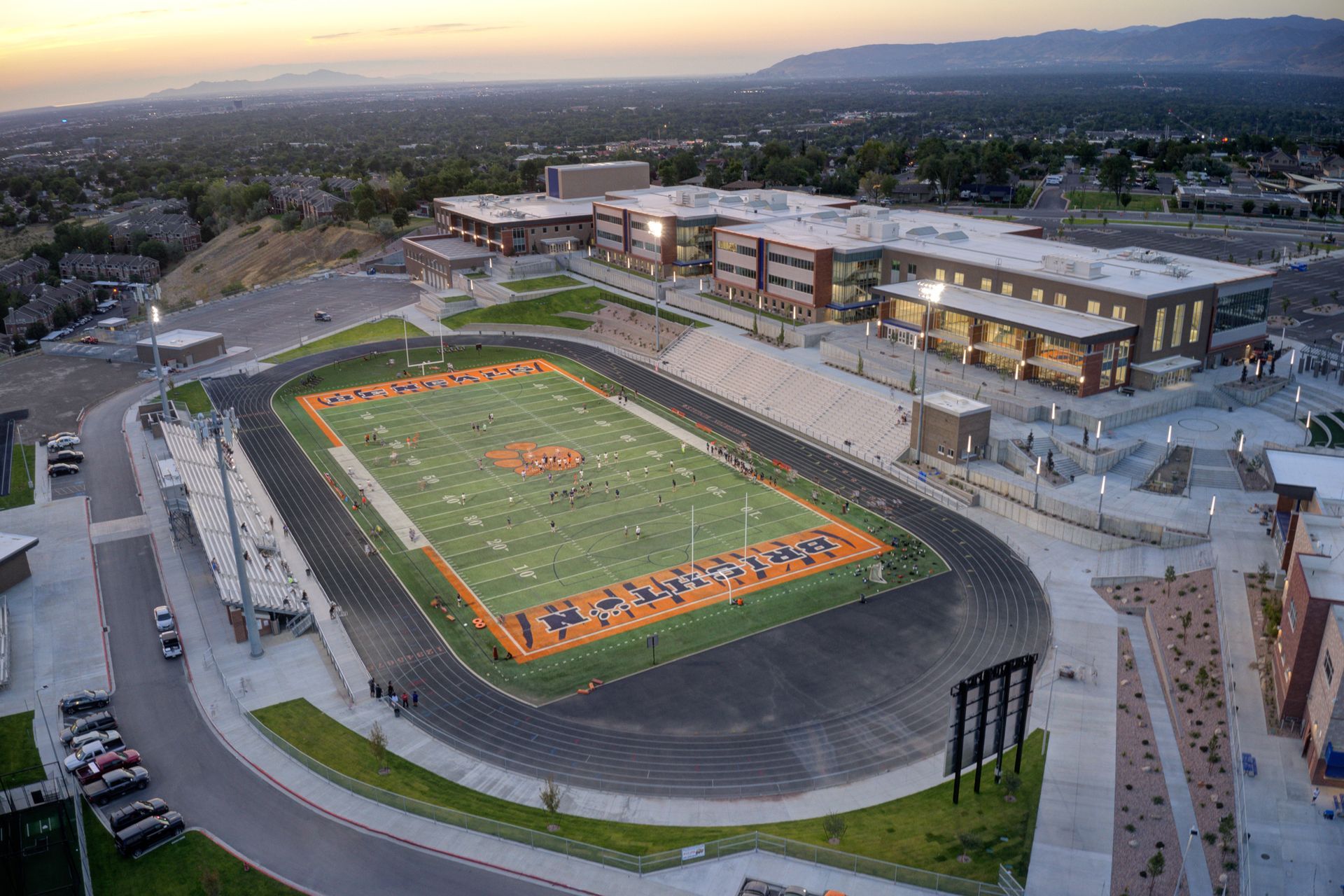
The Centerville-based general contractors were the first firm to utilize CM/GC as a delivery method on Northridge High School (pictured).
Community Builder in the Mountain West
Both men shared a sense of personal pride that the firm that bears their family name seeks projects that enhance a community.
"It's always been that way. When Grandpa started, he was building homes for the vets coming back," Cris said. "We are continuing that tradition with our emphasis on public buildings that enhance the communities we work in."
While the company exited the residential construction realm, it has pursued public and institutional markets and delivered top-notch publicly funded projects, from historic renovations, parks, or the six fire stations in various stages of development the company is currently building. Mike said the steady nature and amount of projects, and the payment guarantees that come from public work, mesh well with the company philosophy, bringing value to their clients and ensuring taxpayers are getting the most for their money.
What better way to build a community? The question may be rhetorical, but Mike emphasized that the personal and professional combine to create noteworthy experiences in which their teams thrive.
"Our employees feel a purpose, a deeper purpose, where they are contributing to the well-being of a community," said Cris. Hogan believes in that value and purpose so much that the company trademarked "Utah's Community Builder".
Mike cited the firm's work on the Legacy Theater in Centerville as just one nearby example that stands out.
Cris agreed before he quipped, "And I have season tickets there. I go there every month!"
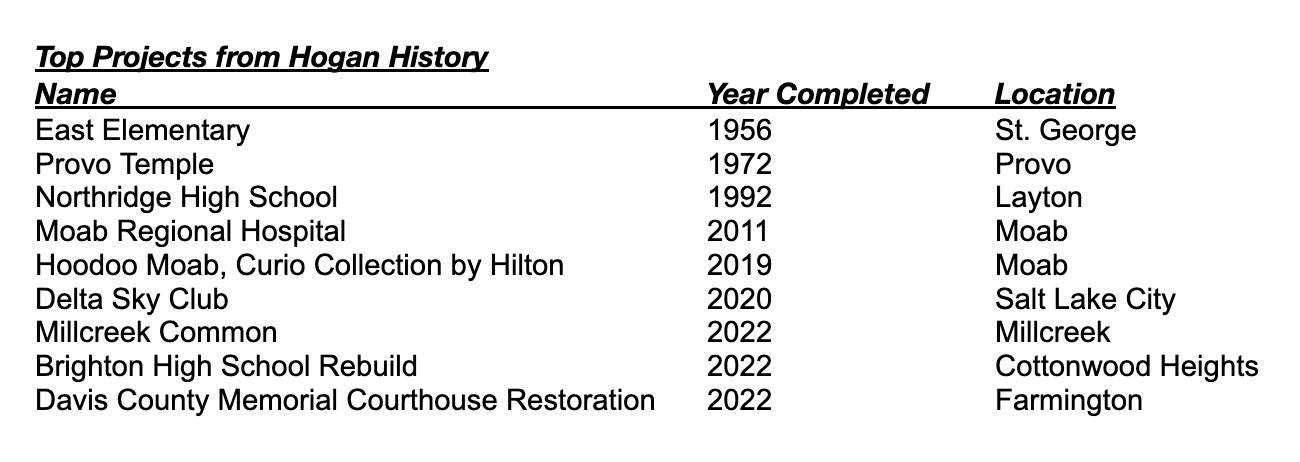
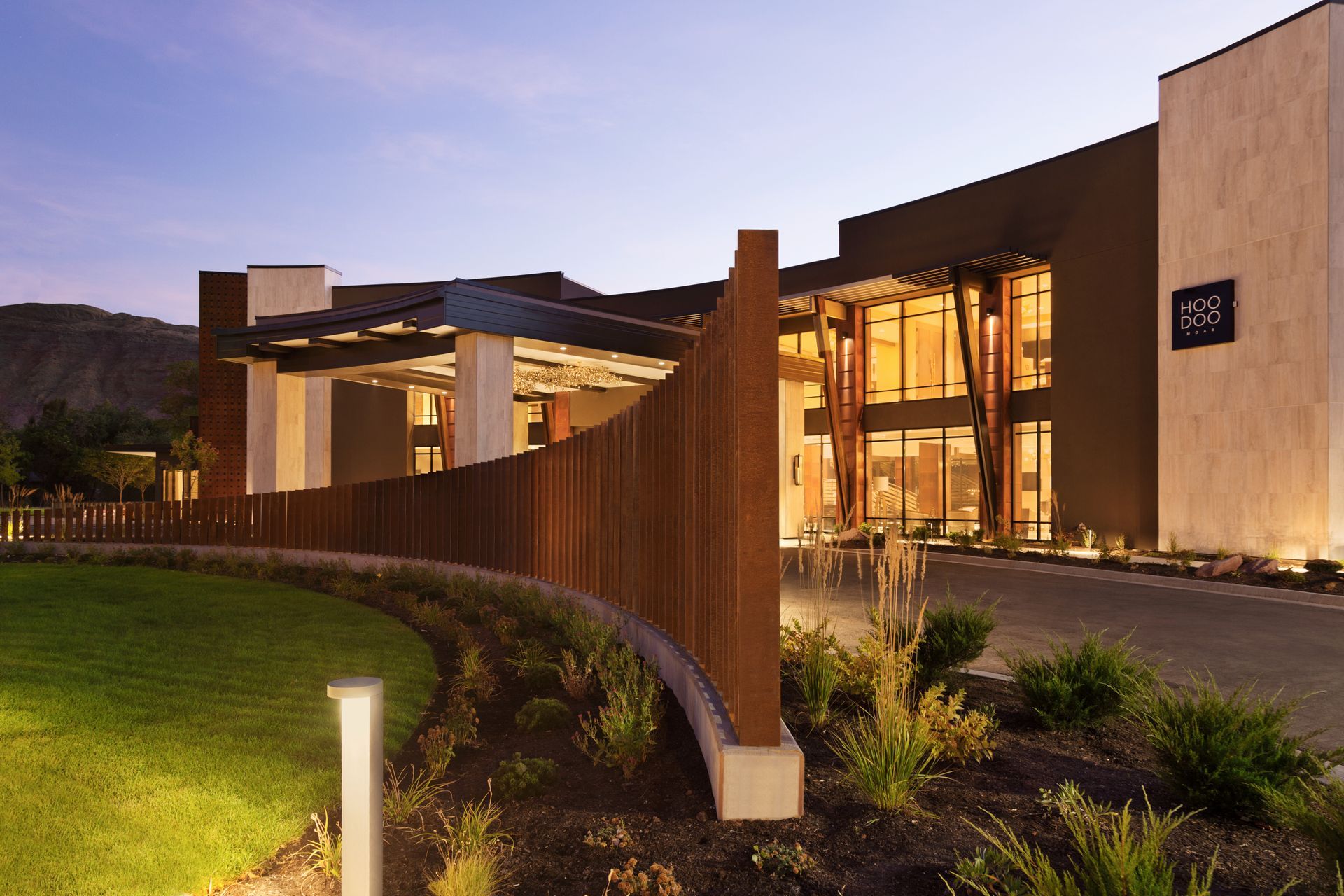
Within Hogan's 80-year history, the firm has completed other commercial work, including hotels (a more recent development), healthcare, historical preservation, and corporate office projects.
Wherever they win work, Mike pointed out, "We try and hire locally as much as we can," he said. "We try and use people that are close [to our projects], whether they're on our payroll or subcontractors."
He said that way of working has created treasured relationships with employees, trade partners, and clients, and has built a stellar roster of talented people who intimately know the areas in which they work, many of whom stayed with Hogan Construction after their projects finished.
Asking Mike and Cris to name the remote locales where Hogan teammates live is a lesson in rural Utah geography—Gunnison, Fountain Green, Monroe, Eden, Mendon, and Delta are all mentioned. One superintendent even lives across the border in Evanston, Wyoming.
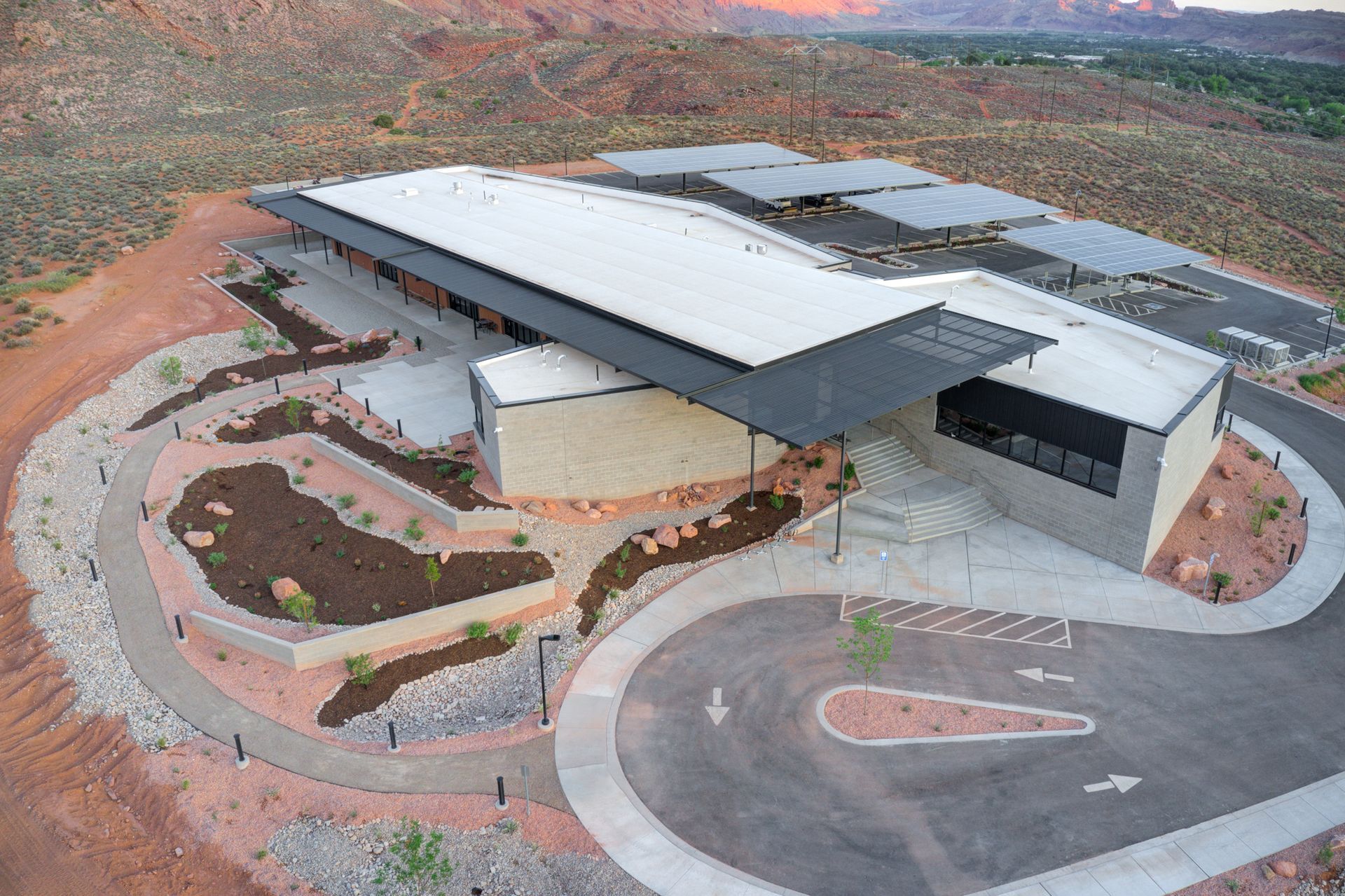
The contractor has followed this build-where-you-live ethos to complete projects throughout the Mountain West. Whether traveling in reverse from pioneer routes to Wyoming communities like Rock Springs, Farson, and Pinedale, north to Idaho Falls, Soda Springs, and Preston in Idaho, or even south to Monticello, Blanding, and Moab, where the firm completed Utahraptor State Park earlier this year, the firm is willing and able to create the built environment for all communities to succeed.
"A gratifying thing for everyone in the company is driving around with your family and seeing our projects and telling them, 'I helped build that!'" said Cris.
"You really feel like you're contributing." Mike agreed. "You feel like your life means something."
Emerging as a Premier Builder in Education
Perhaps their most notable market has been education. Since the first education job, East Elementary in St. George, which first welcomed students in 1956, the firm has become synonymous with delivering high-quality, award-winning learning environments for public and private clients ranging from K-12 to higher education. Among the builder's 386 education projects completed since 1945, many are particularly meaningful to specific individuals.
"It makes me feel good to think that I built an elementary school that's right by where Cris lives," said Mike of Endeavour Elementary in Kaysville, which he personally managed. "My grandkids went to the school that I built. We put a lot of effort into little extra things at that school to make it extra special, because of those kids that were going there."
More recently, the company partnered with local school districts to build a total of 17 "teen centers" to give greater stability and opportunity to students currently experiencing homelessness or other difficult situations at home. Teen center facilities include kitchens, food pantries, laundry and shower facilities, study areas, and other services to help students get back on their feet.
Hogan Heads to the Future
From wherever they hail and in whatever market they pursue, the firm's team of 275 people continues to hold fast to their core values and build communities. The inclusion of "Associates" in the firm's name is purposeful, with Cris saying he is acutely aware of the personal responsibility he has as a leader to provide the means for his associates to support their families.
The company recently hosted employees, clients, and trade partners in a celebration of Hogan Construction's 80th anniversary. Mike and Cris described the festivities as a good experience where everyone could see fellow "associates", clients, and trade partners, and celebrate the milestone together.
When asked for lessons learned over the years, Cris laughed—he has a book-full, an ongoing note he calls "The School of Hard Knocks."
One lesson in "The School of Hard Knocks" is more positive than the title lets on: "It doesn't matter what you're doing, it's all about people," said Cris before smiling as he continued, "Construction is a tough business. There are some real hard-headed, type-A personalities."
The key in all of it, to which he credits his father for teaching him by example: "Listen first. It's so hard to do, but if you listen and promote understanding, you can come up with better solutions."
In such a challenging industry, listening has served Hogan Construction well over the firm's 80 years of building, helping it develop the best solutions. Mike, Cris, and their team of associates have listened closely, holding true to their values to build up strong teams and even stronger communities.
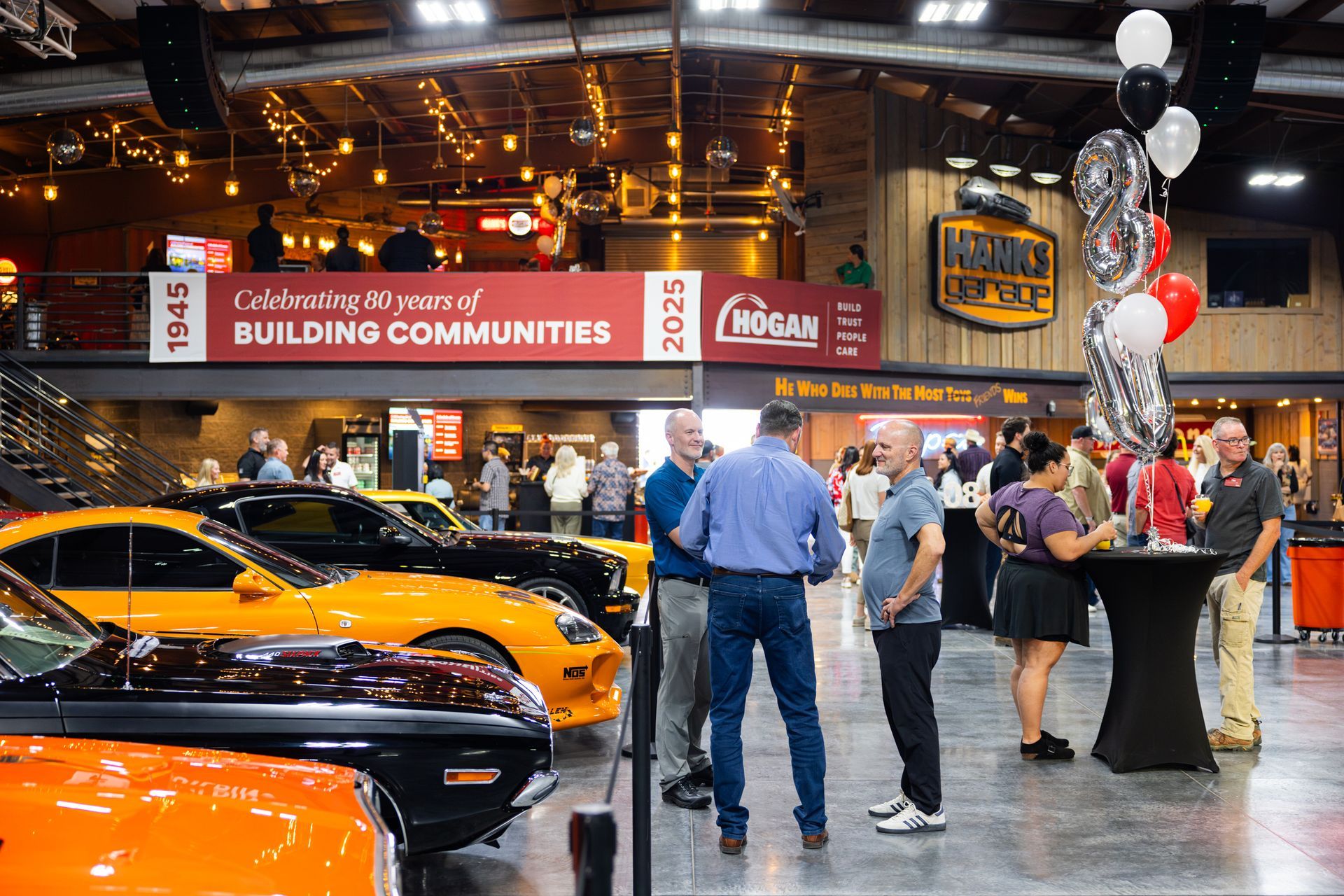
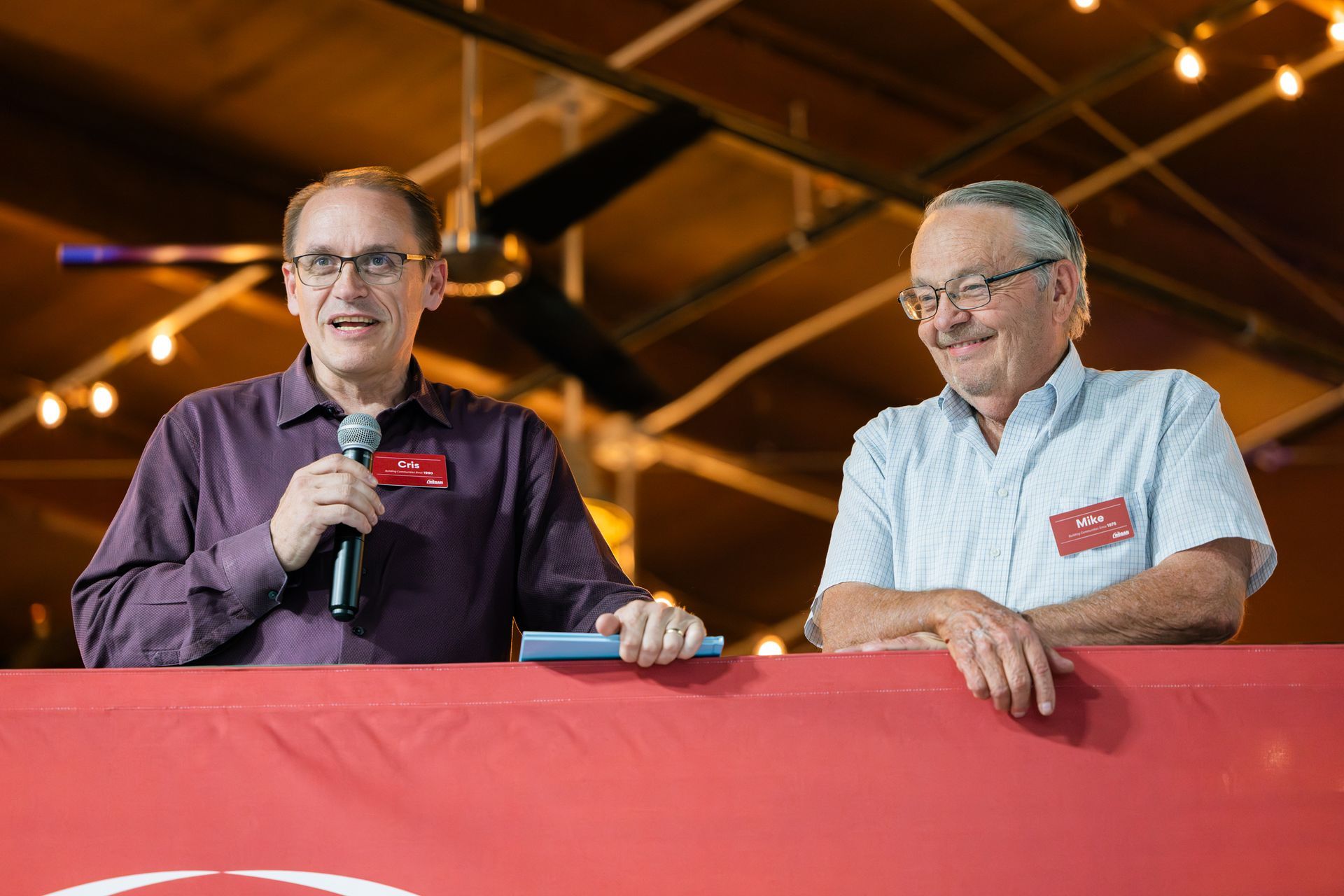
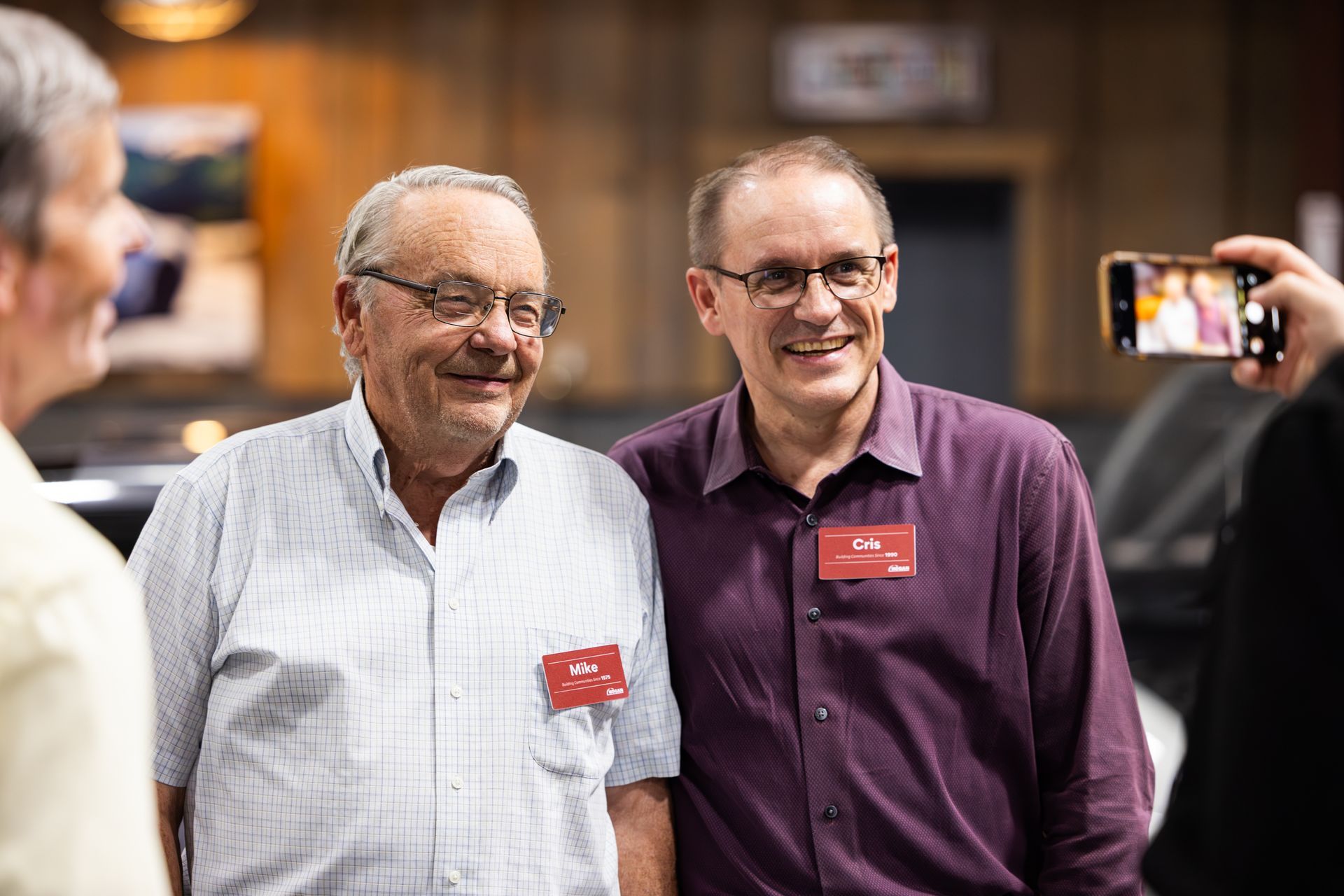
Hogan Construction’s 80th Anniversary party in September was an excellent way for Cris (below, in red), Mike (below, in white), and the rest of the team to enjoy camaraderie and celebrate the firm’s historic milestone (event photos courtesy Kyle Aiken Photography).