






BLAST OFF!

Innovation, creativity fuel design and construction effort of dynamic Central Elementary and Christa McAuliffe Space Center.
By Brad Fullmer
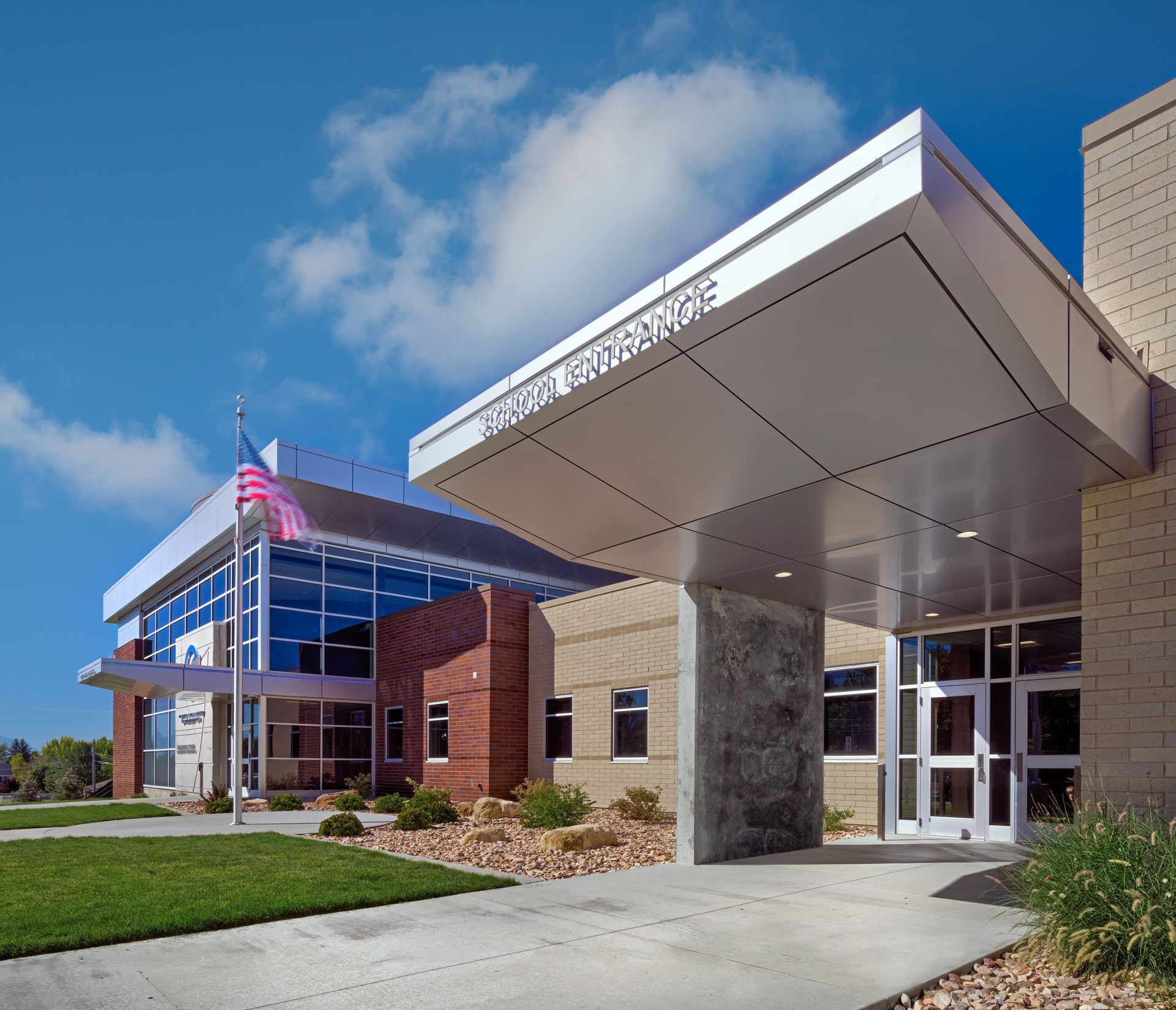
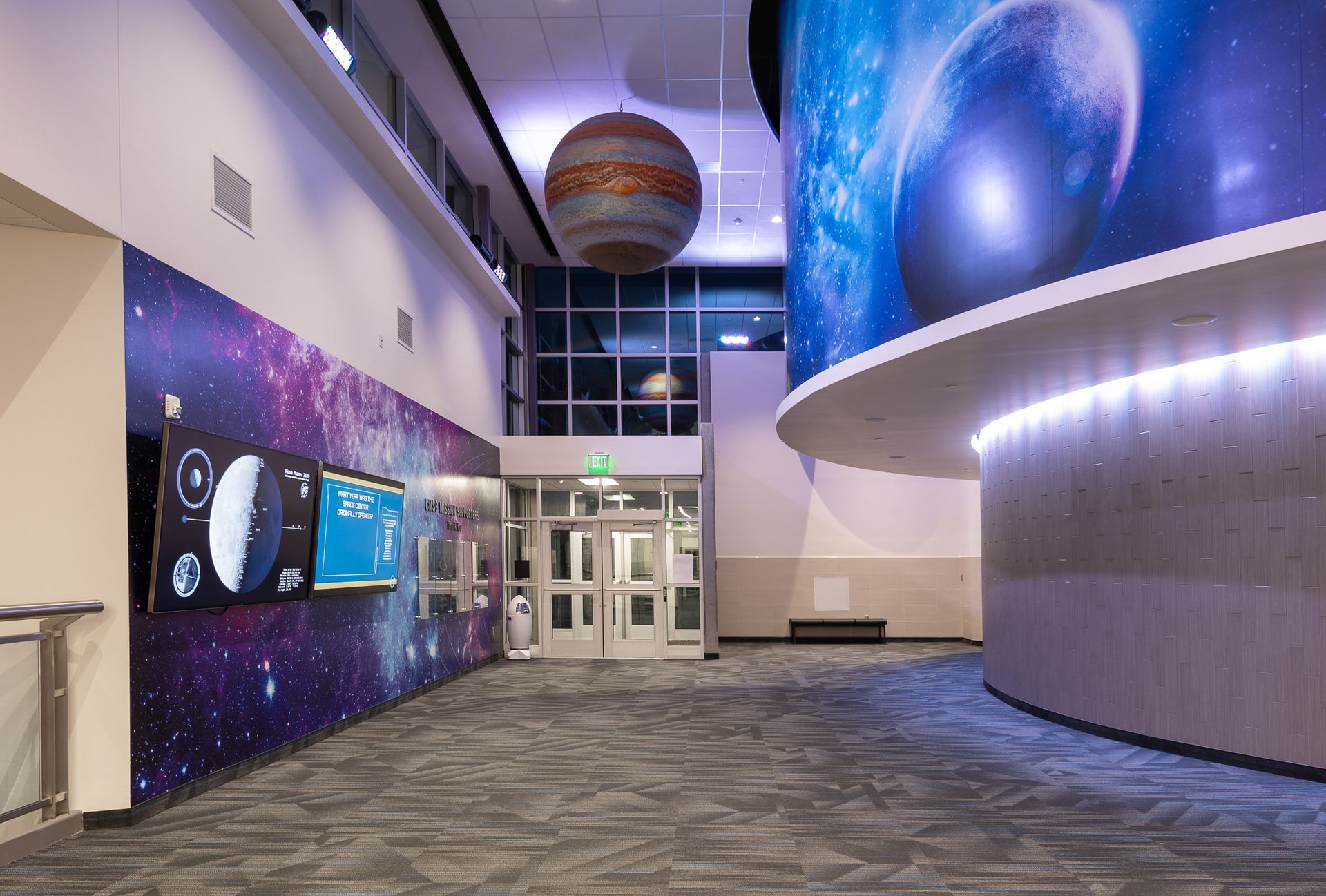
The newly renovated two-story, 72,000 Christa McAuliffe Space Center in Pleasant Grove will inspire thousands of young minds for generations to come (all photos by Alan Blakely, except where indicated).
For more than 30 years, few projects in the K-12 market have inspired minds young and old like the Christa McAuliffe Space Center (CMSC), originally built in 1990 next to Central Elementary in Pleasant Grove. 

An estimated 400,000 participants have performed science-based space adventure simulations since the unique center was designed and built in 1990, becoming one of the most beloved facilities in Utah County over the years. 

Centerville-based Hogan & Associates Construction completed the complex renovation of both projects in fall/winter of 2020–2021, including the two-story, 72,000-SF Central Elementary within 10 feet of the existing building on one side and adjacent to a property line the other, a challenge feat by any measure.

The tight exterior envelope of both the school and center includes brick masonry, tilt-up concrete, metal panel accents, and aluminum storefront glazing—all selected to provide a high-tech look. The school is also NetZero-ready with photovoltaic arrays and energy-efficient HVAC and lighting systems.

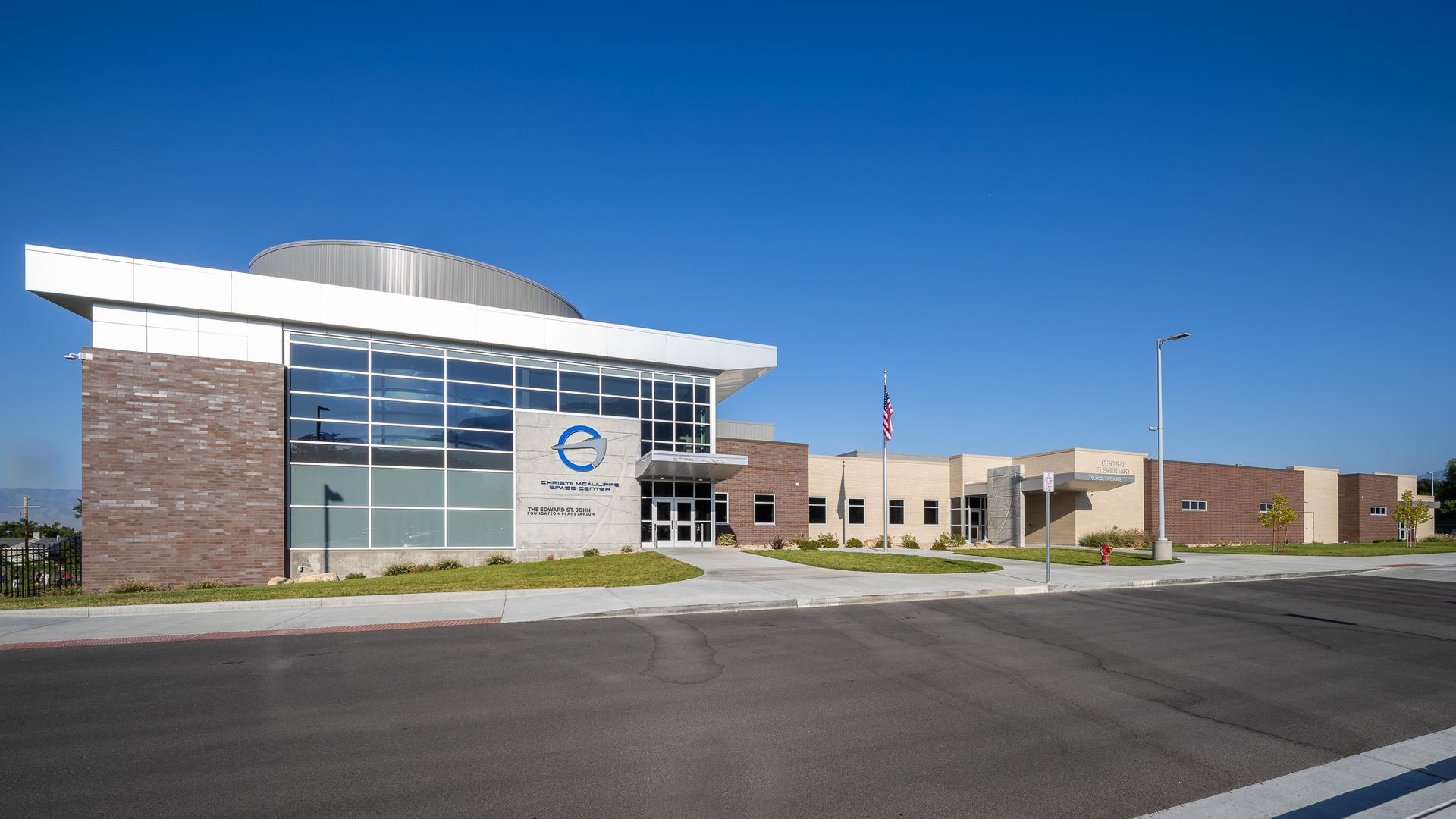
Because Central Elementary and CMSC are separate facilities with differing functions, the design team mirrored this architecturally. VCBO's material selections included Atlas brick for both facilities. The firm combined brick with glass and tilt-up concrete to create the space center's structure. 

These materials helped visually distinguish the space center from the elementary school while creating two durable buildings. The distinct designs maintain internal compatibility, with many of the facilities' functions working together. These include the space center utilizing the elementary school's classroom spaces and the lunchroom when needed. 

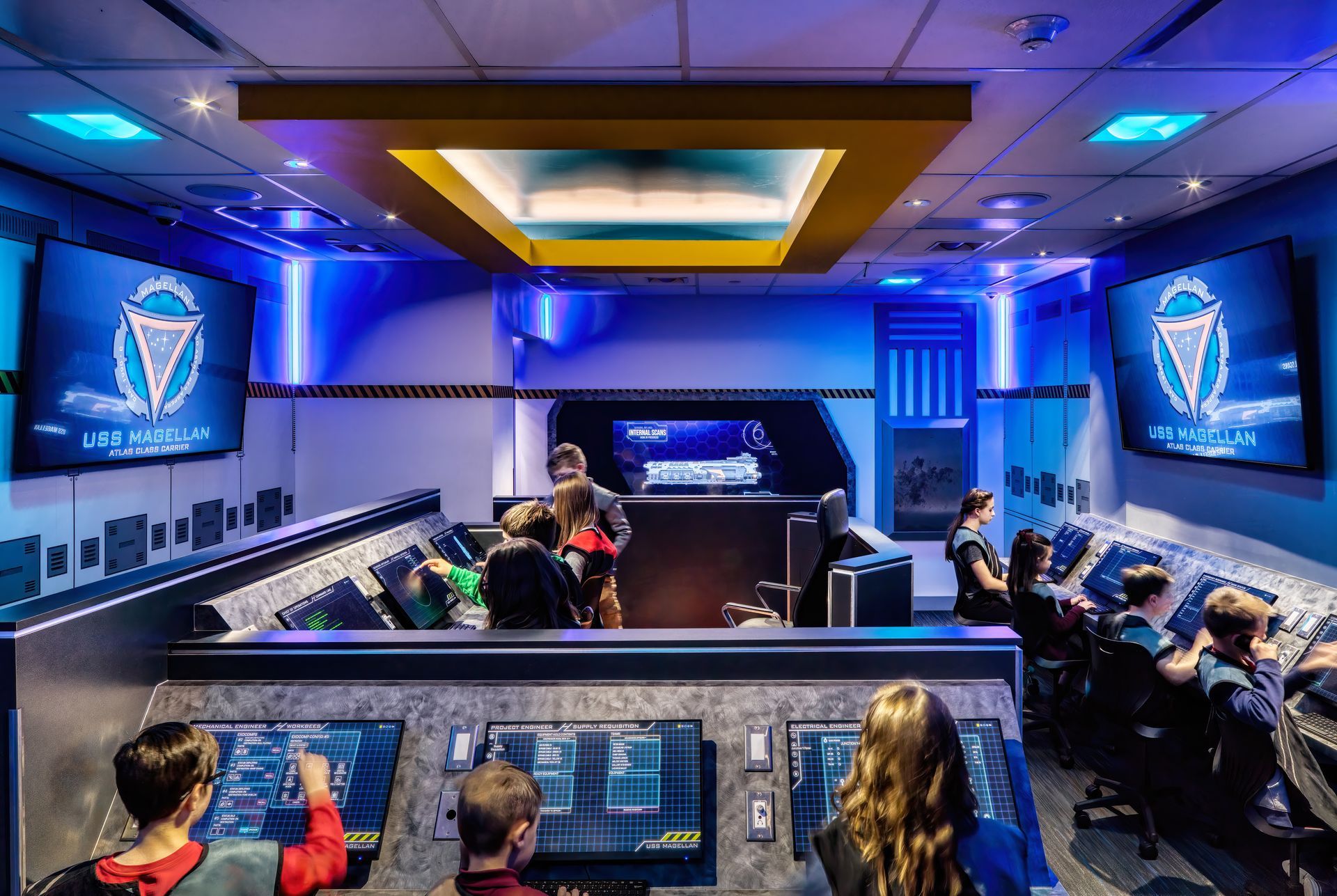
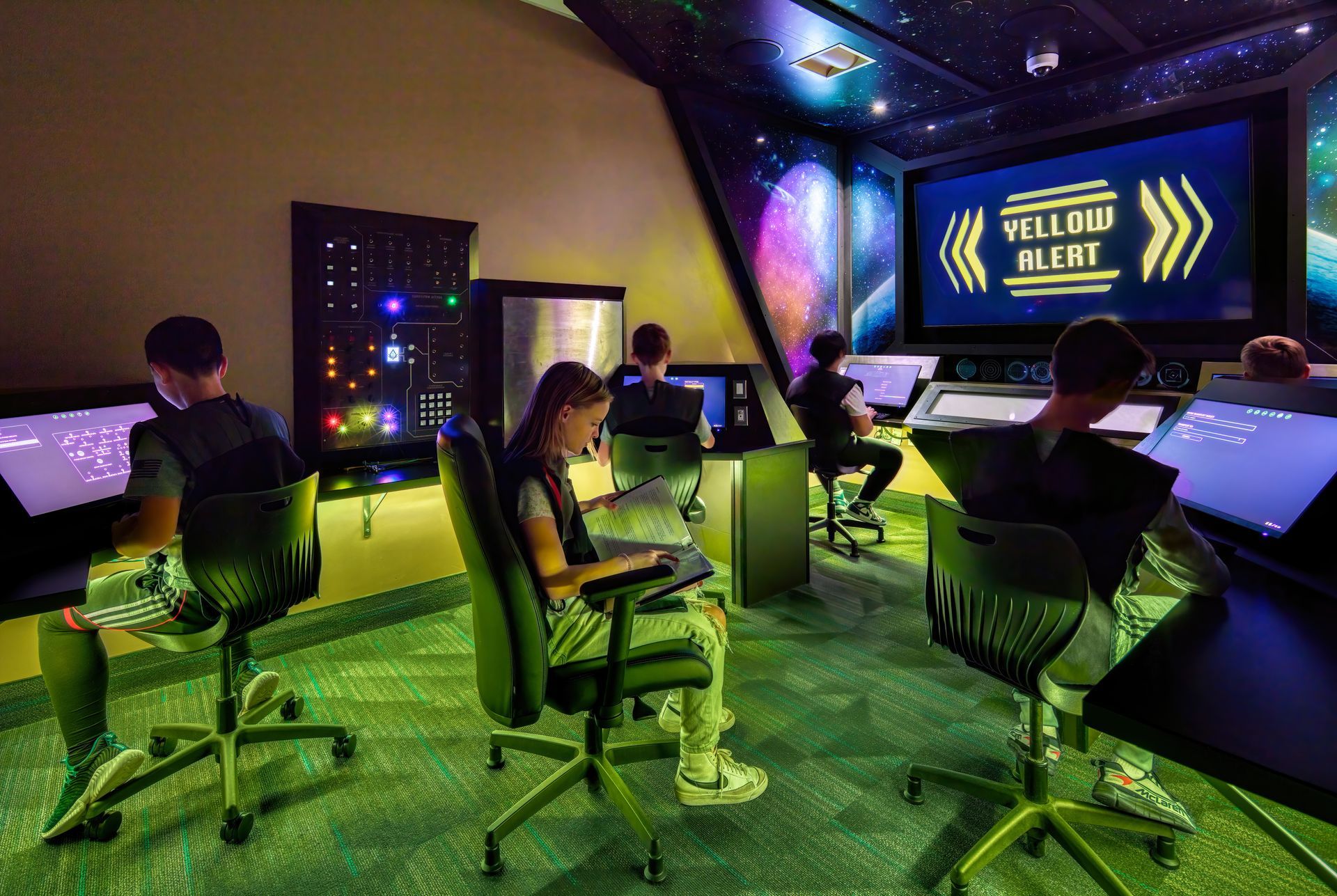
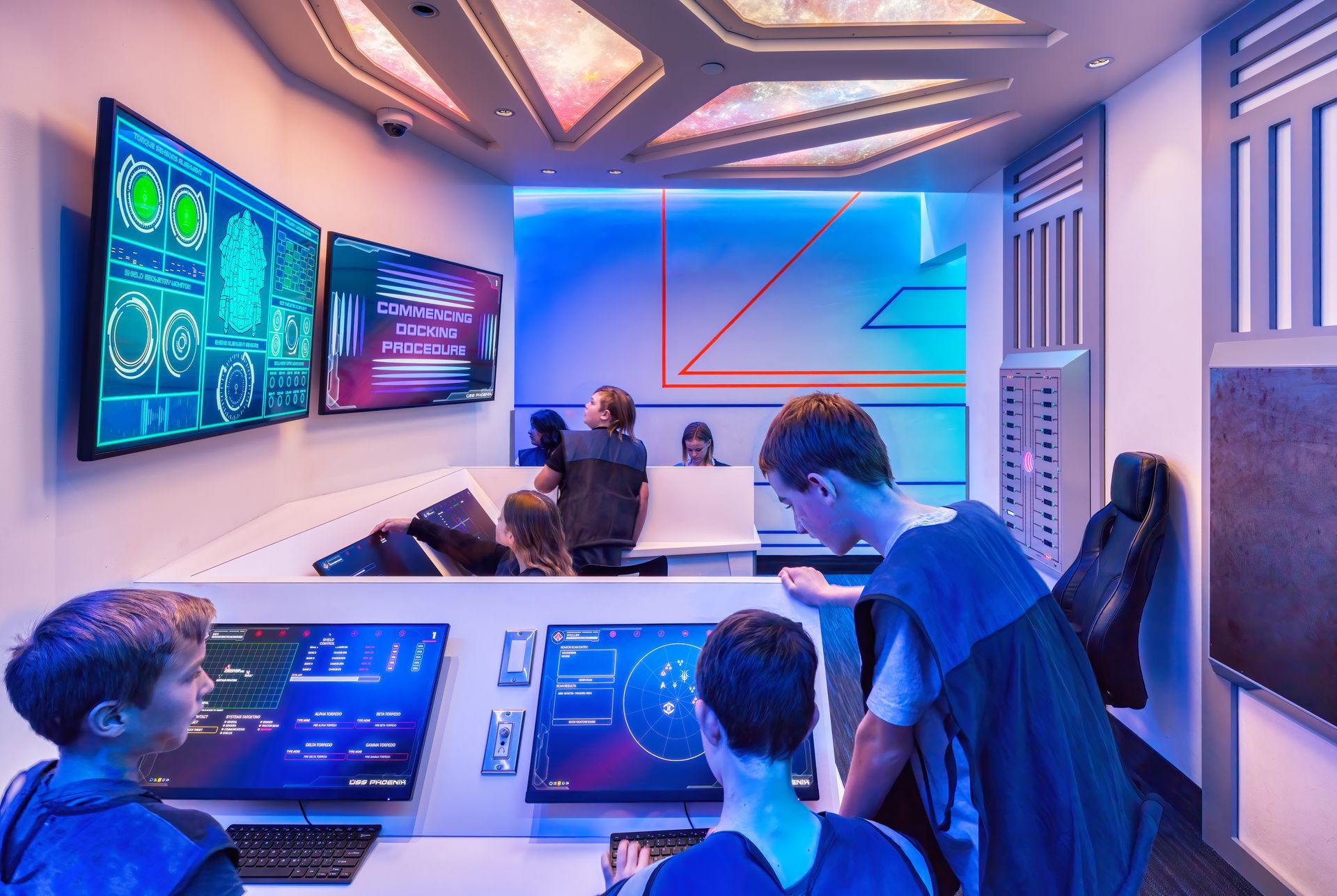
The cutting-edge, 9,569-SF CMSC is connected on the south side of the school and includes a 40-ft planetarium dome with 70 raised theater seats, a state-of-the-art digital projection system with surround sound, and advanced theater lighting. It also includes six captivating starship simulators with astronaut seating and an intricate network backbone. 

The six simulators create an immersive spaceship environment where students can envision themselves in leadership, engineering, science, and other roles, while encountering curriculum-based challenges—all designed to spark the imagination of the next generation of space explorers. 

“As I’ve told people [in the past] as I’m working on this particular project, many said ‘I’ve been there’ and are very familiar with it,” said John Cox, Project Director/Vice President for Hogan & Associates. “It’s a program that is renowned for what they teach kids regarding space. It does more than just educate—it’s a team building experience where students have to work together to solve problems and find solutions. For me, it was not only building a new school but being able to add a space center than was complex. It has a rich history.”

Construction phasing needed to be precise given that it was rebuilt “around the old school, in some cases within 15 feet,” Cox said. That required challenging shoring and underpinning efforts, unique for a K-12 project of this scope. A ground source heating system designed by Salt Lake-based VBFA added to the complexity of the phasing. The system offers redundancy and offers better, more flexible energy usage. 

  • Slide title

    Write your caption here
    Button
  • Slide title

    Write your caption here
    Button
  • Slide title

    Write your caption here
    Button
  • Slide title

    Write your caption here
    Button
  • Slide title

    Write your caption here
    Button
  • Slide title

    Write your caption here
    Button
  • Slide title

    Write your caption here
    Button
  • Slide title

    Write your caption here
    Button

Cox said K-12 projects have become more intricate and detailed during his more than two-decade career.


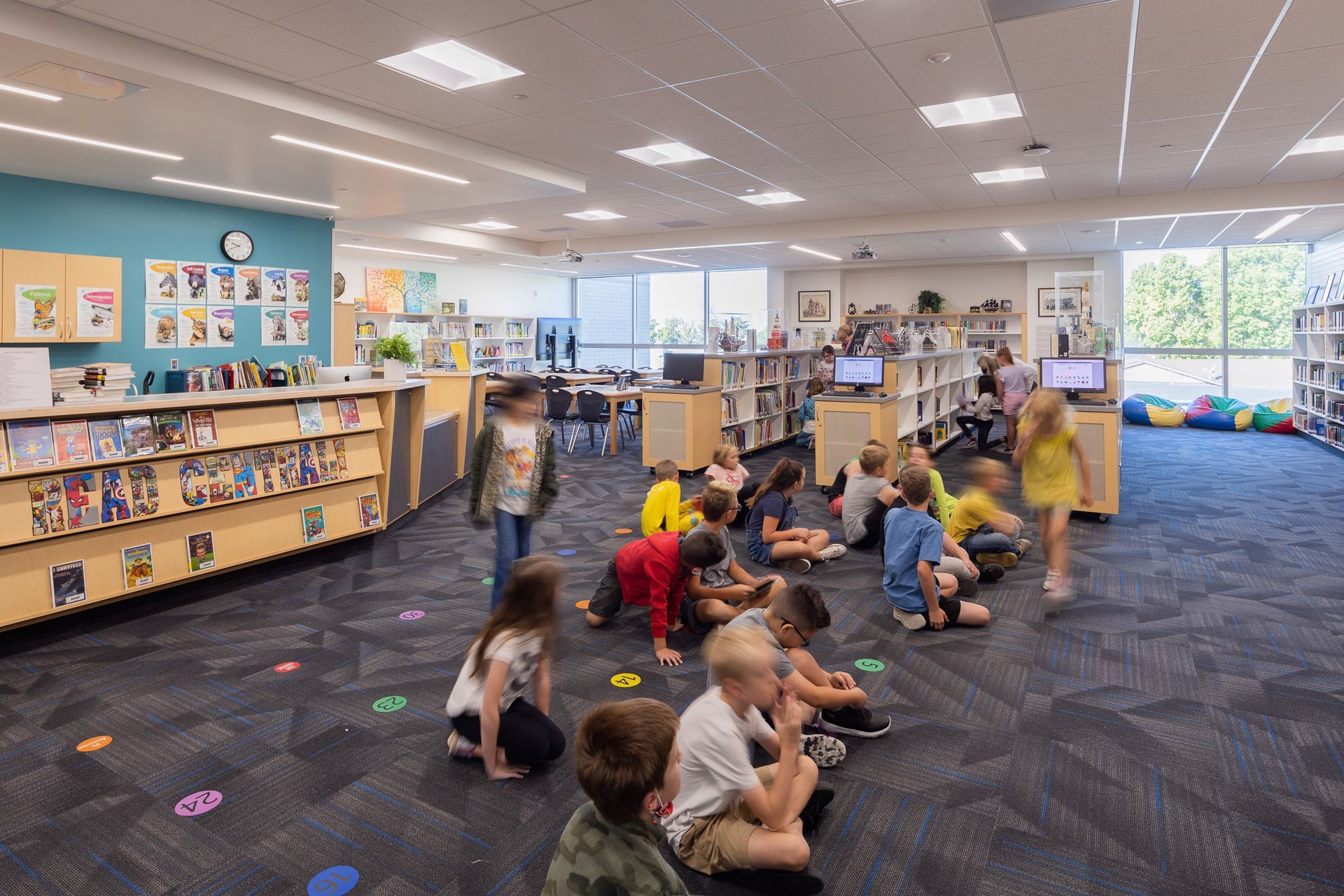
“I think the biggest difference is how much more complex the facilities are, but also they’re more conducive to the learning environment,” Cox added. “Schools I went to were fine, but there was not a lot of thought to collaborative teaching and learning. There are steps to make sure schools are being built at a level that improves learning.”


The new building is a significant upgrade to the treasured space center, and it allows students from all over Utah to experience and learn about astronomy and other STEM-related curricula in an adventurous, future-forward way that few facilities nationwide can match. By marrying architecture and construction with the space center's vision, the project team created a shining example of what K-12 education can be.


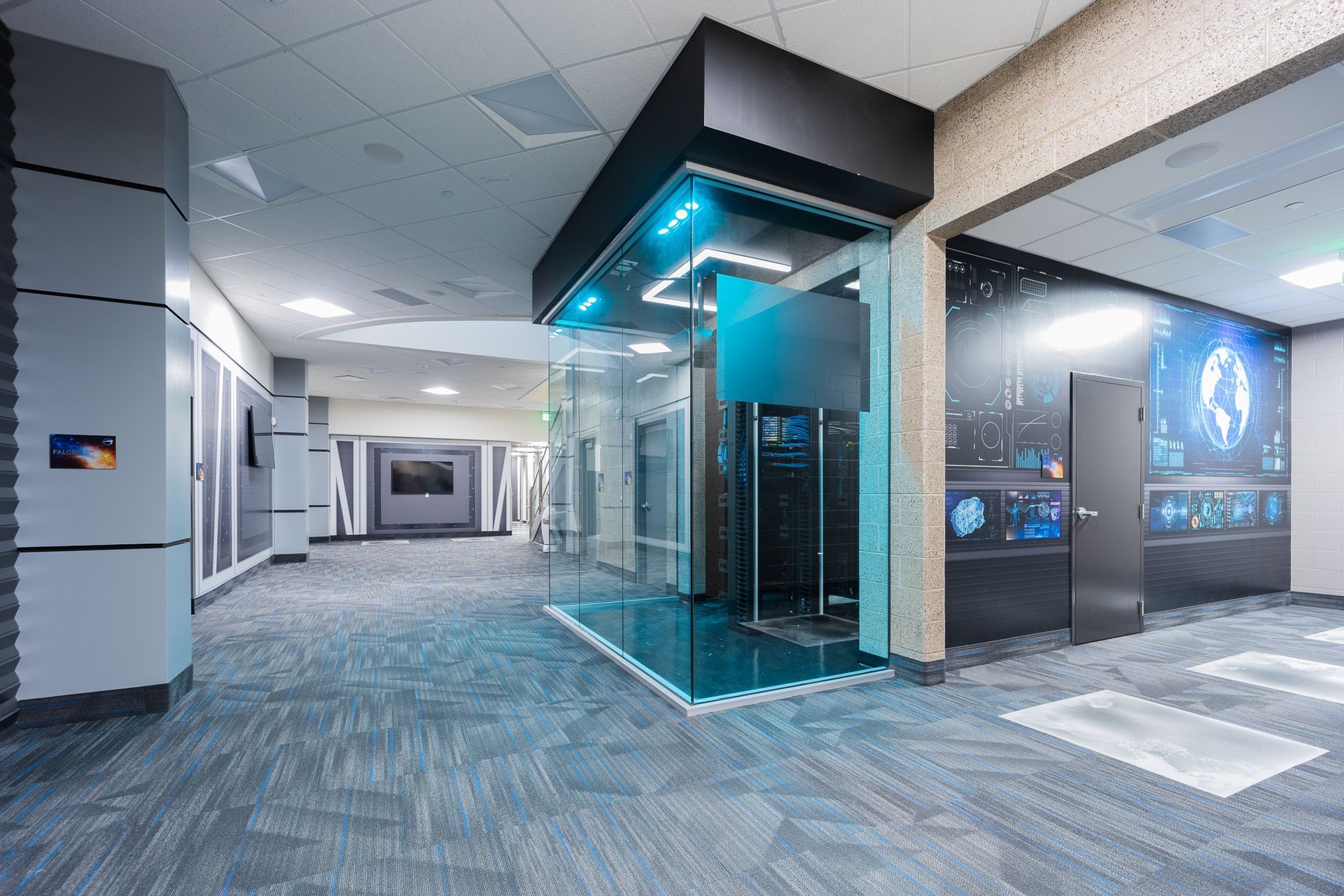
To create the space simulators, the design team outfitted them with the latest network technology, which allows CMSC to offer group, competitive, and joint missions between simulators by rerouting audio or video from one simulator to another, all managed from a central control room. The team also strategically placed microphones in the captain's area in each simulator to create a “Star Trek” effect, so that the captain can be heard throughout the simulator.


The 40-ft planetarium dome utilizes Digistar, which features a database of millions of objects to tell a story about anything in our universe. With the click of a button, students can see what the universe looked like in the past or what it will look like in the future. In addition to astronomy, it allows instructors to compellingly teach STEM programs by visualizing any science discipline on the dome. Digistar also features a cloud library where teachers can connect and share content worldwide.


Another goal of CMSC was to provide students with an immersive flight experience with no sound or vibration transfer between simulators. The audiovisual designer utilized a 5.1 surround sound system to give the effect of a spaceship navigating through space. Then, the architect and A/V designer created a box to house each simulator, which achieved a high acoustic rating and mitigated any sound transfer. 


“Anytime you do something a little different than the norm, it’s a challenge, but far more interesting,” said Cox. “Building a planetarium and a custom one-off project that will probably never be built again was very enjoyable. When you get to see kids in an atmosphere like this and their reactions, there is always a sense of pride there.”


If seeing is believing, then this space center will continue to create an interactive space learning environment that will inspire students for decades to come.


Central Elementary/Christa McAuliffe Space Center

Location: Pleasant Grove

Cost: $27.6 million

Owner: Alpine School District

Architect: VCBO Architecture

General Contractor: Hogan & Associates Construction

Civil Engineer: Meridian Engineering

Electrical Engineer: BNA Consulting

Mechanical Engineer: VBFA

Structural Engineer: Calder Richards Consulting

Interior Design: VCBO Architecture

Geotech: Earthec Engineering

Plumbing/HVAC: PHE Mechanical

Electrical: CR Lighting

Steel Erection: Danco 

Glass/Curtain Wall: Fairway Glass

Masonry: IMS Masonry

Drywall: NTL Drywall

Acoustics: HD Acoustics

Tile/Stone: Joel Hill Construction

Carpentry: Huetter Mill & Cabinet

Flooring: Stonehard

Roofing: Utah Tile & Roofing

Waterproofing: Bonneville Caulking & Waterproofing

Excavation: Armour Construction

Demolition: Grant Mackay

Precast: Olympus Precast

Landscaping: Great Western Landscape


New Paragraph

By Bradley Fullmer April 30, 2026
The new St. George City Hall is a shining example of a collaborative process between owner, architect, and general contractor, producing a world-class facility that will serve the community for the next 40-plus years.  By Bradley Fullmer
By Bradley Fullmer April 30, 2026
After more than a half century designing buildings, 73-year-old Jim Child remains a fixture in Utah’s architectural community, with a genuine passion for his craft that inspires those around him.  By Bradley Fullmer
By Taylor Larsen April 30, 2026
Three Salt Lake City projects showcase the immense talent of the local A/E/C industry to achieve supreme levels of sustainability through adaptive reuse, turning drab offices into vibrant housing. By Taylor Larsen
By Taylor Larsen April 30, 2026
Design and construction teams working at “ludicrous” speeds delivered more than the Utah Mammoth’s new practice facilities, but also a fitting tribute to Utah’s strong hockey culture.
By Bradley Fullmer April 30, 2026
The passage of HB 355 in 2025 provided stability for Utah's construction aggregate producers. The question moving forward is: How long will the finite supply of materials last at existing operations along the Wasatch Front?
By B. Garn April 30, 2026
The new Deseret Peak High School delivers out-of-this-world design for a welcome addition to the growing Tooele Valley. 
By Taylor Larsen April 30, 2026
The eight-year odyssey to deliver Cyprus High was worth the voyage, as designers and builders created a stellar learning environment for Magna’s growing community.
By Taylor Larsen April 30, 2026
Engineers note the emerging trends among Utah’s different transit modes and how evolving technology and partnerships set the state up for success.  By Taylor Larsen
By Bradley Fullmer April 30, 2026
UC+D profiles four new firms who aim to make a name for themselves in an A/E/C market that refuses to slow down. By Bradley Fullmer
By Bradley Fullmer April 30, 2026
Led by the City of St. George, Washington County has experienced explosive growth of more than 50% over the past 15 years, ranking in the top 5% of all U.S. counties and fueling strong demand for commercial construction projects.  By Bradley Fullmer